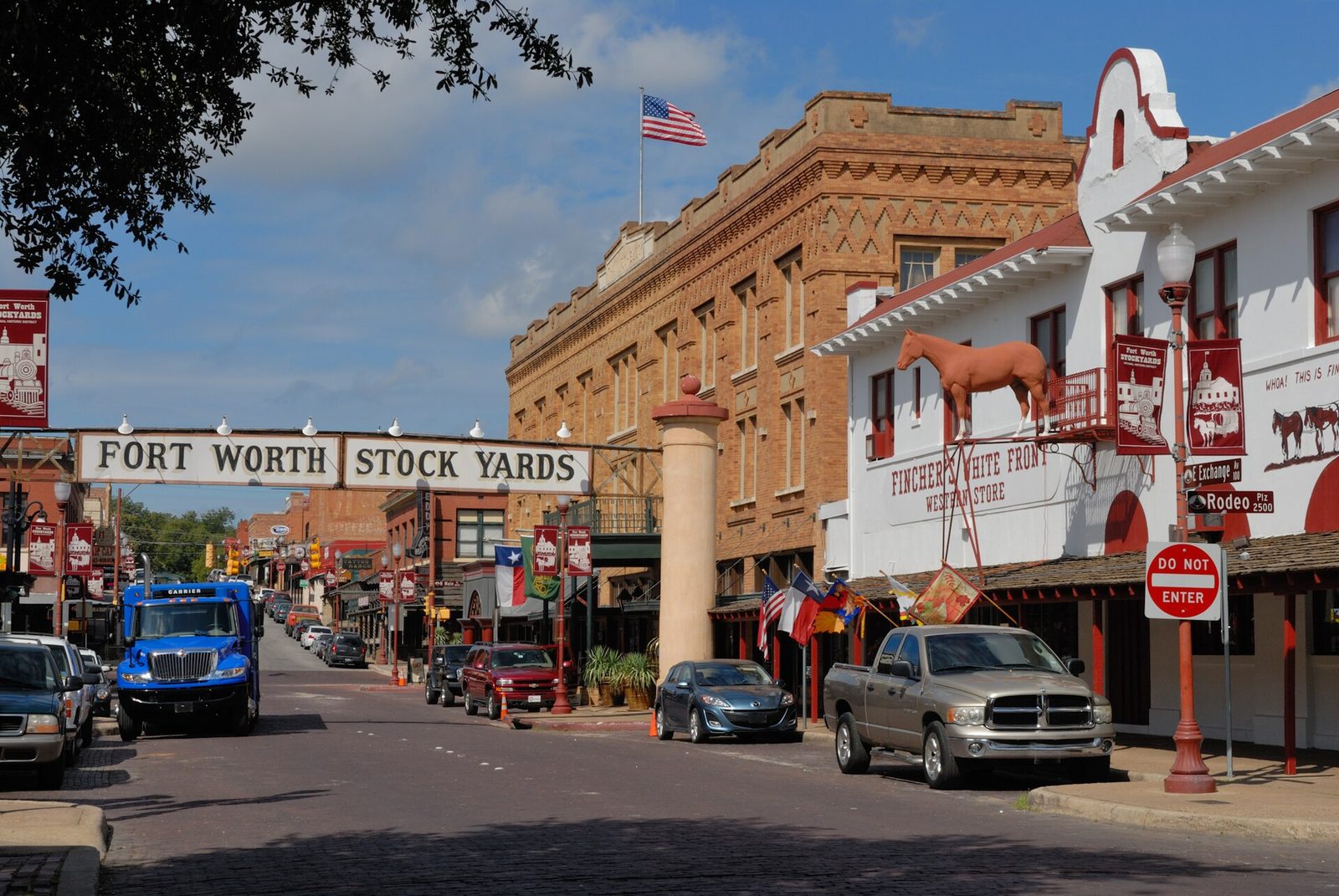
The best day trips from Dallas sort themselves by drive time and by season. Fort Worth is 35 minutes away, does not need a car, and has a cattle drive twice a day. Glen Rose, Waco and the small-town squares sit an hour to two hours out. Ennis has bluebonnets for about two weeks in April and is unremarkable the rest of the year.
This guide gives each destination the thing the listicles leave out: a real drive time, what it costs to get in, when it is worth going, whether you can do it without a car, and — for three of them — an honest statement that it does not work as a day trip at all.
Park fees, opening hours and event times below were checked in September 2026 against operators’ own pages. Drive times are estimates without traffic; North Texas traffic can add half an hour in either direction, and on a Friday afternoon it will.
Every Day Trip from Dallas, Compared
| Destination | Drive, no traffic | Go for | Best season | Car-free? |
|---|---|---|---|---|
| Fort Worth | 35–45 min | Stockyards, cattle drive, world-class free museums | Year-round | Yes — TRE |
| Ennis | 25 min | Bluebonnet trails | April only | No |
| Grapevine | 30 min | Historic Main Street, wineries, family attractions | Year-round; huge at Christmas | Possibly — see below |
| McKinney | 40 min | One of the best small-town squares in Texas | Spring and autumn | No |
| Denton | 50 min | College town, live music, courthouse square | Year-round | Yes — A-train |
| Glen Rose | 1h 30 | Dinosaur tracks in a riverbed, wildlife park | Spring and autumn | No |
| Lake Texoma | 1h 30 | Water, fishing, state parks | May to September | No |
| Granbury | 1h 20 | Historic square, lake, quiet | Spring and autumn | No |
| Waco | 1h 40 | Magnolia, the suspension bridge, Baylor | Spring and autumn | No |
| Tyler | 1h 45 | Rose gardens, East Texas pines | Spring and October | No |
| Turner Falls, Oklahoma | 2h | Waterfall and swimming | Late spring and summer | No |
| Broken Bow, Oklahoma | 3h 15 | Forest, cabins, lake | Autumn | No |
Read the last column first. Two of these are genuinely doable on public transport for $9.00, a third probably is, and the other nine require a car. If you are not renting one, that narrows the list dramatically and usefully.
Which Day Trip Should You Take?
If you only have one free day, the answer is almost always Fort Worth. It is the closest, the most substantial, the only one reachable by train, and the only one that offers a genuinely different city rather than a smaller version of the same one.
Choose Fort Worth if you want the classic Texas experience without a rental car, or if art matters to you — its museum district is one of the best in the United States and several of the museums are free.
Choose Glen Rose if you have children between about four and twelve. Dinosaur tracks in a riverbed beat any indoor exhibit, and the drive is manageable.
Choose Ennis in April and only in April. Outside the bloom there is no reason to make the trip.
Choose McKinney or Granbury if you want a quiet, pretty square, an antique shop and a long lunch. Both are exactly that and nothing more, which is the point.
Choose Waco if Magnolia is specifically the draw. If it is not, the drive is long for what you get.
Choose Lake Texoma between May and September, when water is the entire appeal, and not otherwise.
Fort Worth: The Only One You Can Do Without a Car
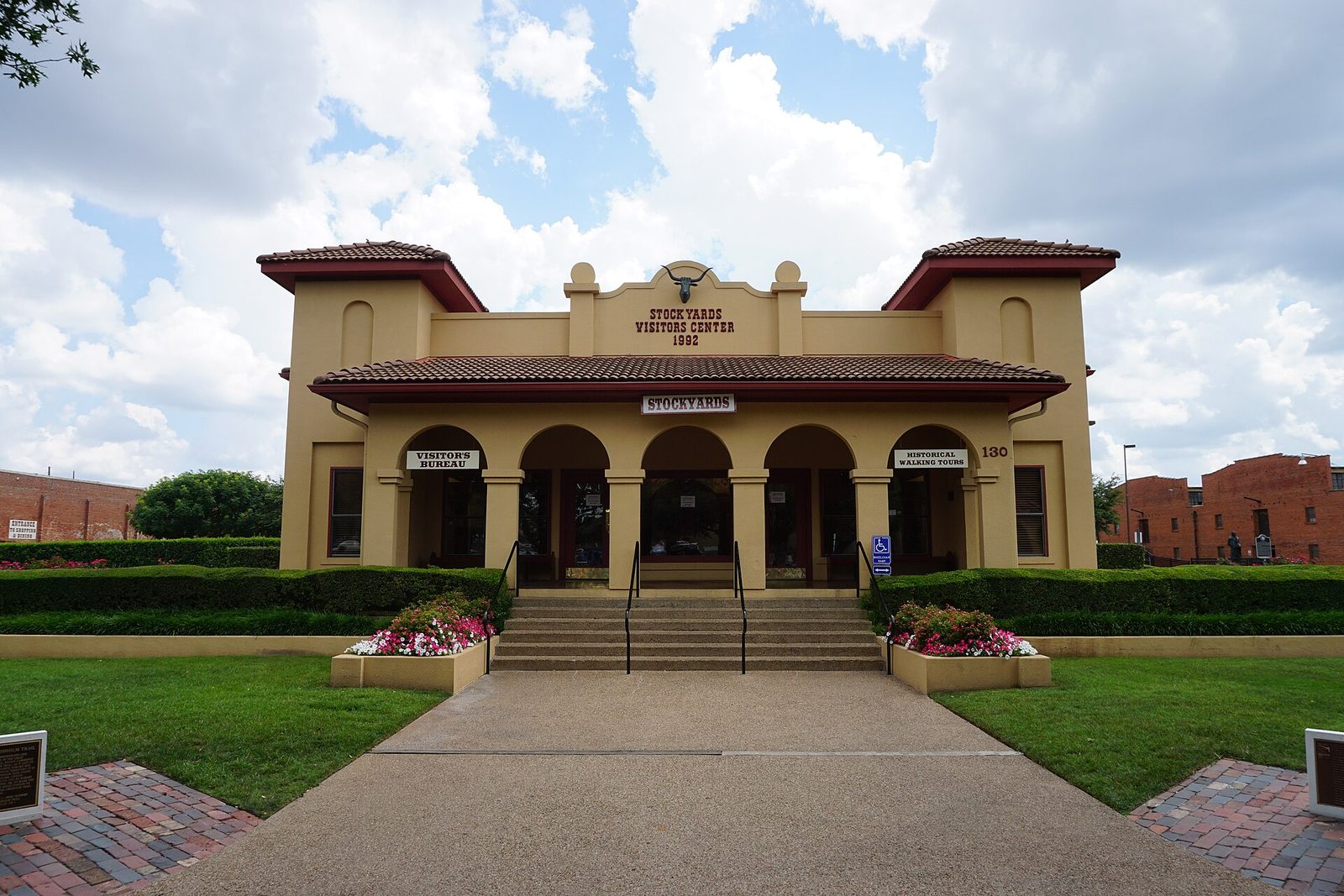
Fort Worth is 35 to 45 minutes west by road and about an hour by train, and it is a different city rather than a suburb — a genuine western heritage that Dallas, which grew up as a commercial city, simply does not have.
The three things worth building a day around:
The Stockyards. A preserved historic district with the cattle drive, the rodeo, Billy Bob’s Texas and a strip of western shops and restaurants along Exchange Avenue. It is touristy and it is also completely real, in the sense that the buildings and the industry that made them are genuine.
The museum district. The Kimbell Art Museum, the Modern Art Museum of Fort Worth and the Amon Carter Museum of American Art stand within a few minutes’ walk of each other, and the quality is extraordinarily high for a city of this size. Several of them charge nothing for general admission. If you have seen the Dallas Arts District and enjoyed it, this is the follow-up.
Sundance Square and downtown. A compact, walkable, pedestrian-friendly downtown with the Water Gardens at its southern edge — a sunken concrete water feature that is genuinely startling in person and free to walk through.
Honest verdict: do not try to do all three in one day. The Stockyards plus lunch is a half day; the museums plus downtown is another. Pick one half and do it properly, or come back. A rushed Fort Worth is the most common mistake visitors to Dallas make, and it produces a worse memory than not going at all.
One Fort Worth Day, Hour by Hour
This is the version that works, built around the 11:30 cattle drive and a train in each direction.
| Time | What you are doing | Note |
|---|---|---|
| 08:30 | TRE west from EBJ Union Station | $9.00 Regional Day Pass. No Sunday service. |
| 10:00 | Arrive Fort Worth, coffee, walk into the Stockyards | Allow for the connection from the station |
| 11:10 | Position yourself on Exchange Avenue | Twenty minutes early gets you the rail |
| 11:30 | The cattle drive | Free. It takes minutes, not hours. |
| 12:00 | Lunch in the Stockyards, then the shops | Book ahead at weekends |
| 14:00 | Either the museum district or Sundance Square | Pick one. Both is how the day goes wrong. |
| 17:30 | Dinner, or start back | Check the last eastbound train first |
The tightest constraint is the return train rather than anything in the city. TRE weekend service is thinner than weekday service, and the last eastbound departure is earlier than most visitors expect. Screenshot it before you leave Dallas in the morning and the whole day relaxes.
What Time Is the Fort Worth Cattle Drive?
Daily at 11:30am and 4:00pm. The Fort Worth Herd bills itself as America’s only twice-daily cattle drive, and there is no admission charge to watch — you stand on Exchange Avenue and a herd of longhorns walks past.
It takes a few minutes. That is not a criticism; it is a thing worth seeing that does not pretend to be longer than it is. Arrive 20 minutes early for a position on the rail, and note that the 11:30 drive is considerably busier than the 4:00pm one in high season.
Around it, the Stockyards runs a proper event calendar. The PBR Stockyards Showcase is on Thursdays at 7:30pm, and the Stockyards Championship Rodeo runs Friday, Saturday and Sunday. The Stockyards’ own guidance is that the cattle drives and shopping need half a day minimum, and that a rodeo makes it a full day — which is a rare example of an operator giving you an honest time estimate.
Parking is the usual historic-district problem. The Stockyards’ advice is to arrive early or be prepared to walk, and there is no single published rate. This is another argument for the train.
Waco: Worth the Drive?
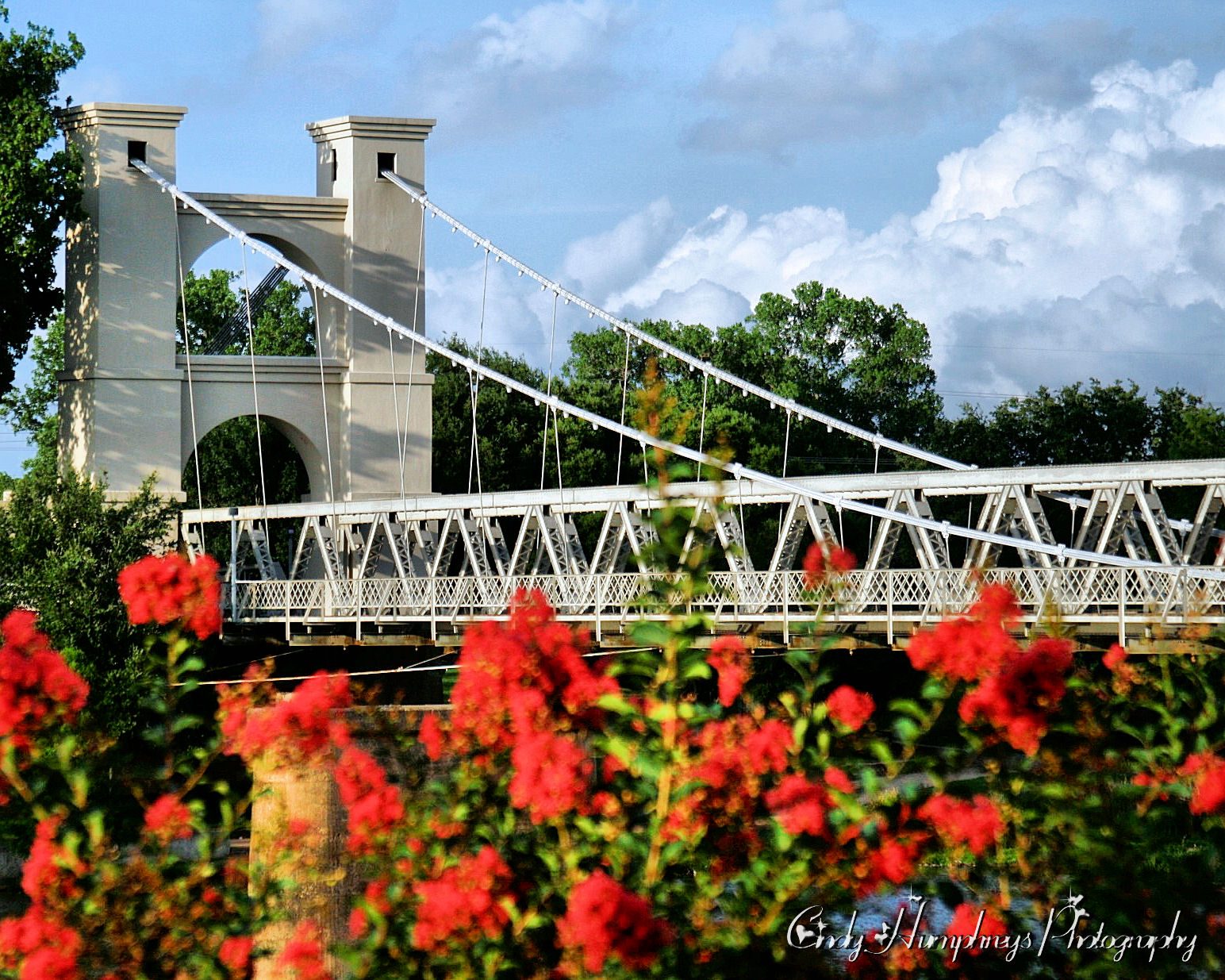
Conditionally. Waco is an hour and forty minutes each way, which means three and a half hours in the car for a day that has to justify it.
If Magnolia is the reason, then yes. The Magnolia Market development — market, bakery, garden and food trucks — is the single biggest driver of visitors to Waco and it delivers what its audience wants. Go on a weekday if you can; weekends are extremely busy.
If Magnolia is not the reason, the honest answer is that Waco is a pleasant mid-sized Texas city with a beautiful suspension bridge over the Brazos, a good zoo, the Baylor campus and a decent downtown — none of which individually justifies a three-and-a-half-hour round trip when Fort Worth is forty minutes away.
The better version of this trip is to stop in Waco on the way to or from Austin rather than treating it as a Dallas day trip. It sits almost exactly halfway, and as a lunch and a walk it is excellent.
Glen Rose and Dinosaur Valley State Park
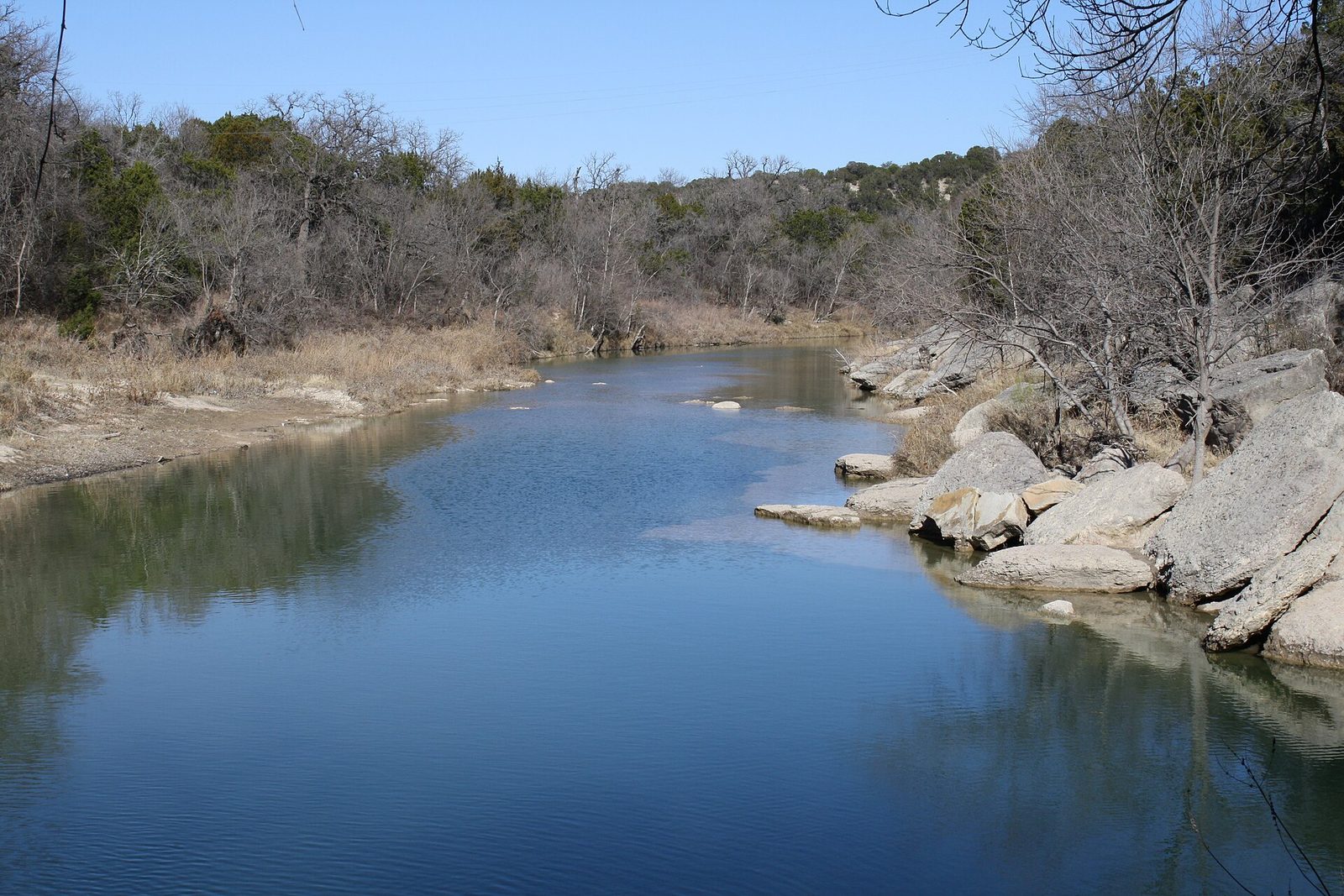
This is the best day trip from Dallas with children, and it comes with a condition that almost every list ignores.
Dinosaur Valley State Park is at 1629 Park Rd 59, Glen Rose, about ninety minutes southwest. Entry is $8 per adult per day, free for children 12 and under. Park gates open 6:00am to 10:00pm; the office runs 8:30am to 4:30pm. There are 20 miles of trails, an interpretive center with dinosaur replicas, and swimming, paddling, fishing and horse riding in season.
Reserve a day pass online before you drive. The park says plainly that it often reaches capacity, and the reservation line is (512) 389-8900. Turning up at a full park after ninety minutes in the car is a bad afternoon.
The condition: the dinosaur tracks are in the Paluxy riverbed and, in the park’s own words, “are not always visible.” Water level and weather decide it. Trails may close when wet. Check the park’s own social channels the morning you travel — this is the single most important piece of planning for this trip and it takes two minutes.
Glen Rose also has Fossil Rim Wildlife Center, a drive-through conservation park, which pairs naturally with the state park and gives you a full day out of the drive. Between them, this is a genuinely strong family day.
Ennis and the Bluebonnets: A Two-Week Window
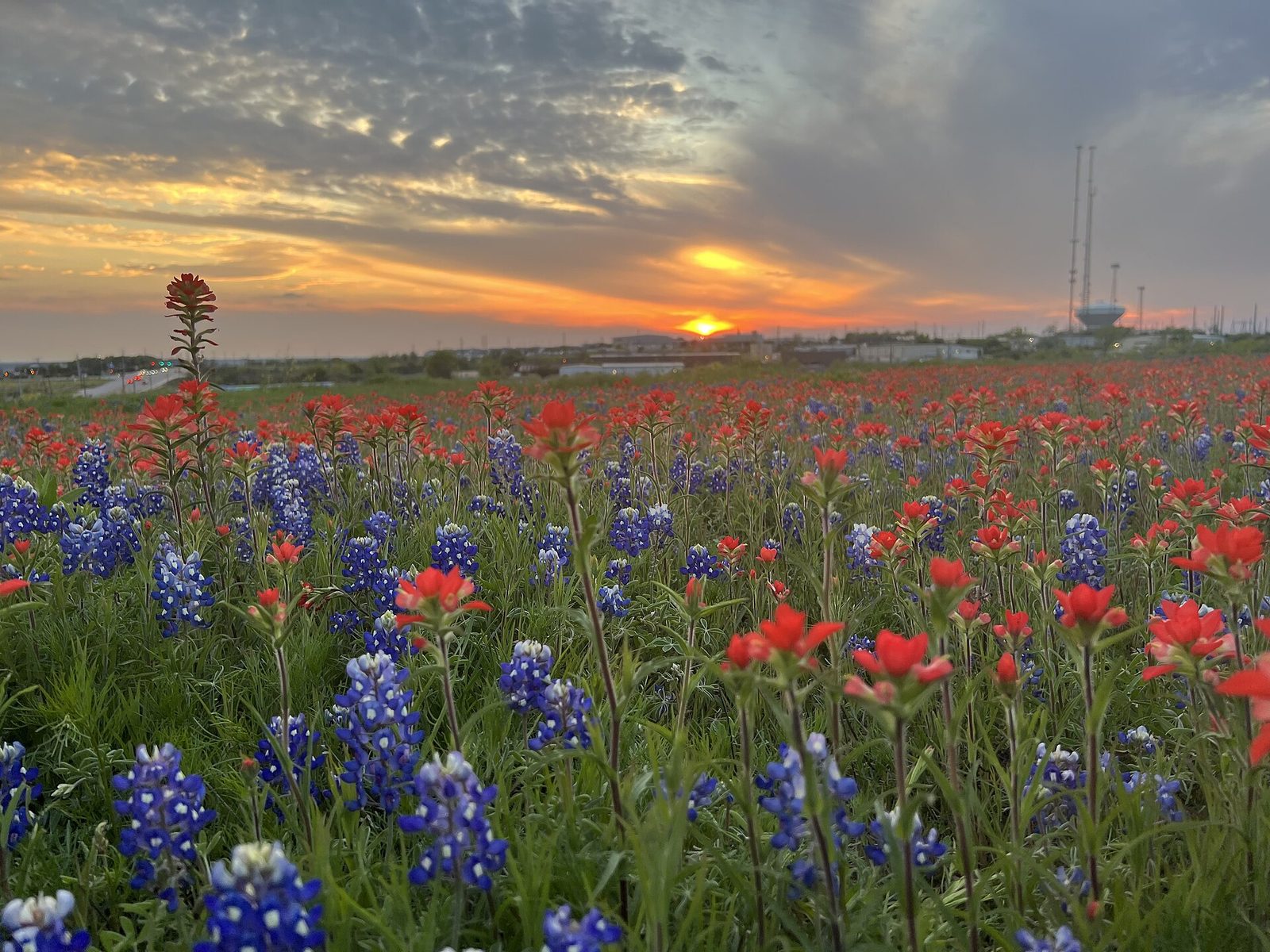
Ennis sits 25 minutes south of downtown Dallas on Interstate 45 — the shortest drive on this list by a wide margin — and is designated home of the official Texas bluebonnet trail.
The trails are mapped routes through surrounding farmland, released each spring by the town’s visitor bureau, and in a good year they are genuinely spectacular. The practical reality is that the bloom is short, entirely weather-dependent, and peaks somewhere in April. A week early or a week late and you are looking at green fields.
How to do it properly: call the Ennis visitor center on (972) 878-4748 or check their site in the week you intend to go, get the current year’s trail map rather than last year’s, and go on a weekday if you possibly can — the weekend traffic on narrow farm roads is the main thing that spoils this trip. The visitor center is at 201 Northwest Main Street.
Honest verdict: outside April, do not make this trip. Inside April, it is the cheapest and shortest genuinely memorable day out from Dallas, and if you are visiting in spring it should be on the list ahead of destinations twice as far away. Our seasonal guide has more on what else spring opens up.
Grapevine, McKinney and the Small-Town Squares
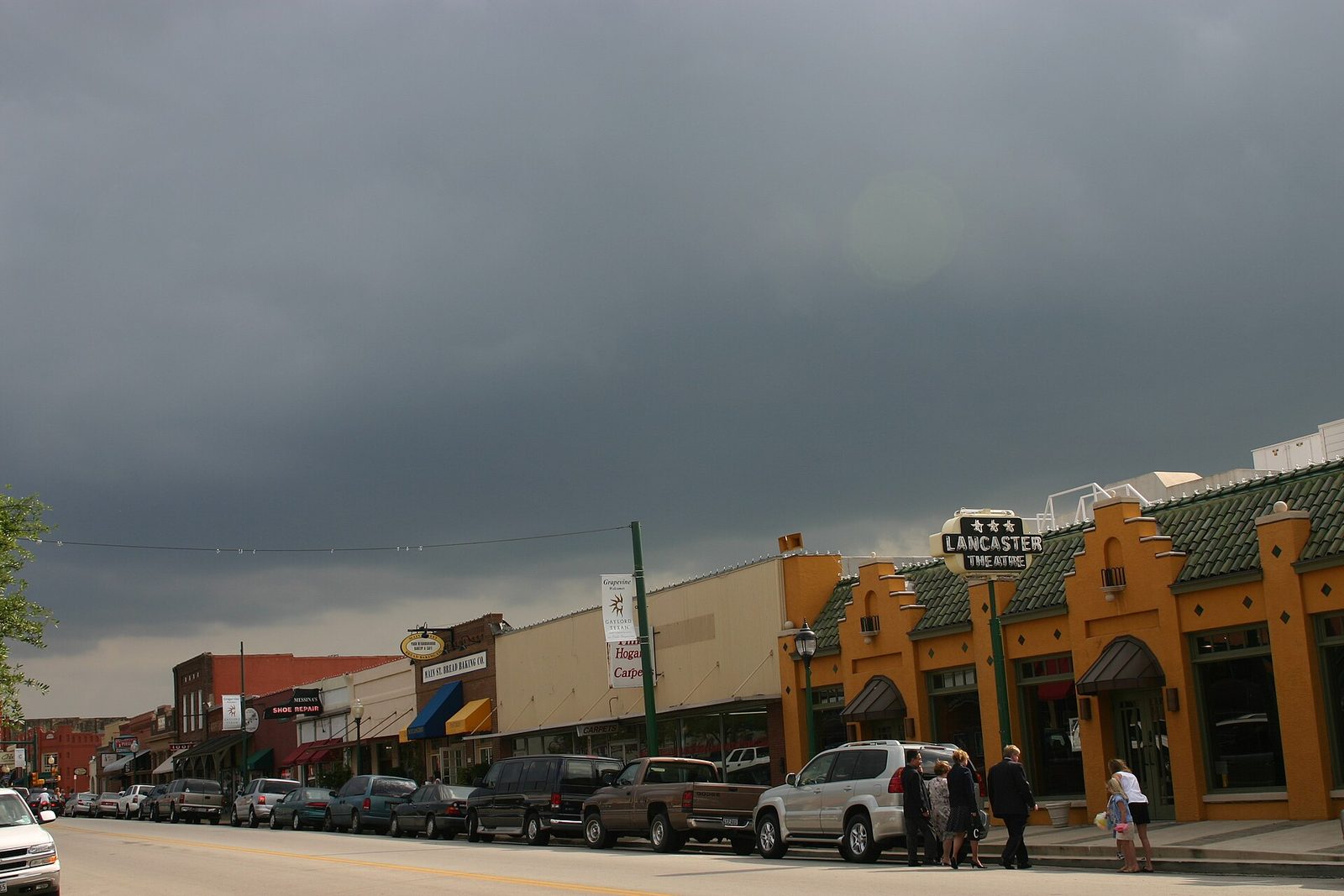
North Texas has a genuine tradition of preserved courthouse squares, and three of them are close enough to reach in under an hour.
Grapevine, thirty minutes northwest and right beside DFW Airport, has a restored Main Street with tasting rooms, a historic theatre, a heritage railroad and — unusually — a serious wine industry. It goes enormously hard at Christmas, billing itself as the Christmas Capital of Texas, which makes December both the best and the busiest time to visit. It is also the most plausible candidate on this list for a car-free trip after Fort Worth and Denton.
McKinney, forty minutes north, has one of the best-preserved squares in the state, anchored by the historic Collin County Courthouse. Independent shops, good restaurants and a walkable few blocks. It is a lunch-and-a-wander destination rather than a full day, which is exactly what some trips need.
Granbury, an hour and twenty southwest, offers the same formula with a lake attached and fewer people. The square is smaller and quieter than McKinney’s and the drive is twice as long, so it suits a slower day.
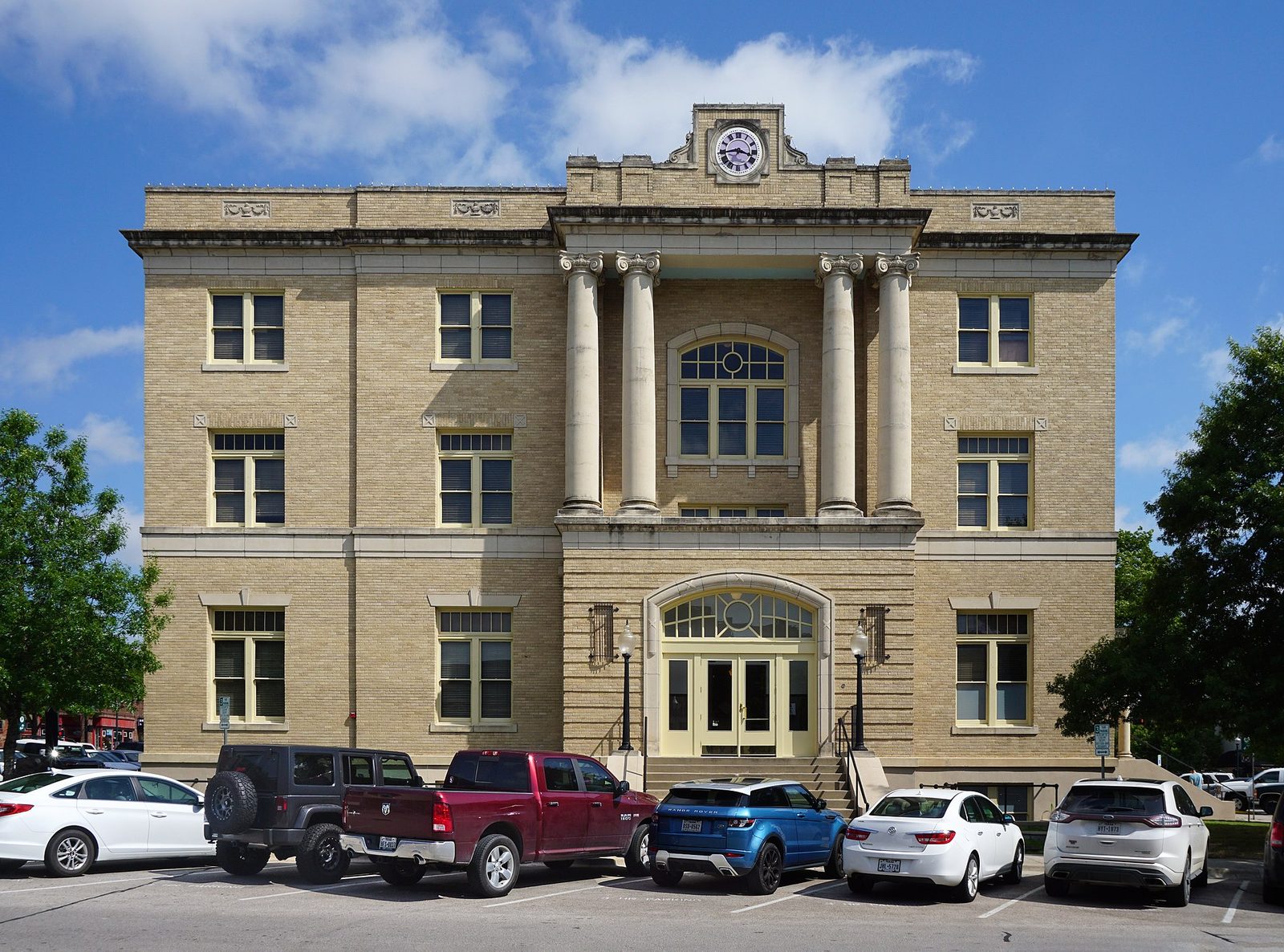
All three work best in spring and autumn. In July and August, a day built around walking a square in the open is a day built around 97°F, and it does not go well.
Lake Texoma and the Water
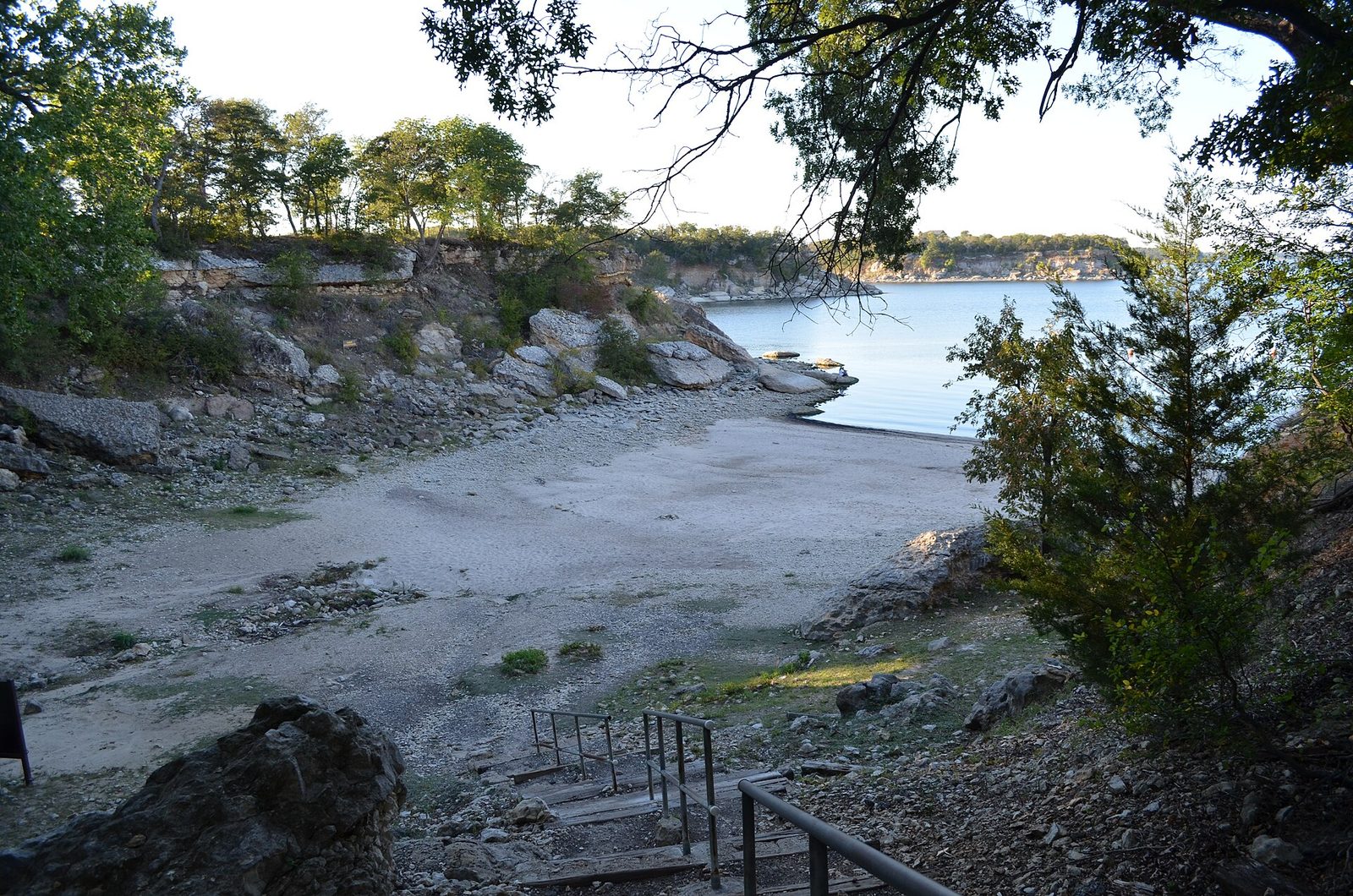
Lake Texoma sits ninety minutes north on the Oklahoma border and is the region’s big water destination — fishing, boating, paddle boarding and several state parks around its shoreline, including Eisenhower State Park on the Texas side.
It is a summer trip and only a summer trip. From May to September it is the obvious answer to a hot Saturday; in February it is a large grey lake with nobody on it.
Practically, you need a car, you should decide which access point you are heading for before you leave — the shoreline is long and the parks are far apart — and you should check state park entry arrangements in advance, since Texas parks increasingly require day passes reserved online.
Closer to the city, White Rock Lake gives you a fraction of the same thing without the drive. Our free things to do guide covers the in-town water options.
Tyler, Turner Falls and the Longer Drives
Tyler, an hour and forty-five east, is the rose capital of the United States and home to a very large municipal rose garden. It is at its best in spring and again in October for the Texas Rose Festival, and East Texas pine country around it is a genuinely different landscape from the prairie west of Dallas. Outside those windows it is a long drive for a garden.
Turner Falls, two hours north in the Arbuckle Mountains of Oklahoma, has a waterfall and natural swimming areas and is a classic late-spring and summer trip. Expect an entry fee at the park gate and expect it to be busy on summer weekends. It suits families with older children who will actually swim.
Canton, an hour east, hosts First Monday Trade Days — an enormous, long-running flea market that runs on specific dates each month rather than continuously. Check the dates before you drive; arriving on the wrong weekend means an empty field.
Planning the Drive: What Actually Goes Wrong
Most day trips from Dallas fail for the same four reasons, and all four are avoidable.
Traffic, not distance. Every drive time on this page assumes clear roads. Leaving the city between 07:00 and 09:00 or returning between 16:00 and 18:30 on a weekday can add thirty to forty-five minutes in each direction, which turns a ninety-minute trip into a different kind of day. Leave at 09:30 and come back at 15:00 if you have the flexibility, or accept the traffic and plan around it.
Capacity limits you did not know about. Texas state parks increasingly require a day pass reserved in advance and turn people away when full. Dinosaur Valley says so explicitly. Check and book before you drive, not when you arrive.
Heat. A day trip in July that involves walking a square, a riverbed or a trail is a different activity from the same trip in April. Summer highs average 96.9°F in July and 97.1°F in August. Carry more water than you think, start early, and build in an air-conditioned middle to the day.
Closed days and seasonal hours. Small-town museums, tasting rooms and attractions outside the metroplex frequently close on Mondays and Tuesdays, and some run reduced winter hours. This is the same trap that catches visitors inside Dallas, and it is worse in towns with one of everything. Phone ahead if a specific attraction is the reason for the trip.
One more, which is less about planning than expectation: several of these destinations are genuinely small. McKinney’s square is a few blocks. Granbury’s is smaller. That is the appeal, not a shortfall — but if you drive ninety minutes expecting a full day of things to do, you will be disappointed by a place that was never trying to give you one.
The Ones That Do Not Work as Day Trips
Being honest about this saves more time than any recommendation.
Austin is three to three and a half hours each way. You can technically leave at 6am and be back at midnight, and people do, but you will spend seven hours in a car for five hours in a city that deserves two days. Make it an overnight or do not make it.
Broken Bow, Oklahoma is three hours and fifteen minutes, and the entire appeal is cabins in the forest by a lake. The point is staying there. As a day trip it is six and a half hours of driving to look at trees.
San Antonio and Houston are four hours or more. Neither is a day trip from Dallas under any reasonable definition, regardless of what a list of thirty-three ideas tells you.
Fort Worth squeezed into an afternoon belongs on this list too. It is the only close destination substantial enough to be genuinely spoiled by rushing. Give it a full day or give it a morning at the Stockyards and accept that you did not see the museums.
Tyler, Granbury and What Else Is Out There
A few more that earn a mention without earning a section of their own.
Tyler rewards a specific kind of visitor. The municipal rose garden is one of the largest in the country, the surrounding countryside is East Texas pine rather than prairie, and in October the Texas Rose Festival turns the whole town out. Outside spring and that October window, an hour and forty-five minutes each way is a long drive for a garden that is not in bloom.
Granbury is Texas small-town tourism at its most comfortable: a preserved square around a courthouse, a restored opera house, antique shops and a lake at the edge of town. It is quieter and less discovered than McKinney, which is the reason to choose it, and it makes a better slow Sunday than a busy Saturday.
Canton holds First Monday Trade Days, an enormous open-air market with hundreds of vendors that has been running since the nineteenth century. The crucial detail is that it operates on set dates each month rather than continuously, and despite the name those dates are not always the first Monday. Confirm before you drive the hour east.
Denton deserves more attention than its distance suggests. It is a university town with two large campuses, a genuine live music tradition, a handsome courthouse square and an independent streak that makes it feel unlike anywhere in the Dallas suburbs. The fact that you can reach it by train makes it the single most underrated entry on this page.
The Car-Free Day Trips Nobody Writes About
Almost every list of day trips from Dallas assumes a rental car. Two of them do not need one, and both run on a single DART Regional Day Pass at $9.00.
Fort Worth by TRE. The Trinity Railway Express runs from EBJ Union Station in Dallas to Fort Worth T&P Station. A Local pass only covers you as far as CentrePort/DFW Airport Station, so the Regional pass is the one you need — and since two one-way TRE tickets cost $12.00, the $9.00 pass is cheaper than the singles. There is no scheduled TRE service on Sundays, and weekend service is thinner than weekday, so check the last train back before you settle into the Stockyards.
Denton by A-train. Take DART rail to Trinity Mills Station in Carrollton and change to the Denton County Transportation Authority’s A-train. The Regional pass covers DCTA, so the same $9.00 ticket does the whole journey. Denton is a university town with a courthouse square, a strong live music scene and a completely different atmosphere from anywhere in Dallas — and it is the region’s most underrated day out.
Grapevine, probably. Grapevine is served by Trinity Metro’s commuter rail between Fort Worth and DFW Airport Terminal B, and a Regional pass covers Trinity Metro. We have not verified the current timetable, so check it before relying on it — but if the times work, it is a third car-free option and the easiest of the three to combine with an airport arrival or departure.
Full fare detail and what each pass covers is in our transport guide, and the airports guide covers the Grapevine and DFW rail connections.
When Should You Go? Season by Season
| Season | Dallas conditions | Best day trips | Avoid |
|---|---|---|---|
| March to May | 69.9°F to 84.9°F, wettest in May | Ennis in April, all the squares, Glen Rose, Tyler | Nothing. This is the season. |
| June to August | 92.7°F to 97.1°F | Lake Texoma, Turner Falls — anything with water | Walking tours of open squares. Waco. Anything outdoors at midday. |
| September | 90.0°F, easing late | Water trips early, squares late | The first two weeks outdoors |
| October | 79.5°F, the wettest month | Everything. Tyler for the rose festival, Broken Bow for autumn color | Nothing, but pack for rain |
| November to February | 57.7°F to 67.8°F | Grapevine at Christmas, Fort Worth, the museums | Lake Texoma. The water trips are pointless. |
The short version: April and October are the two months when every trip on this page works, and July and August are the two months when most of them do not.
What Does a Day Trip Cost?
| Trip | Transport | Entry | Realistic day total, per adult |
|---|---|---|---|
| Fort Worth by train | $9.00 Regional Day Pass | Cattle drive free; several museums free | Under $30 with lunch |
| Denton by train | $9.00 Regional Day Pass | Free to wander | Under $30 with lunch |
| Glen Rose by car | Fuel plus about 3 hours driving | $8 adult, under 12 free | Modest, and excellent value for families |
| Ennis in April | Fuel, 50 minutes round trip | Free | The cheapest good day on this page |
| Waco by car | Fuel plus 3.5 hours driving | Magnolia free to enter | The drive is the cost |
| Lake Texoma by car | Fuel plus 3 hours driving | State park day pass | Depends entirely on whether you rent a boat |
If you are not renting a car for the rest of your trip, hiring one for a single day is usually cheaper than three days of downtown parking — but only if the destination justifies it. Fort Worth and Denton do not require it at all.
Best Day Trips from Dallas: Frequently Asked Questions
What is the best day trip from Dallas?
Fort Worth. It is the closest substantial destination, the only one genuinely reachable by train, and it offers a completely different city — the Stockyards and a cattle drive at one end, a world-class museum district at the other.
Can you do a day trip from Dallas without a car?
Yes, to Fort Worth on the TRE and to Denton on the DCTA A-train via Trinity Mills Station. Both are covered by a single $9.00 DART Regional Day Pass. Grapevine may also work via Trinity Metro rail — check the timetable first.
What time is the Fort Worth cattle drive?
Daily at 11:30am and 4:00pm on Exchange Avenue in the Stockyards. There is no charge to watch. Arrive about 20 minutes early for a spot on the rail; the morning drive is the busier of the two.
How much does Dinosaur Valley State Park cost?
$8 per adult per day, free for children 12 and under. Gates open 6:00am to 10:00pm. Reserve a pass online in advance — the park often reaches capacity — and check whether the riverbed tracks are visible before you drive out.
When are the bluebonnets in Ennis?
April, with a short and weather-dependent peak. Get the current year’s trail map from the Ennis visitor center rather than reusing an old one, and go midweek if possible. Outside the bloom the trip is not worth making.
Is Waco worth a day trip from Dallas?
Only if Magnolia Market is specifically the reason. It is three and a half hours of driving for the round trip, and Fort Worth offers more in forty minutes. Waco works much better as a stop on the way to Austin.
When is the best time of year for day trips from Dallas?
April and October. April brings the bluebonnets, comfortable temperatures and everything open; October averages 79.5°F and suits every destination on this page. July and August rule out most of them unless the trip involves water.
Do I need to book anything in advance?
For Texas state parks, yes — Dinosaur Valley and others sell day passes online and regularly reach capacity. For the Fort Worth cattle drive, no. For restaurants in the Stockyards or at Magnolia on a weekend, book if you can.
How far is Austin from Dallas?
Three to three and a half hours each way. It is technically possible as a very long day, but it is a poor trade — seven hours in the car for a city that rewards at least two days. Make it an overnight.
What is the closest day trip to Dallas?
Ennis, at 25 minutes south on Interstate 45, though it is only worth the trip during the April bluebonnet bloom. Year-round, Grapevine at about 30 minutes is the closest genuinely rewarding option.
What is the best day trip from Dallas with kids?
Glen Rose. Dinosaur tracks in a river you can wade in, 20 miles of trails, $8 for adults and free for under-12s, with Fossil Rim Wildlife Center nearby to fill the rest of the day.
The one out-of-state option on this list is Turner Falls, two hours north up I-35 to Davis, Oklahoma, where a 77-foot waterfall drops into a spring-fed pool in the Arbuckle Mountains. Admission swings between $9 and $20 an adult by season, parking is charged separately at up to $25, and every child twelve and under must wear a certified life jacket in the water. Our Turner Falls day trip from Dallas guide costs the whole thing out.
One caution on fitting a day trip into a short visit: the Fort Worth Stockyards recommend a half day minimum for the cattle drives and shopping and a full day with a rodeo, and there is no scheduled Trinity Railway Express service on Sundays. On a two-day trip that maths rarely works. Our Dallas weekend bucket list sets out when it does and when it does not.
Related Dallas Guides
- Getting Around Dallas — DART fares, the TRE and what the Regional pass covers
- Best Time to Visit Dallas — month by month, including the bluebonnet window
- Things to Do in Dallas — before you start driving out of it
- Dallas Itineraries — where a day trip fits in a three or four-day plan
- Dallas With Kids — including the trips that actually work with children
- Dallas Museums and Arts — the in-town equivalent of Fort Worth’s museum district
- Free Things to Do in Dallas — including White Rock Lake
- Dallas Airports — Grapevine, DFW and the rail connections
- Dallas Sports — Arlington sits on the way to Fort Worth
- Where to Eat in Dallas — including barbecue worth the drive
- Where to Stay in Dallas — bases that make day trips easier
- Dallas Events — festivals worth timing a trip around
- Dallas Travel Guide — the full planning overview
Photo Credits
- Stockyards Visitors Center: photo by Michael Barera, Wikimedia Commons (CC BY-SA 4.0)
- Waco Suspension Bridge: photo by 10chumphreys, Wikimedia Commons (CC BY-SA 3.0)
- Dinosaur Valley State Park: photo by Gordon Reid, Wikimedia Commons (CC BY-SA 3.0)
- Bluebonnets and Indian paintbrush: photo by 8bit12man, Wikimedia Commons (CC BY 4.0)
- Main Street, Grapevine: photo by Raymondlafourchette, Wikimedia Commons (CC BY-SA 3.0)
- Historic Collin County Courthouse, McKinney: photo by Michael Barera, Wikimedia Commons (CC BY-SA 4.0)
- Lake Texoma, Eisenhower State Park: photo by GrapevineTxOnline.com, Wikimedia Commons (CC BY 2.0)
- Fort Worth Stockyards, Exchange Avenue (featured image): photo by Mark Fisher, Wikimedia Commons (CC BY-SA 3.0)
Sources
- Fort Worth Stockyards — cattle drive and event times
- Texas Parks and Wildlife — Dinosaur Valley State Park
- Texas Parks and Wildlife — Eisenhower State Park, Lake Texoma
- Visit Ennis, Texas — bluebonnet trails and visitor center
- Visit Fort Worth
- Visit Grapevine
- Visit McKinney
- Discover Denton
- Visit Waco
- Visit Tyler
- Visit Granbury
- DART — fares and what the Regional pass covers
- Trinity Railway Express — Dallas to Fort Worth
- Denton County Transportation Authority — the A-train
- TravelOK — Turner Falls and Broken Bow