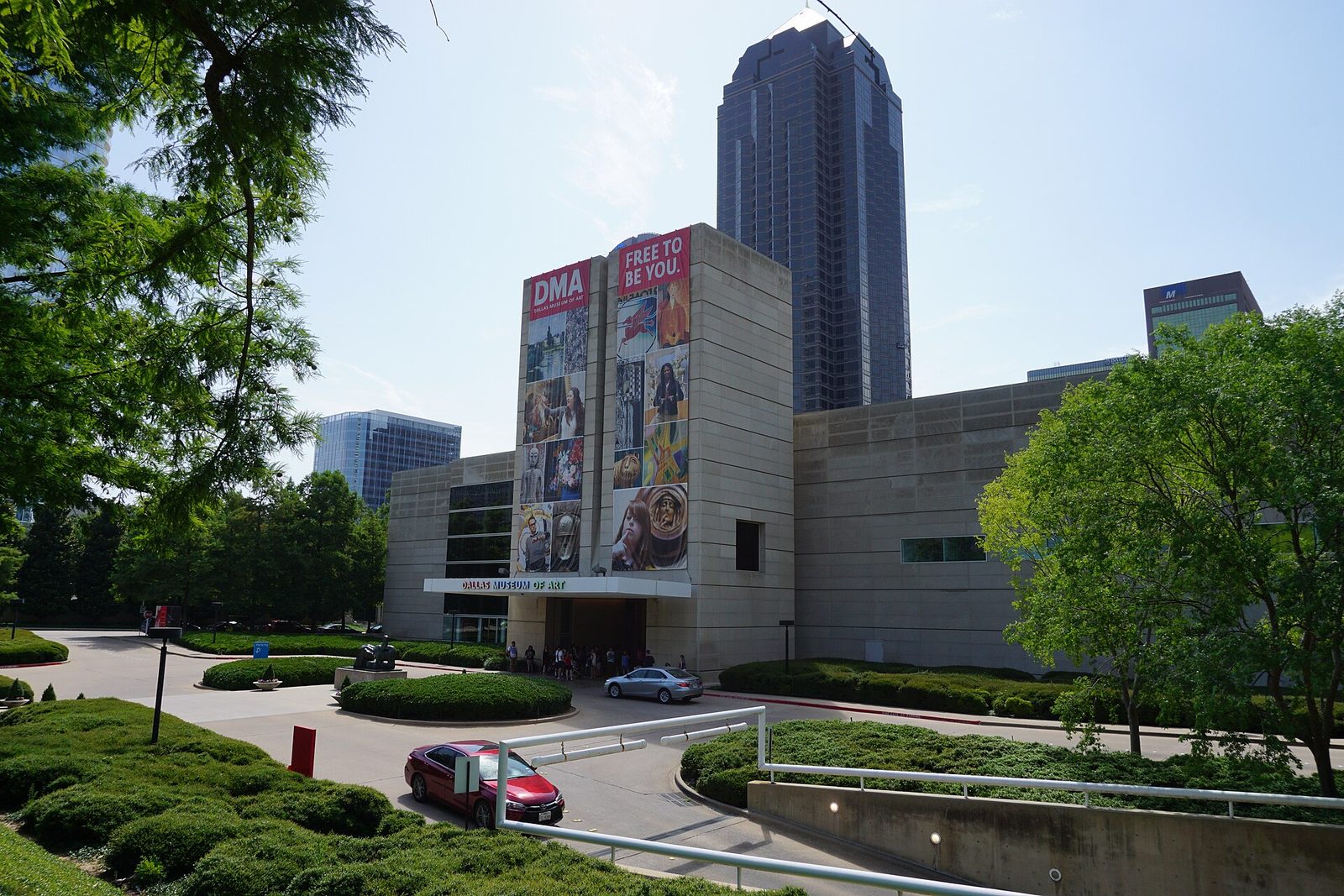
The best Dallas museums sit within a few blocks of each other in the Arts District, and the most important thing to know about them is when they are shut. The Dallas Museum of Art, the Nasher Sculpture Center and the Sixth Floor Museum all close Monday and Tuesday. The Perot closes Tuesday. Plan around that and the rest is easy.
This guide compares every museum worth your time by subject, cost, opening days and how long it actually takes to see, then connects them into routes you can walk. It also tells you which ones are free — there are more than you think — and which single day of the week wrecks a badly planned arts trip.
All prices and hours below were checked in September 2026 against each institution’s own site. Museums change hours seasonally and close for installation; confirm on the day if the visit is the reason for your trip.
Dallas Museums at a Glance
| Museum | Admission | Open | Closed | Time needed |
|---|---|---|---|---|
| Dallas Museum of Art | Free, timed ticket required | Wed–Sun 11:00–17:00 | Mon, Tue | 2–3 hours |
| Nasher Sculpture Center | $10 adult, $7 senior, $5 student, under 12 free | Wed–Sun 11:00–17:00 | Mon, Tue | 1–1.5 hours |
| Perot Museum of Nature and Science | $27 adult, $17 youth 2–12 | Mon and Wed–Sat 10:00–17:00; Sun 11:00–17:00 | Tue (through 7 April 2027) | 3–4 hours |
| Crow Museum of Asian Art | Always free | Tue–Sun 11:00–17:00 | Mon | 1–1.5 hours |
| Meadows Museum | $12 adult, $10 senior, $4 student, 18 and under free | Tue–Wed and Fri–Sat 10:00–17:00; Thu 10:00–21:00; Sun 13:00–17:00 | Mon | 1.5–2 hours |
| The Sixth Floor Museum | $27 adult, $25 senior, $23 youth 6–18 | Wed–Sun 10:00–17:00, last entry 16:15 | Mon, Tue | 1.5–2 hours |
| George W. Bush Presidential Museum | $26 adult, $23 senior, $10 veterans | Mon–Sat 09:00–17:00; Sun 12:00–17:00 | Open daily | 45 min to 4 hours |
| Dallas Holocaust and Human Rights Museum | Ticketed; included in Dallas CityPASS | Check the museum’s ticket page | — | 2 hours |
Two patterns fall out of that table immediately. First, the Arts District institutions keep gallery hours, not tourist hours — nothing opens before 10:00 and most shut at 17:00, so an arts day is a daytime day. Second, the closure pattern is not uniform, which is exactly why it catches people.
What Is Open on a Monday or Tuesday?
This is the table the rest of the internet does not print, and it is worth more than any ranked list of the best Dallas museums.
| Museum | Monday | Tuesday |
|---|---|---|
| Dallas Museum of Art | Closed | Closed |
| Nasher Sculpture Center | Closed | Closed |
| The Sixth Floor Museum | Closed | Closed |
| Perot Museum | Open | Closed |
| Crow Museum of Asian Art | Closed | Open |
| Meadows Museum | Closed | Open |
| George W. Bush Presidential Museum | Open | Open |
| Dallas World Aquarium | Open | Open |
A Monday in Dallas is a Perot and Bush Center day. Both are open, both are substantial, and both sit outside the Arts District so you are not walking past locked doors all afternoon.
A Tuesday in Dallas is a Crow and Meadows day. The Crow Museum of Asian Art is free and open Tuesday; the Meadows is open Tuesday and costs $12. Between them you get a genuinely good art day for $12 on the one weekday that closes almost everything else. Very few visitors know this, and it is the single most useful thing on this page.
If your trip is short and arts-led, the sequencing follows automatically: put the Arts District on a Wednesday through Sunday, and use Monday or Tuesday for the Perot, the Bush Center, the Crow, the Meadows, or anything outdoors. Our Dallas itineraries are built around exactly this constraint.
Which Dallas Museums Are Actually Free?
More than the city gets credit for. Dallas is unusually generous here, and an art-led trip can cost almost nothing if you time it.
- Dallas Museum of Art — free, always. General admission costs nothing, but a timed ticket is required for every person regardless of age. Reserve online or pick one up at the Guest Services desk. Special exhibitions are ticketed separately.
- Crow Museum of Asian Art — free, always. Both locations, no ticket required, no catch.
- Nasher Sculpture Center — free on First Saturdays, 11:00 to 17:00, with family programming from 11:00 to 14:00.
- Meadows Museum — free Thursday evenings after 17:00. The museum stays open until 21:00 on Thursdays, so this is a real evening, not a token hour.
- Laura W. Bush Native Texas Park — 15 acres beside the Bush Center, free, open sunrise to sundown year-round.
- Public art and the Arts District itself — the sculpture, the architecture and the streetscape cost nothing to walk through.
Stack those and you get a free itinerary with real substance: the DMA on a Wednesday, the Crow on a Tuesday, the Nasher on a First Saturday, the Meadows on a Thursday evening. More of this thinking is collected in our guide to free things to do in Dallas.
One honest caveat about the DMA’s free admission: free does not mean walk-in. The timed ticket requirement is real and applies to everyone including infants. On a busy Saturday the same-day slots do run out. Book it the night before and the problem disappears.
The Dallas Arts District: Everything Within Four Blocks
The Dallas Arts District is billed as the largest contiguous urban arts district in the United States, and whether or not you accept the superlative, the practical point stands: the DMA, the Nasher, the Crow’s Arts District location, the Meyerson Symphony Center, the Winspear Opera House, the Wyly Theatre and Moody Performance Hall are all within a comfortable walk of each other.
That density is what makes Dallas a better arts city than its reputation. You can see a major encyclopedic art museum, a world-class sculpture collection and a free Asian art museum in one afternoon without moving a car, and then eat and hear a concert in the same few blocks.
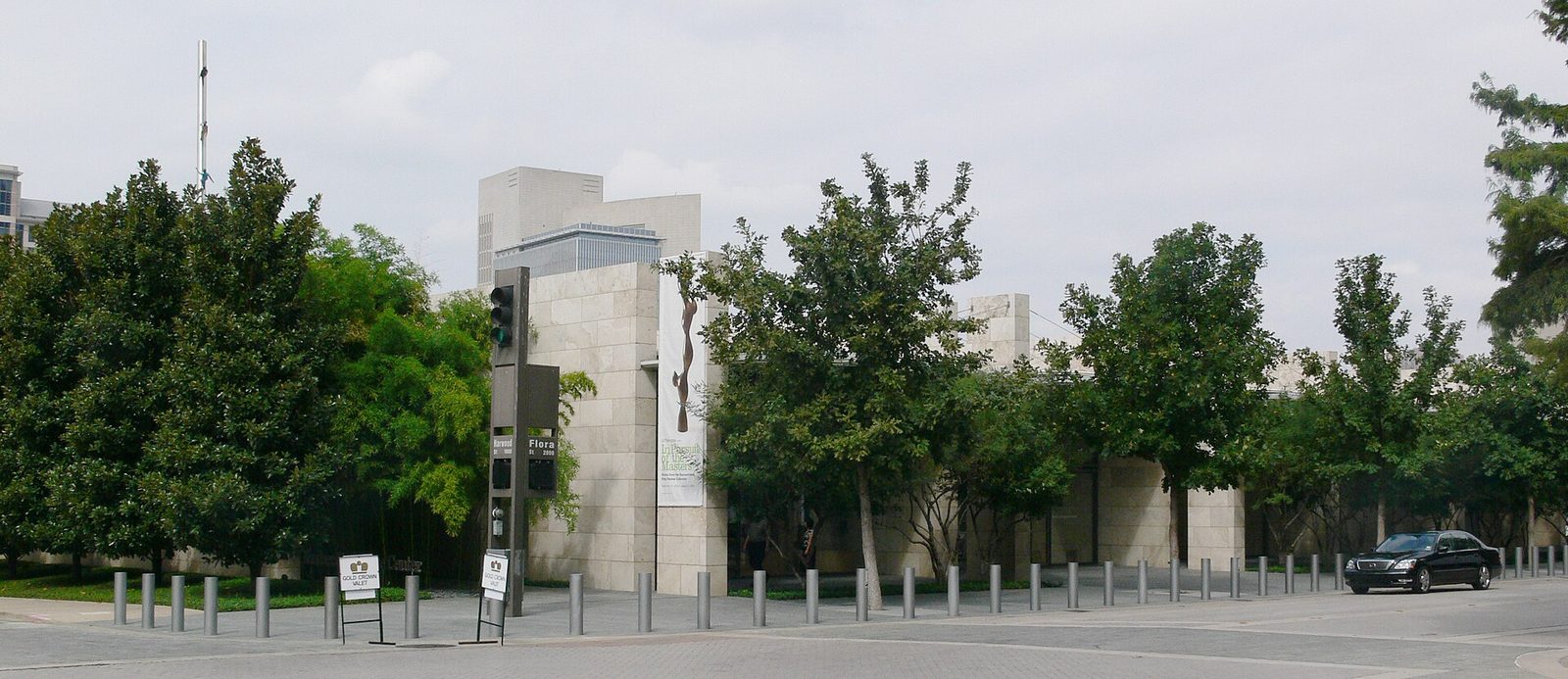
The district is also compact enough to reward wandering, which is rare in a city built at this scale. Flora Street runs as a spine from the Meyerson at one end past the Crow, the Nasher and the DMA, and the whole walk takes perhaps ten minutes end to end without stopping. Nobody needs a map, and the buildings do the signposting — you will recognize the Nasher’s low travertine frontage and the DMA’s banner wall without being told.
Getting there is straightforward: all four DART light rail lines pass through downtown, and the free M-Line Trolley connects the district to Uptown by way of Klyde Warren Park. Our transport guide has the fares and the station detail, including the Nasher’s $2 discount for DART riders.
One planning note about the heat. Flora Street is walkable but exposed, and Dallas summer highs average 97°F in July and August. In those months, treat the district as a series of air-conditioned hops with short transitions, and do the outdoor sculpture garden early or late rather than at two in the afternoon.
The Dallas Museum of Art: Free, but Book the Ticket
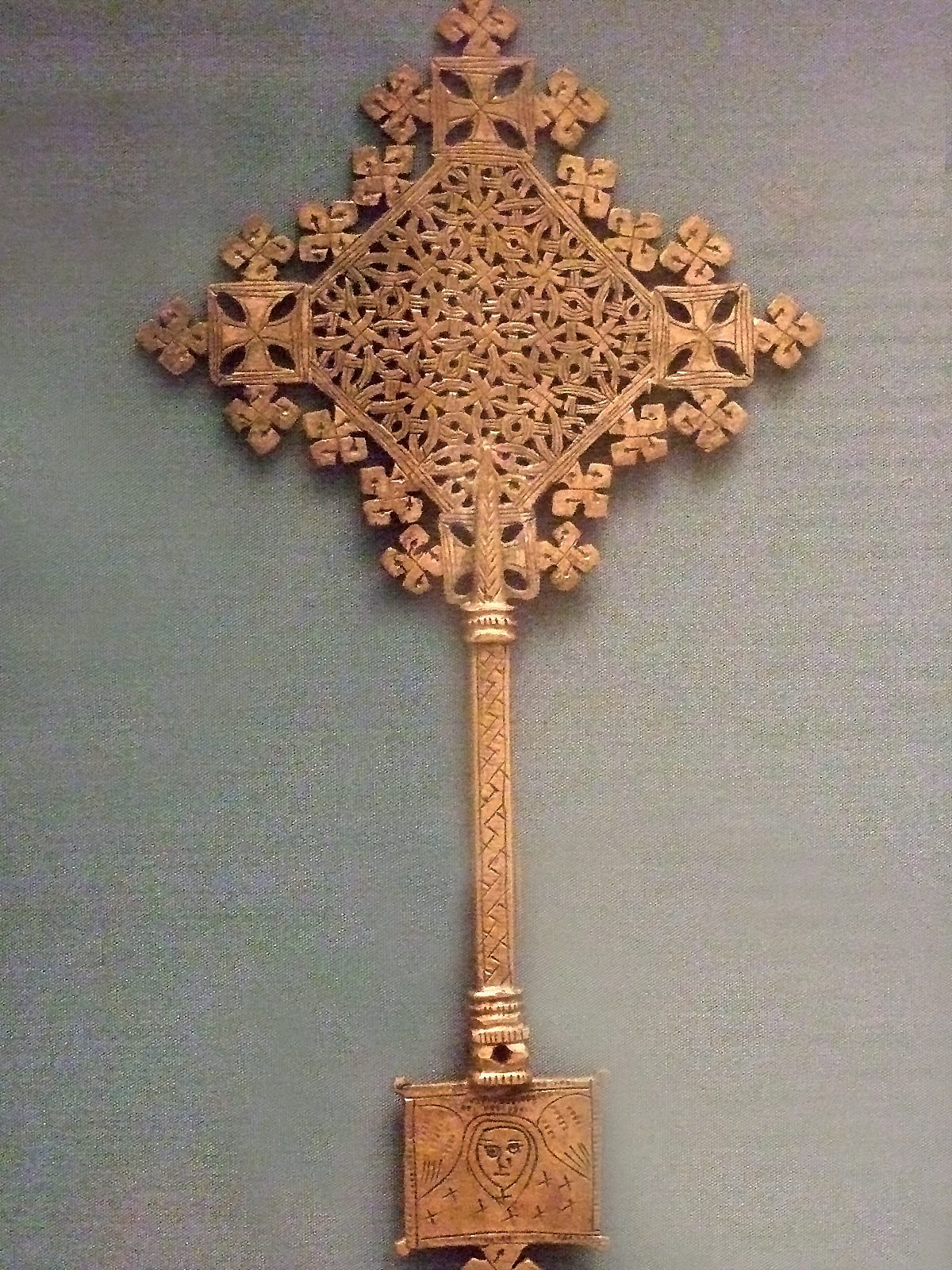
The DMA is the anchor, and its free general admission is genuinely unusual for a museum of this scale in the United States. The collection runs to tens of thousands of objects across nearly every medium and region, which means it rewards a focused visit far more than a comprehensive one.
Hours: Wednesday to Sunday, 11:00 to 17:00. Closed Monday and Tuesday, plus Thanksgiving, Christmas Day and New Year’s Day.
Admission: free, with a timed ticket required for every person. Special exhibitions are ticketed separately and are free for members.
The practical rules catch people out, so know them before you arrive. There is no food or drink permitted in the galleries at all — and the museum means it literally, down to sippy cups and baby bottles. Coat check at the Main Entrance is free. Bags may not be worn on the back; you carry them in front or check them. The building is fully wheelchair accessible with a limited number of loaner wheelchairs at Guest Services, which you should ask about on arrival rather than assume.
Honest verdict: two to three hours is the sweet spot. Attempting the whole museum in one visit produces the familiar glazed shuffle and remembers nothing. Pick two departments, see them properly, and come back — it is free, which is precisely the argument for returning rather than grinding.
The Nasher Sculpture Center: Small, and the Best Hour in the City
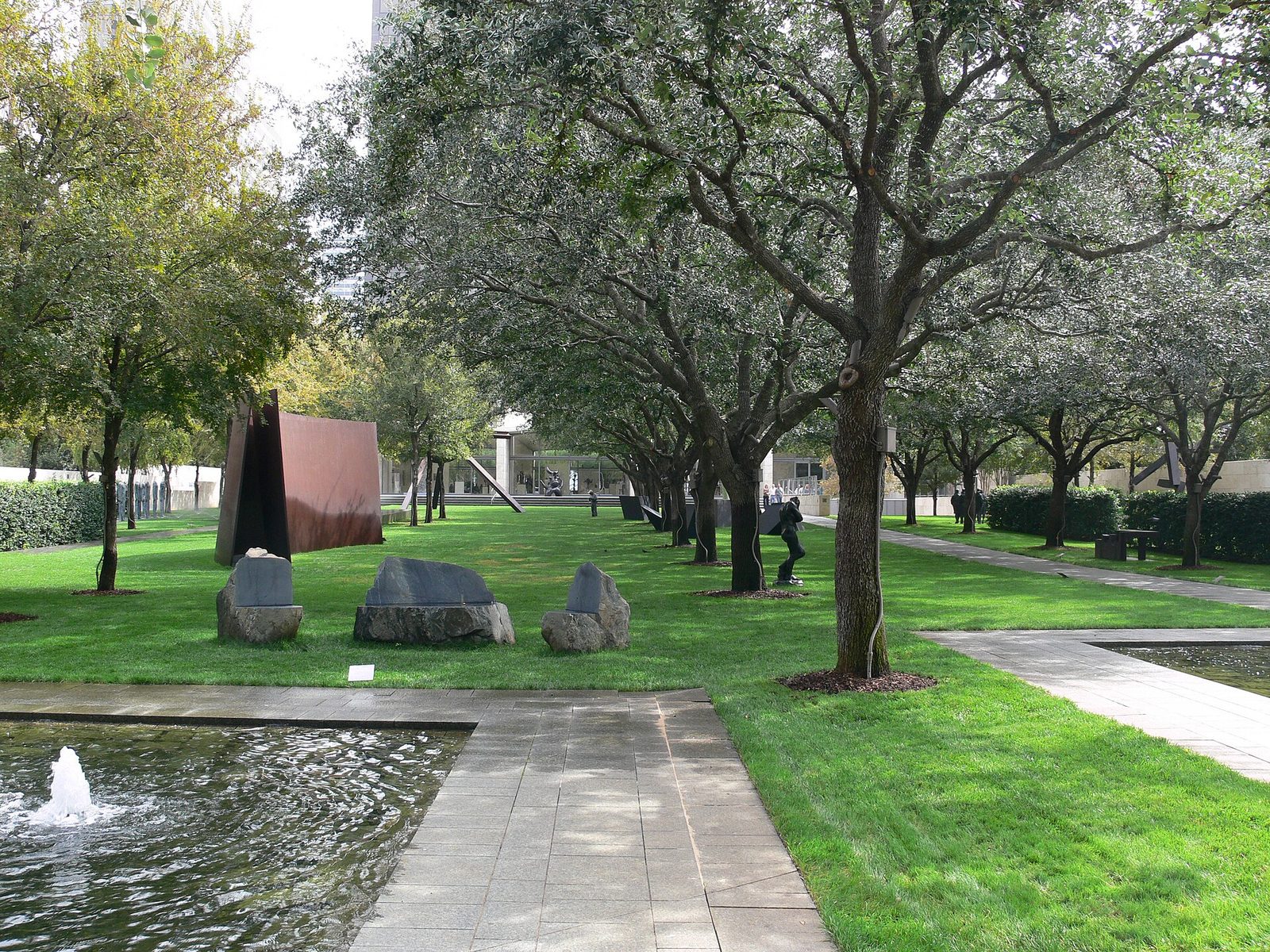
The Nasher is small, and that is its great advantage. An hour here leaves a stronger impression than three hours in a larger museum, because the collection is tight and the building and garden were designed around it.
Admission: $10 adult, $7 senior 65 and over, $5 student or educator with ID, and free for under-12s. Military, first responders and SNAP EBT cardholders go free. DART riders get $2 off with valid proof of fare, which brings an adult ticket to $8 — so a $6.00 day pass has already returned a third of its cost before you have gone anywhere else.
Hours: Wednesday to Sunday, 11:00 to 17:00. Closed Monday and Tuesday. Address: 2001 Flora Street.
Two programs are worth planning around. Free First Saturdays open the whole thing at no charge from 11:00 to 17:00, with family programming from 11:00 to 14:00. ’til Midnight at the Nasher runs on the third Friday of the month from 18:00 to midnight, March through October — an outdoor evening in the garden that is one of the genuinely pleasant things to do in a Dallas summer, precisely because it happens after the heat breaks.
Honest verdict: if you only have time for one paid museum in the Arts District, and it is a Wednesday to Sunday, make it this one. The DMA is free and bigger; the Nasher is the better single hour.
The Perot Museum: Is It Worth $27?
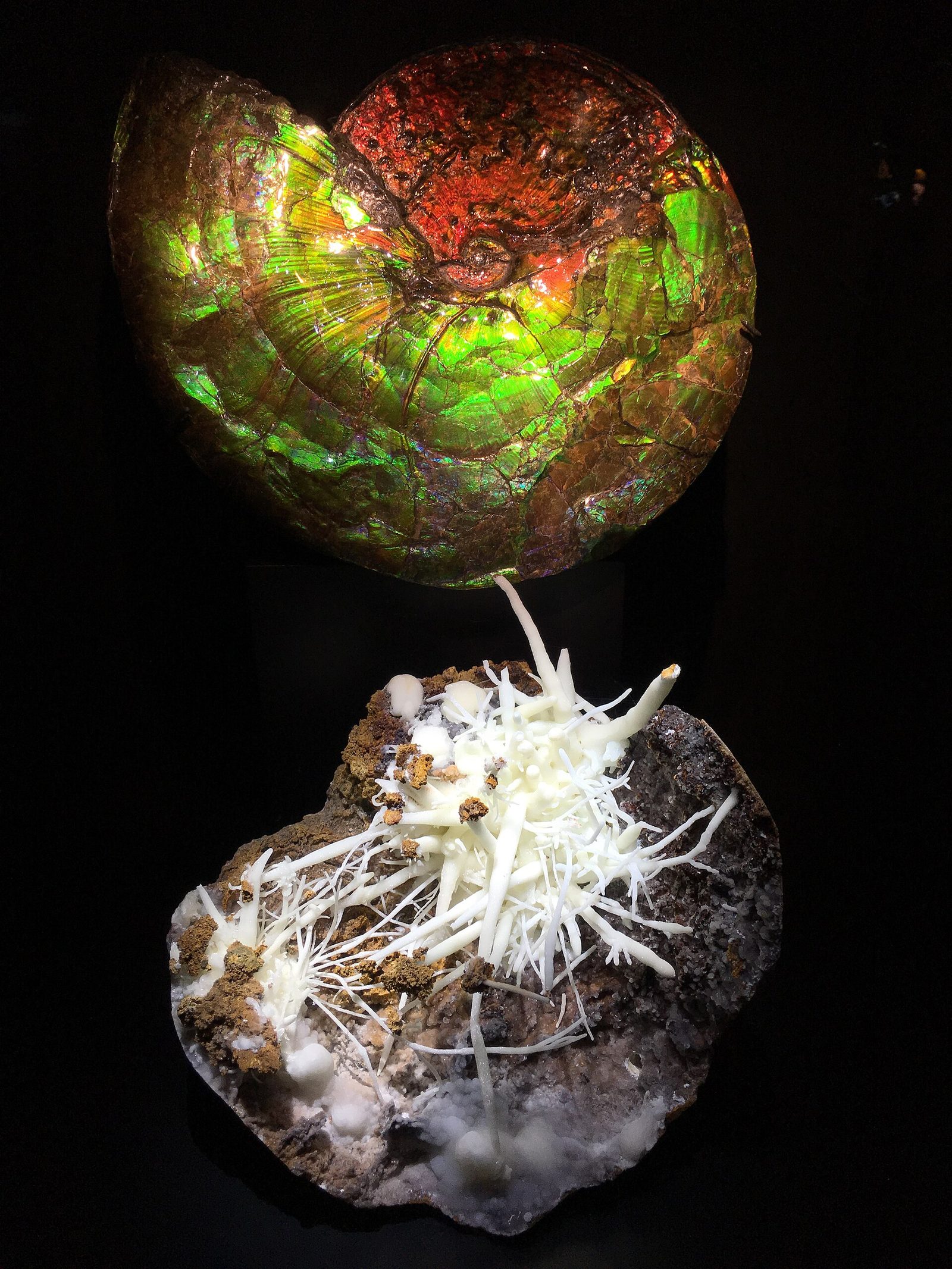
Yes, with conditions. The Perot is the most expensive general-admission museum on this page at $27 for adults and $17 for youth aged 2 to 12, and it is built primarily for families. If you are a childless couple on a two-day arts trip, the DMA and the Nasher will serve you better for a quarter of the money.
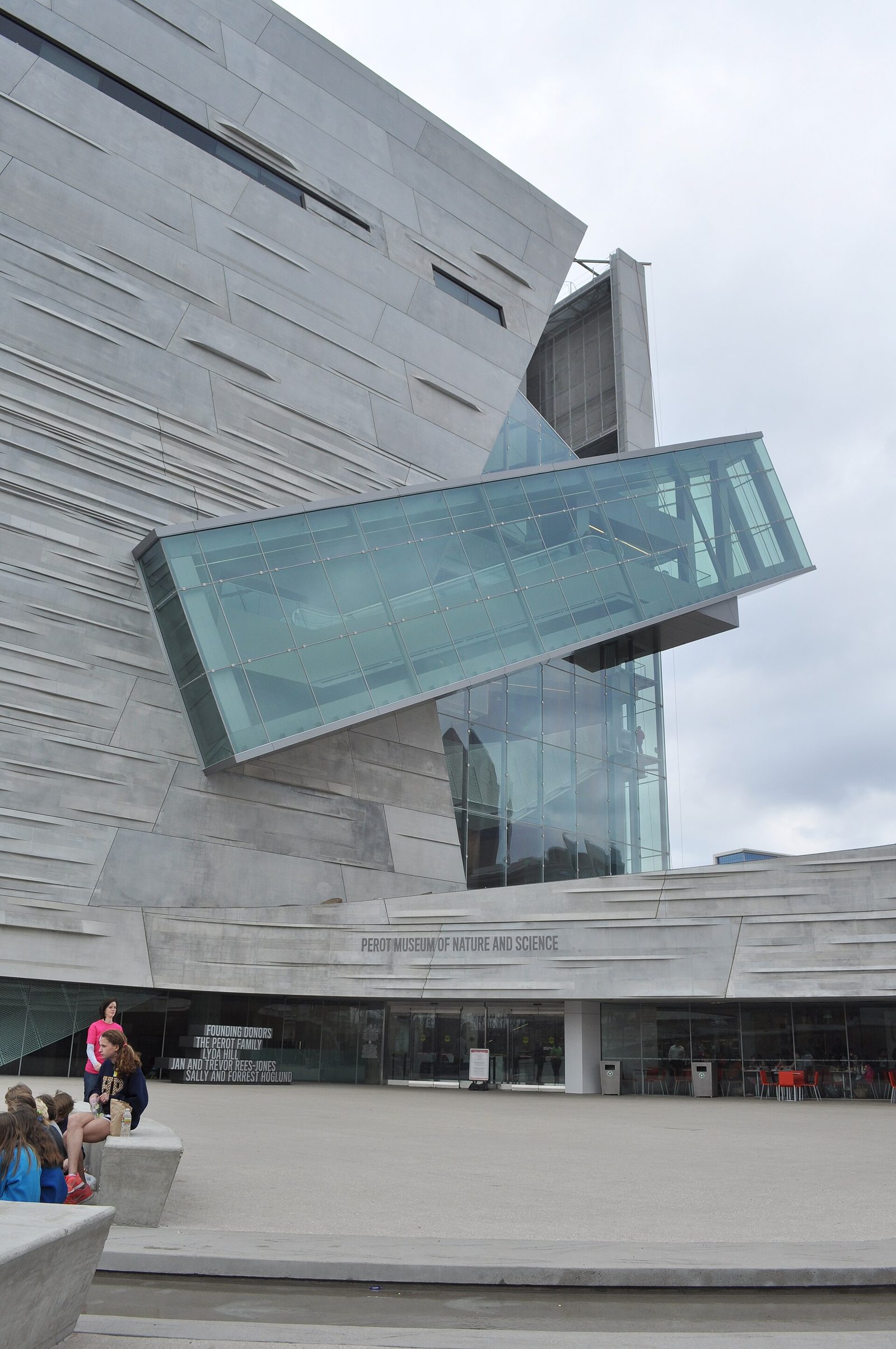
If you have children between roughly five and fifteen, it is the best-value day in Dallas and you should budget three to four hours. The building itself — a fractured limestone cube with an escalator running through a glass tube on the outside — is worth the walk past even if you do not go in.
Hours: Monday and Wednesday to Saturday, 10:00 to 17:00; Sunday 11:00 to 17:00. Closed Tuesdays through 7 April 2027, excluding special holiday hours. Address: 2201 N. Field Street.
Parking in Lot B under Woodall Rodgers costs $15 per vehicle, or $5 for members. That is a real addition to a family ticket, and it is the main argument for arriving by rail — the museum sits on the northern edge of downtown within walking distance of the rail spine.
The Perot’s Monday opening makes it the natural anchor for the worst day of the museum week. Pair it with the Bush Center or the Dallas World Aquarium and a Monday stops being a problem.
The Meadows Museum: The One Visitors Miss
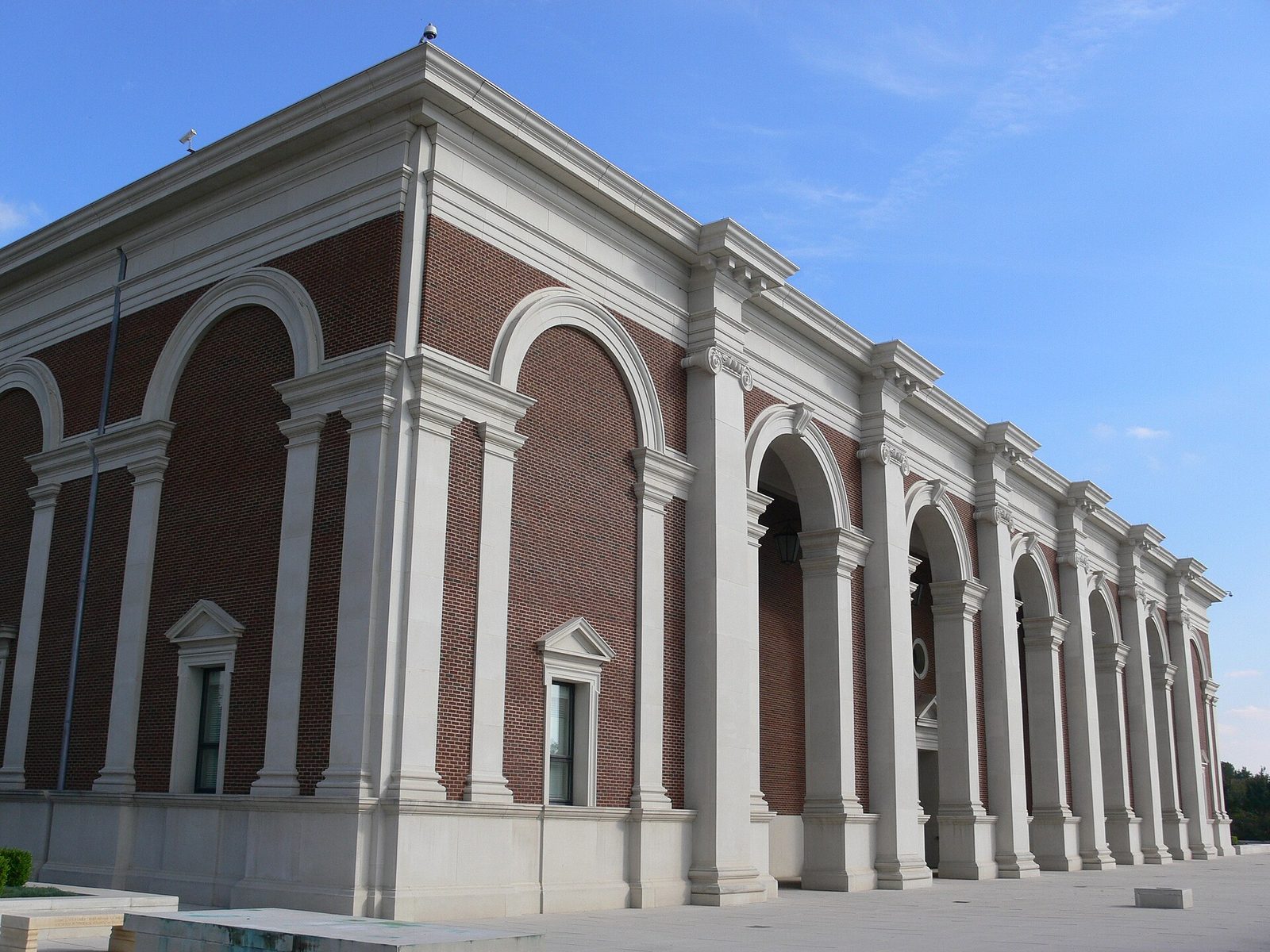
The Meadows is the museum that locals name when they want to sound informed, and they are right to. It holds a serious collection of Spanish art on the SMU campus, and it is almost always quiet.
Admission: $12 adult, $10 senior 65 and over, $4 for non-SMU students, and free for members, anyone 18 and under, and SMU faculty, staff and students. Free on Thursday evenings after 17:00.
Hours: closed Monday; Tuesday and Wednesday 10:00 to 17:00; Thursday 10:00 to 21:00; Friday and Saturday 10:00 to 17:00; Sunday 13:00 to 17:00. Also closed Easter Sunday, July 4, Thanksgiving, Christmas Eve, Christmas Day and New Year’s Day. Address: 5900 Bishop Boulevard.
The planning move is obvious once you see the hours: go on Thursday evening, when it is free and open late, and pair it with dinner near SMU. It is also open Tuesday, when the Arts District is not, which makes it half of the best possible Tuesday.
Practically, the Meadows sits a short walk from the George W. Bush Presidential Center on the same campus, so the two make a natural half-day together — one art, one history, both open when the Arts District is not.
The Crow Museum of Asian Art: Free, and Open on Tuesday
The Crow deserves more attention than it gets, for three reasons: the collection is excellent, entry has always been free, and it is open on the day almost nothing else is.
Admission: always free. Hours: Tuesday to Sunday, 11:00 to 17:00, closed Mondays plus major holidays and occasional additional dates for special events or weather.
Note that the Crow runs two locations with different exhibitions: the Arts District building at 2010 Flora Street, and a campus location at 800 W. Campbell Road in Richardson on the UT Dallas campus. Check which one is showing what before you travel — arriving at the wrong site for a particular exhibition is a long correction, since Richardson is a rail trip north.
For the Arts District location, an hour to ninety minutes is right. It slots neatly between the DMA and the Nasher on a Wednesday-to-Sunday arts day, and it carries a Tuesday entirely on its own.
History Museums and Where They Fit
Dallas has two museums that most visitors put on the list before anything else, and both are really history rather than art. We cover the interpretation in depth in our Dallas history guide; here is what you need to plan around them.
The Sixth Floor Museum at Dealey Plaza occupies the former Texas School Book Depository and covers the Kennedy assassination and its context. Admission is $27 adult, $25 senior 65 and over, $23 youth 6 to 18, and free for children under 6. Open Wednesday to Sunday, 10:00 to 17:00, with the last ticket sold and last entry at 16:15. Closed Monday and Tuesday. Address: 411 Elm Street. Allow 90 minutes to two hours, and note that Dealey Plaza itself is free to walk through at any time.
The George W. Bush Presidential Center on the SMU campus is open seven days: Monday to Saturday 09:00 to 17:00, Sunday 12:00 to 17:00. Admission is $26 adult, $23 senior 62 and over or college student with ID, $24 youth 13 to 17, $20 child 5 to 12, free under 5, and $10 for retired military and veterans with ID. K-12 teachers with school ID go free, as do SMU students, staff and faculty.
Two warnings about the Bush Center specifically, because it is a federal facility. Security is airport-style with metal detectors, and no backpacks or bags larger than 17 by 26 inches are permitted — one purse or diaper bag per person only, and no food or drink through security. Guided tours are not available; the museum suggests 30 to 45 minutes for a highlights pass and four hours or more to see everything, which is an unusually honest range. Free wheelchairs are available at the Box Office on a first-come basis.
The Dallas Holocaust and Human Rights Museum opened in the West End at 300 N. Houston Street and is one of the six options on the Dallas CityPASS. We did not capture current admission prices or daily hours from a first-party page at the time of writing, so check the museum’s own ticket page before you go rather than trusting a third-party figure. Allow around two hours.
Beyond the Museums: Galleries, Murals and Public Art
The museum list is only part of the picture, and some of the best art in Dallas is not ticketed at all.
The Design District, northwest of downtown, is where the commercial galleries cluster, along with Dallas Contemporary — a non-collecting contemporary museum founded in 1978 that shows regional, national and international work. Gallery hours are typically Tuesday to Saturday afternoons, and openings are free and welcoming to visitors.
Deep Ellum is the mural district, and it is genuinely world-class street art rather than a few decorated walls. The neighborhood is a short ride on the Green Line and is best walked in the late afternoon, when the light is good and the bars are opening but not yet full. Our neighborhood guide covers how to approach it.
The African American Museum at Fair Park holds one of the largest folk art collections in the country and is the only institution of its kind in the Southwest. Fair Park is on the Green Line, and the museum’s setting among the park’s art deco buildings is part of the appeal.
Fair Park is worth understanding as an art object in its own right. Built for the 1936 Texas Centennial Exposition, it holds one of the largest collections of art deco architecture anywhere in the United States, and you can walk through it for nothing on any day the grounds are open. During the State Fair of Texas, from 25 September to 18 October 2026, the park is a different proposition entirely — busier, ticketed and loud — so a quiet architecture walk means going outside those dates.
Architecture is the other free collection. The Arts District alone contains buildings by an extraordinary concentration of major architects, and downtown Dallas rewards looking up more than almost any American city of its size. You do not need a tour to appreciate it, though the buildings repay a little reading beforehand.
Performing Arts: What Else the Arts District Holds
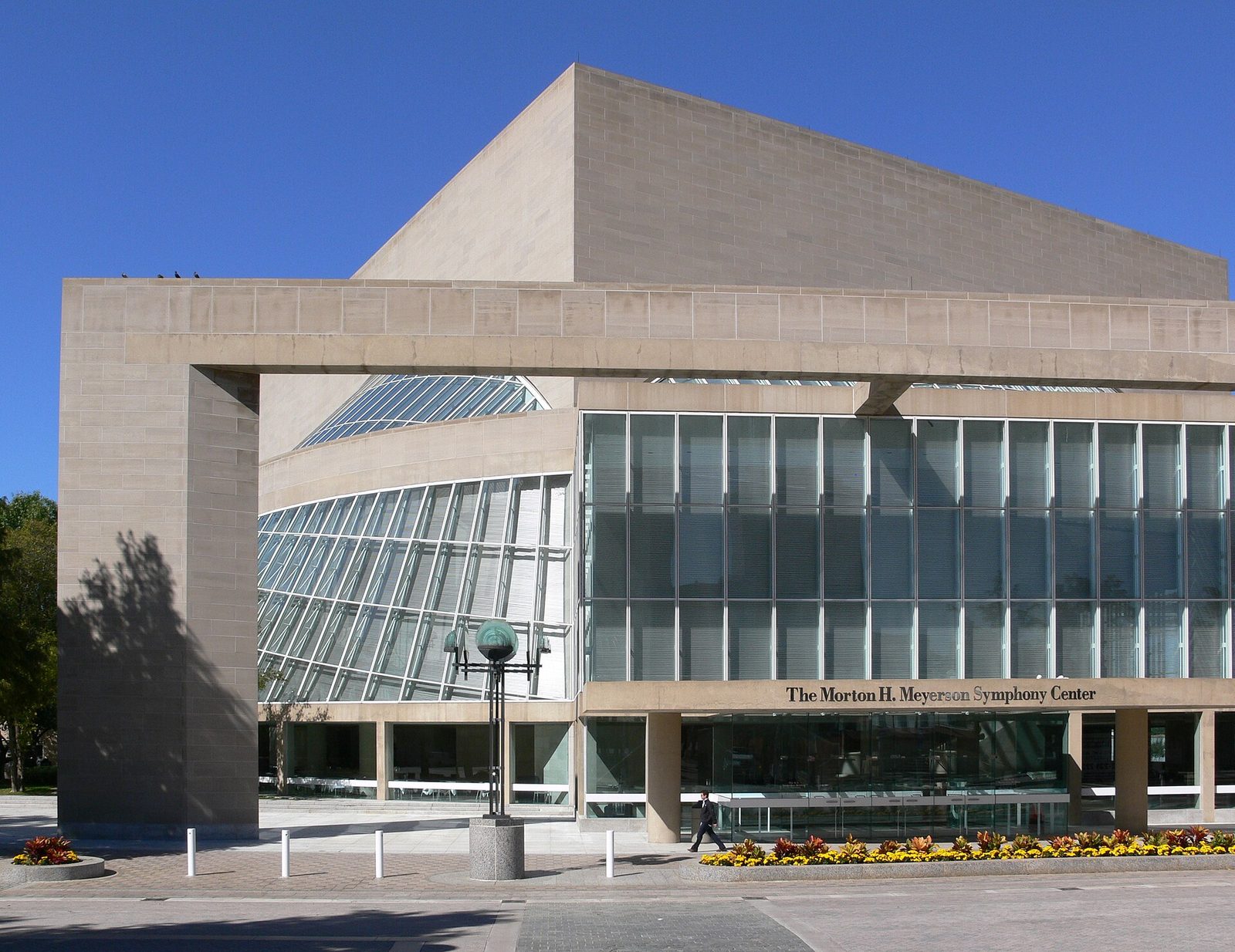
The same few blocks that hold the museums also hold the city’s principal performance venues, which makes a combined afternoon-and-evening plan unusually easy.
The Morton H. Meyerson Symphony Center is the home of the Dallas Symphony Orchestra. The Winspear Opera House and the Wyly Theatre sit in the performing arts complex alongside it, with Moody Performance Hall handling smaller-scale work. Between them they cover orchestral music, opera, theatre and dance across a full season.
The practical advice is to check what is on before you fix your dates rather than after. A Friday in the Arts District that ends with a concert is a substantially better day than the same Friday that ends with a search for a restaurant, and tickets for most of these venues are easier to get than equivalent seats in larger American cities. Our events calendar tracks what is worth building a trip around.
Is the Dallas CityPASS Worth It for Museum Visitors?
Usually not, and the reason is structural rather than about price.
Dallas CityPASS costs $64.00 for adults aged 13 and over and $46.00 for children 3 to 12, valid over a nine-day period beginning on the first day you use it. You choose four of six: the Perot Museum, the Reunion Tower GeO-Deck, the Dallas Zoo, the George W. Bush Presidential Museum, the Dallas Holocaust and Human Rights Museum, and AT&T Stadium Tours.
Look closely at that list. Only three of the six are museums, and the pass does not include the Sixth Floor Museum, the Dallas Museum of Art, the Nasher or the Dallas Arboretum. An art-led trip gets almost nothing from it — the DMA and the Crow are already free, and the Nasher is $10.
Where it does pay is a family trip that genuinely wants four of those six. The Perot alone is $27 and the Bush Museum is $26, so two adult tickets plus the zoo already approaches the pass price, and the stated saving of up to 56% for adults is not fantasy if the four you want happen to be the four on offer.
The honest verdict: write down the four attractions you would pay for anyway. If all four are on the list, buy the pass. If three are, do the arithmetic rather than assuming. If two are, buy individual tickets and spend the difference on dinner.
Three Arts Routes You Can Walk
| Route | Sequence | Cost per adult | Best day |
|---|---|---|---|
| The free art day | DMA (timed ticket) → Crow Museum, Arts District → walk the district’s sculpture and architecture → Klyde Warren Park | $0.00 | Wednesday to Sunday |
| The serious half day | Nasher at opening → Crow → DMA for two departments → concert in the evening | $10.00, or $8.00 with a DART fare | Wednesday to Sunday |
| The Tuesday rescue | Crow Museum → Meadows Museum on the SMU campus → Bush Center or the free Native Texas Park | $12.00, or $38.00 with the Bush Center | Tuesday, when the Arts District is shut |
All three assume you are moving on foot and by rail rather than driving between sites, which in the Arts District is faster as well as cheaper. Add a DART Local Day Pass at $6.00 and the Nasher discount pays part of it back.
Practical Notes: Bags, Food, Accessibility and Kids
Bags. The DMA does not allow bags worn on the back — carry yours in front or use the free coat check at the Main Entrance. The Bush Center is stricter: airport-style screening, nothing larger than 17 by 26 inches, one purse or diaper bag per person. Pack accordingly on a day that includes either.
Food and drink. No food or drink whatsoever in the DMA’s galleries, including sippy cups and baby bottles. No food or drink through Bush Center security at all. Most of these museums have a cafe; plan to eat in it rather than smuggling snacks.
Accessibility. The DMA is fully wheelchair accessible with a limited number of loaner chairs at Guest Services. The Bush Center offers free wheelchairs at the Box Office, first come first served, which may not leave the museum area. DART’s level boarding makes the rail approach straightforward for wheelchairs and strollers alike.
With children. The Perot is the obvious choice and justifies its price for ages five to fifteen. The Nasher’s Free First Saturday family programming runs 11:00 to 14:00 and is aimed squarely at younger children. The DMA’s free admission means a short visit costs nothing when attention runs out, which is a genuine advantage over paid museums. Our family guide has more on pacing a museum day with children in Texas heat.
Dallas Museums: Frequently Asked Questions
Do I need to book Dallas museum tickets in advance?
For the Dallas Museum of Art, yes — the timed ticket is required even though admission is free, and same-day slots do run out on busy weekends. For the Perot, booking ahead is sensible in school holidays. Elsewhere, walking up is generally fine.
Is the Dallas Museum of Art free?
Yes. General admission costs nothing, but every visitor regardless of age needs a timed ticket, which you can reserve online or collect at the Guest Services desk. Special exhibitions are ticketed separately and are free to members.
What day are Dallas museums closed?
Monday and Tuesday are the difficult days. The DMA, the Nasher and the Sixth Floor Museum close both. The Perot closes Tuesday. The Crow and the Meadows close Monday but open Tuesday, and the Bush Center opens seven days a week.
Which Dallas museum is best for a first visit?
The Dallas Museum of Art if you want breadth and no admission cost, the Nasher if you have one hour and want it to count, the Perot if you are traveling with children. On a Tuesday, the Crow Museum of Asian Art is the answer by default.
How much is the Nasher Sculpture Center?
$10 for adults, $7 for seniors 65 and over, $5 for students and educators with ID, and free for under-12s. Military, first responders and SNAP EBT cardholders enter free. DART riders get $2 off with proof of fare.
Is the Perot Museum worth the price?
For families with children roughly five to fifteen, yes — three to four hours of genuine engagement for $27 adult and $17 youth. For adults on an art-focused trip, the DMA and the Nasher deliver more for far less money.
Can I walk between the Dallas museums?
Within the Arts District, easily — the DMA, the Nasher, the Crow and the concert halls are all a few minutes apart. The Perot is a slightly longer walk at the northern edge of downtown. The Meadows and the Bush Center are on the SMU campus and need rail or a car.
Is the Dallas CityPASS good for museums?
Only partly. Three of its six options are museums, and it excludes the Sixth Floor Museum, the DMA and the Nasher. It works for a family doing the Perot, the zoo, the Bush Museum and one more; it does very little for an art-focused trip.
Are there free museums in Dallas besides the DMA?
Yes. The Crow Museum of Asian Art is always free at both locations. The Nasher is free on First Saturdays, the Meadows is free on Thursday evenings after 17:00, and the Laura W. Bush Native Texas Park is free from sunrise to sundown.
How long should I allow for the Dallas Arts District?
A full day covers the DMA, the Nasher and the Crow without rushing, with time to look at the buildings. Half a day works if you pick two. In July or August, add time for air-conditioned breaks between sites.
Two of the museums above are really history rather than art, and they sit inside a much larger story the city tells badly. Our Dallas history guide sorts it into five threads — the founding city, Black Dallas, the 1936 Centennial deco at Fair Park, the music districts and November 1963 — with routes you can walk.
Stack the free days and four significant art museums cost nothing: the DMA any open day, the Crow always, the Nasher on First Saturdays and the Meadows on Thursday evenings. Our Dallas on a budget guide has the grid, plus the CityPASS arithmetic for anyone weighing the paid options.
Access provision varies sharply between these venues, and not always in the way the buildings suggest. The Nasher hands out KultureCity sensory kits and keeps a private quiet room; the Sixth Floor Museum lends free sensory bags; the Dallas Museum of Art keeps a limited number of loaner wheelchairs that are worth reserving by phone. We set out what each one publishes, and what it doesn’t, in our guide to accessible travel in Dallas.
December concentrates the Arts District’s programming. The Avant Chamber Ballet stages The Nutcracker with live orchestra at Moody Performance Hall from 28 November to 6 December 2026, and the Meyerson, the Nasher and the Dallas Museum of Art all sit within a few walkable blocks of it, which makes a show-plus-gallery day easy to build. See our guide to Christmas things to do in Dallas for the full seasonal programme.
Worth planning around: the galleries here are a daytime proposition. The Dallas Museum of Art, the Nasher and the Sixth Floor Museum all close at 5 p.m. and all close Monday and Tuesday, and the Perot closes at 5 p.m. and on Tuesdays. The exception is ’til Midnight at the Nasher, third Friday of the month, 6 p.m. to midnight, March through October — see our guide to Dallas after dark.
The gap in the Dallas museum week is worth planning around. On a Tuesday the Dallas Museum of Art, the Nasher, the Sixth Floor Museum and the Perot are all closed — but the Crow Museum of Asian Art on Flora Street is open, free, and a two-minute walk from the shuttered Nasher. Our guide to indoor things to do in Dallas lays out the whole week venue by venue.
Related Dallas Guides
- Dallas Attractions — every major sight, with prices and verdicts
- Things to Do in Dallas — the master list by district
- Dallas Itineraries — plans that route around the Monday and Tuesday closures
- Free Things to Do in Dallas — including several museums
- Getting Around Dallas — DART fares, the free trolley and the Nasher discount
- Dallas Neighborhoods — Deep Ellum murals and the Design District galleries
- Dallas With Kids — the Perot, pacing and museum stamina
- Dallas Events — concerts, openings and festival dates
- Best Time to Visit Dallas — when the outdoor sculpture is bearable
- Where to Eat in Dallas — including near the Arts District
- Where to Stay in Dallas — hotels within walking distance of the museums
- Dallas Airports — arriving and getting to the Arts District
- Dallas Travel Guide — the full planning overview
Photo Credits
- Perot Museum of Nature and Science: photo by Joe Mabel, Wikimedia Commons (CC BY-SA 3.0)
- Nasher Sculpture Center exterior: photo by Photo: Andreas Praefcke, Wikimedia Commons (CC BY 3.0)
- Ethiopian handheld cross, Dallas Museum of Art: photo by Mary Harrsch, Wikimedia Commons (CC BY-SA 4.0)
- Nasher Sculpture Garden: photo by Photo: Andreas Praefcke, Wikimedia Commons (CC BY 3.0)
- Specimen at the Perot Museum: photo by bryan…, Wikimedia Commons (CC BY-SA 2.0)
- Meadows Museum: photo by Photo: Andreas Praefcke, Wikimedia Commons (CC BY 3.0)
- Morton H. Meyerson Symphony Center: photo by Photo: Andreas Praefcke, Wikimedia Commons (CC BY 3.0)
- Dallas Museum of Art (featured image): photo by Michael Barera, Wikimedia Commons (CC BY-SA 4.0)
Sources
- Dallas Museum of Art — visit, hours and tickets
- Nasher Sculpture Center — admission and hours
- Perot Museum of Nature and Science — visit and parking
- Crow Museum of Asian Art — visit and locations
- Meadows Museum — admission and hours
- The Sixth Floor Museum at Dealey Plaza
- George W. Bush Presidential Center — visit and security
- Dallas Holocaust and Human Rights Museum
- Dallas Arts District
- Dallas Symphony Orchestra — Meyerson Symphony Center
- AT&T Performing Arts Center — Winspear and Wyly
- Dallas Contemporary
- African American Museum, Dallas
- Dallas CityPASS — price and included attractions
- DART — fares and passes