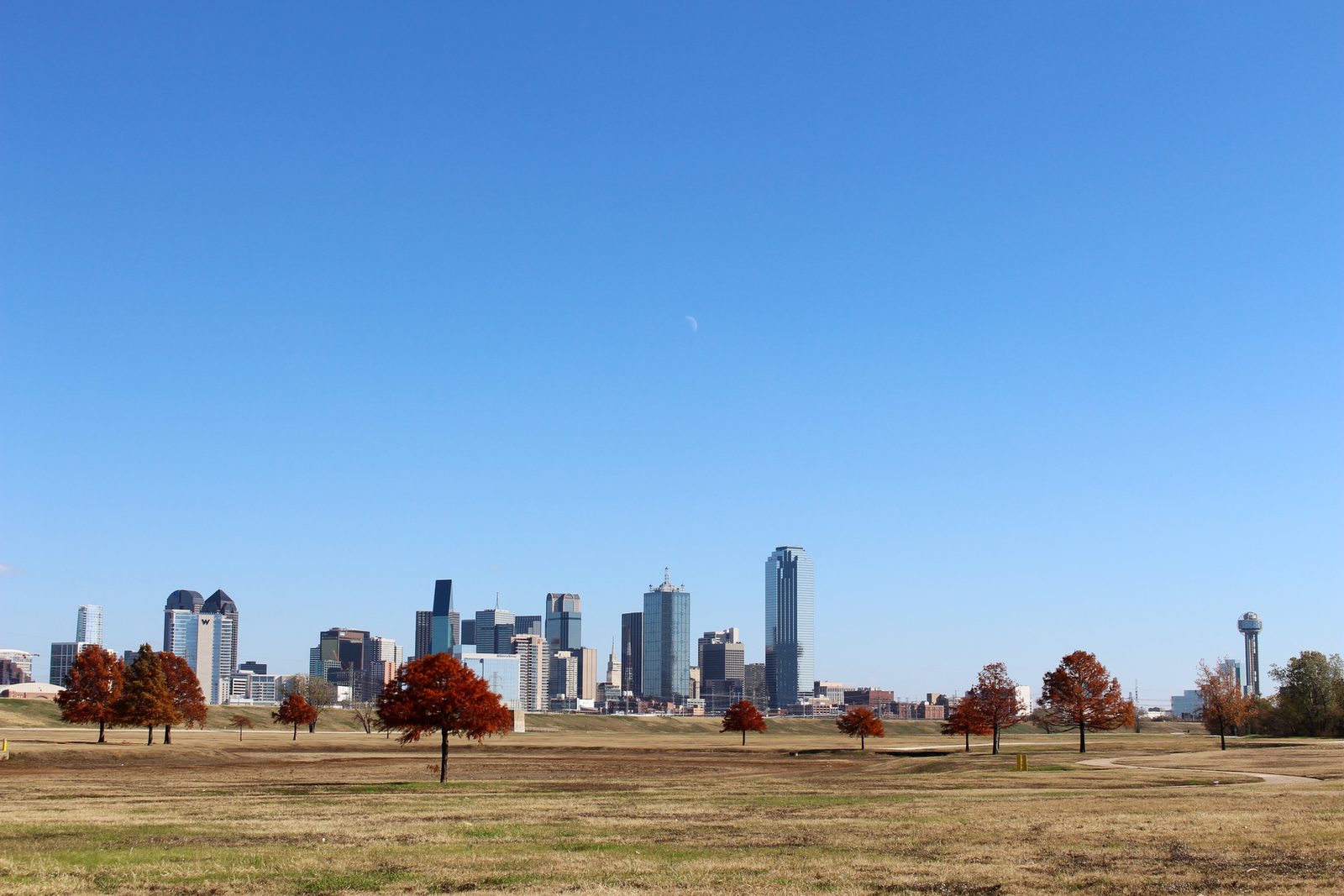
The best time to visit Dallas is October, with April a close second and early November the value pick. October combines an average high of 79.5°F with the State Fair of Texas and Autumn at the Arboretum, which is also why it is the most expensive and the wettest month of the year. Every other month involves a trade you should make on purpose rather than by accident.
Most seasonal guides to this city stop at “spring and fall are nice, summer is hot.” That is true and useless. What actually decides a Dallas trip is the interaction between three things: the temperature, which swings 40°F between January and August; the events calendar, which drives hotel rates far more than the season does; and the fact that four of the five headline museums close on Monday or Tuesday regardless of the month.
What follows is month by month, using climate normals rather than impressions, with the cost signal, the crowd signal, what to pack and what to do when the weather turns — in both directions, because North Texas produces 100°F summers and occasional ice storms from the same sky. Figures were checked in September 2026.
The Short Answer: When to Go to Dallas
Different travellers want different months, and the honest answer depends on what you are optimising for.
| If you want… | Go in | Why |
|---|---|---|
| The best all-round trip | October | 79.5°F highs, the State Fair, the Arboretum |
| Good weather, lower prices | Early November | 67.8°F highs, no festival, rates off the peak |
| Flowers and long days | April | 77.4°F highs, Dallas Blooms, the city at its greenest |
| The cheapest possible trip | Late July to August | Hotel rates at their annual floor |
| Empty museums | January | The quietest month on the calendar |
| A family trip with a pool | June | Hot but manageable; school holidays begin |
| Christmas lights and mild days | December | 59.2°F highs and the holiday displays |
One planning note that overrides every row: arrive on a Wednesday if you can. The Dallas Museum of Art, the Nasher Sculpture Center and the Sixth Floor Museum close Monday and Tuesday, and the Perot Museum closes Tuesday. The month you choose matters less than the day you land.
Dallas Month by Month: Weather, Crowds and Cost
Average highs and lows in °F and average rainfall in inches, from long-term climate normals. The verdict column is ours.
| Month | High | Low | Rain | Verdict |
|---|---|---|---|---|
| January | 57.7 | 37.9 | 2.59 | Quiet, cheap, occasional hard freeze |
| February | 62.0 | 41.9 | 2.78 | Mild, but the month ice storms happen |
| March | 69.9 | 49.4 | 3.45 | Spring starts; Dallas Blooms underway |
| April | 77.4 | 56.8 | 3.15 | Excellent. The second-best month |
| May | 84.9 | 66.0 | 4.57 | Warm and stormy; second-wettest month |
| June | 92.7 | 73.8 | 3.83 | Heat arrives. Mornings only outdoors |
| July | 96.9 | 77.7 | 2.54 | Hot and dry. Indoor by default |
| August | 97.1 | 77.4 | 2.31 | The hardest month, and the cheapest |
| September | 90.0 | 70.1 | 3.10 | Still hot; the State Fair opens late |
| October | 79.5 | 58.7 | 4.79 | The best month. Also the wettest |
| November | 67.8 | 47.8 | 2.93 | Underrated. Comfortable and quieter |
| December | 59.2 | 39.8 | 3.23 | Mild with cold snaps; holiday displays |
Two things in that table surprise people. July and August are the driest months of the year, at 2.54 and 2.31 inches — the heat is dry heat by American standards, not a monsoon. And October, the month everyone recommends, is the wettest at 4.79 inches. Neither fact changes the recommendation, but both should change what you pack.
Snow is nearly irrelevant: the annual average is 1.7 inches, almost all of it in February at 0.9 inches. The record is a different matter — 12.5 inches fell over two days at DFW Airport in February 2010, and the all-time low is −3°F on January 18, 1930.
Why Is October the Best Month?
Because three things line up that do not line up anywhere else on the calendar.
The weather breaks. September still averages 90.0°F. October drops to 79.5°F, which is the first month since April when walking around outdoors in the afternoon is genuinely comfortable. Evenings at an average low of 58.7°F are patio weather without being cold.
The State Fair of Texas is running. In 2026 it runs September 25 to October 18 at Fair Park, with hours of 10:00 to 21:00 Monday to Thursday and Sunday, and 10:00 to 22:00 on Friday and Saturday. It is the one genuinely trip-shaping event on the Dallas calendar, and it only exists for three and a half weeks a year.
Autumn at the Arboretum overlaps it. September 19 to November 1 in 2026, across 66 acres on White Rock Lake. Admission is sold through a dated ticket calendar with no flat rate published, so check your specific day.
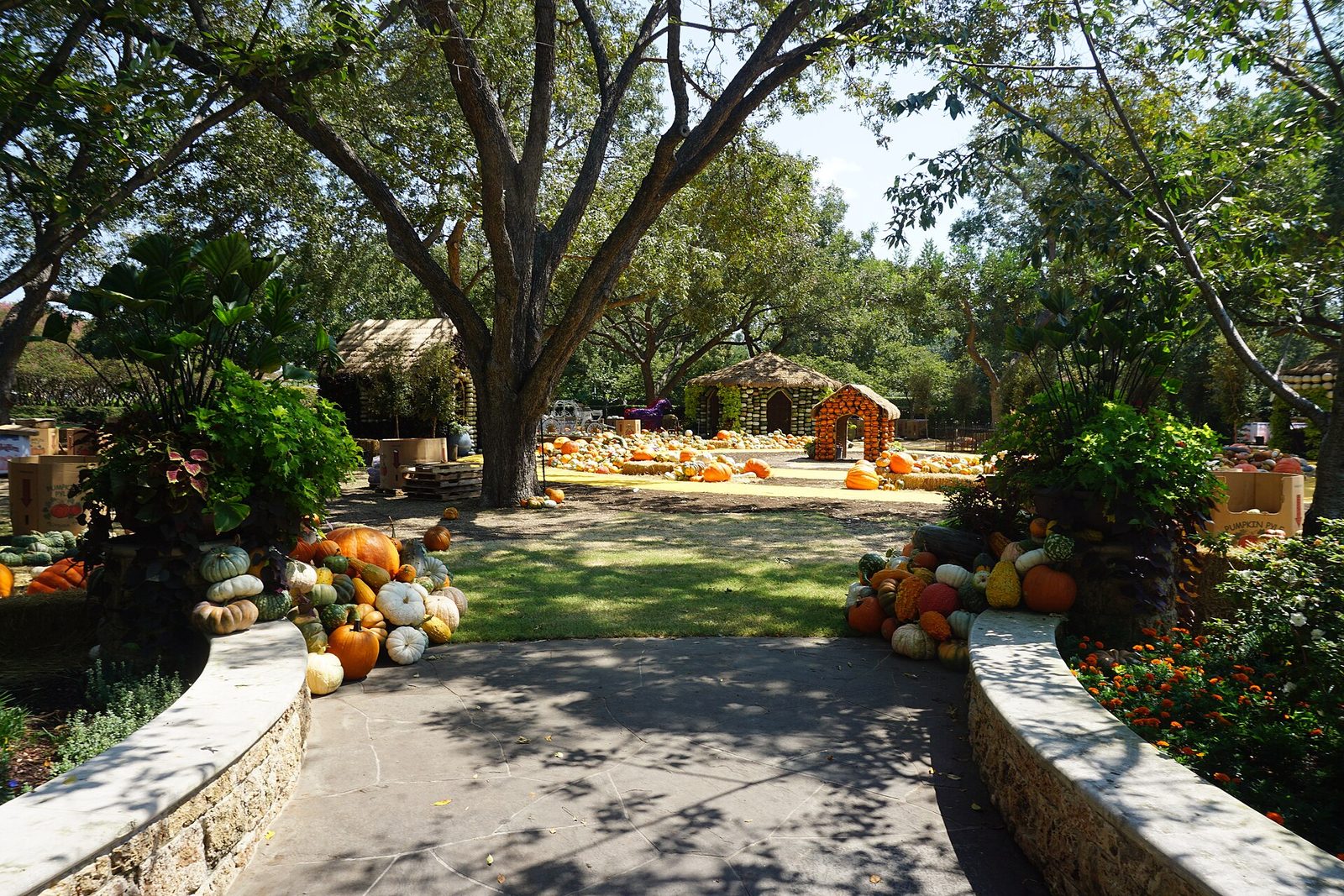
The costs of choosing October are real and worth stating. It is the most expensive month for hotels, because the fair and the convention calendar collide. It is the wettest month at 4.79 inches. And Fair Park itself is unavailable for anything but the fair while it runs, so if you wanted the 1936 exposition architecture in peace, October is exactly the wrong time.
The refinement most guides miss: go in the last week of October, after the fair closes on the 18th. You keep the weather, you lose the crowds and the surge pricing, the Arboretum is still running, and Fair Park reverts to being a park.
Is April the Better Choice?
For some trips, yes — and it is the right answer if gardens, walking or children are central to your plans.
April averages 77.4°F by day and 56.8°F at night, with 3.15 inches of rain, which is meaningfully drier than October. The city is at its greenest, Texas wildflowers are out across North Texas, and Dallas Blooms at the Arboretum — listed by the organiser as running February 21 to April 12, though without a year attached, so confirm before booking — is the region’s largest floral festival.
April also has no State Fair, which cuts both ways: no crowds and no surge pricing, but also nothing that makes the trip unrepeatable. Hotel rates sit below the October peak while the weather is nearly as good.
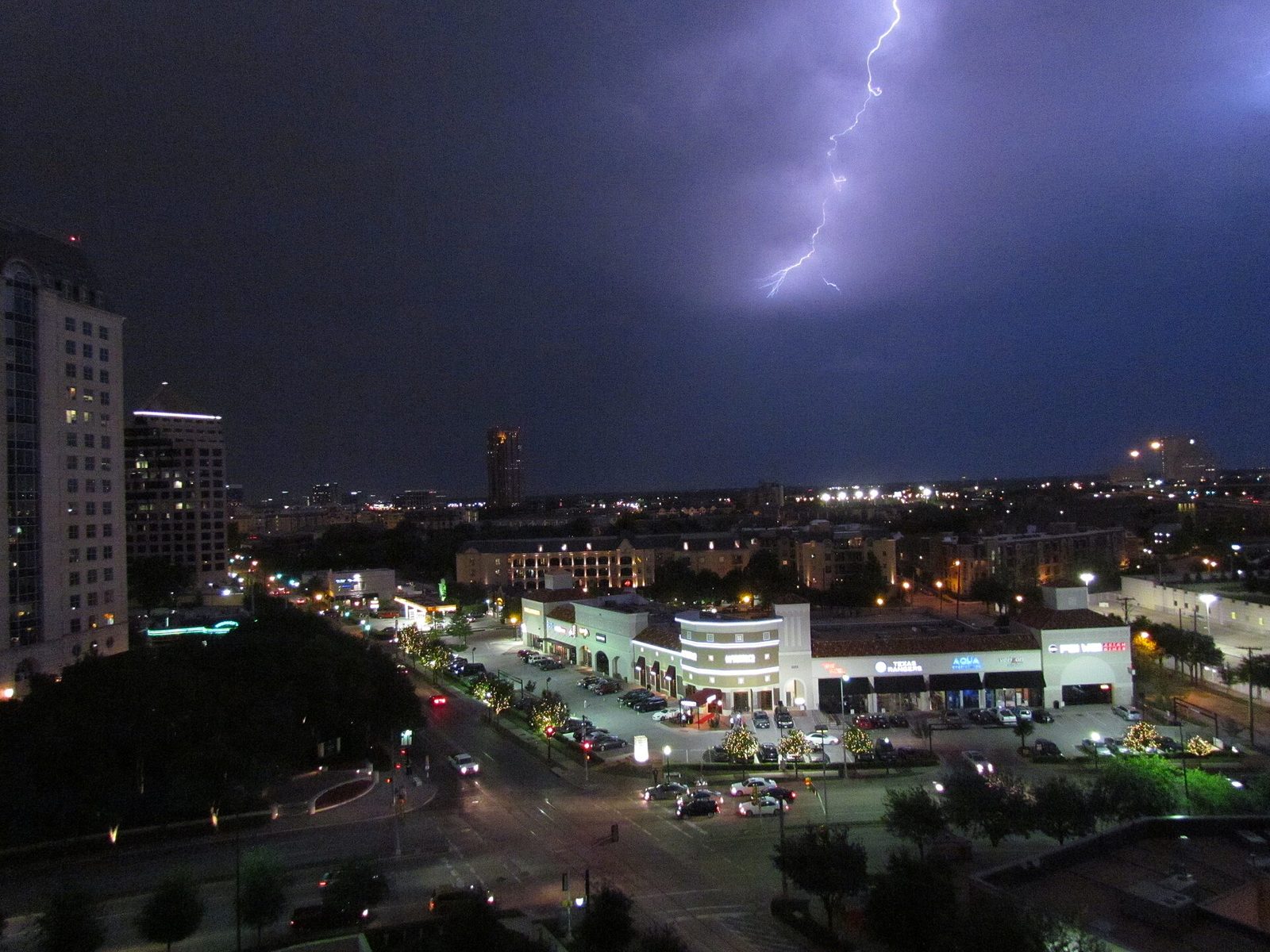
The April risk is storms. North Texas sits in a region where spring severe weather is a genuine category, and May is the second-wettest month of the year at 4.57 inches. April is usually fine; late April into May increasingly is not. If you want spring without the storm risk, aim for late March into early April rather than May.
Verdict: October for the event, April for the outdoors, and early November if you want the weather without either crowd.
How Bad Is a Dallas Summer, Really?
Bad enough to reshape your day, not bad enough to cancel the trip — and the hotel rates make an argument of their own.
June averages 92.7°F, July 96.9°F and August 97.1°F. Triple-digit days happen at least several times every summer, and the all-time record is 113°F, set during the 1980 heat wave. The detail that catches out visitors from drier climates is the overnight low: August lows average 77.4°F, so the heat does not lift after dark the way it does in a desert. A 21:00 patio dinner in August is warm, not cool.
The rule is simple and it works: outdoors before 11:00, indoors from 11:00 to 18:00, outdoors again after 19:00. The Dallas World Aquarium opens at 08:30 seven days a week, which makes it the single best first stop of a summer morning. The Dallas Zoo should be a 09:00 arrival or not at all — by noon the animals are inactive and the paths are exposed.
What summer gives you in exchange is real. Hotel rates fall to their annual floor in late July and August, because the events calendar is empty and nobody wants to be outdoors. A downtown room that runs $280 in October can fall to well under half that. The museums are quiet. And the city’s strongest attractions — the Dallas Museum of Art, the Perot, the Sixth Floor Museum, the aquarium — are all air-conditioned.
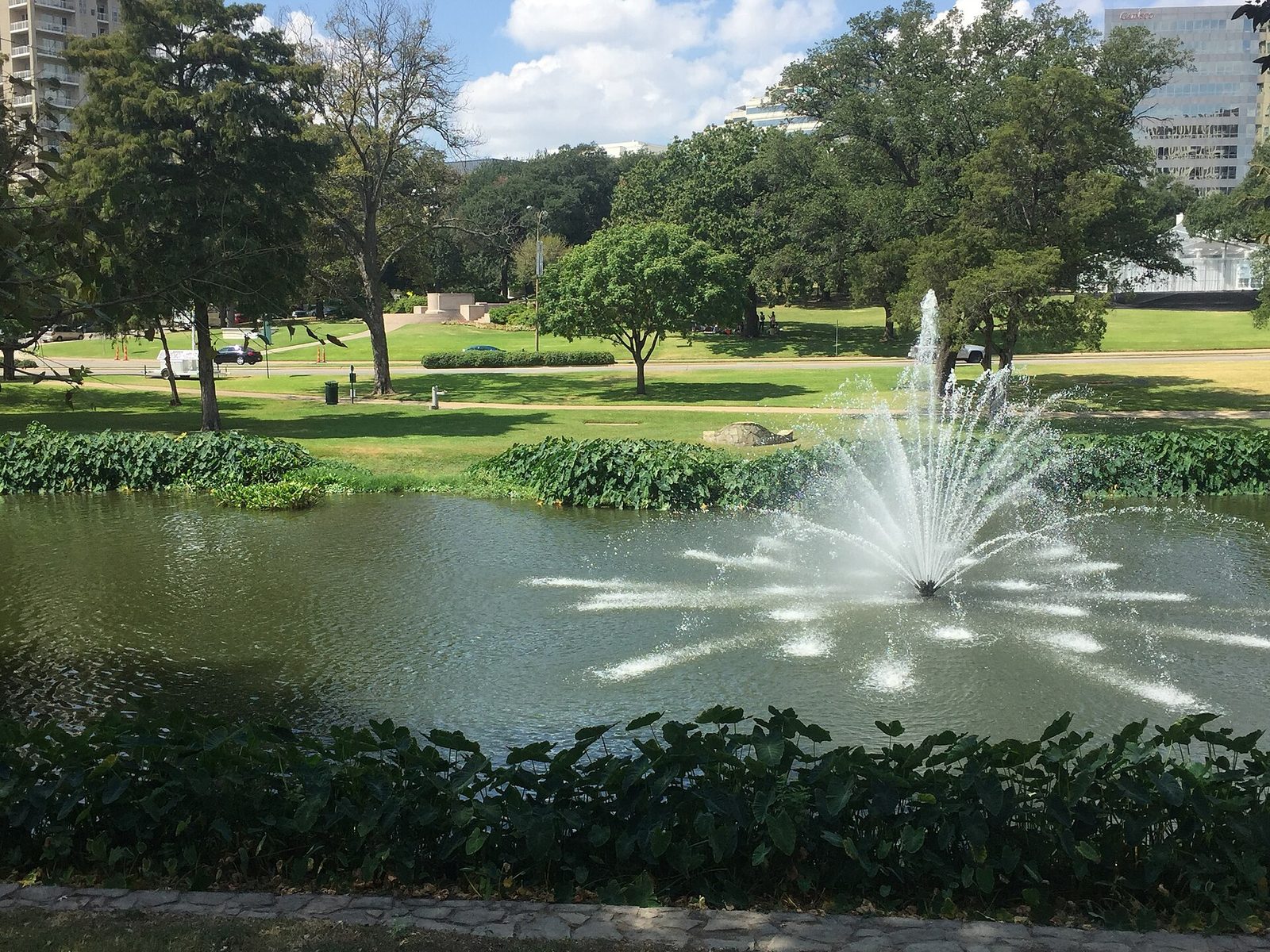
Treat the heat as a safety matter rather than a comfort one, particularly with children, older travellers and anyone who has just flown in from a cool climate. Carry water everywhere, and do not plan a long unshaded walk at 14:00 because the map said it was only a mile.
Should You Visit Dallas in Winter?
Yes, if you want the museums to yourself and do not mind packing for two climates at once.
Dallas winters are mild on average: December highs of 59.2°F, January 57.7°F, February 62.0°F, with overnight lows in the high 30s and low 40s. January and February are among the driest months at 2.59 and 2.78 inches. For a visitor from the northern United States or northern Europe, this is a comfortable walking climate.
The complication is variance rather than average. North Texas gets sharp cold snaps that arrive fast, and the all-time low of −3°F on January 18, 1930 is a reminder that the average is not the whole story. Snow is rare — 1.7 inches a year on average, mostly in February — but 12.5 inches fell over two days at DFW in February 2010.
What genuinely disrupts a winter trip here is not snow but ice. A freezing-rain event will close roads, ground flights at DFW and shut attractions across the metroplex, and the region has less equipment for it than a northern city does because it happens rarely. It is a low-probability, high-impact risk: most winters see nothing, and the ones that do see it see it properly.
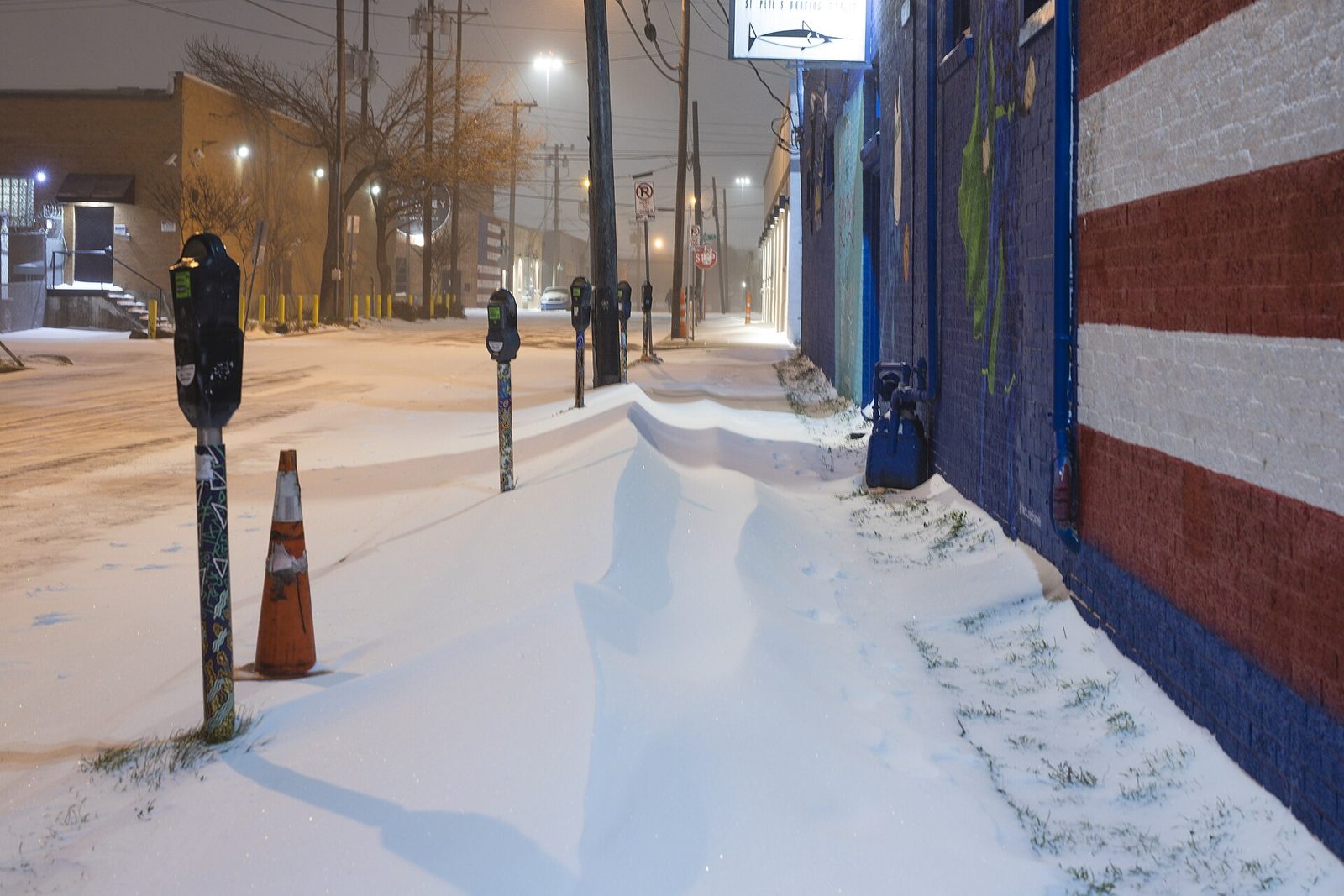
The winter upsides are considerable. Hotel rates are low after the holidays, January is the quietest month on the events calendar, and the Arts District in December with no crowd is one of the better experiences the city offers. December also brings holiday lighting displays, though calibrate expectations — Dallas does American holiday lights rather than European Christmas markets.
When Is Dallas Cheapest?
This is where Dallas differs from most tourist cities, and it is worth understanding properly.
Hotel rates here follow the convention and events calendar, not the tourist season. The city’s hotel stock is sized for business travel, so a midweek stay during a large convention can cost double the same room the following Tuesday, while a quiet weekend in the dead of summer can be the cheapest night of the year.
| Period | Hotel cost | What you get |
|---|---|---|
| Late July – August | Lowest | 97.1°F highs, empty museums, indoor-only planning |
| January | Low | Quiet, mild, small freeze risk |
| Early November | Moderate | 67.8°F, no festival, the value sweet spot |
| March – April | Moderate to high | Excellent weather, Dallas Blooms |
| Late Sept – mid Oct | Highest | The State Fair, the Arboretum, best weather |
| Any big convention week | Highest | Nothing extra — you are just paying more |
The practical move: pick your month for weather, then check the events calendar and shift by a week. Late October after the State Fair closes, or the first half of November, gets you close to peak conditions at well below peak prices. Our guide to where to stay in Dallas covers how far ahead to book for each of those windows, and our Dallas events guide has the confirmed dates.
Attraction costs do not vary by season, with two exceptions worth knowing: Reunion Tower and the Dallas Arboretum both price admission by date through a ticket calendar, so the same visit costs more on a festival Saturday than on a February Tuesday. Neither publishes a flat rate.
What Does Each Season Actually Feel Like?
Numbers only take you so far. Here is what the four Dallas seasons are like to be in.
Spring is short and spectacular. It runs from about mid-March to early May and it is the only stretch of the year when Dallas feels like a garden city. The trees come into leaf, the Arboretum is at its peak, bluebonnets appear along the highways, and the air has not yet acquired the weight it carries from June. It ends abruptly — May averages 84.9°F and by the end of the month it is summer in all but name.
Summer is a discipline. Three months of 92.7°F to 97.1°F with overnight lows near 78°F means the city rearranges itself around air conditioning. Locals are out at 07:00 and again after 20:00, and the middle of the day belongs to indoors. It is not miserable if you adopt that rhythm; it is miserable if you fight it. The compensations are genuine: cheap rooms, empty museums, long evenings and a city with the tourists removed.
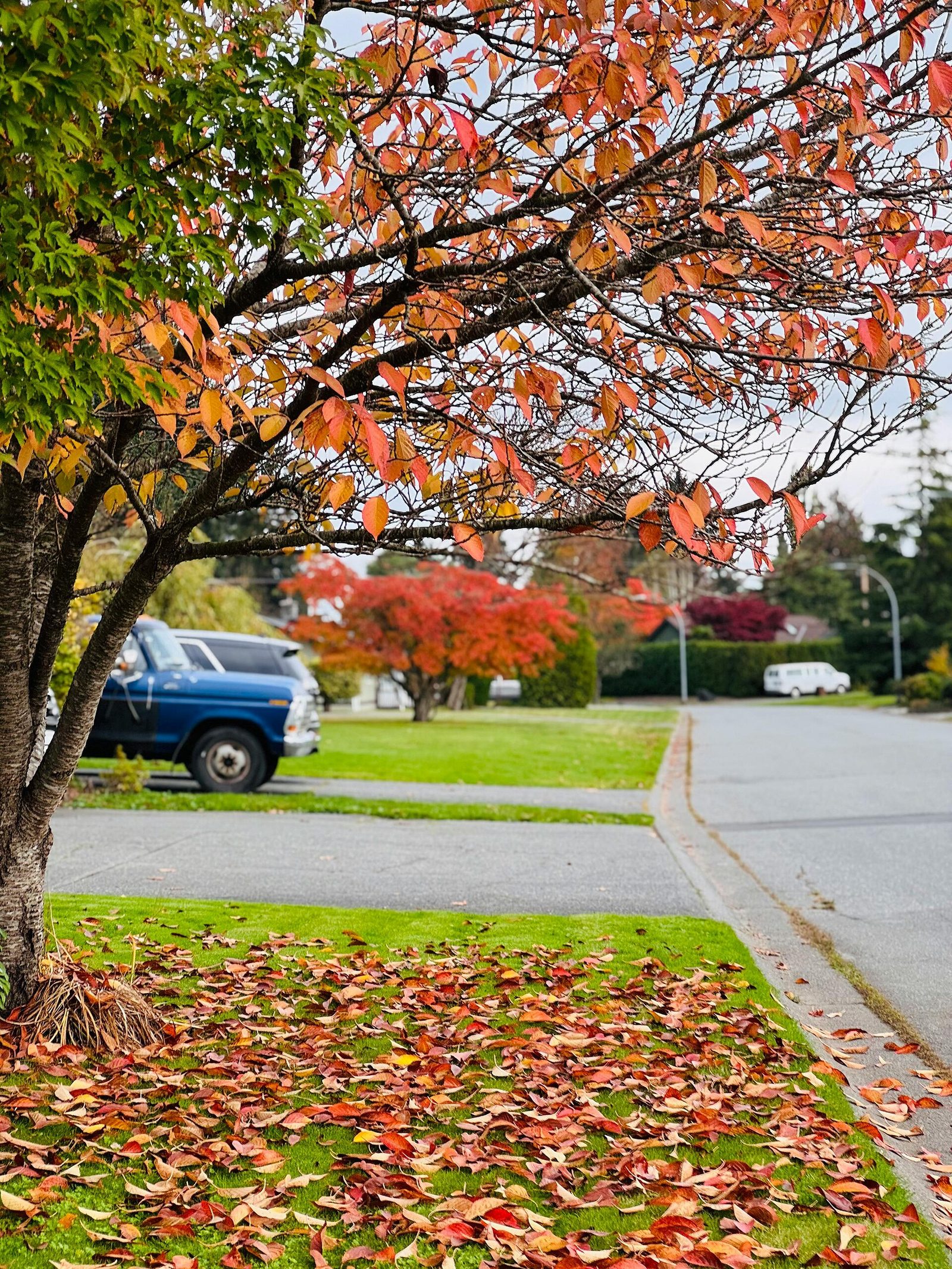
Autumn is the payoff. From about the last week of September, the heat starts to break, and by mid-October the city is transformed — patios usable, walking pleasant, the State Fair running, the Arboretum in pumpkin season. Autumn colour is modest by New England standards but real, and it arrives late, through November rather than October.
Winter is mild and unpredictable. Most days in December, January and February sit between 55°F and 65°F, which is pleasant walking weather. Then a front arrives and it is 25°F for three days. There is no reliable pattern, which is why packing for a Dallas winter means packing for two climates and accepting you may only need one.
The through-line is variance. Dallas averages are perfectly comfortable and Dallas extremes are not, and the further you plan from the average — a January trip, an August trip — the more the extremes matter to your day.
How Does the Season Change What You Can Do?
Substantially for outdoor attractions, and hardly at all for the indoor ones — which is why the city’s core sights work in any month.
| Attraction | Spring | Summer | Autumn | Winter |
|---|---|---|---|---|
| Dallas Museum of Art, Nasher, Perot | Yes | Yes — the default | Yes | Yes |
| Sixth Floor Museum, Dallas World Aquarium | Yes | Yes | Yes | Yes |
| Dallas Zoo | Ideal | Opening hour only | Ideal | Fine, quieter |
| Dallas Arboretum | Peak season | Avoid afternoons | Peak season | Sparse but open |
| White Rock Lake, Katy Trail | Ideal | Before 09:00 only | Ideal | Good, bring a coat |
| Klyde Warren Park | Ideal | Evenings | Ideal | Good on mild days |
| Dealey Plaza on foot | Yes | Early morning | Yes | Yes |
| Fair Park grounds | Yes | Uncomfortable | The fair, or closed off | Yes, and empty |
Read down the summer column and the strategy writes itself: everything indoors stays on the list, everything outdoors moves to the first two hours of the day. That single adjustment is the difference between a good August trip and a bad one, and it costs you nothing except an early alarm.
Read down the winter column and you get the other underused insight: Fair Park in January is empty, free to walk and architecturally remarkable. The 1936 exposition buildings are the third-best thing to look at in Dallas and almost nobody sees them without a hundred thousand people in the way.
When Are the Crowds Worst?
Narrower windows than you would expect, because Dallas is not a mass-tourism city.
The State Fair, on weekends. This is the single densest crowd in the Dallas year and it is concentrated into three and a half weeks. A Saturday at the fair is the same event as a Tuesday with twice the people and half the enjoyment.
Spring break, in March. Family attractions — the zoo, the aquarium, the Perot — fill up, and Texas school holidays do not align with everyone else’s, so check the local calendar rather than assuming.
Sunday brunch, year-round. The 11:00 to 13:00 window is the busiest restaurant period of the entire week in several neighborhoods. Go at 09:30 and you will walk into almost anywhere.
Big convention weeks, which are invisible until you look. They do not create tourist crowds but they do create hotel scarcity, and they are the main reason a room price doubles for no apparent reason.
What is never crowded: the Dallas Museum of Art on a weekday, the Nasher at almost any time, Dealey Plaza outside school holidays, and the entire city in August.
What Should You Pack for Each Season?
Dallas packing errors are predictable and easily avoided.
| Season | Pack | The thing people forget |
|---|---|---|
| March–May | Layers, light rain jacket | May is the second-wettest month at 4.57 in |
| June–August | Light clothing, hat, sunscreen, water bottle | A light layer for fierce air conditioning |
| September | Summer clothing, still | September averages 90.0°F — it is not autumn yet |
| October | Layers, umbrella | The wettest month, at 4.79 in |
| November | Light jacket, long sleeves | Lows of 47.8°F make evenings genuinely cool |
| December–February | Warm coat, gloves | Cold snaps arrive fast from mild baselines |
The one that catches almost every summer visitor: interiors in Texas run 20°F cooler than outside, and a two-hour museum visit in shorts and a vest is genuinely uncomfortable. A light long-sleeved layer in your bag is the highest-value item you will pack in August.
Comfortable shoes matter year-round. The walkable stretches of Dallas are genuinely walkable, the crossings are wide, and the distances within the Arts District and the West End add up faster than the map suggests.
What Is the Ice and Heat Contingency Plan?
Both extremes have the same answer, which is convenient: go indoors, and know in advance where.
For heat, the reliable indoor set is the Dallas Museum of Art, free but requiring a timed ticket for every visitor; the Nasher Sculpture Center at $10, or $8 with a DART fare; the Perot Museum at $27; the Sixth Floor Museum at $27 with a hard last entry at 16:15; and the Dallas World Aquarium at $34.95 plus tax, open 08:30 to 17:00 daily. The Arts District puts three of those within a few minutes of one another, which makes it the natural heat-day cluster.
For ice, the answer is different: stay put. A freezing-rain event in North Texas closes roads and grounds flights, and the correct response is to not drive. If you are downtown, you can still walk to the Arts District, and the museums generally stay open unless conditions are severe. If you are in a suburban hotel, you are staying in the hotel.
For rain, which is the likeliest of the three, very little changes. Texas rain tends to arrive hard and clear quickly rather than settling in for the day, so a two-hour museum visit often outlasts it. What you lose is the free outdoor tier — Dealey Plaza, Klyde Warren Park, Pioneer Plaza, White Rock Lake — which is where a cheap Dallas day gets its value, so a wet day costs more than a dry one.
Whatever the weather does, the free indoor fallback is the Dallas Farmers Market hall at 920 S. Harwood Street, open daily 10:00 to 19:00 and costing nothing to enter. The open-air Shed with the growers runs Saturday 09:00 to 17:00 and Sunday 10:00 to 17:00 only, which is the detail most visitors get wrong.
Which Month Suits Your Kind of Trip?
Matching the month to the trip rather than to a generic recommendation.
| Trip type | Best months | Avoid |
|---|---|---|
| Museums and architecture | Any — they are indoors | Nothing; just avoid Mon and Tue |
| Gardens and walking | March–April, late Oct–Nov | June–September |
| Family with young children | April, October, December | July–August without a pool |
| Food-led trip | Any; October for the fair | Nothing — kitchens are indoors |
| Budget trip | Late July–August, January | Late September–mid October |
| Sport and events | Autumn and winter | Midsummer — the calendar is empty |
| A first visit, all-round | Late October, early November | July, August, and Mondays |
If you are still deciding how long to come for as well as when, our Dallas travel guide covers trip length, budgets and airports, and our Dallas itineraries have season-specific versions of each day plan.
When Should You Avoid Dallas Entirely?
Rarely, but there are three cases where the honest advice is to change your dates.
If your trip is built around being outdoors and it falls in July or August. The zoo, the Arboretum, White Rock Lake and the Katy Trail are all genuinely unpleasant after about 11:00, and a trip that was supposed to be about parks and walking becomes a trip about air conditioning. Move it to April or October.
If you want Fair Park’s architecture and museums, and your dates fall inside the State Fair. September 25 to October 18 in 2026. During the fair, Fair Park is the fair. Outside it, the 1936 exposition buildings are yours to walk.
If your dates land on a Monday and Tuesday and you only have two days. Four of the five headline museums are shut across those two days, and no amount of good weather compensates. Shift by 48 hours if you possibly can.
What is not a reason to avoid Dallas: summer heat, if your plans are indoors. Winter, which is mild. Rain, which passes. Or the absence of a festival, since the city’s strongest attractions run year-round.
There is also a version of this question that nobody asks and probably should. If you have already decided on Texas but not on a city, the seasonal logic differs across the state: the Gulf Coast is humid in a way Dallas is not, the Hill Country peaks in wildflower season, and West Texas is a different climate altogether. Dallas is at its most competitive against those alternatives in October and November, when its weather is excellent and its event calendar is at full strength, and at its least competitive in July and August, when almost anywhere with elevation or a coastline beats it. Factoring that in is how you end up with the right trip rather than merely the right month.
Frequently Asked Questions About the Best Time to Visit Dallas
What is the hottest month in Dallas?
August, at an average high of 97.1°F, narrowly ahead of July at 96.9°F. August is also the driest month of the year at 2.31 inches of rain, and overnight lows average 77.4°F, so the heat does not lift much after dark.
What is the coldest month in Dallas?
January, with an average high of 57.7°F and a low of 37.9°F. That is mild by northern standards, but the variance matters more than the average — the all-time low is −3°F, recorded on January 18, 1930.
Does it snow in Dallas?
Barely. The annual average is 1.7 inches, nearly all of it in February at 0.9 inches, with traces in January, March and December. Exceptional events happen: 12.5 inches fell over two days at DFW Airport in February 2010. Ice is the bigger disruption, because freezing rain closes roads and grounds flights.
What is the rainiest month in Dallas?
October, at 4.79 inches, followed by May at 4.57 inches. That October is both the best month to visit and the wettest is one of the odder facts about this city. Pack an umbrella and go anyway — the rain arrives hard and clears fast.
Is September a good time to visit Dallas?
Late September, yes. Early September still averages 90.0°F and feels like summer. From around the 25th, the State Fair of Texas opens and Autumn at the Arboretum is already running, so the last week of September is the beginning of the good season rather than the end of the hot one.
How many days should you spend in Dallas?
Three full days covers the city comfortably, four if you want a proper day in Fort Worth. The season does not change that much — what changes is the shape of each day, since summer forces everything outdoors into the morning and autumn does not.
Is Dallas worth visiting in summer?
Yes, if you plan for it. Hotel rates hit their annual low, museums are quiet, and the strongest attractions are air-conditioned. Keep outdoor activity to before 11:00, treat the middle of the day as indoor time, and check that your hotel pool is actually open before you book on the strength of it.
What is the cheapest month to visit Dallas?
August, followed by late July and then January. Hotel rates in Dallas track the convention and events calendar rather than the weather, so the months with nothing on are the cheap ones. August combines an empty events calendar with 97.1°F highs, which is exactly why a downtown room can cost less than half its October price.
Is Dallas humid?
Moderately, and less than the Gulf Coast. July and August are the driest months of the year at 2.54 and 2.31 inches of rain, so the summer heat is drier than visitors expect from Texas — closer to a hot inland climate than to Houston. Spring and autumn carry more moisture, which is when the thunderstorms arrive.
Do Dallas attractions close for the season?
Almost none. The museums, the aquarium and the zoo run year-round, and the zoo is open 364 days a year. What is seasonal is the Arboretum’s festival programming — Dallas Blooms in spring and Autumn at the Arboretum from September to November — and the State Fair, which exists for three and a half weeks. The weekly closures matter far more than the seasonal ones: four of the five headline museums are shut on Monday, Tuesday, or both.
When is the best time to visit the Dallas Arboretum?
Spring during Dallas Blooms, listed as February 21 to April 12, or autumn during Autumn at the Arboretum, which runs September 19 to November 1 in 2026. Admission is priced by date through a ticket calendar with no flat rate, so check your specific day. Avoid midsummer afternoons entirely — 66 acres in 97°F is not a garden visit.
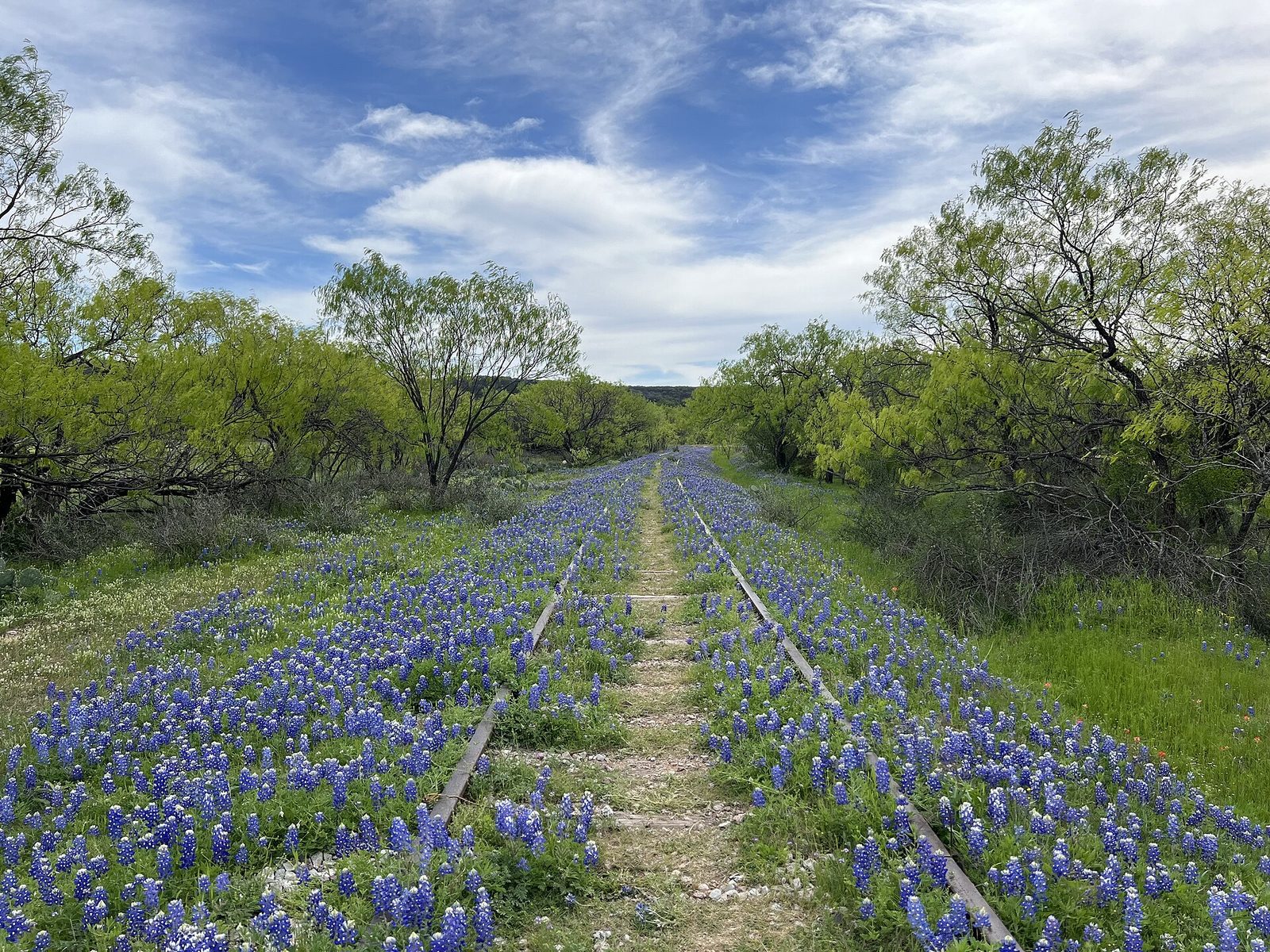
Season decides the day trips more than it decides anything in the city. The Ennis bluebonnets are an April phenomenon, Lake Texoma only makes sense from May to September, and October suits everything. Our North Texas day trips guide sets out the window for each destination.
The heat decides the outdoor half of any Dallas trip more than it decides anything else. Our guide to outdoor things to do in Dallas sets out a safe window for every month, from all-day walking in April and October to a pre-nine-o’clock rule in July and August.
One group should read this calendar backwards: anyone bringing a dog. The months that make Dallas a hard sell for sightseeing — December through February, at highs in the high fifties — are the months the city is genuinely pleasant on four legs, while July and August leave roughly two usable hours at each end of the day. Our dog friendly Dallas guide lays the year out against safe walking windows.
December deserves more credit than it gets here. At an average high of 59.2°F it is one of the few months when the Arts District is genuinely comfortable to walk, hotel rates soften midweek, and the holiday programme is unusually deep. The trade is a 5:26 p.m. sunset and a small ice risk. Our guide to Dallas at Christmas works through the season in detail.
Nowhere in Dallas swings as hard on the calendar as the Arboretum. In April during Dallas Blooms, or in October once the heat breaks, it is among the best botanical gardens in the country; on a 97°F August afternoon the same ticket buys a long hot walk. We set the seasons against the temperatures in our Dallas Arboretum visitor guide.
December is the one month where the evenings matter more than the daylight hours. The sun sets at 5:26 p.m. on the winter solstice and full dark arrives before six, which means a light display that opens at 6 p.m. opens into genuine night and there is no reason to wait until eight. If you are building a December trip around it, our roundup of the best Christmas lights in Dallas covers arrival windows, real costs and the free neighborhood routes.
December is the month that rewards the most planning. Two Nutcracker productions collide on 12 December, Christmas Day closes the Arboretum, the zoo, the aquarium and the Dallas Museum of Art, and the quietest and cheapest window of the whole season is the stretch between Boxing Day and New Year. Our guide to Christmas things to do in Dallas lays out the dates, the costs and the booking deadlines.
Autumn in Dallas is dominated by one event. The State Fair of Texas runs 25 September to 18 October 2026 at Fair Park, and the difference between a late-September visit at 90°F and a mid-October one at 79.5°F is the difference between two entirely different days out. Our guide to the best time to visit the State Fair of Texas weighs the heat against October’s rainfall and the crowd peaks.
Late December closes the year with the Lone Star NYE fireworks, launched from Reunion Tower at precisely 11:59 p.m. with 5,000 pyrotechnic effects and 500 drones. Temperatures sit near a 39.8°F low by then and you will be standing still outdoors, so the planning matters. See our guide to New Year’s Eve in Dallas for viewing spots, road closures and what is open on 1 January.
Related Dallas Guides
- Dallas Events and Festivals — the annual calendar with confirmed dates, so you can shift your trip by a week and save a fortune.
- Dallas Travel Guide — trip length, budgets, airports and the mistakes first-time visitors make.
- Dallas Itineraries — day plans with summer, rain and closed-Monday variants.
- Best Dallas Attractions — prices, closing days and which sites work in which weather.
- Where to Stay in Dallas — how hotel rates move with the events calendar rather than the season.
- Best Dallas Neighborhoods — timed walking routes, and which districts work in the heat.
- Things to Do in Dallas — the wider view across the city.
Photo Credits
- Texas bluebonnets: photo by 8bit12man, Wikimedia Commons (CC BY-SA 4.0)
- Night thunderstorm over Dallas: photo by David Berkowitz, Wikimedia Commons (CC BY 2.0)
- Deep Ellum in the snow: photo by Matthew T Rader, Wikimedia Commons (CC BY-SA 4.0)
- Turtle Creek, Dallas: photo by Riverhugger, Wikimedia Commons (CC BY-SA 4.0)
- Autumn at the Dallas Arboretum: photo by Michael Barera, Wikimedia Commons (CC BY-SA 4.0)
- Autumn street scene: photo by Nojonof8, Wikimedia Commons (CC0)
- Dallas skyline in autumn (featured image): photo by IcedCowboyCoffee, Wikimedia Commons (CC0)
Sources
- Climate of Dallas — monthly normals, precipitation, snowfall and records
- State Fair of Texas — 2026 Dates and Hours
- Dallas Arboretum — Visitor Information and 2026 Autumn Dates
- Dallas Arboretum — Dallas Blooms
- Dallas Museum of Art — Hours and Timed Tickets
- Nasher Sculpture Center — Admission and Hours
- Perot Museum — Hours and Admission
- The Sixth Floor Museum — Hours and Last Entry
- Dallas World Aquarium — Hours and Prices
- Dallas Zoo — Tickets and Hours
- Reunion Tower — Date-Based Ticketing
- Dallas Farmers Market — The Shed and The Market Hours
- DART — Fares and Passes