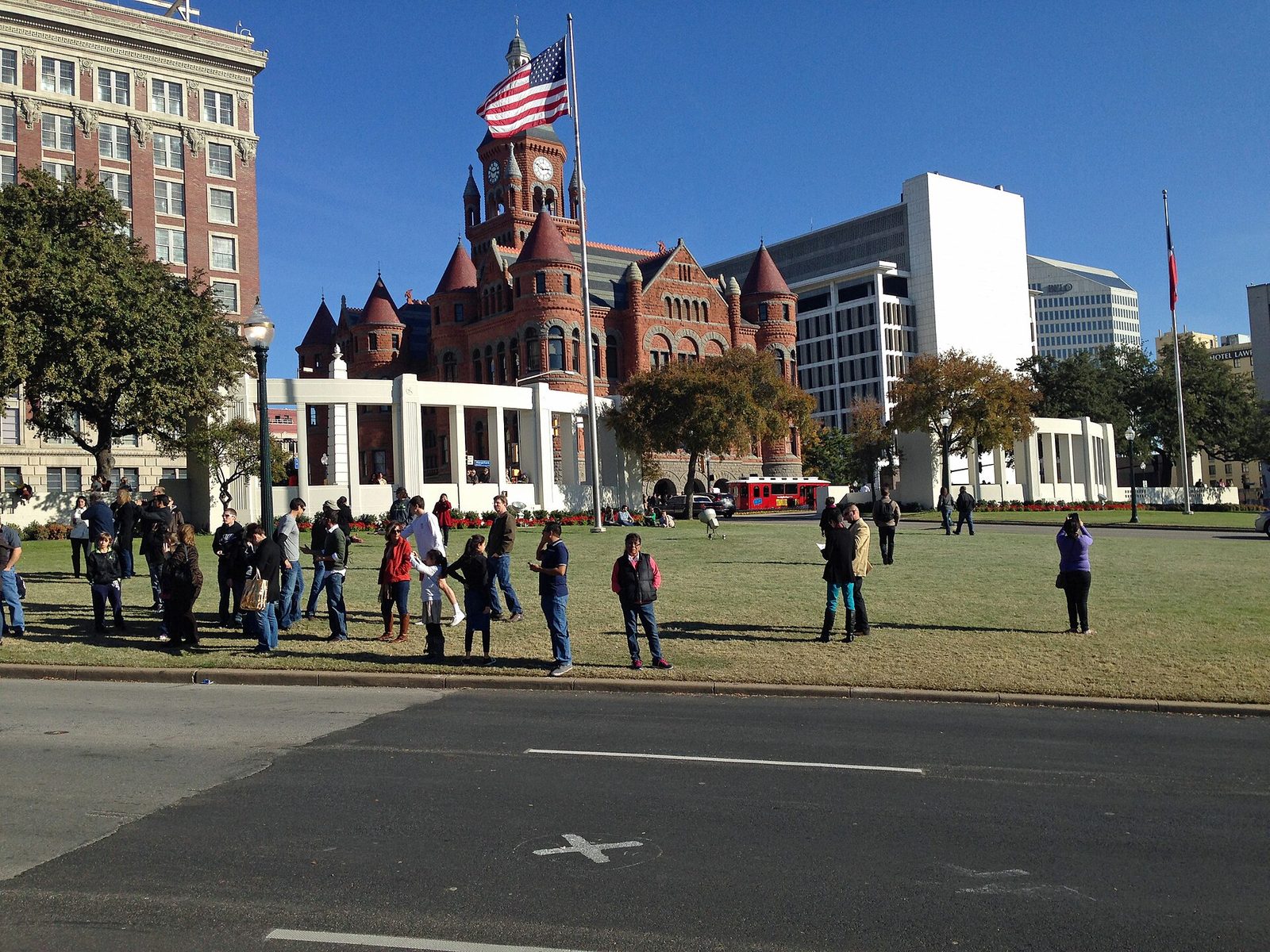
The best things to do in Dallas for a weekend trip come down to five choices, not fifty: the Sixth Floor Museum, the Arts District, one evening district, one big outdoor space, and whether you give half the weekend to Fort Worth. Two days in Dallas is a selection problem, and the city punishes anyone who tries to solve it by moving fast.
The thing that decides your weekend more than anything else is which two days you have. A Saturday and Sunday works. A Sunday and Monday loses three of the city’s five headline museums. A Monday and Tuesday loses four. Most weekend guides to Dallas are written as if every weekend is the same weekend, and that single omission does more damage than any amount of bad restaurant advice. This page is a two-day experience selector; for full day-by-day routes see our Dallas itineraries, and for hotels our where to stay in Dallas guide.
The Weekend Bucket List: Nine Experiences Worth the Time
| Experience | Time needed | Cost | Open |
|---|---|---|---|
| The Sixth Floor Museum at Dealey Plaza | 1.5–2 hours | $27 adult | Wed–Sun, last entry 4:15 p.m. |
| Dallas Museum of Art | 2–3 hours | Free, timed ticket required | Wed–Sun |
| Nasher Sculpture Center | 1–2 hours | $10, or $8 with DART fare | Wed–Sun |
| Perot Museum | Half a day | $27 adult, $17 youth | Daily except Tuesday |
| Dallas Arboretum | Half a day | $21.95–$25.95, plus $15 parking | Daily 9 a.m.–5 p.m. |
| Reunion Tower GeO-Deck | 45 min–1 hour | Sold by date and time slot | Daily |
| Deep Ellum or Bishop Arts in the evening | An evening | Cost of dinner | Daily |
| Fort Worth Stockyards | Half a day minimum | Free to watch the cattle drive | Daily, 11:30 a.m. and 4 p.m. |
| The free skyline from the Ronald Kirk Bridge | An hour | Free | Always |
Nine items, two days. You will do five or six of them properly, or all nine badly. The rest of this page is about choosing which.
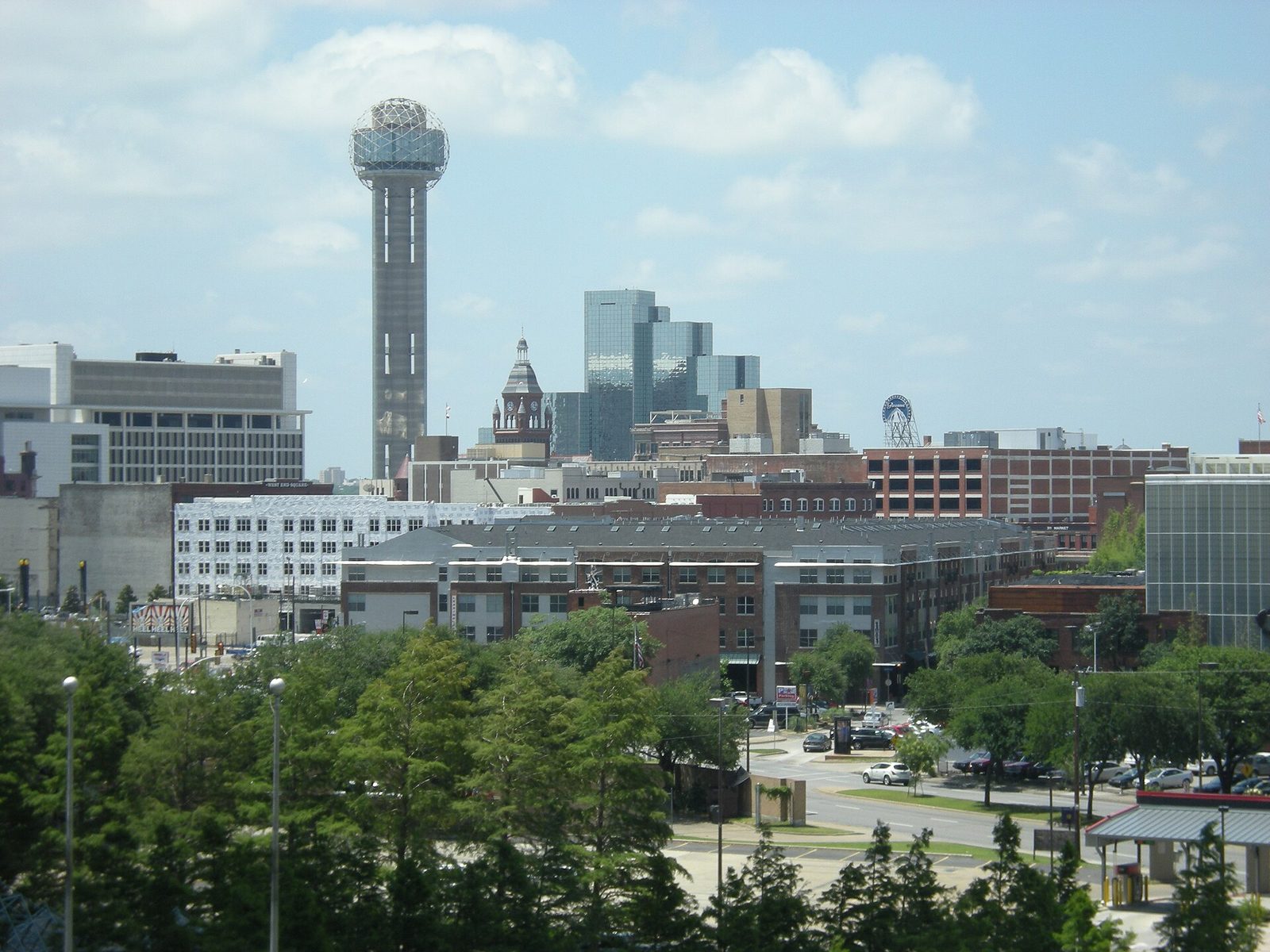
Which Two Days Do You Actually Have?
This is the table that should open every Dallas weekend guide and never does.
| Your weekend | What you get | What you lose |
|---|---|---|
| Friday–Saturday | Everything. Plus Free First Saturday at the Nasher, and ’til Midnight there on a third Friday, March–October | Nothing |
| Saturday–Sunday | Everything. The standard, and the busiest | Nothing, but no TRE to Fort Worth on Sunday |
| Sunday–Monday | Sunday is full; Monday gives you the Perot, the aquarium, the Bush Center and the GeO-Deck | Monday: the DMA, the Nasher and the Sixth Floor Museum |
| Monday–Tuesday | The Perot on Monday only, the Crow Museum on Tuesday only, plus the aquarium, the Bush Center and the Arboretum both days | The DMA, the Nasher and the Sixth Floor Museum entirely |
The details behind that: the Dallas Museum of Art, the Nasher Sculpture Center and the Sixth Floor Museum all close Monday and Tuesday, and the Perot closes Tuesday — specifically through 7 April 2027. Open seven days: the Dallas World Aquarium, the George W. Bush Presidential Center, the Dallas Arboretum, the Dallas Zoo and the Reunion Tower GeO-Deck. The Crow Museum of Asian Art is free and open Tuesday to Sunday, closed Mondays, which makes it the specific answer to a Tuesday.
If you have any say over your dates, take a Friday and Saturday. You get the full museum week plus two date-specific bonuses: the Nasher runs Free First Saturdays from 11 a.m. to 5 p.m. with family programming from 11 a.m. to 2 p.m., and ’til Midnight at the Nasher runs on the third Friday of the month, 6 p.m. to midnight, March through October. Neither happens at the weekend most people book.
What Should You Cut?
Two days is roughly four blocks of time: two mornings and two afternoons, with two evenings attached. Here is how we would spend them, and what we would drop.
Keep the Sixth Floor Museum. It is the one attraction that explains Dallas rather than simply occupying you, and a first-time visitor who skips it has not really been. At $27 for an hour and a half it is not cheap, and it is not on the CityPASS. Note the last entry at 4:15 p.m.
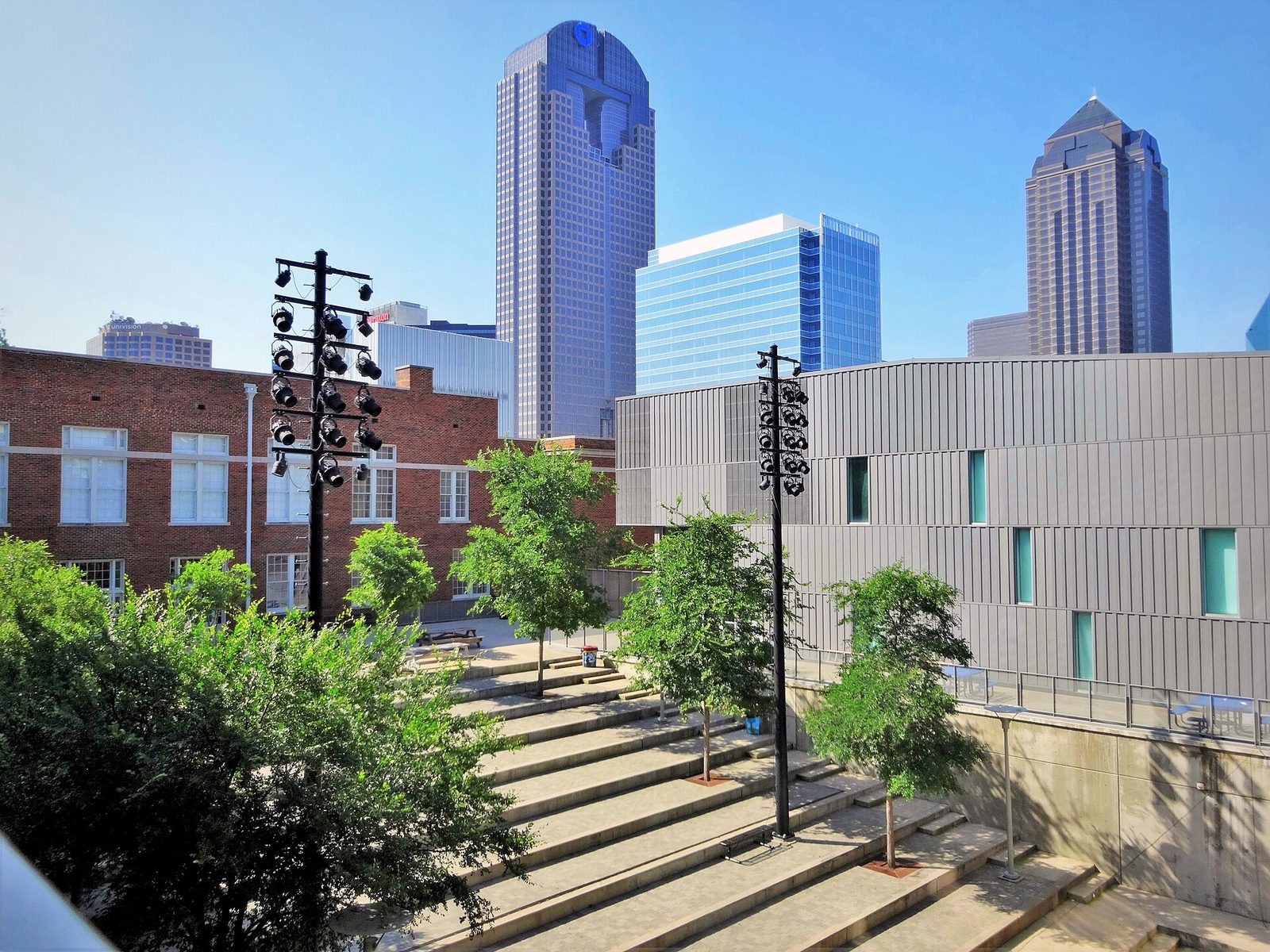
Keep one Arts District morning. The DMA is free and the Crow Museum is free and they are a two-minute walk apart on Flora Street, with the Nasher at $8 if you arrive by rail. Three collections for eight dollars is the single best-value block in the city.
Keep one evening district. Deep Ellum for music and energy, Bishop Arts for independent restaurants on a $1.00 streetcar ride, Uptown for ease on the free M-Line Trolley. One, not two — they are far apart and the ground between them is highway.
Cut the Arboretum if you only have two days and no car. It is excellent and it is a half-day on Garland Road, off the rail network. Beautiful, and a big bite out of a short trip.
Cut the second museum of the same kind. The Perot and the aquarium are both half-day attractions aimed at similar enthusiasms. Pick one.
Is Fort Worth Worth Half Your Weekend?
This is the biggest single decision in a Dallas weekend, and the honest answer is: only if you give it a proper half day, and probably not at all on a two-day trip.
The case for going is real. The Fort Worth Herd cattle drive runs daily at 11:30 a.m. and 4 p.m. at the Stockyards, billed as America’s only twice-daily cattle drive, and it costs nothing to watch. The Stockyards Championship Rodeo runs Friday, Saturday and Sunday, and the PBR Stockyards Showcase is Thursdays at 7:30 p.m. It is the closest thing to the Texas most first-time visitors have in their heads, and Dallas itself will not give them that.
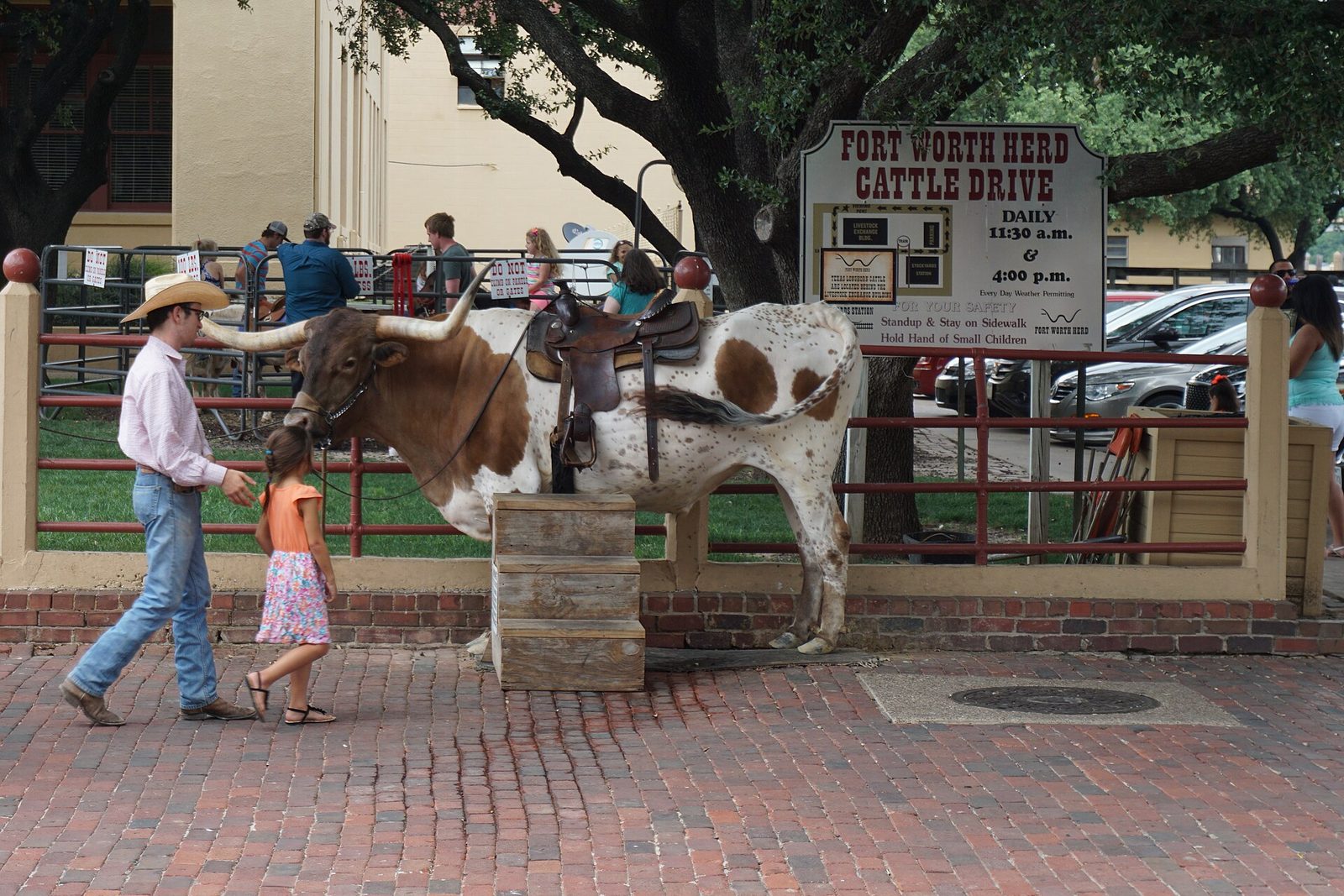
The case against is the clock. The Stockyards’ own guidance is a half day minimum for the cattle drives and the shopping, and a full day if you want a rodeo. Add the travel and you have spent most of one of your two days. Squeezing Fort Worth into a Dallas weekend is the most common way visitors ruin both halves of a short trip.
If you go car-free, note the transport constraint precisely: the Trinity Railway Express runs from EBJ Union Station to Fort Worth T&P and needs a Regional Day Pass at $9.00 — a Local pass only reaches CentrePort/DFW Airport Station. And there is no scheduled TRE service on Sundays. If your weekend is Saturday and Sunday and you were planning Fort Worth by train on the Sunday, that plan does not exist.
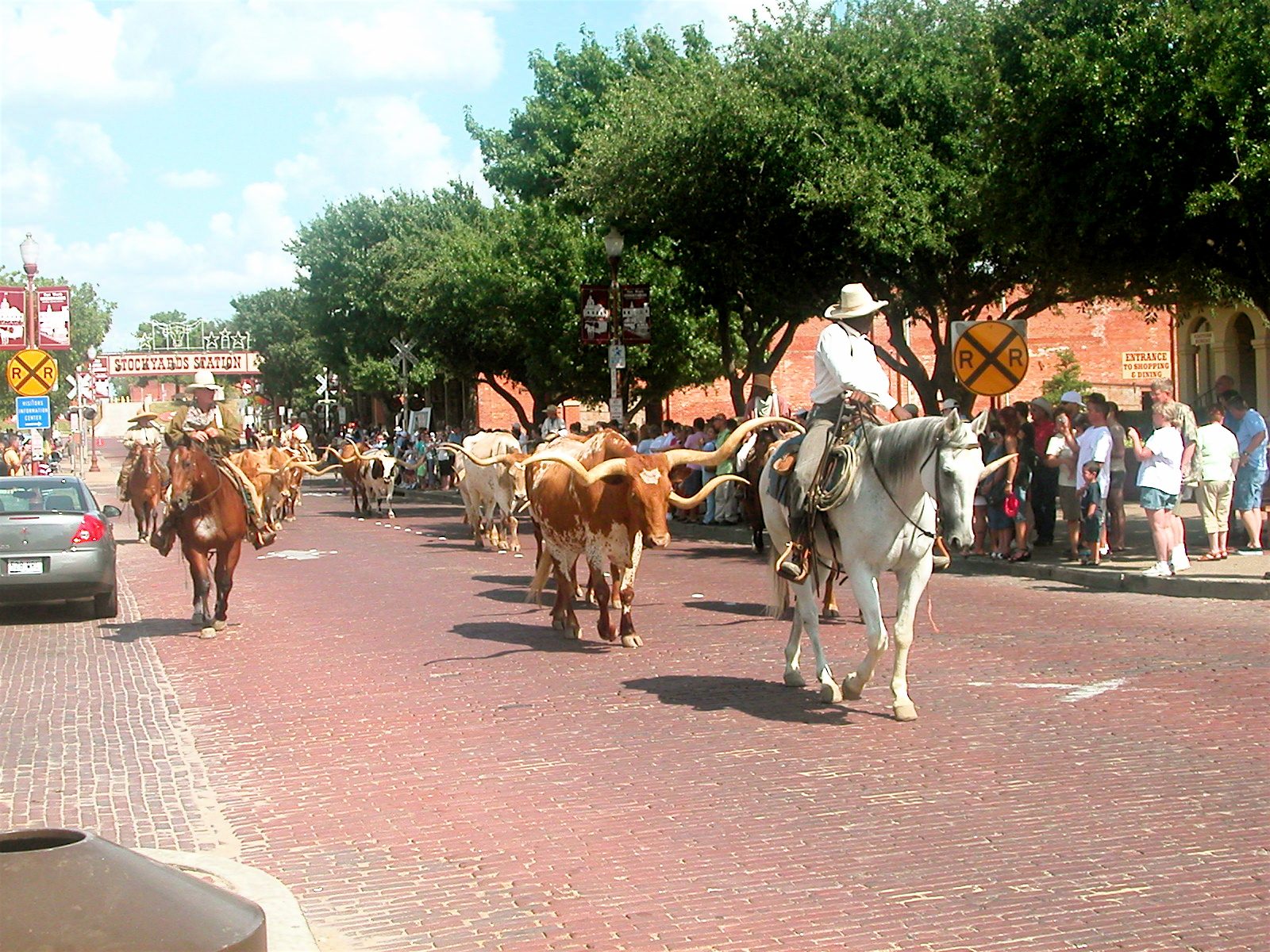
Our recommendation: on two days, stay in Dallas and do it properly. Save Fort Worth for a three-day trip, where it earns a full day rather than an apologetic afternoon. Our day trips from Dallas guide sets out what each option really needs.
Saturday and Sunday: The Standard Weekend
Saturday morning. Dealey Plaza and the Sixth Floor Museum, opening at 10 a.m. It is the right thing to do first because it reframes everything you see afterwards, and because the West End around it holds the Dallas World Aquarium at 1801 N. Griffin Street if you want a second stop.
Saturday afternoon. Walk or ride to the Arts District. The Dallas Museum of Art on a free timed ticket, the Crow Museum next door, the Nasher at $8 if you came by rail. If it is the first Saturday of the month the Nasher is free from 11 a.m. to 5 p.m.
Saturday evening. Deep Ellum, reachable by rail, for live music and late kitchens. Or the free M-Line Trolley north into Uptown for an easier version. Finish on the Ronald Kirk Bridge for the lit skyline, which costs nothing.
Sunday morning. The Dallas Farmers Market — The Shed, the open-air producer stalls, runs Sunday 10 a.m. to 5 p.m., and the indoor Market is open daily 10 a.m. to 7 p.m. No admission charge.
Sunday afternoon. Either the Perot Museum, which opens at 11 a.m. on Sundays, or the Dallas Arboretum if you have a car. Or the Reunion Tower GeO-Deck timed to sunset, remembering that ticket sales close and the final elevator departs thirty minutes before closing.
A Monday–Tuesday Weekend That Actually Works
Plenty of people arrive on the wrong two days — a conference ends on Sunday, a flight is cheaper midweek — and every Dallas guide abandons them. It does not have to be a bad trip. Here is the version that works.
Monday morning: the Perot Museum. This is the key move, because the Perot is the one big museum that opens on Monday and closes on Tuesday, the reverse of the others. It is a half-day attraction at $27 adult and $17 for youth 2–12, at 2201 N. Field Street in Victory Park, walkable from downtown or a short ride on rail. Parking in Lot B under Woodall Rodgers is $15 per vehicle.
Monday afternoon: the Dallas World Aquarium or the Bush Center. Both are open seven days. The aquarium at 1801 N. Griffin Street is in the West End, walkable from the Perot, and costs $34.95 plus tax — but remember its last entry is 4 p.m. The George W. Bush Presidential Center at 2943 SMU Boulevard is open Monday to Saturday 9 a.m. to 5 p.m., and the operator’s own estimate runs from 30–45 minutes for a highlights pass to four-plus hours for everything.
Monday evening: Deep Ellum or the free M-Line Trolley through Uptown, then the Ronald Kirk Bridge for the skyline. None of that depends on the day of the week.
Tuesday morning: the Crow Museum of Asian Art. Free, open 11 a.m. to 5 p.m., at 2010 Flora Street in the Arts District. It is the only free art museum in the district open on a Tuesday, and it sits between the shuttered DMA and the shuttered Nasher — which is either poetic or maddening depending on your mood.
Tuesday afternoon: the Dallas Arboretum, open daily 9 a.m. to 5 p.m., at $21.95 for an adult on a weekday plus $15 parking, with personal picnics allowed anywhere except the designated dining areas. Or the Reunion Tower GeO-Deck, open seven days, timed to sunset.
That is a genuinely full two days with no compromises beyond the three museums you could not have had anyway. The one thing to accept is that you will not see the Sixth Floor Museum, and there is no workaround — it closes Monday and Tuesday, full stop. If it matters enough, shift a flight by a day.
What Changes on a Sunday?
More than you would expect, and the changes are all in opening times rather than closures.
| Venue | Sunday hours | Other days |
|---|---|---|
| Perot Museum | 11 a.m.–5 p.m. | 10 a.m.–5 p.m. Mon, Wed–Sat |
| George W. Bush Presidential Center | Noon–5 p.m. | 9 a.m.–5 p.m. Mon–Sat |
| Dallas Farmers Market, The Shed | 10 a.m.–5 p.m. | Saturday 9 a.m.–5 p.m. only |
| Trinity Railway Express to Fort Worth | No scheduled service | Runs Mon–Sat |
| Dallas Museum of Art, Nasher, Sixth Floor | Open, 11 a.m. or 10 a.m.–5 p.m. | Closed Mon and Tue |
The Bush Center’s noon opening is the one that catches people, because it removes an entire Sunday morning from a venue the operator itself says can absorb four-plus hours. If the Bush Center is on your list, do it Saturday.
Can You Do the Weekend Without a Car?
Yes, comfortably, provided you accept two exclusions. This is genuinely one of the better American cities for a car-free short trip, which surprises people.
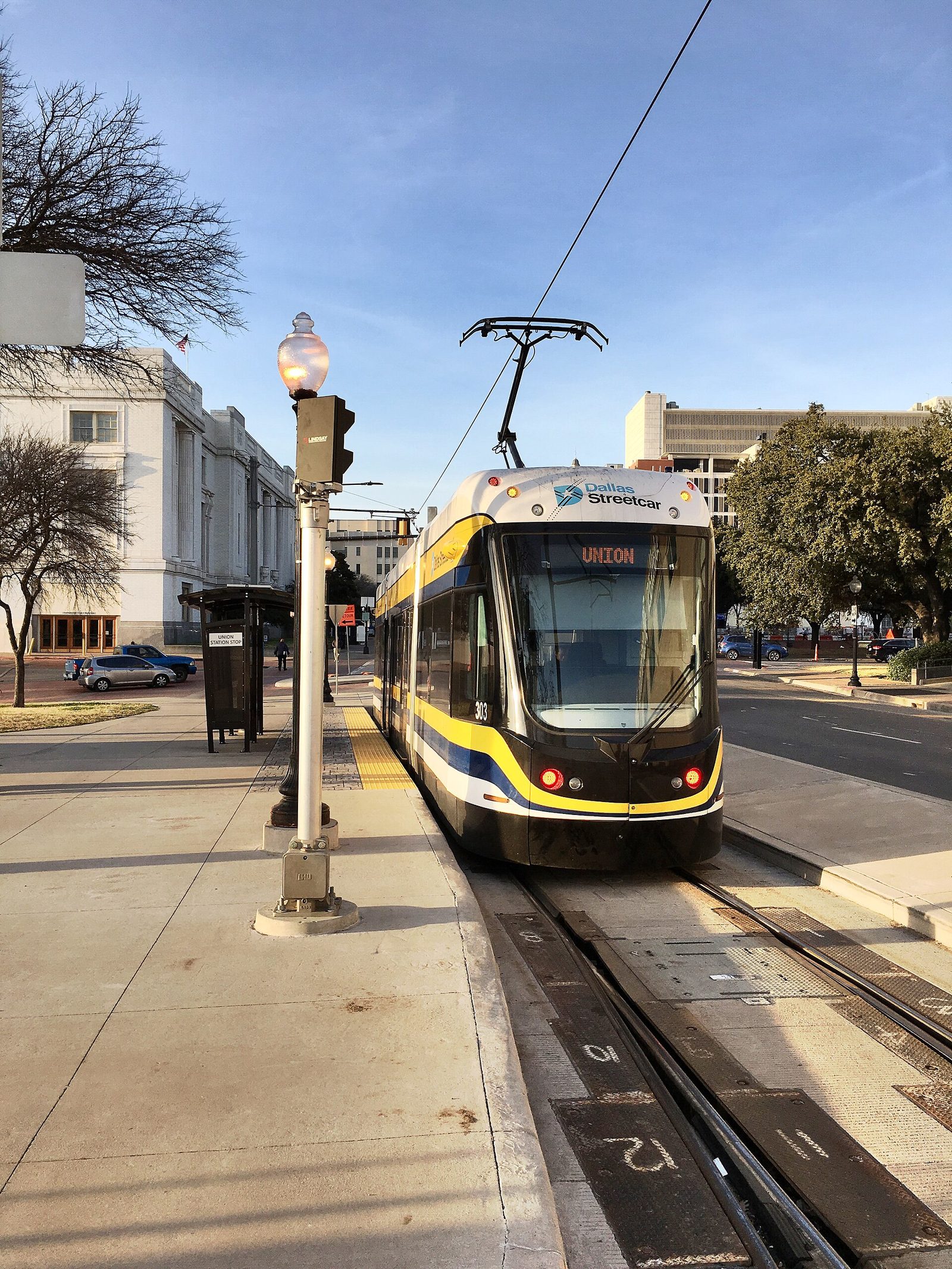
Reachable on foot or by rail: Dealey Plaza and the Sixth Floor Museum, the Dallas World Aquarium in the West End, the Dallas Museum of Art, the Crow Museum and the Nasher in the Arts District, the Perot at Victory Park, the Reunion Tower, Klyde Warren Park, Deep Ellum, Bishop Arts on the $1.00 Dallas Streetcar, and Uptown on the free M-Line Trolley. Downtown holds a walk score of 95 and crosses on foot in about thirty minutes.
Not reachable: the Dallas Arboretum on Garland Road, and White Rock Lake. Both need a rideshare.
Fares are simple. A DART Local Day Pass is $6.00, or $3.00 reduced, covering rail, buses, GoLink, the Dallas Streetcar and the Silver Line, valid until 3 a.m. the following morning. A Regional Day Pass at $9.00 adds the TRE to Fort Worth, Trinity Metro and Denton County Transportation Authority. The M-Line Trolley is free, 365 days a year. Two Local day passes cover an entire car-free weekend for $12. Our getting around Dallas guide has the detail.
What Does a Dallas Weekend Cost?
| Item | Per person |
|---|---|
| The Sixth Floor Museum | $27 |
| Dallas Museum of Art | Free, timed ticket required |
| Crow Museum of Asian Art | Free |
| Nasher Sculpture Center | $10, or $8 with proof of DART fare |
| Perot Museum | $27 adult, $17 youth 2–12 |
| Dallas World Aquarium | $34.95 plus tax |
| Dallas Arboretum | $21.95 Mon–Thu, $25.95 Fri–Sun, plus $15 per vehicle |
| Two DART Local Day Passes | $12.00, or $6.00 reduced |
| M-Line Trolley, Ronald Kirk Bridge, Klyde Warren Park | Free |
A sensible car-free weekend — the Sixth Floor, the DMA, the Crow, the Nasher with the DART discount, two day passes and the free skyline — comes to about $47 a head in admissions and transport. Add the Perot or the aquarium and it is $74 to $82. Accommodation and food will dominate either way, and Texas levies a state hotel occupancy tax of 6 percent with cities and certain districts authorised to add a local tax on top; we could not confirm the exact combined Dallas rate first-hand, so read the tax line on your own confirmation. Our Dallas on a budget guide goes further.
Where Should You Eat on a Dallas Weekend?
Food is genuinely one of the reasons to come here, and on two days you have four meals that matter. Spend them on the things Dallas does better than wherever you came from: barbecue and Tex-Mex.
The barbecue has a timing problem that visitors routinely walk into. Texas barbecue is a lunch, not a dinner, because it runs until it sells out. Pecan Lodge in Deep Ellum opens 11 a.m. and closes at 8 p.m. Tuesday to Thursday, 9 p.m. Friday and Sunday and 10 p.m. Saturday, “or until we’ve sold out” — and the sell-out clause does most of the work. Cattleack Barbeque in Farmers Branch is stricter still: Wednesday, Thursday and Friday 10 a.m. to 2 p.m., plus first Saturdays only. If Cattleack is on your list and your weekend is not a first Saturday, it is not available at all.
Put barbecue in a Saturday lunch slot, build the morning around something within walking distance of it, and accept that you may arrive to find the brisket gone. That is not bad service, it is the whole model.
For the other three meals, let the district do the choosing. Bishop Arts is the concentration of independent kitchens, reachable on the $1.00 Dallas Streetcar, and small enough that you can walk past six menus before committing. Deep Ellum pairs food with live music and stays open latest. Uptown and the West Village have the highest restaurant density and the free M-Line Trolley through the middle. Trinity Groves, west of downtown, puts the skyline in the window.
Two practical notes. Dallas restaurants fill on Friday and Saturday evenings more than visitors expect from a city this size, so book the one dinner you care about. And the Dallas Farmers Market is a genuinely good Sunday breakfast: The Shed’s producer stalls run Sunday 10 a.m. to 5 p.m. and the indoor Market daily 10 a.m. to 7 p.m., with no admission charge. Our Dallas restaurants guide covers the neighborhoods in depth.
Is the CityPASS Worth It for Two Days?
No, and this is worth stating plainly because the pass is marketed hard at exactly this trip.
The Dallas CityPASS costs $64 adult and $46 child 3–12, valid across a nine-day window, and covers four of six: the Perot, the Reunion Tower GeO-Deck, the Dallas Zoo, the George W. Bush Presidential Museum, the Dallas Holocaust and Human Rights Museum, and an AT&T Stadium tour.
Two problems on a weekend. First, four attractions in two days is a forced march, and two of those six — the Perot and the Bush Center — are each capable of absorbing half a day on their own. Second, and more decisive, the pass excludes the Sixth Floor Museum, the Dallas Museum of Art, the Nasher and the Dallas Arboretum, which between them are most of what a first-time weekend visitor actually wants. The nine-day validity window tells you plainly who the product is for, and it is not you.
Where Should You Base Yourself?
Briefly, because this is a selector rather than a hotel guide. Downtown is the efficient choice — a walk score of 95, more than 15,000 rooms in the walkable core, and rail out to everything else. It fills with conference traffic midweek and empties at weekends, which suits you. Uptown trades a little convenience for far better restaurant density and the free trolley. The Arts District suits a weekend built around the museums, since three of them are within a few blocks.
What not to do on two days is stay out by the Arboretum, in Irving, or anywhere that needs a car for every movement. The whole advantage of a Dallas weekend is that the core is compact; staying outside it gives that away. Our where to stay in Dallas guide compares the districts properly.
Seasonal: Which Weekend to Pick
October and April, then March and November. Dallas averages a high of 79.5°F in October and 77.4°F in April, against 96.9°F in July and 97.1°F in August, and that difference decides whether your weekend happens outdoors or in air conditioning.
The complication in autumn is the State Fair of Texas, 25 September to 18 October 2026, which is either the reason to come or the reason to avoid the city, depending on your taste — it draws very large crowds to Fair Park and fills hotels. October is also the wettest month of the Dallas year at 4.79 inches, though the rain arrives in bands rather than all day.
A summer weekend is not a write-off, it is an inversion: indoors from eleven until six, outdoors after seven, with sunset as late as 8:39 p.m. on the summer solstice. A winter weekend is quiet, cheap and perfectly walkable, with December averaging a high of 59.2°F. Our guide to the best time to visit Dallas compares the months in full.
What If You Have Three Days?
A third day changes the answer to almost every question above, and it changes one in particular: Fort Worth becomes worth doing.
With three days, give the whole of one to the Stockyards. Arrive for the 11:30 a.m. cattle drive, spend the afternoon at Stockyards Station and the shops, and stay for the Stockyards Championship Rodeo on a Friday, Saturday or Sunday evening, or the PBR Stockyards Showcase on a Thursday at 7:30 p.m. That is the operator’s own full-day recommendation and it is the right one. Car-free, take the Trinity Railway Express from EBJ Union Station on a $9.00 Regional Day Pass — but not on a Sunday, when there is no scheduled service.
A third day also lets you add the Dallas Arboretum without sacrificing a museum block, which is the other thing two days cannot accommodate. Sixty-six acres above White Rock Lake is a half-day at minimum, and it is the attraction most often cut from a weekend and most often regretted.
Alternatively, use the third day to go slower rather than wider: a second Arts District morning, a long lunch in Bishop Arts, an afternoon walking the Katy Trail or White Rock Lake, and an evening you do not have to plan. Dallas is a city that improves considerably when you stop trying to cover it. Our Dallas itineraries set out three- and four-day routes properly, and our guide to outdoor Dallas covers the trails and lakes.
What we would not do with a third day is add a second city beyond Fort Worth. Waco, Glen Rose and the Oklahoma parks are all real day trips from Dallas, and all of them want a full day of their own rather than a slot in a short trip.
What Is Overrated on a Dallas Weekend?
Adding Fort Worth to two days. The Stockyards want a half day minimum and a full day with a rodeo. Compressed into an afternoon it is a long drive to watch eighteen longhorns walk down a street, and you have lost a Dallas day for it.
The CityPASS. Nine-day validity, four attractions, and it excludes the four things you most want. On a weekend, buy individual tickets.
Two evening districts in one weekend. Deep Ellum and Bishop Arts are on opposite sides of downtown. One each night is fine; both in one night is an evening spent in transit.
Driving. Downtown parking has no published citywide rate and the district points visitors at parking apps rather than quoting prices. Two DART day passes cost $12 and remove the problem entirely.
A Monday–Tuesday weekend, if you have any choice. You lose the Dallas Museum of Art, the Nasher and the Sixth Floor Museum outright. It is a perfectly good trip built from the Perot, the Crow, the aquarium, the Bush Center and the neighborhoods — but it is not the weekend you were picturing. Our things to do in Dallas pillar has the full list either way.
Frequently Asked Questions About a Dallas Weekend
Is two days enough for Dallas?
Yes, for the city itself. Two days covers the Sixth Floor Museum, an Arts District morning, one evening district, one big attraction and the free skyline, comfortably and without rushing. It is not enough to add Fort Worth, which the Stockyards themselves say wants a half day minimum and a full day with a rodeo.
What is the best weekend to visit Dallas?
A Friday and Saturday in October or April. Friday–Saturday gives you the full museum week plus Free First Saturdays at the Nasher and, on a third Friday from March to October, ’til Midnight there. October averages 79.5°F and April 77.4°F, against 97°F in August.
What is closed in Dallas on a Monday?
The Dallas Museum of Art, the Nasher Sculpture Center, the Sixth Floor Museum and the Crow Museum of Asian Art. Open: the Perot, the Dallas World Aquarium, the George W. Bush Presidential Center, the Dallas Arboretum, the Dallas Zoo and the Reunion Tower GeO-Deck.
Can you visit Dallas without a car for a weekend?
Yes. Two DART Local Day Passes cost $12.00 total and cover rail, buses, the Dallas Streetcar and the Silver Line, valid until 3 a.m. each night, and the M-Line Trolley is free. The only notable exclusions are the Dallas Arboretum and White Rock Lake, which need a rideshare.
Should you do Fort Worth on a Dallas weekend?
Not on two days. If you do, note that the Trinity Railway Express from EBJ Union Station needs a $9.00 Regional Day Pass and has no scheduled Sunday service, and that the Fort Worth Herd cattle drive runs at 11:30 a.m. and 4 p.m. daily and is free to watch.
Is the Dallas CityPASS worth it for a weekend?
No. It costs $64 for four of six attractions across a nine-day window, and it excludes the Sixth Floor Museum, the Dallas Museum of Art, the Nasher and the Arboretum. Fitting four of the remaining six into two days is a forced march.
What is the one thing you should not miss?
The Sixth Floor Museum at Dealey Plaza. It is $27, it takes an hour and a half to two hours, its last entry is 4:15 p.m., and it closes Monday and Tuesday. It is the attraction that explains the city rather than simply filling time in it.
How much does a Dallas weekend cost in admissions?
About $47 a head for a car-free weekend covering the Sixth Floor Museum, the free Dallas Museum of Art and Crow Museum, the Nasher at the $8 DART rate and two day passes. Add the Perot or the Dallas World Aquarium and it rises to roughly $74 to $82.
Related Dallas Guides
- Things to do in Dallas — the full list to select from.
- Dallas itineraries — day-by-day routes in detail.
- Indoor things to do in Dallas — the weekday closures, venue by venue.
- Things to do in Dallas at night — how to spend the two evenings.
- Day trips from Dallas — what Fort Worth and the rest really need.
- Where to stay in Dallas — district by district.
- Getting around Dallas — fares, the trolley and the streetcar.
- Dallas on a budget — the full cost picture.
- Best time to visit Dallas — which weekend to pick.
Photo Credits
- Dallas West End and Reunion Tower: photo by Joe Mabel, Wikimedia Commons (CC BY-SA 3.0)
- Dallas Arts District: photo by Nadia Eimandoust, Wikimedia Commons (CC BY-SA 4.0)
- Fort Worth Stockyards: photo by Michael Barera, Wikimedia Commons (CC BY-SA 4.0)
- Fort Worth Herd cattle drive: photo by Lyndi & Jason from Dallastown, Pennsylvania, United States, Wikimedia Commons (CC BY-SA 2.0)
- Dallas Streetcar at Union Station: photo by airbus777, Wikimedia Commons (CC BY 2.0)
- Dallas Union Station: photo by kla4067, Wikimedia Commons (CC BY 2.0)
- Dealey Plaza (featured image): photo by Fredlyfish4, Wikimedia Commons (CC BY-SA 3.0)
Sources
- The Sixth Floor Museum — Plan Your Visit
- Dallas Museum of Art — Visit
- Crow Museum of Asian Art — Visit
- Nasher Sculpture Center — Visit
- Perot Museum of Nature and Science — Visit
- Dallas World Aquarium — Hours and Prices
- George W. Bush Presidential Center — Visit
- Dallas Arboretum — Hours and Admission
- Dallas Farmers Market
- Fort Worth Stockyards
- Dallas CityPASS
- DART — Fares and passes
- McKinney Avenue Transit Authority — M-Line Trolley
- Texas Comptroller — Hotel occupancy tax
- Climate of Dallas — NOAA-derived monthly normals