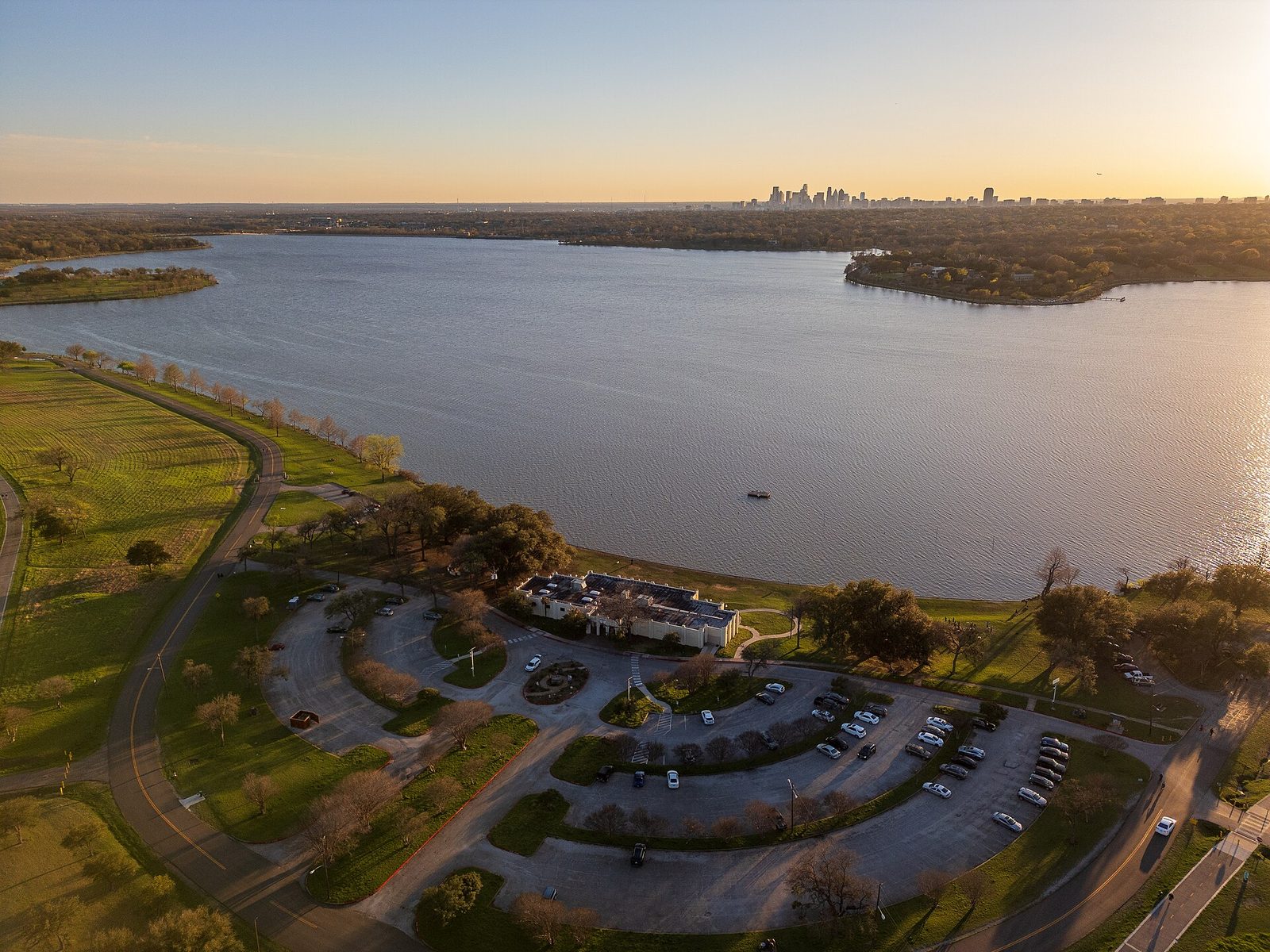
Outdoor things to do in Dallas divide into two lists: what works in April and October, and the much shorter list that survives a July afternoon. Klyde Warren Park, the 3.5-mile Katy Trail and the nine-mile loop at White Rock Lake carry the city year-round. Real hiking starts at Cedar Ridge Preserve, twenty minutes southwest.
What follows is the detail that decides whether a recommendation is any use: surface, shade, water, restrooms, dogs, cost, and the hour of the day you should actually be there. Visit Dallas counts more than 350 parks and 160 miles of trail across the city; almost none of the pages listing them tell you which ones have shade.
Fees, hours and park details below were checked in September 2026 against operators’ own pages. Texas state parks increasingly sell day passes online and turn people away when full, so book before you drive.
Outdoor Dallas at a Glance
| Place | From downtown | Surface | Shade | Water & restrooms | Cost |
|---|---|---|---|---|---|
| Klyde Warren Park | Walkable | Paved, level | Good, plus structures | Yes | Free |
| Katy Trail | Walkable to Uptown end | Paved, level | Patchy but real in stretches | Along the route | Free |
| White Rock Lake | 20 min drive | Paved loop, level | Limited on the open sections | At the main areas | Free |
| Ronald Kirk Bridge | Walkable | Paved, level | None | No | Free |
| Cedar Ridge Preserve | 20 min southwest | Dirt and rock, real grades | Good, mostly wooded | At the entrance area | Check current arrangements |
| Cedar Hill State Park | 30 min southwest | Mixed; DORBA trail is dirt | Varies by trail | Yes, with showers | $7 adult, under 12 free |
| Trinity River floodplain | Walkable to the levees | Gravel and grass | None | No | Free |
| Dallas Arboretum | 20 min drive | Paved paths | Excellent | Yes | Dated ticket, price varies |
The shade column is the one to read. Dallas is a prairie city, and a great deal of its outdoor space is genuinely open ground with nothing between you and the sun. That is fine in March and it is a serious consideration in August.
When Is It Safe to Be Outside in Dallas?
This is the question the listicles never answer, so here it is directly.
| Month | Average high | Safe outdoor window | What works |
|---|---|---|---|
| March–May | 69.9–84.9°F | All day | Everything. Wildflowers in April. |
| June | 92.7°F | Before 10:00, after 19:00 | Shaded trails, water, evening walks |
| July | 96.9°F | Before 09:00, after 20:00 | Lakes and shaded woodland only |
| August | 97.1°F | Before 09:00, after 20:00 | The same, and less of it |
| September | 90.0°F | Before 10:00, after 19:00 early in the month | Improving fast after the middle |
| October | 79.5°F | All day | The best outdoor month of the year |
| November–February | 57.7–67.8°F | All day | Everything, with a layer |
Dallas passes 100°F several times every summer and has recorded 113°F. The practical rules in June, July and August:
- Start at sunrise. A 07:00 walk around White Rock Lake in July is genuinely pleasant. The same walk at 14:00 is dangerous.
- Carry more water than you think, and know where the next fountain is before you start. Several of the best trails have none.
- Prefer wooded over open. Cedar Ridge Preserve in August is survivable because it is under trees; the Trinity levees are not, because they are not.
- Treat the middle of the day as indoor time. This is not caution, it is how the city actually functions from June to September.
October is the reward. Average highs of 79.5°F, everything open, and — as the wettest month of the year at 4.79 inches — occasionally spectacular skies. Our month-by-month guide goes further on the trade-offs.
Klyde Warren Park: The Easiest Outdoors in the City
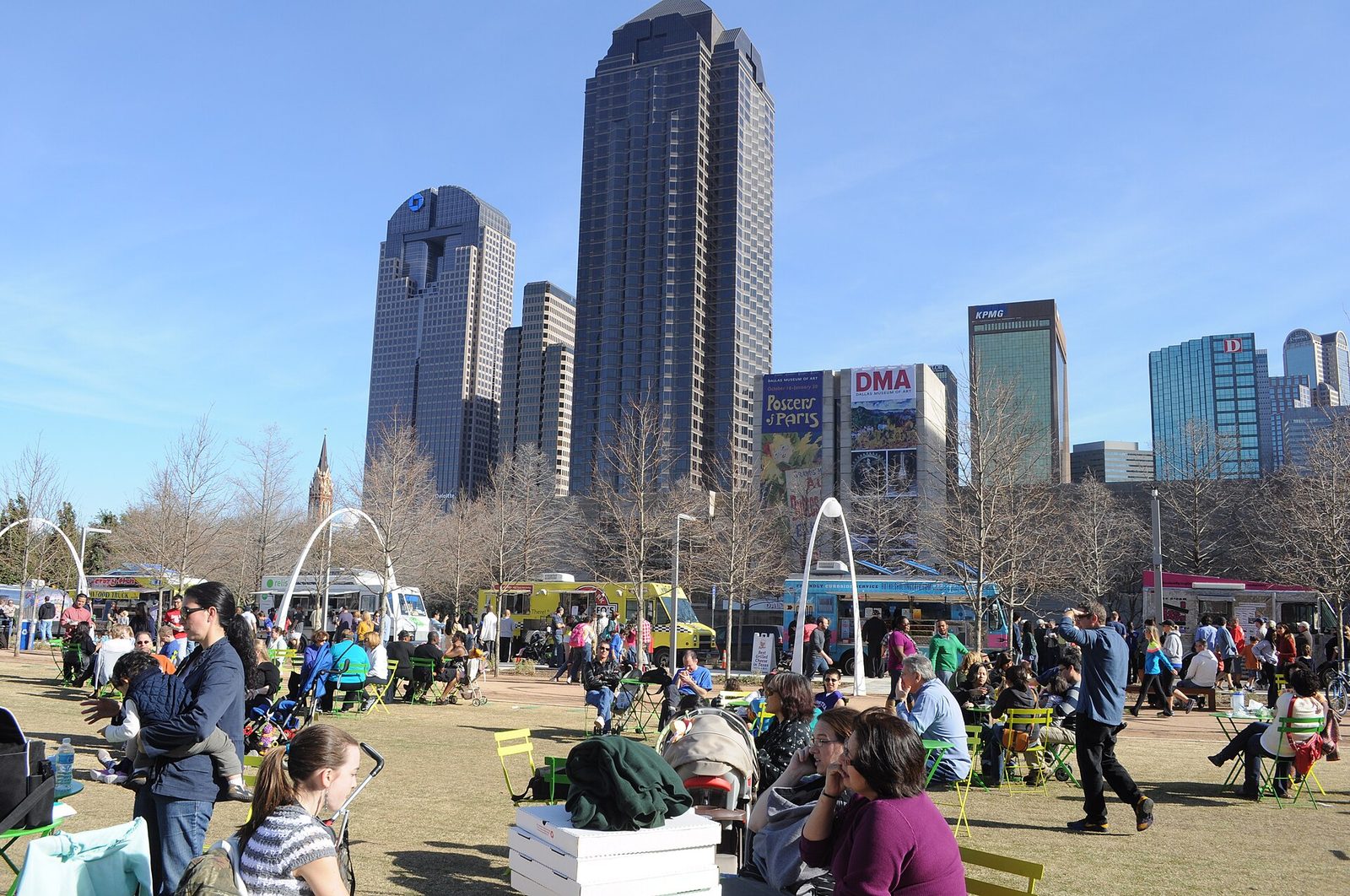
Klyde Warren Park is a deck park built over the Woodall Rodgers Freeway, stitching downtown to Uptown across what used to be a canyon of traffic. It is free, it is about five acres, and it takes over two million visitors a year.
What makes it useful to a visitor is the programming rather than the greenery. Free fitness classes, chess, Piano in the Park, a running club and children’s programming run on a published calendar, and there are rotating food trucks alongside permanent dining. There is also a dog park with its own posted rules.
Practically, it is the answer to “we have two hours and it is 92 degrees” — there is shade, there are structures, there is food, and the Arts District is on one side and Uptown on the other. It is also the natural midpoint of a walk between the two.
Honest verdict: it is a very good piece of urban design and a modest park. Do not travel across the city for it. Do use it as the hinge of a downtown day, which is exactly what it was built to be.
The Katy Trail: 3.5 Miles Through Uptown
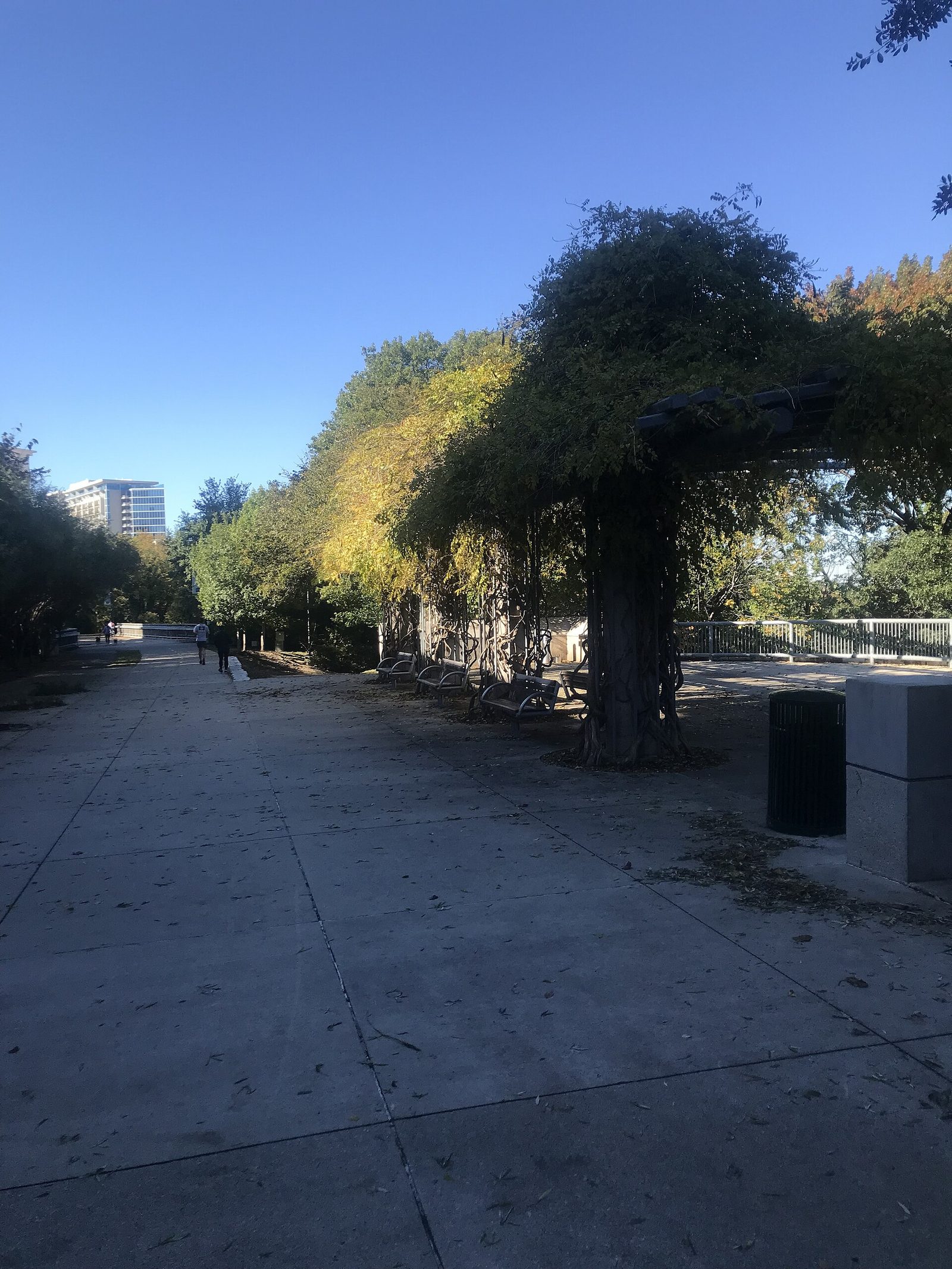
The Katy Trail runs 3.5 miles along a former rail alignment through Uptown, and it is the single most used piece of recreational infrastructure in the city. Walkers, runners and cyclists all use it, and entrances along its length drop you directly into Uptown’s restaurant and bar districts.
Because it follows a railway grade it is flat, which makes it genuinely accessible, and because it is an old corridor it has mature trees in long stretches — the best shade of any linear trail in the city.
It gets busy. Early mornings and evenings are the peak, and at those times a slow walk in the middle of the path is not popular. Keep right, listen for bikes, and if you are running with a dog, keep it on a short lead.
The trail organization does not publish surface details, hours or a rules list on its site, so treat it as an urban shared path and behave accordingly. For anything specific, the office is on (214) 303-1180.
Where it fits: the Katy Trail plus Klyde Warren Park plus the Arts District is a genuinely good car-free half day, and the free M-Line Trolley connects the Uptown end back to downtown. Our transport guide has the detail.
White Rock Lake: The Nine-Mile Loop
White Rock Lake is where Dallas goes to run, cycle and look at its own skyline. Visit Dallas puts it at more than 1,015 acres with a loop running over nine miles, and the view back at downtown from the eastern shore is the best free skyline view in the city after the Ronald Kirk Bridge.
The loop is paved and level throughout, which makes it excellent for cycling and for anyone who needs a predictable surface. The catch is shade: long sections are completely open, and on a summer afternoon the loop is a serious undertaking rather than a pleasant ride.
Practical notes. There is no admission charge. Parking is free at several lots around the lake and fills on spring weekends. Water and restrooms are at the main areas rather than evenly distributed, so plan a nine-mile circuit around them. The Dallas Arboretum sits on the southeastern shore, which makes an obvious pairing.
Best time: an hour after sunrise, any month. In October and April it is good all day. In July, do a section rather than the loop, and do it early.
Cedar Ridge Preserve: Real Hiking, Twenty Minutes Out
This is the answer for anyone who wants actual hiking rather than a paved path, and it is startlingly close to the city.
Cedar Ridge Preserve is a 633-acre natural sanctuary about 20 minutes southwest of downtown, managed by Audubon Dallas, with approximately nine miles of hiking trails through native prairie, woodland and butterfly gardens. It sits at an elevation of 755 feet and is fairly described by its managers as a taste of the Texas Hill Country inside the Dallas area.
The trails vary in difficulty and include real grades — this is not a flat riverside path. Two worth knowing: the Cattail Pond Trail, which leads to a pond surrounded by wildflowers, and the Escarpment Trail, which gives panoramic views over the surrounding landscape. There is a butterfly garden near the entrance and the preserve is one of the better birdwatching sites in the county.
Audubon Dallas runs regular programming, including Junior Ranger Hikes — an easy one-mile walk led by North Texas Master Naturalists — and Conservation in Action volunteer days on the first and third Saturdays of each month.
The address is 7171 Mountain Creek Parkway. Check the current operating hours and any entry arrangements on Audubon Dallas’s own site before you drive out; we did not capture a published admission price or daily hours at the time of writing and we are not going to guess at one.
Honest verdict: the best hiking within half an hour of downtown Dallas, and the only place on this page where you can get properly out of sight of the city. It also has the shade that most Dallas outdoor space lacks, which makes it the summer default.
Cedar Hill State Park and Joe Pool Lake
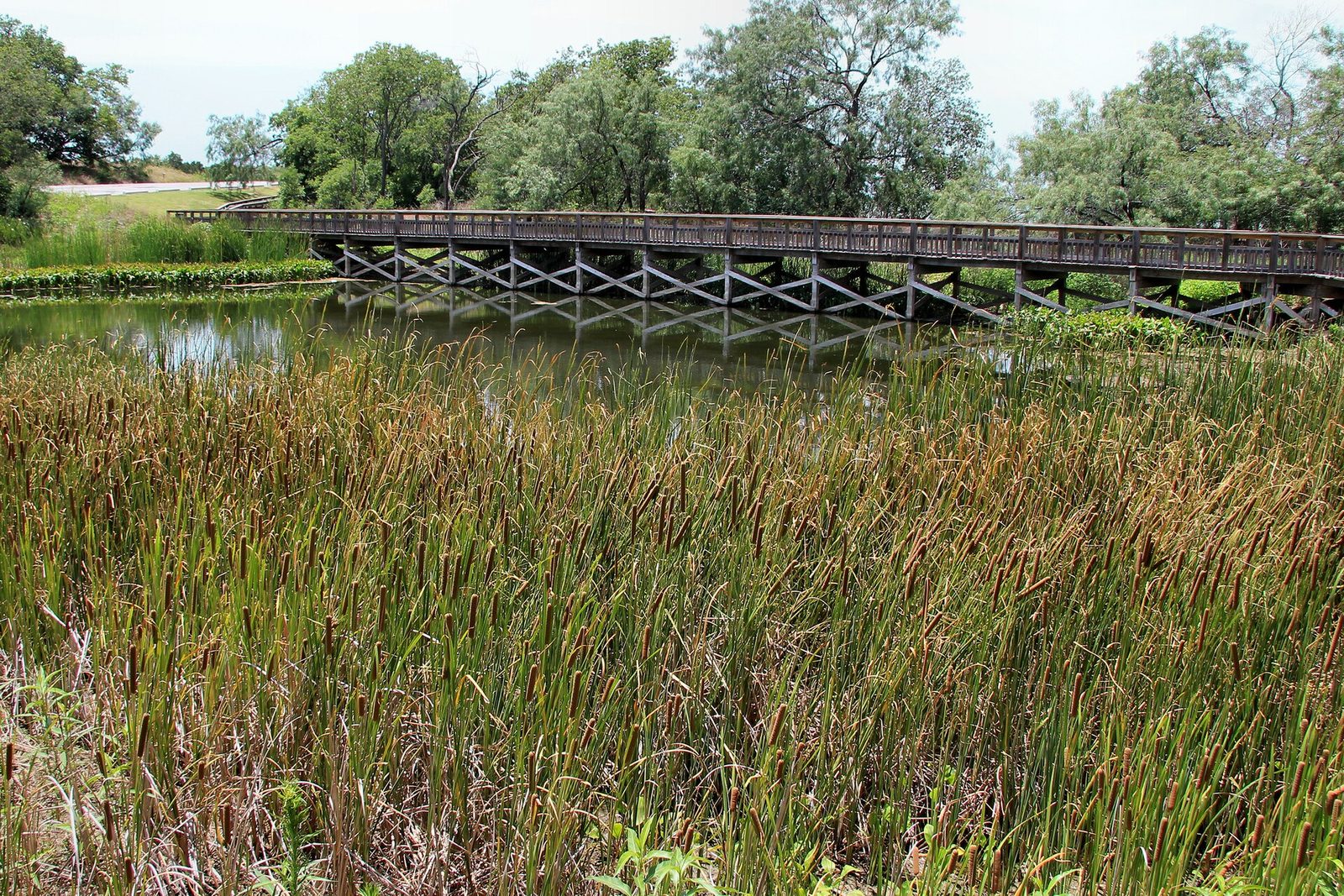
Thirty minutes southwest on the shore of Joe Pool Lake, Cedar Hill is the full state park experience and the closest one to Dallas.
Entry is $7 per adult for day use, $5 for overnight guests, and free for children 12 and under. The park is open daily from 6:00am to 10:00pm. Reservations are highly recommended — the park says plainly that it often reaches capacity, and a day pass booked online guarantees entry.
What you get:
- Swimming from a gravel beach on Joe Pool Lake, which covers 7,500 acres. This is the nearest genuine swimming to the city.
- The DORBA Trail, spanning 1,200 acres and open to both mountain bikers and hikers. It closes when wet — check before you load bikes into a car.
- 350 campsites, all with water and electricity and all near restrooms with hot showers.
- Birdwatching — Visit Dallas cites more than 200 species recorded across the park.
Address: 1570 West FM 1382, Cedar Hill. You need a car; there is no transit option.
The Trinity River and the Great Trinity Forest
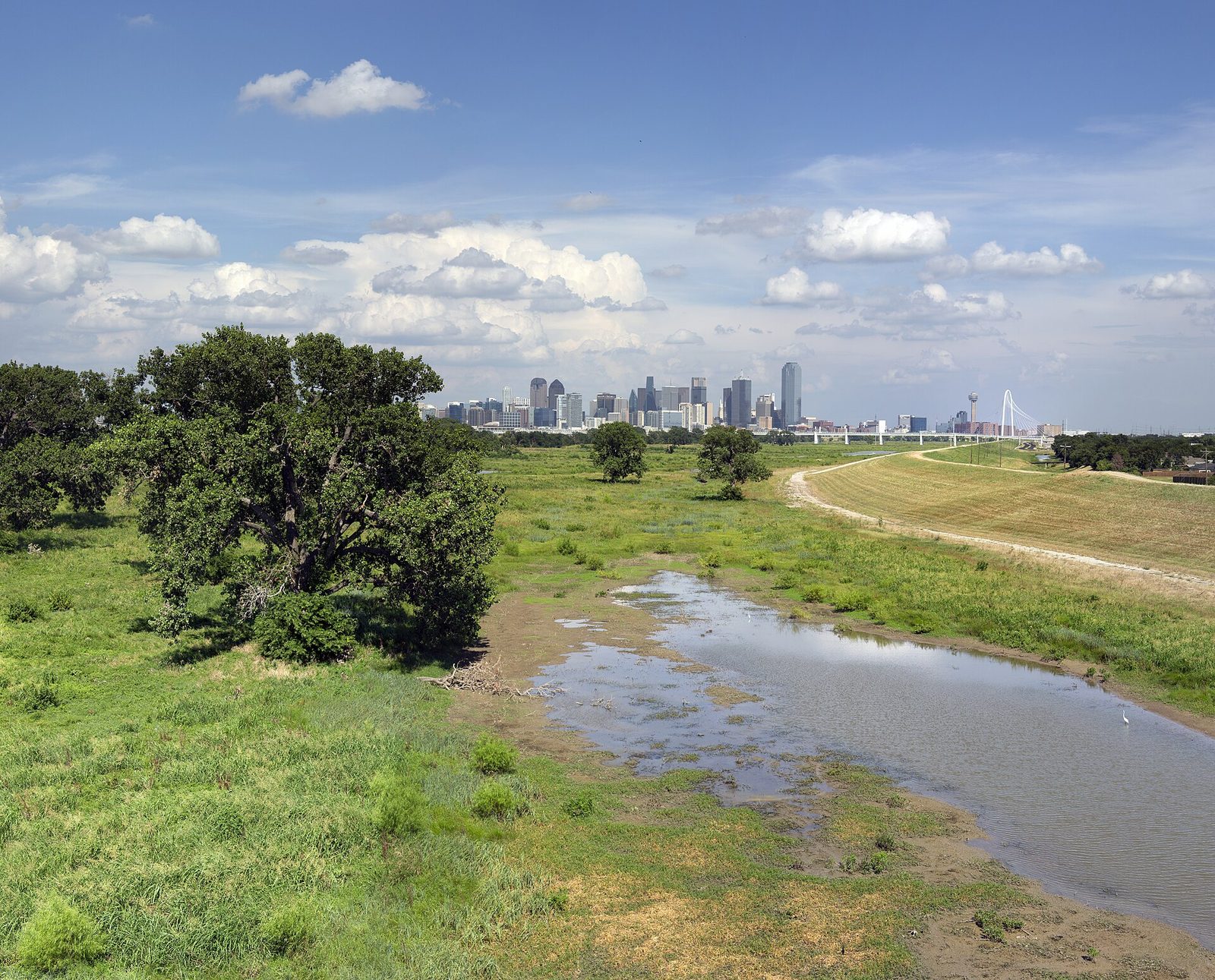
The Trinity River runs immediately west and south of downtown through a vast engineered floodplain between levees, and the city has spent two decades trying to turn it into a park. The result is a genuinely large green space with a spectacular skyline view and very little infrastructure.
Walk the levee paths and the floodplain trails for the view and the strangeness of standing in open grassland with towers behind you. Do not do it in the middle of a summer day — there is no shade at all, no water and no restrooms out there, and the exposure is total.
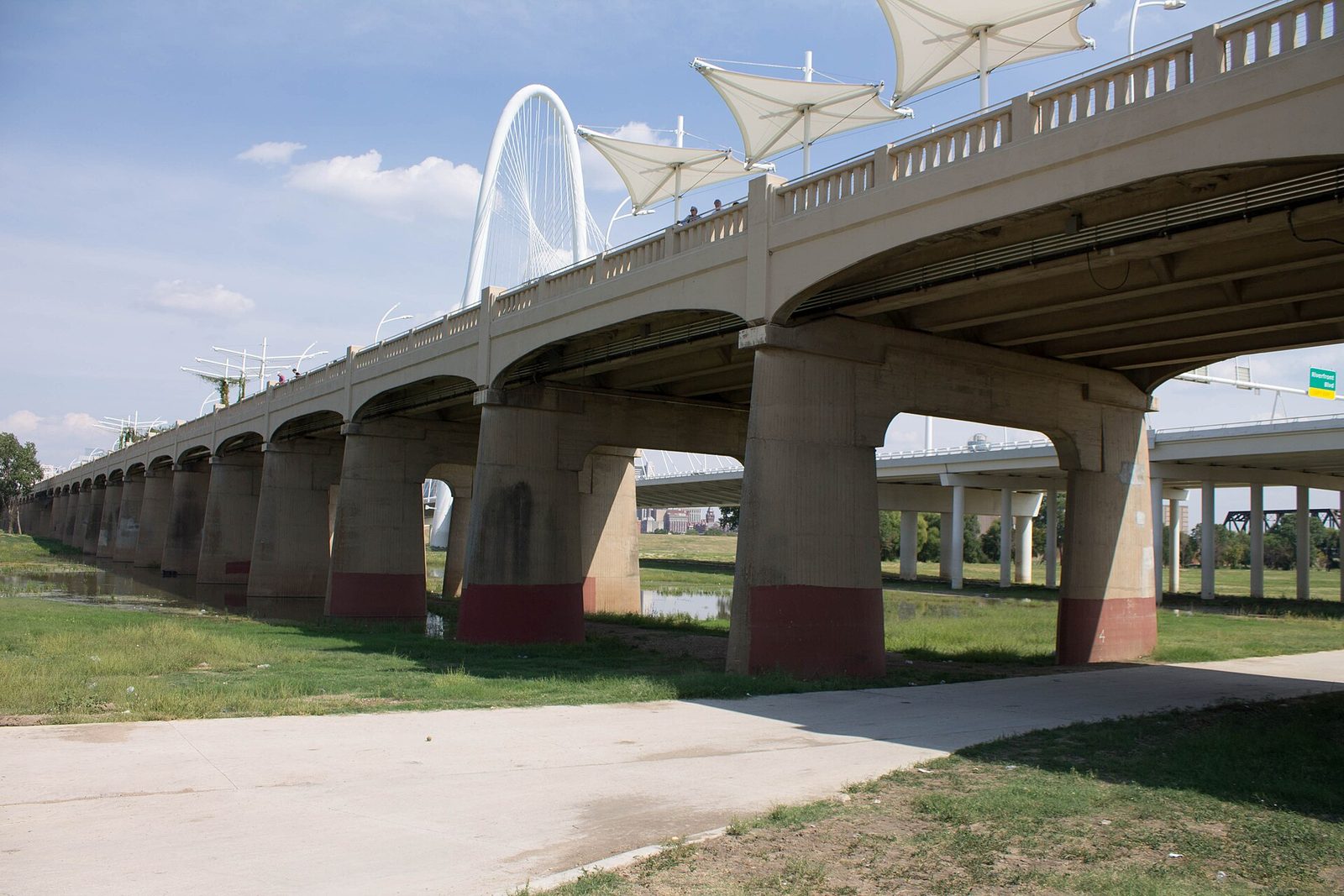
The Ronald Kirk pedestrian bridge is the easy version. It crosses the Trinity beside the Margaret Hunt Hill Bridge, it is free, it is a short walk from downtown, and the view back at the skyline from the middle of it is better than the one you would pay for from an observation deck. Go at golden hour.
Further south, the Great Trinity Forest — billed as the largest urban hardwood forest in the United States — holds the Trinity River Audubon Center and a network of trails. It is less visited and less manicured than anything else on this page, and it rewards people who like that.
The Dallas Arboretum: A Garden, Not a Park
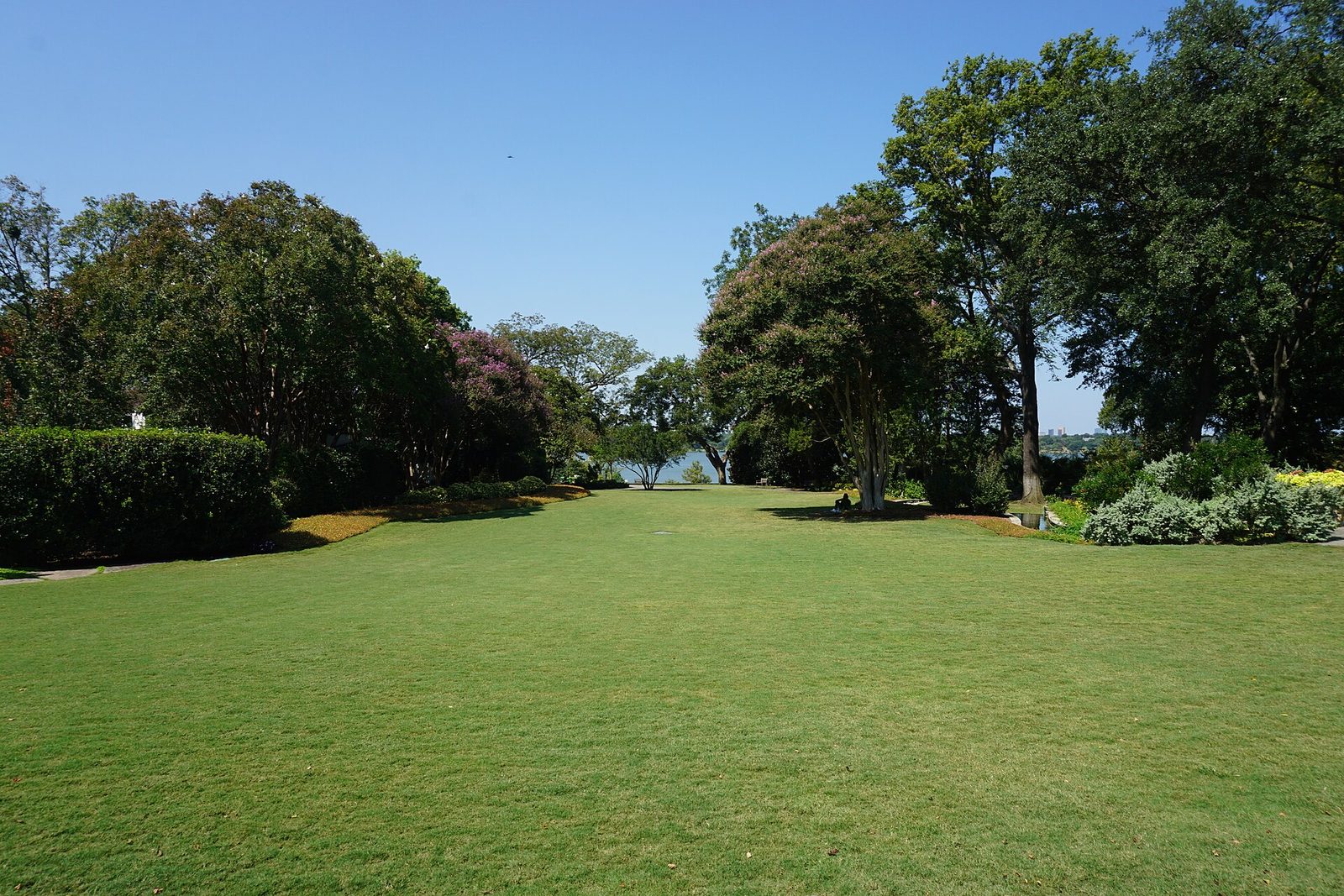
The Dallas Arboretum and Botanical Garden covers 66 acres on the southeastern shore of White Rock Lake and is the most comfortable outdoor attraction in the city in hot weather, simply because it is heavily planted and heavily shaded.
Autumn at the Arboretum runs from 19 September to 1 November 2026, and it is the single most popular period of the year. Dallas Blooms, the spring festival, is listed as running 21 February to 12 April.
The Rory Meyers Children’s Adventure Garden is eight acres and is included in general garden admission rather than being a separate ticket, which is a common misconception. It runs daily programming — the Walne Family Discovery Lab at 11:00, 12:30 and 14:00, the OmniGlobe at 11:30 and 14:30, drop-in STEM Stops from 12:00 to 14:00, and Little Adventurers storytime at 10:30 on weekdays with a weekend puppet show at The Glade.
Two practical points. Children under 16 must be accompanied by an adult. Complimentary wheelchairs are first-come, first-served, and there are no trams or golf carts during evening hours.
On price: the Arboretum sells admission through a dated ticket widget and the price varies by date and by festival. There is no flat rate, and anyone quoting you one is guessing. Check the day you intend to go.
Outdoor Attractions That Are Not Parks
Three ticketed places belong in an outdoor plan even though nobody files them under hiking.
The Dallas Zoo is the largest zoological park in Texas and sits on the Red and Blue lines at its own station, which makes it the most transit-friendly attraction in the city. Tickets start at $18 and vary by entry date; children two and under go free. It is open 364 days a year, closing only on Christmas Day. It is an outdoor day in the literal sense, which means the summer rules apply with force — go at opening, and treat the middle of the day as the time to find shade and indoor exhibits.
Fair Park is 277 acres of art deco architecture built for the 1936 Texas Centennial Exposition, and walking through it costs nothing on ordinary days. It is on the Green Line. During the State Fair of Texas, which runs 25 September to 18 October 2026, it becomes a ticketed event and a completely different experience — enormous, crowded and enjoyable on its own terms, but not a quiet architecture walk.
The Perot Museum’s plaza and the Arts District deserve a mention for anyone who wants to be outside but not far from air conditioning. The whole district is walkable, largely shaded and studded with sculpture, which makes it the best hot-weather compromise in the city — outside, but never more than three minutes from a lobby.
Picnics, Playgrounds and Where to Sit
The picnic question comes up more than any other in this category, and the answer depends entirely on whether you have a car.
Without a car: Klyde Warren Park has lawns, shade, tables and food trucks on site, which removes the need to carry anything. It is the obvious choice from a downtown or Uptown hotel and it is free.
With a car: White Rock Lake has several picnic areas around its shoreline with tables, parking and restrooms, and the eastern side gives you the skyline as a backdrop. Cedar Hill State Park has picnic facilities beside its swimming beach for a $7 day-use fee.
Playgrounds are where the city quietly excels. Klyde Warren Park’s children’s area is designed rather than bolted on, and the Rory Meyers Children’s Adventure Garden at the Arboretum is eight acres of structured outdoor play included in general garden admission. Between them they cover most ages.
Two practical notes for any outdoor meal here. Ants are a genuine consideration in Texas — use a table rather than a blanket if one is available. And glass is prohibited in most city parks, so bring cans or bottles.
Where Can You Actually Swim Near Dallas?
Not in White Rock Lake, which is the first thing to know. The city’s signature lake is for looking at and paddling on, not for swimming in.
Cedar Hill State Park is the realistic answer — a gravel swimming beach on Joe Pool Lake, thirty minutes southwest, $7 for adults and free for under-12s, open 6:00am to 10:00pm.
Lake Texoma, ninety minutes north on the Oklahoma border, is the bigger version with more beaches and more boats. It is a day trip rather than an afternoon.
Turner Falls in Oklahoma, two hours north, has natural swimming pools beneath a waterfall and is the classic North Texas summer excursion. Our day trips guide covers both of those properly.
In the city itself, hotel pools and municipal aquatic centers are what exist. This is not a swimming city; it is a lake city where the lakes are mostly for boats.
Kayaking, Paddleboarding and Cycling
Paddling happens on the Trinity River Paddling Trail, which Visit Dallas describes as having 21 official launch sites across nine municipalities, and on White Rock Lake, where rental operators run in season. The Trinity is a river paddle with current and access points rather than a lake paddle; check conditions and river levels before committing, because the Trinity’s level moves quickly after rain.
Cycling divides into three kinds. Paved trail riding on the Katy Trail and the White Rock loop, which needs no special equipment and suits any bike. Mountain biking on the DORBA Trail at Cedar Hill State Park, which closes when wet, and at Boulder Park, which Visit Dallas credits with twelve miles of singletrack through woods and creek crossings. And urban riding, which requires more care than the trail map suggests.
Two urban rules that catch visitors. Bikes and scooters are illegal on sidewalks in downtown Dallas — ride in the road or a bike lane. And rental scooters operate only from 05:00 to 21:00, so they are not an evening option. DART’s light rail takes bikes: the center car of every vehicle is level with the platform and designed for bikes, wheelchairs and strollers alike, which makes a train-and-ride day genuinely practical.
Birdwatching and Wildlife
North Texas sits on the Central Flyway, which makes the region far better for birds than its reputation suggests, and two sites on this page are genuinely good.
Cedar Ridge Preserve is the serious one. Its mix of native prairie, woodland and pond habitat across 633 acres produces a long species list, and Audubon Dallas runs guided programming through the year. The butterfly garden near the entrance is worth ten minutes on its own in late summer, when it is at its busiest.
Cedar Hill State Park is the other, with Visit Dallas citing more than 200 recorded species across its acreage on Joe Pool Lake. The lake edge and the wooded sections each produce different birds, so a morning that covers both is better than a longer walk in one habitat.
Closer in, White Rock Lake holds substantial waterfowl numbers, particularly in winter, and the Trinity River Audubon Center in the Great Trinity Forest is purpose-built for exactly this. Early morning is the answer everywhere, which fits neatly with the heat rules above.
On other wildlife: this is snake country, and the preserves are honest about it. Watch where you put your hands and feet on rocky trails, stay on the path, and do not reach into crevices. Encounters are uncommon and bites are rarer still, but the precaution costs nothing.
Dogs: Which Parks and Trails Work?
Dallas is a good city for dogs, with some caveats worth knowing before you set out.
Klyde Warren Park has a dedicated dog park with its own posted rules, which makes it the easiest option for anyone staying downtown. White Rock Lake is the classic long walk, on lead, with the usual warning about hot pavement — asphalt in July will burn paws, and the test is whether you can hold your own hand on it for five seconds.
The Katy Trail takes dogs on a short lead, and a short lead matters here because the path is shared with fast cyclists. On state park trails, leads are required and rules are enforced.
Heat is the real dog issue in this city rather than access. Dogs overheat faster than people do, they cannot tell you when they are in trouble, and a summer afternoon walk that feels merely unpleasant to you can be genuinely dangerous to them. Dawn walks, shade and water, every time.
Accessibility: Surfaces, Grades and Restrooms
The paved, level options are Klyde Warren Park, the Katy Trail, the White Rock Lake loop and the Ronald Kirk Bridge. All four are genuinely flat, all four are hard-surfaced throughout, and all four are free.
The Dallas Arboretum is paved throughout with complimentary wheelchairs on a first-come basis, and it is the most comfortable ticketed option. Note the absence of trams and golf carts during evening hours, which lengthens the walk back.
Cedar Ridge Preserve and the DORBA Trail at Cedar Hill are dirt with real grades and are not suitable for wheelchairs or for anyone unsteady on uneven ground. The Trinity floodplain paths are gravel and grass and vary.
For getting there, DART’s level boarding — the center car of every light rail vehicle sits flush with the platform — makes the in-city options straightforward without a car.
What to Carry, and What Catches People Out
Five things, and the first two are not optional between May and October.
Water, and more than you planned. Several of the best routes on this page have no drinking water at all — the Trinity levees, most of the White Rock loop between the main areas, and the outer trails at Cedar Ridge. Two liters per person for a morning is not excessive in August.
Sun protection that does not rely on shade. Hat, sunscreen, sunglasses. The prairie sun here is harsher than visitors from northern climates expect, and the humidity means you will not notice how much you are sweating until you are behind.
Closed shoes for anything unpaved. Cedar Ridge and the DORBA Trail are rocky, and the preserve’s own volunteer guidance asks for closed-toe shoes and long trousers for good reason — this is snake country, and while encounters are rare, they are not theoretical.
A charged phone. Not for photographs. Several of these areas have patchy coverage and long distances between access points, and the trail networks at Cedar Ridge and Cedar Hill are easy to misjudge.
An exit plan for the heat. Know where the nearest air conditioning is. On the Katy Trail that is a restaurant; at White Rock Lake it is your car; at Cedar Ridge it is your car and it is a walk away. Heat exhaustion in Texas arrives faster than people from cooler places expect, and the symptoms — a headache, mild nausea, feeling suddenly tired — are easy to attribute to a long walk rather than to the weather.
One thing that does not catch people out as often as it should: storms. Texas thunderstorms build quickly, particularly in spring, and open ground beside a lake or on a levee is the wrong place to be when one arrives. Check a forecast before a long outing and take the sky seriously if it changes.
Three Outdoor Half-Days
| Half day | Plan | Season | Cost |
|---|---|---|---|
| The car-free one | Klyde Warren Park → Katy Trail north → free M-Line Trolley back → Ronald Kirk Bridge at sunset | Any, early or late in summer | $0.00, or $6.00 with a day pass |
| The real hike | Cedar Ridge Preserve at opening — Escarpment Trail, then Cattail Pond | Best October to May; workable in summer for the shade | Fuel, plus whatever the preserve currently asks |
| The water day | Cedar Hill State Park — swim from the gravel beach, then the DORBA Trail if dry | May to September | $7 adult, under 12 free |
Each of those is a half day deliberately. In this climate, a full day outdoors is a spring and autumn activity, and pretending otherwise is how visitors end up miserable.
Outdoor Things to Do in Dallas: Frequently Asked Questions
What is the best park in Dallas?
Klyde Warren Park for convenience and programming, White Rock Lake for the nine-mile loop and the skyline view, Cedar Ridge Preserve for actual hiking. They are three different things and the right answer depends on whether you have a car.
Where can you hike near Dallas?
Cedar Ridge Preserve, twenty minutes southwest, has roughly nine miles of dirt trails with real grades across 633 acres at 755 feet of elevation. Cedar Hill State Park, thirty minutes out, adds the DORBA Trail and swimming.
Is it too hot to be outdoors in Dallas in summer?
Not if you time it. July and August average 96.9°F and 97.1°F, so the usable windows are before 09:00 and after 20:00. Choose shaded, wooded trails over open ground, carry more water than you expect to need, and treat midday as indoor time.
Can you swim in White Rock Lake?
No. White Rock Lake is for walking, cycling and paddling, not swimming. The nearest genuine swimming is the gravel beach at Cedar Hill State Park on Joe Pool Lake, thirty minutes southwest, at $7 per adult.
How long is the Katy Trail?
3.5 miles, along a former rail alignment through Uptown. It is flat, paved, well shaded in stretches and very busy at dawn and dusk. Keep right and listen for cyclists.
How much does Cedar Hill State Park cost?
$7 per adult for day use, $5 for overnight guests, free for children 12 and under. Open daily 6:00am to 10:00pm. Reserve a pass online in advance — the park regularly reaches capacity.
Are there free outdoor things to do in Dallas?
Most of the best ones. Klyde Warren Park, the Katy Trail, the entire White Rock Lake loop, the Ronald Kirk Bridge and the Trinity floodplain paths all cost nothing. So does the Laura W. Bush Native Texas Park beside the Bush Center.
What is the best skyline view in Dallas that does not cost anything?
The Ronald Kirk pedestrian bridge over the Trinity, particularly at golden hour. The eastern shore of White Rock Lake is the other contender. Both beat paying for an observation deck if a photograph is what you want.
Is there anywhere to picnic in Dallas without a car?
Klyde Warren Park, easily. It has lawns, shade, tables, rotating food trucks and permanent dining, and it sits within walking distance of most downtown and Uptown hotels. No admission charge and nothing to carry.
Can I take a bike on DART?
Yes. The center car of every light rail vehicle is level with the platform and is designed for bikes, wheelchairs, strollers and luggage. Keep the aisle clear. It makes a train-out, ride-back day entirely practical.
Most of this network takes leashed dogs, and a few stretches of it are the best dog walking in the city — the shaded side of the White Rock Lake loop in particular, which is the one route that still works on a July morning. The Trinity trails have the better skyline but almost no cover. Our dog friendly Dallas guide sorts the trails by shade and season, and lists the twelve city off-leash parks.
The Arboretum sits along the western shore of White Rock Lake, which means the region’s best formal gardens and its best free lakeside path are next door to each other. Doing both in one morning costs no more than the gardens alone. Our guide to visiting the Dallas Arboretum covers the seasons, the tram times and the picnic rules.
For swimming in genuinely wild water rather than a lake, the nearest serious option is across the state line: Turner Falls at Davis, Oklahoma, about two hours north, where a spring-fed creek drops 77 feet into a pool in the Arbuckle Mountains. It is a paid park with tiered parking rather than a state park, and the rules are stricter than most people expect. See our guide to the Turner Falls day trip from Dallas.
Related Dallas Guides
- Free Things to Do in Dallas — most of this page qualifies
- Best Time to Visit Dallas — the heat, month by month
- Day Trips from Dallas — Lake Texoma, Turner Falls and Glen Rose
- Dallas With Kids — the Children’s Adventure Garden and more
- Getting Around Dallas — bikes on trains, scooter rules and fares
- Dallas Attractions — including the Arboretum and the zoo
- Things to Do in Dallas — the complete list
- Dallas Neighborhoods — which districts have green space
- Dallas Itineraries — fitting an outdoor morning into a short trip
- Dallas Museums and Arts — the indoor half of a summer day
- Dallas Events — outdoor festivals and seasonal programming
- Where to Eat in Dallas — including patios that work
- Dallas Travel Guide — the full planning overview
Photo Credits
- Klyde Warren Park: photo by Joe Mabel, Wikimedia Commons (CC BY-SA 3.0)
- Katy Trail: photo by Stephenbharrison, Wikimedia Commons (CC BY-SA 4.0)
- Cedar Hill State Park: photo by Larry D. Moore, Wikimedia Commons (CC BY 4.0)
- Trinity River floodplain: photo by IcedCowboyCoffee, Wikimedia Commons (CC0)
- Lay Family Garden, Dallas Arboretum: photo by Michael Barera, Wikimedia Commons (CC BY-SA 4.0)
- Ronald Kirk Bridge: photo by Renelibrary, Wikimedia Commons (CC BY-SA 4.0)
- White Rock Lake (featured image): photo by DronePhotographer, Wikimedia Commons (CC0)
Sources
- Audubon Dallas — Cedar Ridge Preserve
- Texas Parks and Wildlife — Cedar Hill State Park
- Texas Parks and Wildlife — Dinosaur Valley State Park
- Friends of the Katy Trail
- Klyde Warren Park
- Dallas Arboretum and Botanical Garden
- Dallas Park and Recreation
- Trinity River Audubon Center
- DART — level boarding and bikes on rail
- Downtown Dallas Inc. — scooter and sidewalk rules
- National Weather Service — Fort Worth/Dallas
- Visit Dallas — outdoors overview