Dallas on a budget works better than most American cities, for one specific reason: the best museum is free, the best transport pass is $6.00, and the best skyline view costs nothing at all. A careful visitor can cover transport and attractions for under $15 a day. The money goes on hotels, parking and tax.
This guide builds transparent, all-in numbers rather than a headline daily average. Every price below is one an operator publishes, stamped with when we checked it. Where a number is not published — hotel rates, Reunion Tower admission, the Arboretum, the combined Dallas hotel tax — we say so and tell you how to find it, instead of inventing a figure.
All prices checked September 2026. Fares and admissions move; hotel rates move daily. Treat the structure as durable and the specific numbers as a snapshot.
What Does a Day in Dallas Actually Cost?
| Per adult, per day | Careful | Comfortable | What changes |
|---|---|---|---|
| Transport | $0.00–$6.00 | $20–$40 | DART pass versus rideshare |
| Attractions | $0.00–$12.00 | $27–$55 | Free museums versus the Perot and the Sixth Floor |
| Food | Market and food trucks | Sit-down meals | The single biggest swing after the hotel |
| Accommodation | Hostel or budget chain | Downtown hotel plus parking | Parking can rival the room rate |
| Tax on everything | Up to 8.25% sales tax | Same, plus hotel tax | Added at the till, not shown on the label |
For context on the wider picture: BudgetYourTrip, a third-party aggregator rather than a first-party source, puts the average daily cost of travel in Dallas at around $103, with budget travelers nearer $73 and mid-range around $166. Those are averages built from reported spending, not quoted prices, and we cite them as orientation rather than as a target.
The number we stand behind is narrower and more useful: transport and attractions for one adult can be done well for $6.00 to $18.00 a day, using published fares and published admissions. Everything above that is food and a bed, and those are decisions rather than costs.
The Costs Nobody Puts in the Headline Number
Five things inflate a Dallas trip past the budget people set for it, and four of them are avoidable.
Sales tax. Texas charges 6.25% state sales tax and local jurisdictions can add up to 2%, for a maximum combined 8.25%. American prices are displayed pre-tax. Every meal, every ticket, every purchase is roughly 8% more than the number on the label.
Hotel tax. The state hotel occupancy tax is 6% of the room cost, and cities, certain counties and special purpose districts are authorized to add a further local hotel tax on top. We could not reach a first-party page giving the current Dallas combined rate, so we are not printing one — see the section below for how to get the real number for your booking.
Parking. Downtown Dallas has no published standard rate; the business district itself points visitors at parking apps rather than quoting prices. Hotel garages are quoted per property and are frequently the largest single surprise in a trip budget.
Tolls. North Texas has an extensive tolled road network, and rental companies bill tolls through their own programs with an added service fee — some flat per day, some per transaction. Read the toll clause before you sign.
Event surges. A Cowboys home game, a convention or the State Fair — 25 September to 18 October 2026 — moves hotel rates, parking rates and rideshare pricing simultaneously. Checking the event calendar before booking dates is the highest-value thirty seconds in this entire guide.
How Much Is Hotel Tax in Dallas?
More than the room rate you were quoted, and we are going to be straight about the limits of what we know.
What is verified: the Texas state hotel occupancy tax is 6% of the cost of a room, applying to rooms costing $15 or more daily for state tax and $2 or more daily for local taxes. Cities, certain counties and special purpose districts are authorized to impose an additional local hotel tax.
What is not verified: the exact combined percentage a guest pays in the City of Dallas. We could not reach a current first-party page stating it at the time of writing, and third-party figures for this vary enough that we are not going to repeat one.
What to do instead: take any room rate you are quoted and go through to the final confirmation screen before you compare hotels. Every booking channel is required to show the tax and fees before you pay. Compare the all-in totals, not the headline rates, because the difference between two hotels quoting the same nightly rate can be meaningful once taxes, resort fees and parking are added.
The practical rule: budget a double-digit percentage on top of every quoted room rate, plus parking if you have a car. A room at $150 is not a $450 three-night stay.
Transport: The Cheapest Line on Your Budget
This is where Dallas is genuinely, unusually cheap, and it is all published.
| Fare | Price | Covers |
|---|---|---|
| M-Line Trolley | Free | Arts District, downtown, Klyde Warren Park, Uptown, West Village — 365 days a year |
| Love Link bus from Love Field | Free outbound | The airport to Inwood/Love Field Station. $2.50 in the other direction. |
| DART 3-Hour Pass | $3.00 | Unlimited local rides for three hours; $1.50 reduced |
| DART Local Day Pass | $6.00 | Rail, buses, GoLink, the Dallas Streetcar and the Silver Line until 3am; $3.00 reduced |
| Dallas Streetcar one-way | $1.00 | Union Station to Bishop Arts; free with a Local pass |
| DART Regional Day Pass | $9.00 | All of the above plus the full TRE, DCTA and Trinity Metro; $4.50 reduced |
Three consequences worth internalizing:
- DFW Airport to downtown costs $3.00 on a 3-Hour Pass via the Orange Line from Terminal A. There is no cheaper way in from a major American hub.
- Love Field to downtown also costs $3.00, because the Love Link bus out of the airport is free and you only pay for the rail leg.
- A day trip to Fort Worth costs $9.00 return on a Regional pass, against $12.00 for two one-way TRE tickets. Denton by A-train is the same $9.00.
Reduced fares at half price cover seniors, riders with disabilities, Medicare card holders and qualifying students, with a Discount GoPass Tap card applying it automatically. Bring documentation. Our transport guide has the full picture.
Attractions: What Everything Costs
| Attraction | Adult | Child or youth | Note |
|---|---|---|---|
| Dallas Museum of Art | Free | Free | Timed ticket required for everyone |
| Crow Museum of Asian Art | Free | Free | Both locations, always |
| Nasher Sculpture Center | $10, or $8 with DART proof of fare | Under 12 free | $7 senior, $5 student; free First Saturdays |
| Meadows Museum | $12 | 18 and under free | $10 senior, $4 student; free Thursdays after 17:00 |
| Perot Museum | $27 | $17 youth 2–12 | Parking $15 extra unless you take the train |
| Sixth Floor Museum | $27 | $23 youth 6–18 | $25 senior; under 6 free; last entry 16:15 |
| George W. Bush Presidential Museum | $26 | $20 child 5–12 | $24 youth 13–17; $10 veterans; under 5 free |
| Dallas World Aquarium | $34.95 + tax | $24.95 + tax, 3–12 | $28.95 senior; under 2 free |
| Dallas Zoo | From $18 | Under 2 free | Price varies by date; on the Red and Blue lines |
| Cedar Hill State Park | $7 day use | Under 12 free | Reserve online; swimming beach included |
| Dinosaur Valley State Park | $8 | Under 12 free | Glen Rose, 90 minutes out |
| Reunion Tower GeO-Deck | Not published as a flat rate | Not published | Sold by date and time slot; check for your day |
| Dallas Arboretum | Not published as a flat rate | Not published | Dated ticket; varies by date and festival |
Note the last two rows. Reunion Tower and the Arboretum both sell through date-and-time widgets with no published flat price, and any guide quoting you a single figure for either is guessing. Check the day you intend to go.
Which Days Are Free?
Dallas is unusually generous, and stacking the free days is the single most effective budget tactic available.
| What | When it is free |
|---|---|
| Dallas Museum of Art | Always — Wednesday to Sunday, timed ticket required |
| Crow Museum of Asian Art | Always — Tuesday to Sunday |
| Nasher Sculpture Center | First Saturday of the month, 11:00–17:00 |
| Meadows Museum | Thursday evenings after 17:00, open until 21:00 |
| ’til Midnight at the Nasher | Third Friday, 18:00–midnight, March to October |
| Laura W. Bush Native Texas Park | Always — sunrise to sundown |
| Fair Park grounds and deco architecture | Always, outside State Fair dates |
| Klyde Warren Park, Katy Trail, White Rock Lake | Always |
| Dealey Plaza, JFK Memorial, Pioneer Plaza | Always |
| Ronald Kirk Bridge | Always — the best free skyline view in the city |
The perfect free week would put the DMA on a Wednesday, the Crow on a Tuesday, the Nasher on a First Saturday and the Meadows on a Thursday evening. That is four significant art museums for nothing, and almost nobody does it because nobody publishes the grid. Our free things to do guide goes further.
Is the Dallas CityPASS Worth It?
Sometimes, and the arithmetic is simple enough to do yourself.
Dallas CityPASS costs $64.00 adult and $46.00 child aged 3 to 12, valid over a nine-day period starting the first day you use it. You choose four of six: the Perot Museum, the Reunion Tower GeO-Deck, the Dallas Zoo, the George W. Bush Presidential Museum, the Dallas Holocaust and Human Rights Museum, and AT&T Stadium Tours. CityPASS states savings of up to 56% for adults.
Run it against published prices. Perot $27 plus Bush Museum $26 is already $53 for two of the four; add the zoo from $18 and you are at $71 for three, against $64 for four. On that combination the pass wins clearly.
Where it fails is an art-led or history-led trip. The pass does not include the Sixth Floor Museum, the Dallas Museum of Art, the Nasher or the Arboretum — and two of those are free or nearly free anyway. If your list is the DMA, the Nasher, the Sixth Floor Museum and the Arts District, the pass saves you nothing at all.
The test: write down the four attractions you would pay for regardless. Four on the list, buy it. Three, do the arithmetic. Two, buy singles.
Eating in Dallas on a Budget
We are not going to print restaurant prices we have not verified, so here is structure rather than false precision.
The Dallas Farmers Market is the anchor. Free to enter, at 920 S. Harwood Street downtown. The indoor Market — a food hall and shops — is open daily 10:00 to 19:00, which makes it a reliable cheap lunch. The open-air Shed with the producer stalls is Saturday 09:00–17:00 and Sunday 10:00–17:00 only.
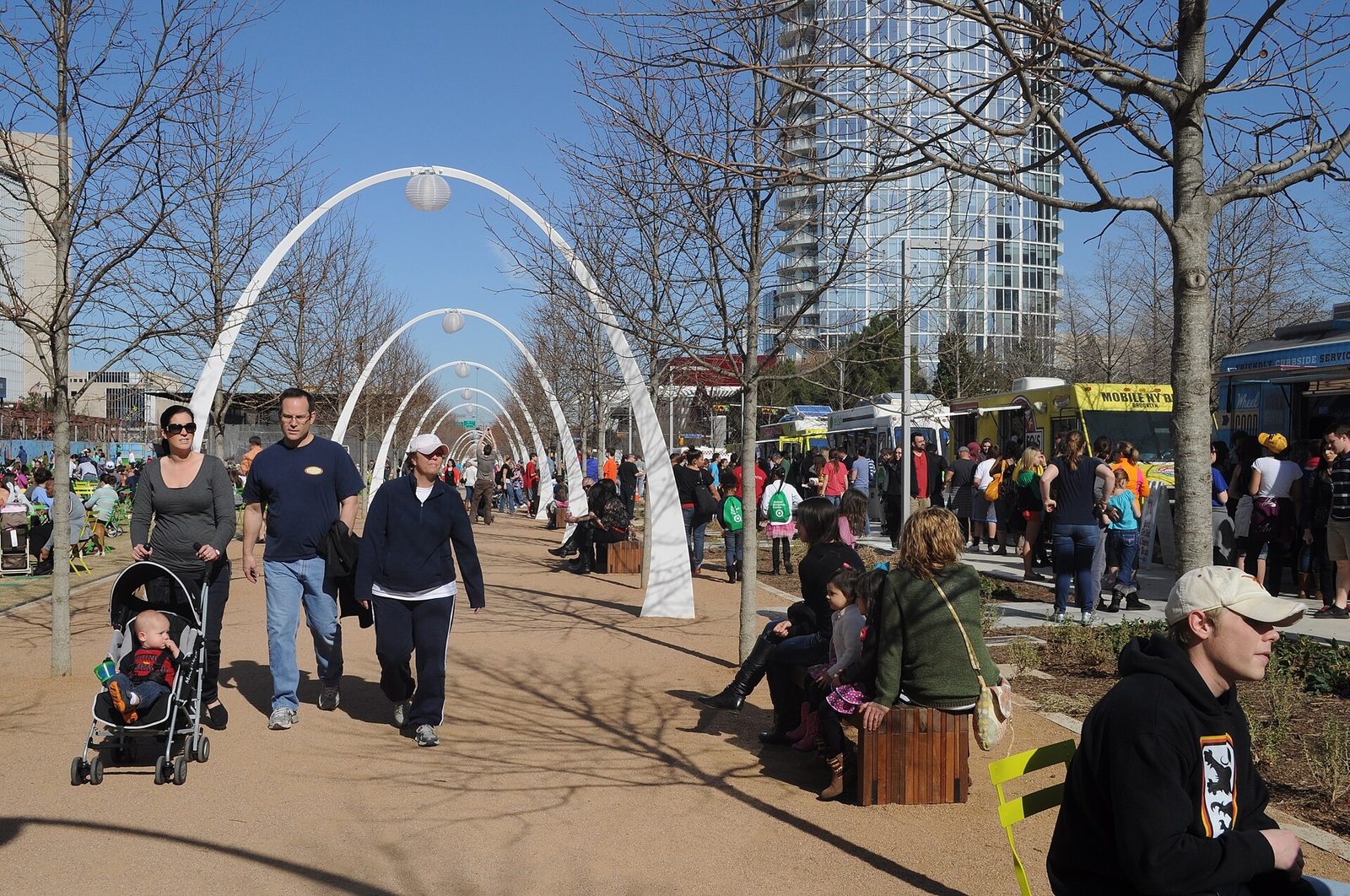
Klyde Warren Park has rotating food trucks alongside permanent dining, in the middle of downtown, with tables and shade. It is the best cheap lunch in the city center by location alone.
Barbecue is a daytime, sell-out business, and knowing that saves both money and disappointment. Pecan Lodge in Deep Ellum runs to 20:00 Tuesday to Thursday and later at weekends, but its posted hours end “or until we’ve sold out.” Cattleack Barbeque in Farmers Branch opens Wednesday to Friday and first Saturdays, 10:00 to 14:00 only. Turning up at 19:00 for famous barbecue is how people end up paying twice for a worse meal.
Three structural savings: eat your main meal at lunch, when the same kitchens charge less; drink outside Uptown, where the district premium is real; and remember that tipping is expected at 18–20% in table service, which is a fifth on top of a bill that already carries 8.25% tax. A $40 dinner is closer to $52 out the door. Our restaurants guide has the specifics.
Where to Stay, and What It Really Costs
Accommodation is the largest line in any Dallas budget and the one we can say least about with precision, because rates move daily and nobody publishes a flat price.
What we can give you is the trade-off, and it is sharper here than in most cities.
A downtown or Uptown room costs more per night and removes almost all your transport spending. You walk to the Arts District, the free trolley covers Uptown, the Green Line covers Deep Ellum and Fair Park, and the streetcar covers Bishop Arts. Transport falls to $6.00 a day or less.
A suburban room costs less per night, usually includes free parking, and pushes you into a rental car — which brings fuel, tolls and a garage charge every time you come into the city. For a two or three-night trip focused on the center, the suburban room is frequently the more expensive option once everything is counted.
The questions to ask before booking: what is the total including all taxes and fees; what does parking cost per night; is there a resort or destination fee; and how far is the nearest rail station. Four questions, and they will change your choice more often than the star rating does. Our accommodation guide covers the districts.
Parking, Tolls and the Car Question
The single most effective budget decision in Dallas is not renting a car for a downtown trip.
There is no published standard rate for downtown parking — Downtown Dallas Inc. describes surface lots, garages, meters and valet and points visitors at ParkMobile, BestParking, SpotHero and ParkMe instead of quoting a price, which tells you how variable it is. The rates we can verify are operator-specific: Perot Museum Lot B is $15 per vehicle and Reunion Tower self-parking is $10. Hotel garages are quoted per property.
Against that, a DART Local Day Pass is $6.00. One day of downtown parking generally costs more than two days of unlimited public transport.
If you do need a car — for the Arboretum, White Rock Lake, an Arlington stadium or a day trip — rent it for the specific day rather than the whole stay. Front-load the transit days, back-load the car day, and return it before the final night rather than the final morning. On a four-night trip this routinely saves more than the DART passes cost for the entire visit.
On tolls: setting your navigation app to avoid toll roads costs most visitor itineraries ten or fifteen minutes and removes the rental company’s toll service fee entirely.
When Is Dallas Cheapest?
Two answers, and they conflict with the weather.
July and August are the cheapest and the hardest. Average highs of 96.9°F and 97.1°F push leisure demand down, and rates follow. If you can plan an indoor-heavy trip — museums in the middle of the day, outdoor time before 09:00 and after 20:00 — the savings are real and the city is perfectly enjoyable.
December through February is the other window, with average highs between 57.7°F and 67.8°F, which is genuinely comfortable walking weather, and lower demand outside the holiday peak.
The expensive periods are April and October, when the weather is best, and any date overlapping a major event. The State Fair of Texas runs 25 September to 18 October 2026 and lifts rates across the city, not just near Fair Park. Cowboys home weekends and large conventions do the same.
The arbitrage: late February to mid-March, and the second half of November. Decent weather, no major events, and rates below the spring peak. Our month-by-month guide has the full trade-off.
A Zero-Dollar Day in Dallas, Costed
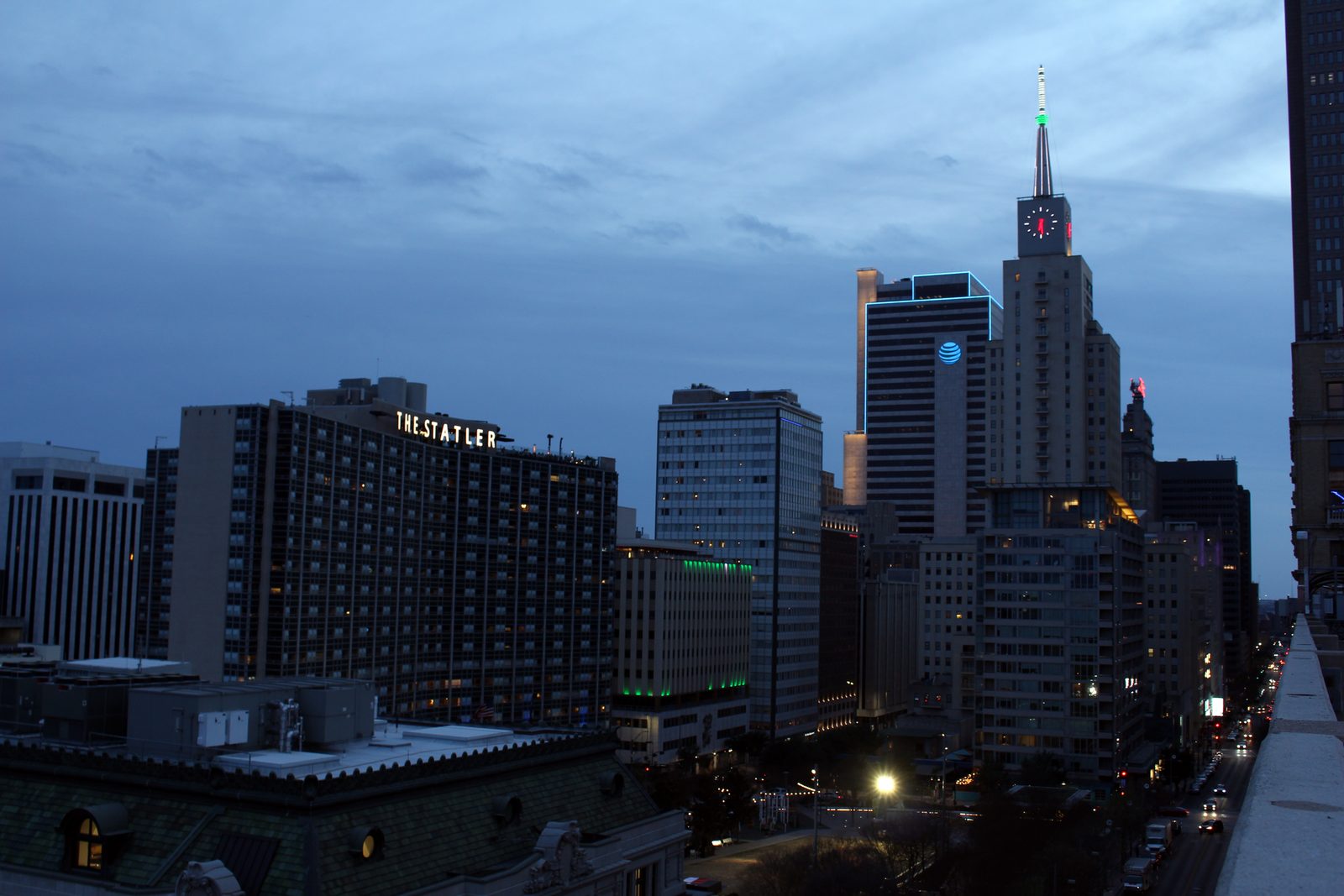
Not a stunt. A genuinely good Wednesday that costs nothing but food.
- Morning: walk to Klyde Warren Park. Free. Cross into the Arts District.
- Late morning: the Dallas Museum of Art on a free timed ticket, booked the night before. Two departments, not the whole building.
- Lunch: food trucks at Klyde Warren Park, or the Dallas Farmers Market food hall.
- Afternoon: the Crow Museum of Asian Art in the Arts District. Free. Then walk the district’s sculpture and architecture.
- Late afternoon: the free M-Line Trolley up to Uptown and the Katy Trail.
- Evening: the Ronald Kirk Bridge at golden hour for the skyline. Free, and better than the paid deck.
Total transport cost: $0.00, because the trolley is free and everything else is walkable. Total admission cost: $0.00. Add $6.00 for a day pass if you want the rail as well, and you have a full day in a major American city for the price of a coffee.
Three Budgets: Three Days in Dallas
| Careful | Balanced | Comfortable | |
|---|---|---|---|
| Transport, 3 days | $12.00 (two day passes, one free day) | $18.00 (three day passes) | $18.00 plus rideshares |
| Attractions | $0.00 — DMA, Crow, Fair Park, Dealey Plaza | $37.00 — Nasher $8 with DART, Sixth Floor $27, Meadows free Thursday | $64.00 CityPASS, four attractions |
| Day trip | — | $9.00 Fort Worth by TRE | Rental car day |
| Food | Market, food trucks, one sit-down meal | Lunch out, dinner out | Dinner out nightly |
| Accommodation | Hostel or budget chain | Downtown mid-range, no car | Downtown hotel plus parking |
| Non-hotel, non-food total | $12.00 | $64.00 | $82.00 plus car |
The striking figure is the first one. Three full days of transport and attractions for $12.00 per adult is not a stripped-back trip — it includes a major art museum, a free Asian art museum, the country’s best surviving 1930s exposition architecture and the JFK sites from the outside.
Family Math: Four People, Three Days
Family budgets break differently, because most of the savings that work for one adult multiply badly.
Transport multiplies. Four Local Day Passes is $24.00 a day, $72.00 over three days. At that point a rental car with one paid parking day starts to compete, which is the opposite of the single-traveler conclusion. Check whether your children qualify for reduced fares at half price.
Admissions multiply worse. The Perot at $27 adult and $17 youth is $88 for two adults and two children. The Dallas World Aquarium is more. This is where the free museums earn their keep: the DMA and the Crow cost a family of four exactly nothing, and the Meadows is free for anyone 18 and under at any time.
Where CityPASS helps a family: at $64.00 adult and $46.00 child, a family of four doing the Perot, the zoo, the Bush Museum and one more pays $220.00 for four attractions each. Against published singles that is a genuine saving — but only if you actually want all four.
The cheapest strong family day: the Dallas Zoo from $18 adult with under-2s free, reached on the Red or Blue line so you avoid parking, followed by Klyde Warren Park in the afternoon for nothing. Our family guide has more.
Getting Here: The Part of the Budget That Moves Most
Airfare is the largest single variable in most Dallas budgets and the one nobody can quote, but the structural choices are stable.
Two airports means two price curves. DFW International is the global hub, with the widest route network and — for international arrivals — usually the only option. Dallas Love Field is small, domestic and dominated by Southwest, and on domestic routes it frequently undercuts DFW or beats it on convenience. Check both before booking; travel search tools do not always compare them properly because they are listed as separate cities.
The ground transfer is not a rounding error. From DFW, the Orange Line into downtown costs $3.00 on a 3-Hour Pass. A rideshare across the same twenty miles at a busy hour is many times that, and on four arrivals and departures across a family trip the difference is real money. From Love Field the equivalent journey is also $3.00, because the Love Link bus out of the airport is free.
The luggage caveat is the honest counterweight. DART light rail has no luggage racks at all. If you are arriving with two large cases each, the train is a false economy and you should pay for the car without guilt. The Silver Line to DFW Terminal B is the exception, with overhead racks and a luggage area, but it serves the northern suburbs rather than downtown.
On timing, the cheapest fares into Dallas generally track the same seasonal pattern as the hotels: high summer and the depths of winter are cheaper, spring and autumn cost more, and anything overlapping the State Fair or a major convention costs most of all.
Our Pricing Method, and Where We Refuse to Guess
Worth being explicit, because most budget pages are not.
What we quote: prices published by the operator on its own site, checked in September 2026 and stated with the category they apply to. DART fares, museum admissions, state park entry, sales tax rates, CityPASS pricing.
What we attribute: third-party averages, clearly labeled as such — the BudgetYourTrip daily figures above are an aggregator’s reported averages, not quoted prices, and we say so.
What we refuse to quote: Reunion Tower and Dallas Arboretum admission, because both sell through date-and-time widgets with no flat rate. The combined Dallas hotel occupancy tax, because we could not reach a first-party statement of it. Downtown parking, because no standard rate exists. Restaurant prices, because they are not published in any stable form. Hotel rates, because they move daily.
Every guide that gives you a confident single number for those things is estimating and not telling you. The honest version is less tidy and more useful: know which numbers are fixed, and check the rest for your dates.
What Is Actually Worth Paying For
Budget writing usually stops at what to avoid. Here is the other half: the things in Dallas that justify their price.
The Sixth Floor Museum at $27. Expensive for ninety minutes, and worth it. It is a serious, carefully made institution, the audio guide is included, and the twenty free minutes you spend in Dealey Plaza afterwards only work because of it.
The Perot Museum at $27, if you have children. Three to four hours of genuine engagement for ages roughly five to fifteen. For adults on an art-led trip it is poor value against a free DMA; for a family it is the best paid day in the city.
The Nasher at $8 with a DART fare. The best single hour of art in Dallas, and the discount makes the day pass partly pay for itself.
A Regional Day Pass at $9.00 for Fort Worth. A different city, a twice-daily cattle drive that costs nothing to watch, and a museum district several of whose institutions charge no general admission. Nine dollars is an absurd price for a day out of that quality.
And what is not worth paying for: an observation deck when the Ronald Kirk Bridge gives you the same skyline for nothing at a better hour; a rental car sitting in a downtown garage for three nights you did not need it; a CityPASS bought before you have written down which four attractions you actually want; and a famous barbecue queue joined at a time of day when the good meat has already sold out.
Twelve Ways to Spend Less in Dallas
- Buy the Local Day Pass, not the Regional, unless you are going to Fort Worth or Denton that day. It saves $3.00 daily.
- Show your DART fare at the Nasher for $2 off, which pays back a third of the day pass.
- Book the DMA timed ticket the night before. It is free but it does sell out on weekends.
- Put the Meadows on a Thursday evening, when it is free and open until 21:00.
- Aim a Saturday at the Nasher’s First Saturday, free 11:00 to 17:00.
- Take the train from the airport. $3.00 from DFW, $3.00 from Love Field including a free bus leg.
- Do not rent a car for a downtown trip. The parking alone exceeds the transport saving.
- Eat your main meal at lunch. The same kitchens cost less at midday.
- Use the Ronald Kirk Bridge instead of an observation deck. Free, and a better photograph at golden hour.
- Ride the M-Line Trolley — free, 365 days a year, and it covers the Uptown corridor.
- Check the event calendar before fixing your dates. A fair or a home game moves every price in the city.
- Compare all-in hotel totals, including tax, fees and parking, rather than headline nightly rates.
Dallas on a Budget: Frequently Asked Questions
How much does a trip to Dallas cost?
Transport and attractions can be done for $6.00 to $18.00 per adult per day using published fares and admissions. Accommodation and food are the variables. The aggregator BudgetYourTrip puts overall average daily spending at around $103, with budget travelers nearer $73.
What is free in Dallas?
The Dallas Museum of Art, the Crow Museum of Asian Art, Klyde Warren Park, the Katy Trail, White Rock Lake, Dealey Plaza, the JFK Memorial, Pioneer Plaza, Fair Park’s grounds and architecture, and the M-Line Trolley. The Nasher is free on First Saturdays and the Meadows on Thursday evenings.
How much is public transport in Dallas?
A DART Local Day Pass is $6.00 and a 3-Hour Pass is $3.00, both half price for qualifying reduced fares. The Dallas Streetcar is $1.00 one-way, the M-Line Trolley is free, and the Love Link bus out of Love Field is free.
Is the Dallas CityPASS worth buying?
Only if you want four of its six options. At $64.00 adult and $46.00 child it beats singles on a combination like the Perot, the Bush Museum and the zoo. It excludes the Sixth Floor Museum, the DMA, the Nasher and the Arboretum, so art-led trips gain nothing.
How much is sales tax in Dallas?
Texas charges 6.25% state sales tax and local jurisdictions can add up to 2%, for a maximum combined rate of 8.25%. Prices are displayed before tax, so add roughly 8% to everything when budgeting.
What is the cheapest time to visit Dallas?
July and August, when the heat pushes demand down, and December through February outside the holiday peak. Avoid dates overlapping the State Fair of Texas — 25 September to 18 October 2026 — and major sporting or convention weekends.
Do I need a car in Dallas on a budget?
No, and not renting one is usually the biggest single saving available. Downtown, Uptown, the Arts District, Deep Ellum, Bishop Arts and Fair Park are all reachable on a $6.00 day pass. Rent for a specific day if a day trip needs it.
How much should I budget for food in Dallas?
Structure matters more than a number. Eat your main meal at lunch, use the Dallas Farmers Market food hall and the Klyde Warren Park food trucks for cheap meals, and remember that 8.25% tax plus an 18–20% tip adds roughly a third to a table-service bill.
Is Dallas cheaper than other US cities?
For transport and attractions, considerably — a free major art museum, a $6.00 all-day transit pass and a $3.00 airport train are better than most large American cities offer. For hotels and parking, it is unremarkable, which is where most of a Dallas budget goes.
One event rewards this kind of arithmetic more than anything else in Dallas. A family of four at the State Fair pays about $95 on a Saturday with parking, or about $46 on a Wednesday with a canned food donation and two DART day passes — the same fair, the same hours. Our State Fair of Texas first timer guide lists every discount day and what you need to bring to claim it.
Few days out in Dallas swing as widely on your decisions as the State Fair. A family of four can spend $120 in coupons or $200-plus at the same fair on the same afternoon, and almost all of the difference is discretionary — refillable cups, Tuesday ride pricing and skipping the novelty items account for most of it. Our guide to State Fair food, rides and coupons does the arithmetic.
The State Fair is a good illustration of how much timing is worth in Dallas. The same day out costs $7 on a Wednesday with five canned goods and $25 on a Saturday, parking is $25 against a $6.00 DART Local Day Pass, and the FLEX 4-Pack Combo works out around $15 a head on any day of the week. We run the full arithmetic in our guide to the best time to visit the State Fair of Texas.
Turner Falls is a good case study in how a day trip’s headline price hides the real one. Adult admission ranges from $9 on a winter weekday to $20 at a summer weekend, and parking is charged on top at $25, $15 or free depending on which level you use — so a family of four can pay anywhere between $30 and $97 for the same waterfall. We break it down in our Turner Falls day trip from Dallas guide.
Autumn’s biggest expense is also one of the city’s best-value days out, provided you know three things: the fair lets you bring your own food in a 9x10x12 soft cooler, the hand stamp lets you leave and come back, and a $6.00 DART Local Day Pass replaces $25 of parking. Our guide to the State Fair of Texas on a budget costs out three days from published prices.
Related Dallas Guides
- Free Things to Do in Dallas — the zero-cost version of this page
- Getting Around Dallas — every published fare and what it covers
- Dallas Attractions — prices, opening days and verdicts
- Dallas Museums and Arts — the free-day grid
- Where to Stay in Dallas — including which areas assume a car
- Where to Eat in Dallas — cheap eats and the barbecue timing problem
- Best Time to Visit Dallas — when rates fall and why
- Day Trips from Dallas — including two you can do for $9.00
- Dallas With Kids — where the family math breaks
- Dallas Airports — the $3.00 route into the city
- Outdoor Dallas — free parks, trails and lakes
- Dallas Itineraries — plans built around the free days
- Dallas Travel Guide — the full planning overview
Photo Credits
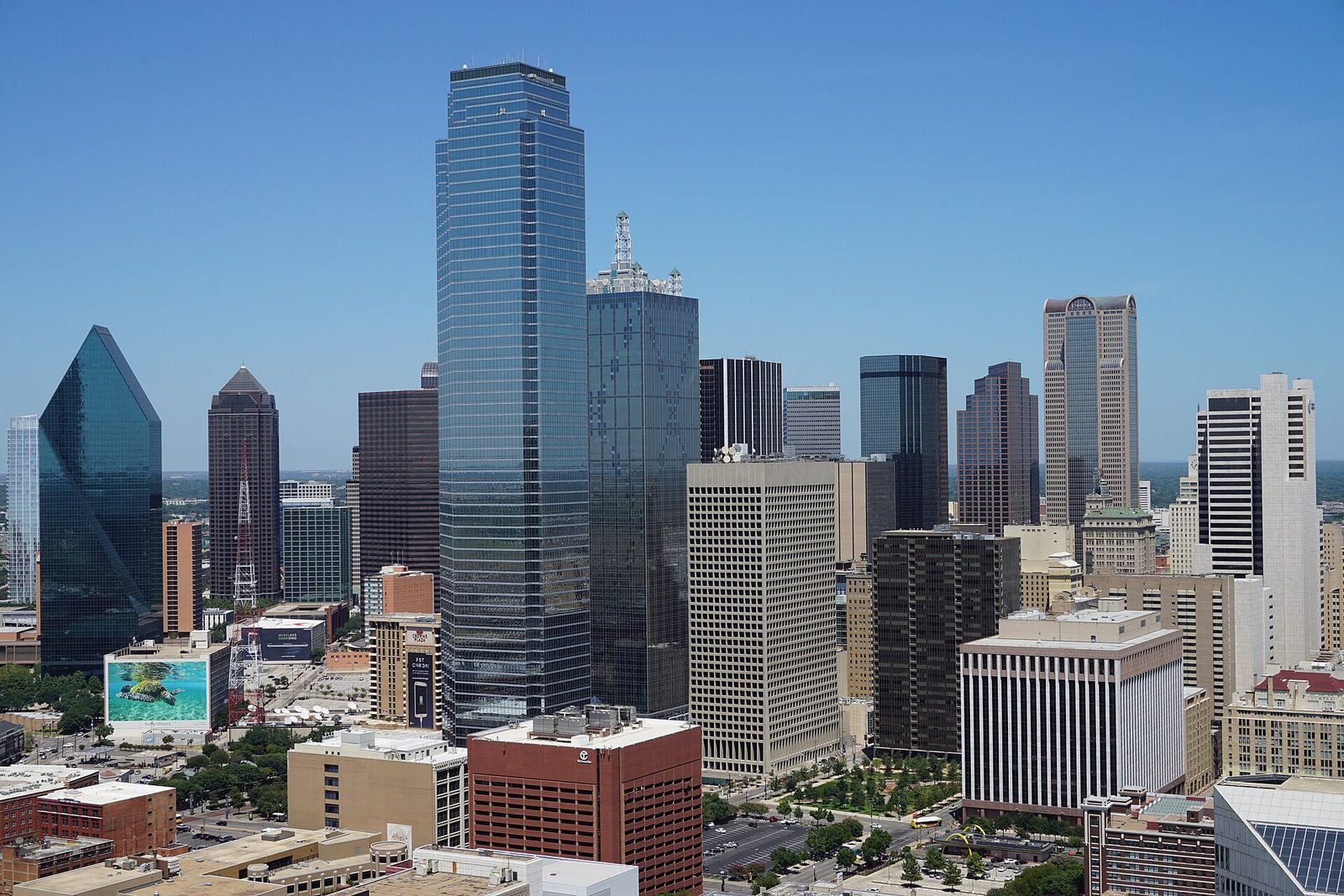
- Downtown Dallas from above: photo by Michael Barera, Wikimedia Commons (CC BY-SA 4.0)
- Klyde Warren Park food trucks: photo by Joe Mabel, Wikimedia Commons (CC BY-SA 3.0)
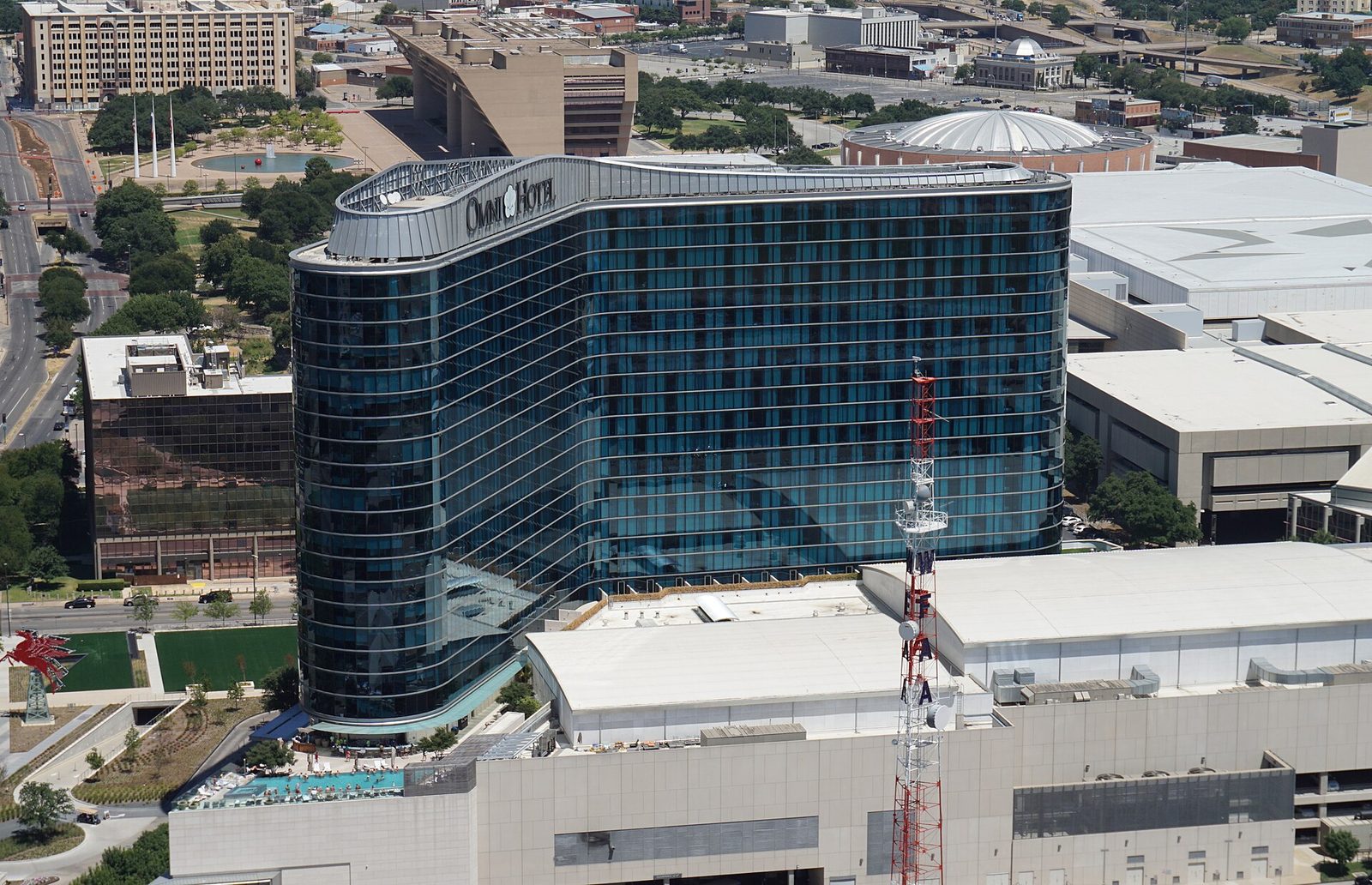
- Omni Dallas Hotel: photo by Michael Barera, Wikimedia Commons (CC BY-SA 4.0)
- Main Street Garden Park: photo by IcedCowboyCoffee, Wikimedia Commons (CC0)
- Dallas City Hall: photo by Daquella manera, Wikimedia Commons (CC BY 2.0)
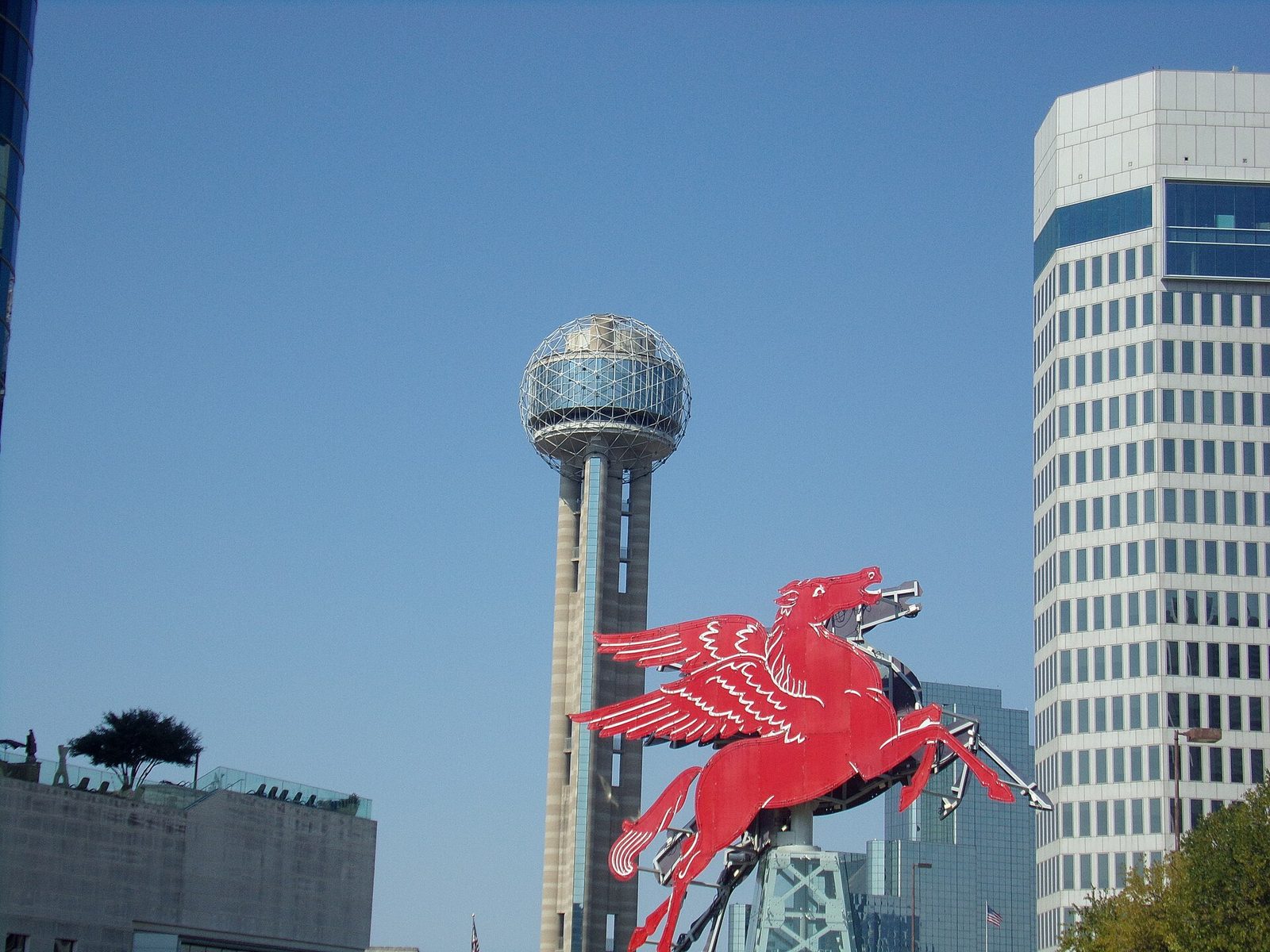
- Reunion Tower and the Pegasus (featured image): photo by Robert Kixmiller, Wikimedia Commons (CC BY-SA 4.0)
Sources
- DART — fares and passes
- Texas Comptroller — sales and use tax rates
- Texas Comptroller — hotel occupancy tax
- Dallas CityPASS — price and included attractions
- Dallas Museum of Art — free admission and timed tickets
- Nasher Sculpture Center — admission and the DART discount
- Crow Museum of Asian Art — free admission
- Meadows Museum — free Thursday evenings
- Perot Museum — admission and parking
- The Sixth Floor Museum — admission
- Dallas Zoo — ticket pricing
- Texas Parks and Wildlife — Cedar Hill State Park fees
- Dallas Farmers Market — hours
- Downtown Dallas Inc. — parking and getting around
- State Fair of Texas — 2026 dates