Dallas history is usually reduced to six seconds in November 1963, and that is a poor return on a city founded in 1841. The assassination sites deserve their place, but so do Freedman’s Cemetery, the largest collection of 1930s art deco buildings in the country at Fair Park, the Black business and music district that became Deep Ellum, and a village of pre-skyline Dallas preserved on 22 acres south of downtown.
This guide sorts the city’s history into five threads you can actually follow on foot or by train, says what each site costs and when it is open, and is honest about which ones reward an hour and which reward ten minutes. It also takes a position on how to visit Dealey Plaza, because that question deserves an answer rather than a shrug.
Admission prices and opening hours below were checked in September 2026 against each institution’s own page where we could reach one. Where we could not, we say so rather than guessing.
Dallas History in Five Threads
| Thread | Where | Time | Cost | Getting there |
|---|---|---|---|---|
| The founding city, 1841–1900 | Founder’s Plaza, Old Red, Pioneer Plaza, Dallas Heritage Village | Half a day | Mostly free | Walkable downtown; rail to the edge |
| Black Dallas | Freedman’s Cemetery Memorial, Deep Ellum, the African American Museum at Fair Park | Half a day | Mostly free | Green Line and M-Line |
| The 1936 Centennial and art deco | Fair Park — Hall of State, Esplanade, Cotton Bowl | Two to three hours | Free to walk the grounds | Green Line, direct |
| Music history | Deep Ellum, the Kessler, Fair Park | Two hours, or an evening | Free to walk | Green Line |
| November 1963 | Dealey Plaza, the Sixth Floor Museum, the JFK Memorial | Two to three hours | $27 adult for the museum; the rest free | Walkable downtown |
The threads overlap geographically, which is the useful part. Fair Park carries two of them at once. Downtown carries two more within a few blocks. A visitor with one day can follow two threads properly rather than skimming all five.
How Should You Approach the JFK Sites?
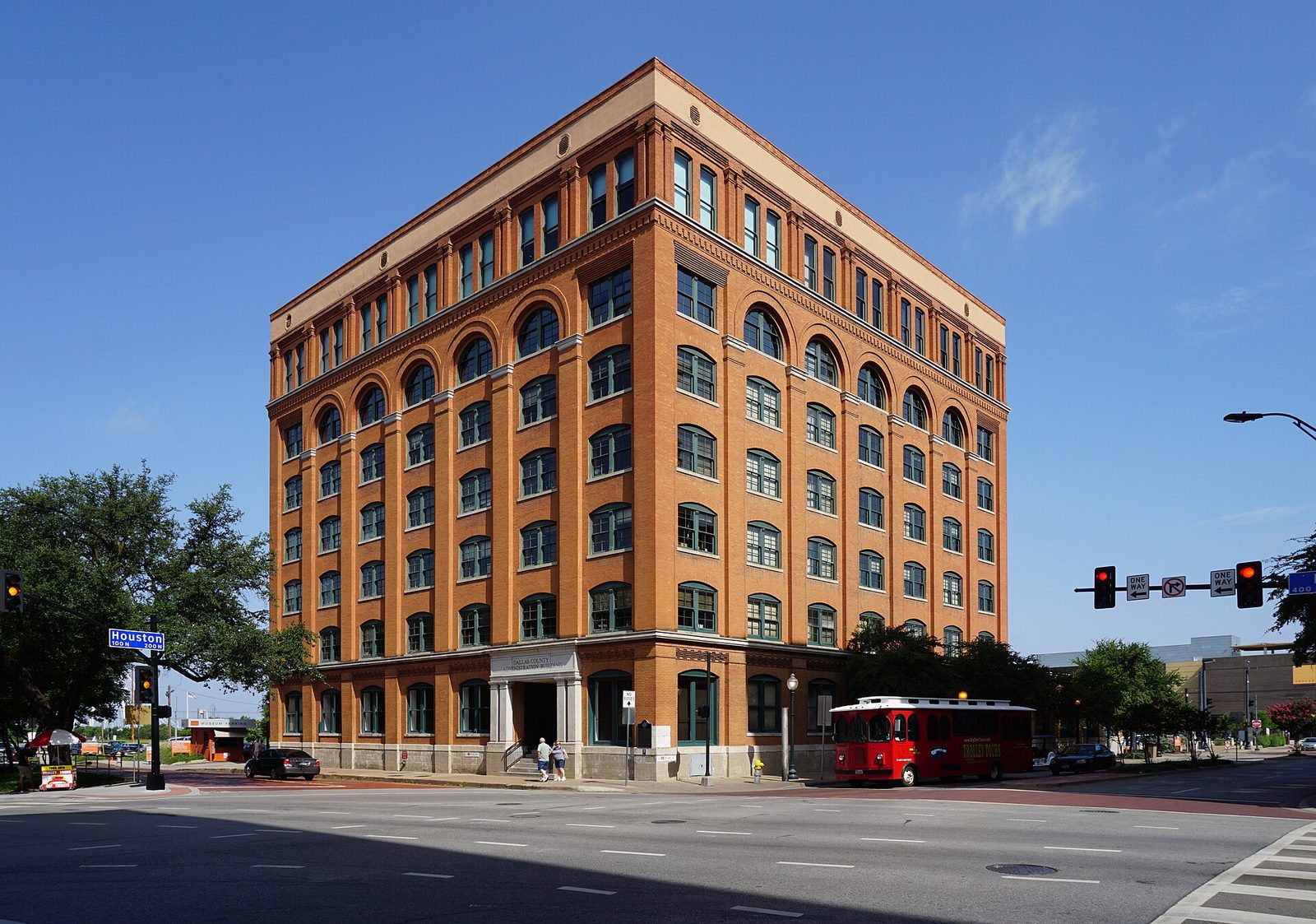
Worth saying plainly, because most guides avoid the question: Dealey Plaza is a public square where a man was murdered, and it is visited by people for whom that is living memory. It is not a novelty.
The site handles this reasonably well. The Sixth Floor Museum is a serious institution rather than a sensational one, the plaza itself is quiet most of the time, and the interpretation on offer is historically careful. What is less good is the informal trade around the edges — people selling conspiracy literature and offering unofficial tours on the pavement. You are under no obligation to engage with any of it, and we would suggest you do not.
Our recommendation: do the museum first and the plaza second. The museum gives you the context, the chronology and the 1963 city; walking out into the plaza afterwards, with that in your head, is a far more meaningful ten minutes than standing on a road marking wondering what you are supposed to feel.
Two practical notes. Elm Street is a live road with real traffic and people do step into it for photographs; this is genuinely dangerous and worth not doing. And the John F. Kennedy Memorial Plaza, a plain white cenotaph a few blocks east, is free, almost always empty and designed as a place to sit rather than to look. It is the part of the story most visitors skip and the part that actually works as a memorial.
The Sixth Floor Museum and Dealey Plaza
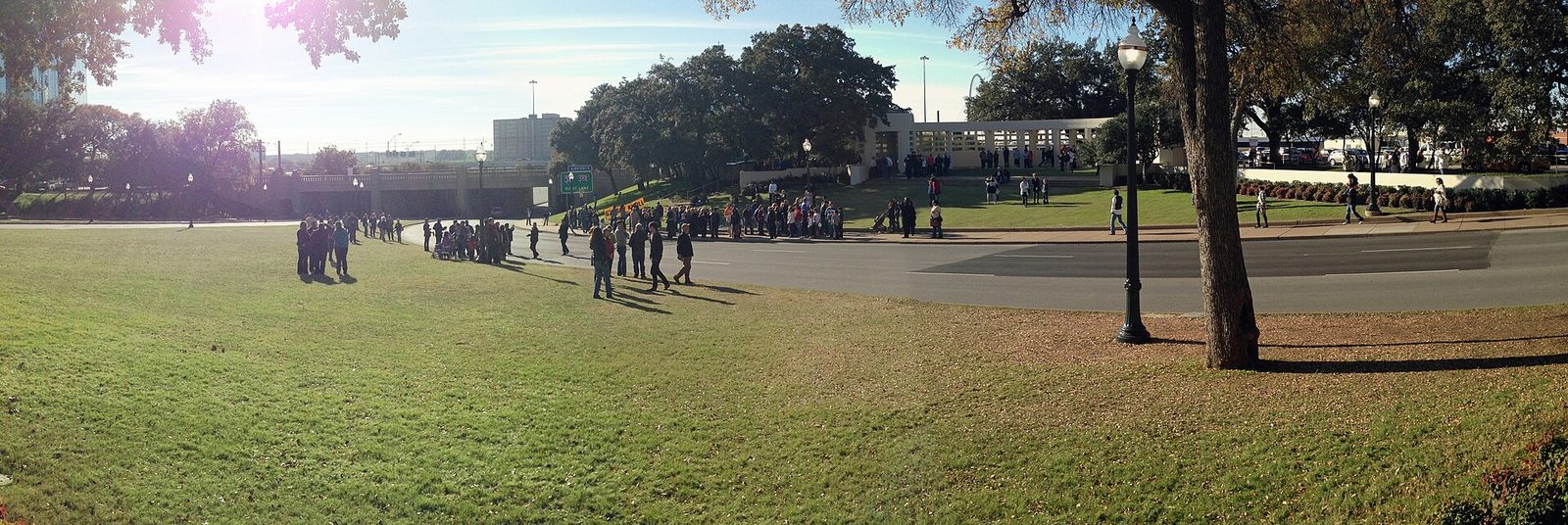
The museum occupies the sixth floor of the former Texas School Book Depository at 411 Elm Street, and covers the Kennedy presidency, the assassination, the investigations and the aftermath through photographs, film, artifacts and the preserved corner window.
Admission: $27 adult, $25 senior 65 and over, $23 youth 6 to 18, free for children under 6.
Hours: Wednesday to Sunday, 10:00 to 17:00. Closed Monday and Tuesday. The last ticket is sold and the last entry permitted at 16:15 — a genuine cut-off rather than a suggestion, and one that catches out visitors who arrive at 16:30 expecting to walk in.
Time needed: ninety minutes to two hours. The audio guide is included and worth using; it is measured in tone and it does the chronological work that makes the plaza legible afterwards.
Dealey Plaza itself costs nothing, is open at every hour, and is smaller than photographs suggest — a compact triangular park with the pergola on the grassy knoll at one corner. Allow twenty minutes. The Old Red Museum, in the 1892 county courthouse immediately beside the plaza, covers the wider history of Dallas County and is the natural next stop for anyone who wants the city rather than the event.
Black History in Dallas: Freedman’s Cemetery, Deep Ellum and Fair Park
This is the thread the city has historically told worst and is now telling much better, and it is the one we would push a curious visitor toward.
Freedman’s Cemetery Memorial, north of downtown near Uptown, marks the burial ground of Freedman’s Town, a community established by formerly enslaved people after emancipation. The cemetery was built over during the twentieth century and rediscovered during highway construction; the memorial that now stands there, with its bronze sculptures and gateway, is the result of a long archaeological and civic reckoning. It is free, it is open, and it is quiet. Fifteen minutes here is worth an hour in most museums.
Deep Ellum grew up east of downtown as a Black and immigrant commercial district in the early twentieth century, and it became one of the most important blues and jazz centers in the South. The musicians who played there are part of the foundation of American music. Today the district is a nightlife and mural neighborhood, and the history is present in the buildings and the street names rather than in a visitor center — which is exactly why it is worth knowing before you walk it.
The African American Museum at Fair Park is the formal institution, holding one of the largest African American folk art collections in the country and standing as the only museum of its kind in the Southwest. It sits among the art deco buildings, on the Green Line, and it is the anchor of any serious version of this thread.
These three connect geographically as well as thematically: Freedman’s Cemetery is near the M-Line corridor, and Deep Ellum and Fair Park are both on the Green Line. A single $6.00 DART Local Day Pass covers the lot. Our transport guide has the fares.
Fair Park and the 1936 Texas Centennial
Fair Park is the single most underrated historic site in Texas, and on an ordinary day it costs nothing to walk through.
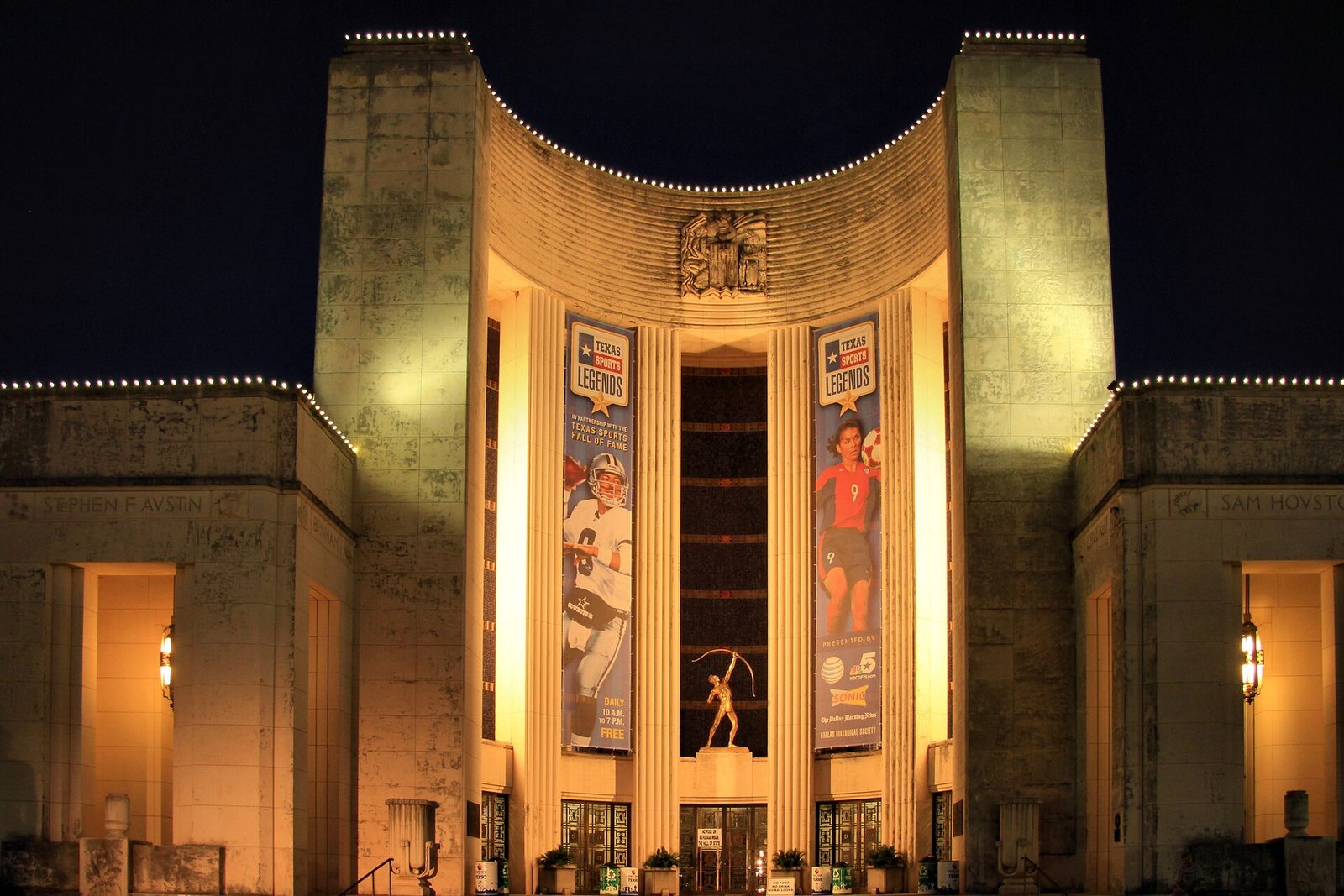
The park was built out for the 1936 Texas Centennial Exposition, celebrating a hundred years of Texas independence, and the result is what is generally described as the largest intact collection of 1930s art deco exposition architecture in the United States. The Esplanade, the murals, the statuary and the Hall of State were designed as a coherent ensemble and they survive as one.
The Hall of State is the centerpiece — a monumental deco building at the head of the Esplanade, home to the Dallas Historical Society and its archive of historic documents and artifacts. The Great Hall, with its murals and gold medallion, is worth seeing even if you read nothing. We could not reach the Historical Society’s own visitor page at the time of writing, so check current admission and opening days before you go rather than relying on a figure from elsewhere.
Also inside the park: the Cotton Bowl, the African American Museum, the Texas Discovery Gardens and several other museums.
The timing decision. During the State Fair of Texas, 25 September to 18 October 2026, Fair Park becomes a ticketed, crowded, extremely loud event — enormously enjoyable on its own terms but useless for an architecture walk. Outside those dates the grounds are quiet and free and you can photograph the Esplanade without a hundred people in the frame. Decide which experience you want before you pick your dates. The Green Line serves the park directly, which matters enormously during the Fair when driving is close to impossible.
Downtown’s Founding Sites
Three free sites within a few blocks of each other tell the story of how Dallas started, and together they take about an hour.
Founder’s Plaza holds a replica of John Neely Bryan’s cabin — Bryan founded the settlement in 1841 — alongside a terrazzo map of Dallas County as it was in the 1800s. It is modest and it is the actual origin point of the city.
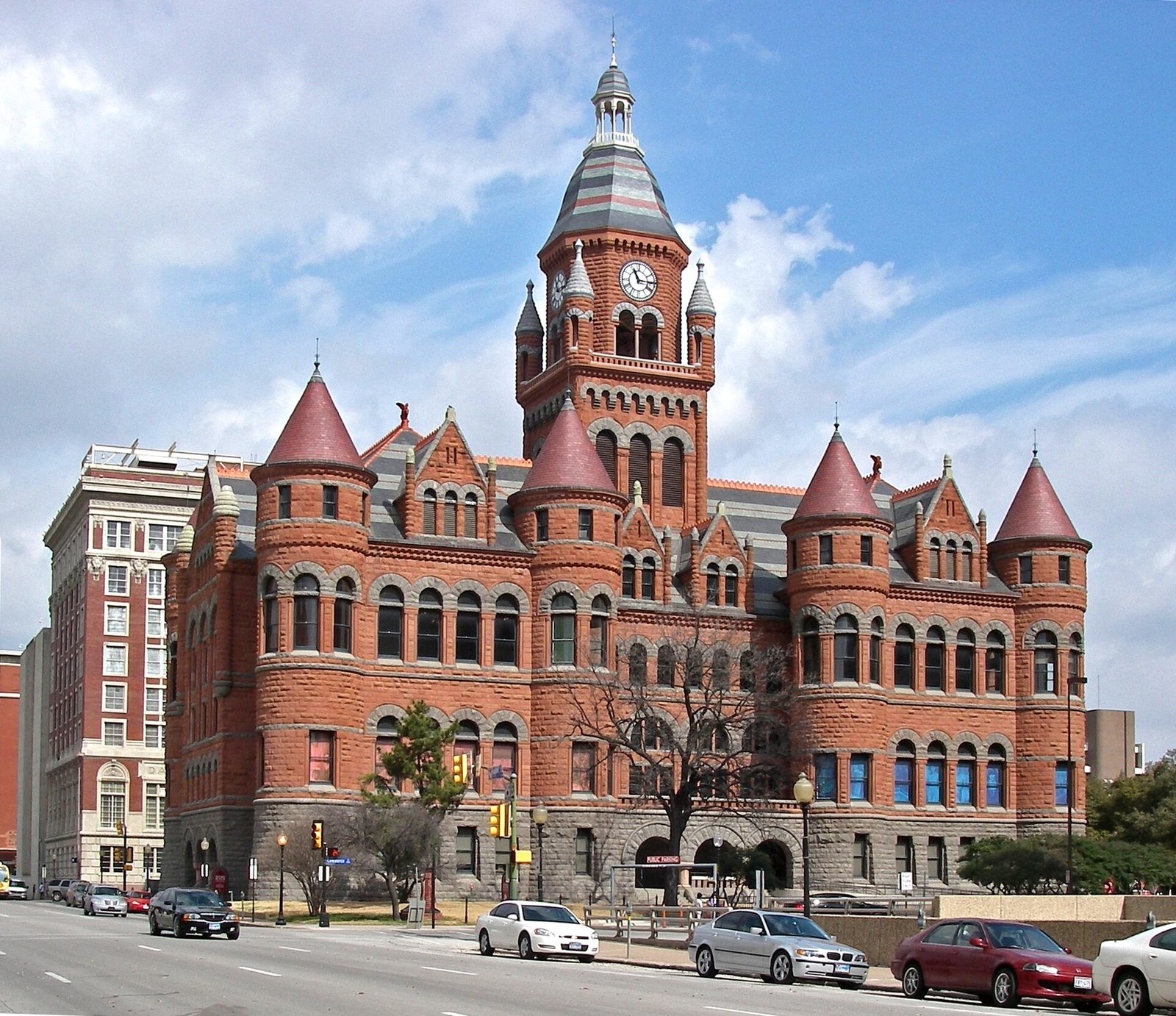
The Old Red Courthouse, completed in 1892 in red sandstone with a clock tower and turrets, is the most characterful historic building downtown and houses the Old Red Museum of Dallas County History and Culture. The exterior costs nothing; the museum inside is ticketed.
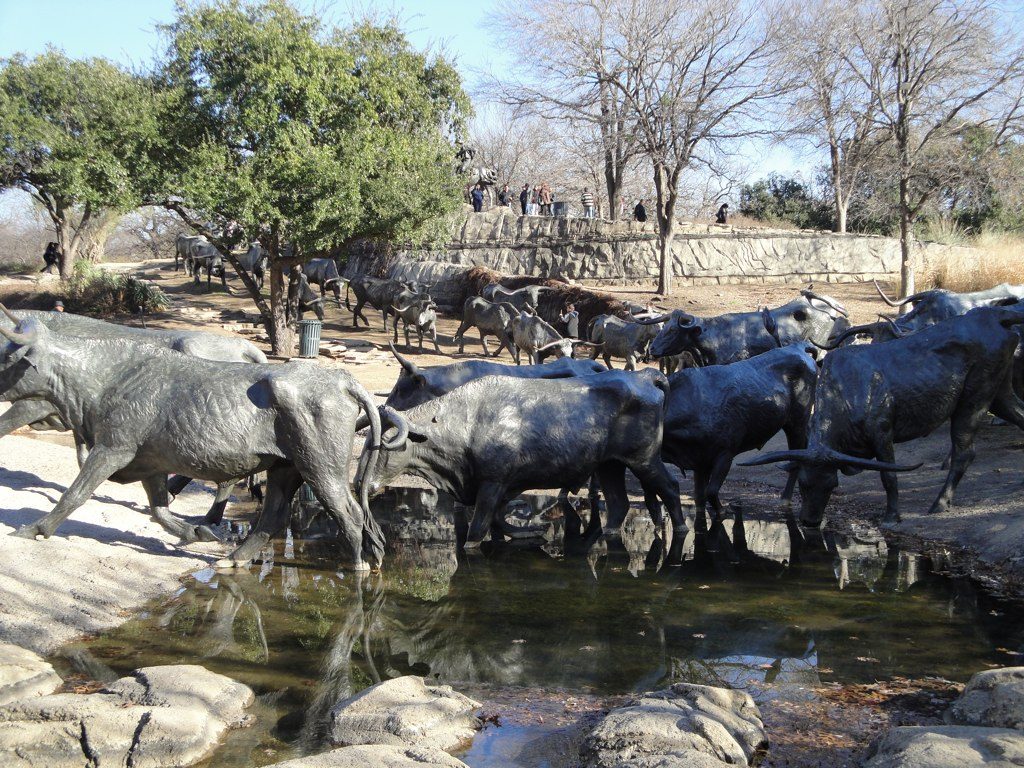
Pioneer Plaza commemorates the cattle drives that ran through this country with 49 bronze longhorn steers at around six feet high, driven by bronze cowboys across an artificial stream and limestone bluff. It is billed as the largest bronze monument of its kind in the world, it is free, and it is unapologetically a piece of civic theatre — which does not stop it being genuinely impressive at eye level. The adjoining Pioneer Park Cemetery, one of the city’s oldest burial grounds, is quieter and more affecting.
All three are within easy walking distance of the Dealey Plaza sites, which is why a downtown history morning works so well: founding city, county courthouse, cattle trails and 1963, in one walk.
Dallas Heritage Village: The City Before the Skyline
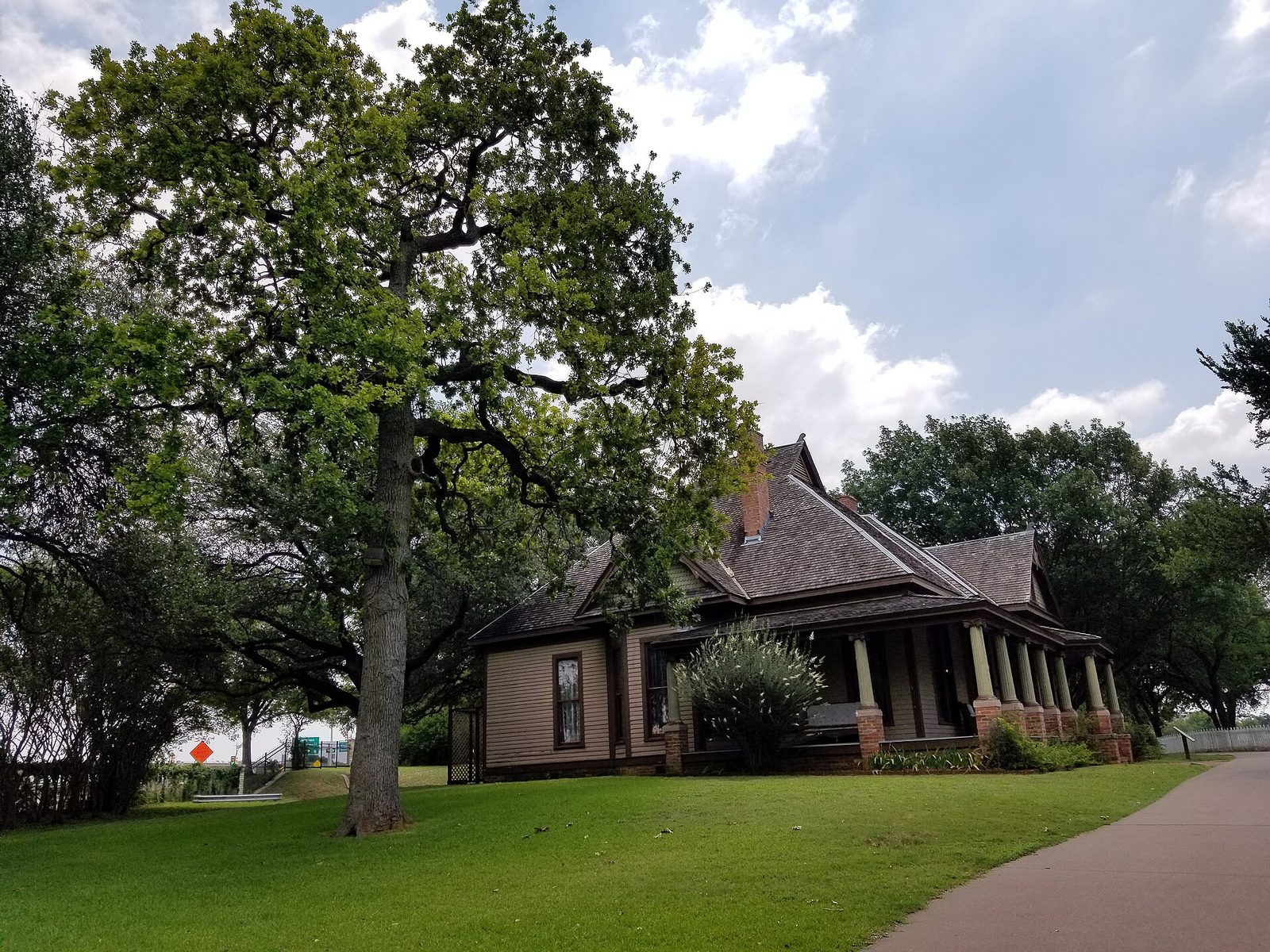
Just south of downtown, Dallas Heritage Village occupies what was established in 1876 as Dallas’s first city park, on around 22 acres, and gathers a collection of restored structures dating from roughly 1840 to 1910 — houses, a school, a church, commercial buildings and a working farmstead, including the Millermore Mansion.
It is the only place in the city where you can see what Dallas looked like before it became a skyline, and it fills a gap that no museum can: scale. The buildings are small, the rooms are small, and the distance between the 1870s and the tower on the horizon is the whole point.
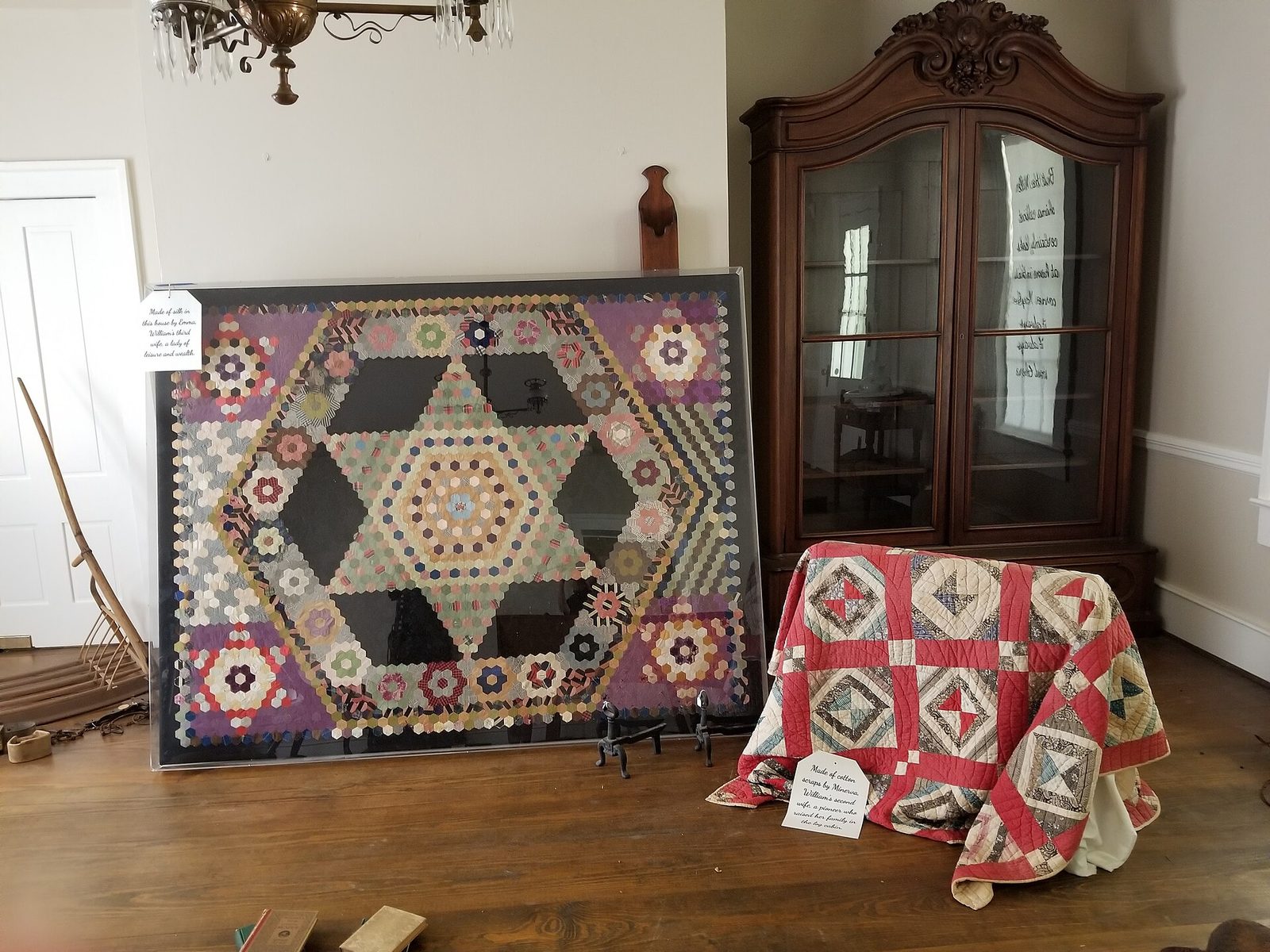
Guided interpretation is available and worth taking — the buildings are legible on their own but the stories attached to them are not. Check the current admission, opening days and seasonal hours with the village directly; open-air museums in Texas commonly reduce hours in high summer, and we could not reach their visitor page at the time of writing to confirm this year’s arrangements.
Honest verdict: best in spring and autumn. In July and August an open-air museum in Dallas is a heat management exercise rather than a pleasure, and the same two hours in the Sixth Floor Museum or the Hall of State will be more comfortable and no less interesting.
Deep Ellum: The Music History Under the Murals
Most visitors experience Deep Ellum at night, when it is a bar and live music district. The daytime version is a history walk, and it is a better one than the neighborhood advertises.
The district developed from the 1870s onward around the railroad and industry east of downtown, and by the 1920s it was one of the South’s most significant centers of blues and jazz, with a concentration of Black-owned businesses, theatres and record-buying public that made it a destination for touring musicians. That history was interrupted by highway construction and decline, and the neighborhood’s revival from the 1980s onward built on the same buildings.
What to look for on a daytime walk: the warehouse and commercial architecture, which is the physical record of the district’s first life; the historical markers, which are easy to miss; and the murals, which are the current layer and are genuinely among the best urban art in the United States. Late afternoon is the sweet spot — good light for photographs, the first venues opening, and the streets not yet full.
The Green Line serves Deep Ellum Station directly. Our nightlife guide covers the evening version, and our neighborhood guide covers how the district fits into the wider city.
Two Museums That Belong in This Story
The Dallas Holocaust and Human Rights Museum opened in the West End at 300 N. Houston Street and connects the history of the Holocaust to the American civil rights movement and to contemporary human rights. It is a serious, difficult and well-made museum, and it sits within a few minutes’ walk of Dealey Plaza, which makes for an unusually heavy but coherent morning. It is one of the six options on Dallas CityPASS. Allow around two hours, and check its own ticket page for current admission and hours.
The George W. Bush Presidential Center on the SMU campus covers a presidency that is recent enough to still be argued about, which is its interest. Admission is $26 adult, $23 senior 62 and over or college student with ID, $24 youth 13 to 17, $20 child 5 to 12, free under 5 and $10 for retired military and veterans with ID. It is open Monday to Saturday 09:00 to 17:00 and Sunday 12:00 to 17:00 — seven days, which makes it one of the few substantial options on a Monday or Tuesday.
Two warnings. It is a federal facility with airport-style security and metal detectors, and no backpacks or bags larger than 17 by 26 inches are permitted — one purse or diaper bag per person, and no food or drink through security. Guided tours are not available. The museum’s own estimate is 30 to 45 minutes for a highlights pass and four hours or more to see everything, which is an unusually honest range. The adjoining Laura W. Bush Native Texas Park is 15 acres, free, and open sunrise to sundown year-round.
Historic Neighborhoods and Houses
Away from the monuments, Dallas keeps its nineteenth and early twentieth-century fabric in a handful of residential districts, and walking them is free.
Swiss Avenue in East Dallas is the grandest — a long boulevard of early twentieth-century mansions in a preserved historic district, laid out when this was the edge of the city and the money was moving out of downtown. It is a residential street rather than an attraction, which means you walk and look and do not knock on doors, but as an hour of architecture it is excellent and it costs nothing.
Munger Place, adjoining it, holds one of the largest concentrations of Prairie-style houses in the country, built for a slightly less grand version of the same aspiration.
Oak Cliff, across the Trinity, developed as a separate town before being annexed, and it still reads that way — older, lower, more varied, with the Kessler Theater and the Texas Theatre among its landmarks. The Texas Theatre has its own place in the events of November 1963 and continues to operate as a working cinema, which is a more dignified fate than most such buildings get.
The Wilson Block near Swiss Avenue preserves a row of restored Victorian houses now used by nonprofits, and it is the closest thing downtown Dallas has to an intact nineteenth-century streetscape.
None of these charge admission and none of them have a visitor center. That is the point: they are the city getting on with itself, and reading them takes nothing but time and a little context.
Which Historic Sites Are Free?
Most of the best ones, which makes Dallas a cheap city for history.
- Dealey Plaza — free, always open.
- The John F. Kennedy Memorial Plaza — free, always open, almost always empty.
- Founder’s Plaza and the John Neely Bryan cabin — free.
- Pioneer Plaza and Pioneer Park Cemetery — free.
- The Old Red Courthouse exterior — free; the museum inside is ticketed.
- Freedman’s Cemetery Memorial — free.
- Fair Park grounds and the exterior deco architecture — free outside State Fair dates; the museums inside charge separately.
- Deep Ellum — free to walk, and the murals are the point.
- Laura W. Bush Native Texas Park — free, sunrise to sundown.
Stack those and you have two full days of Dallas history for the price of a $6.00 day pass. Our free things to do guide collects more of the same thinking.
What Is Open on a Monday or Tuesday?
The same trap that catches museum visitors catches history visitors, and it is worth stating directly.
| Site | Monday | Tuesday |
|---|---|---|
| The Sixth Floor Museum | Closed | Closed |
| Dealey Plaza and the JFK Memorial | Open (outdoors, always) | Open |
| George W. Bush Presidential Center | Open | Open |
| Pioneer Plaza, Founder’s Plaza, Freedman’s Memorial | Open | Open |
| Fair Park grounds | Open | Open |
| Fair Park museums and the Hall of State | Check individually | Check individually |
The practical answer: a Monday or Tuesday in Dallas is an outdoor history day. The plazas, the memorials, the Fair Park architecture and the Deep Ellum walk are all available, and the Bush Center covers the indoor requirement. Save the Sixth Floor Museum for Wednesday onward. Our museums guide has the full opening grid.
The Twentieth Century: Oil, Banks and the Skyline
The part of the story that explains the city you are actually standing in, and the part almost no museum covers well.
Dallas was never an oil town in the way Houston was — there is no oil under it. What it did was finance the oil, insure it, bank it, and sell to the people who found it, and the towers downtown are the physical result. The East Texas field, discovered in the 1930s a couple of hours east, made Dallas the money center of the region rather than the drilling center, and the distinction shaped everything afterwards.
The other engine was cotton and then trade. The railroads arrived in the early 1870s, and the intersection of two lines turned a modest settlement on the Trinity into the commercial hub of North Texas within a generation. Old Red, built two decades later, is what that money looked like when it decided to build something permanent.
The postwar decades added the airport, the corporate relocations and the suburban expansion that produced the metroplex, and the 1980s added the skyline that appears in every photograph of the city — including the illuminated outlines that make it recognizable at night. None of this is housed in a single museum, which is a genuine gap in the city’s interpretation of itself.
Where you can see it: the downtown towers themselves, the Old Red museum’s county history displays, the Hall of State’s collections, and the Dallas Heritage Village contrast between the 1870s town and the skyline visible above it. Put together, they tell the story better than any one of them does alone.
Three Walkable History Routes
| Route | Sequence | Time | Cost |
|---|---|---|---|
| Downtown founding and 1963 | Founder’s Plaza → Old Red → Dealey Plaza → Sixth Floor Museum → JFK Memorial → Pioneer Plaza | Half a day | $27, everything else free |
| Fair Park deco | Green Line to Fair Park → Esplanade and murals → Hall of State → African American Museum → Cotton Bowl exterior | Three hours | $6.00 day pass plus museum entries |
| Black Dallas | Freedman’s Cemetery Memorial → M-Line and downtown → Green Line to Deep Ellum → Fair Park and the African American Museum | Full day | $6.00 day pass plus one museum |
All three assume walking within districts and riding between them, which is the correct way to move around this city in any season. In July and August, move the outdoor legs to the morning.
Visiting Responsibly, and What to Expect
A few things worth saying about how to behave at sites that are not simply attractions.
At Dealey Plaza and the memorials, people around you may have personal or family connections to what happened. Photographs are normal and fine; posing in the roadway is neither, and it is dangerous besides. The same applies at the JFK Memorial Plaza, which is designed as a room for quiet and functions as one when visitors let it.
At Freedman’s Cemetery Memorial, remember that this is a burial ground whose destruction and rediscovery are part of its meaning. Read the interpretive text before you photograph the sculptures. Fifteen unhurried minutes is the right amount of time.
At the Holocaust and Human Rights Museum, allow decompression time afterwards. Pairing it with something light in the same afternoon is a reasonable plan rather than a frivolous one, and the West End’s proximity to Dealey Plaza means you can end up with a very heavy day if you do not plan around it.
On sources and claims, one general caution. Dallas history, and the 1963 material in particular, attracts a large volume of confident assertion of varying quality. The institutions on this page — the Sixth Floor Museum, the Dallas Historical Society, the African American Museum, the county museum at Old Red — are the ones doing source-led work. The literature sold on the pavement outside is not the same thing, whatever it claims about itself.
On accessibility, the picture is mixed and worth checking in advance. The modern museums are fully accessible. The historic houses at Dallas Heritage Village and some of the Fair Park interiors are nineteenth and early twentieth-century buildings with the limitations that implies, and the outdoor sites involve uneven ground, grass and, at Pioneer Plaza, deliberately rough limestone. Every one of these institutions will answer a direct question about access if you call ahead.
Reading the City: What the Buildings Tell You
One last thread, for anyone who likes to work things out from the evidence rather than a plaque.
Dallas grew as a commercial city rather than a port, a capital or an industrial center, and the built record shows it. The 1892 courthouse is the confident architecture of a county that had just got rich on cotton and rail. The 1936 Fair Park ensemble is a state performing its own centenary at scale during a depression. The downtown towers are the oil, banking and real estate booms of the mid and late twentieth century, and the gaps between them are the parking lots left by what those booms demolished.
The M-Line Trolley belongs in this reading too. It runs genuinely historic streetcars on a surviving alignment, it is free, and riding it is the closest thing Dallas offers to time travel as transport. It links the Arts District, downtown, Klyde Warren Park, Uptown and the West Village, and it connects to DART at CityPlace/Uptown Station.
And the thing most visitors notice without being told: the surviving old buildings are scattered rather than clustered. Dallas demolished a great deal in the twentieth century, and what remains stands in isolation between much newer neighbors. That pattern is itself the history — a city that has always preferred building the next thing to keeping the last one.
Dallas History: Frequently Asked Questions
How much is the Sixth Floor Museum?
$27 for adults, $25 for seniors 65 and over, $23 for youth aged 6 to 18, and free for children under 6. Open Wednesday to Sunday, 10:00 to 17:00, with the last ticket sold and last entry at 16:15. Closed Monday and Tuesday.
Is Dealey Plaza free to visit?
Yes. It is a public plaza, open at all hours, with no charge. Allow twenty minutes. Be careful of traffic on Elm Street, which is a live road, and treat the informal tour sellers around the edges as optional.
What is there to see in Dallas besides the JFK sites?
A great deal. Fair Park holds the country’s largest collection of 1930s art deco exposition architecture. Freedman’s Cemetery Memorial, Deep Ellum’s music history and the African American Museum carry the Black history of the city. Dallas Heritage Village preserves the pre-skyline town.
How much time do you need for Dallas history?
One day covers the downtown thread properly — the founding sites, Old Red, Dealey Plaza and the Sixth Floor Museum. Two days lets you add Fair Park’s art deco and the Black history sites. Three days is enough for Dallas Heritage Village and the historic neighborhoods as well.
How old is Dallas?
The settlement was founded in 1841 by John Neely Bryan, whose cabin is replicated at Founder’s Plaza downtown. The city’s first park, now Dallas Heritage Village, was established in 1876, and the county courthouse known as Old Red was completed in 1892.
Is Fair Park worth visiting outside the State Fair?
Yes, and arguably it is better. Outside the fair the grounds are free, quiet and photographable, and the 1936 Centennial architecture is the reason to go. During the fair — 25 September to 18 October 2026 — it is a ticketed, crowded event rather than an architecture walk.
Can you visit Dallas history sites without a car?
Almost all of them. The downtown sites are walkable from each other, Fair Park and Deep Ellum are both on the Green Line, and Freedman’s Cemetery is near the free M-Line Trolley corridor. A single $6.00 DART Local Day Pass covers the lot.
What is the best free historic site in Dallas?
Freedman’s Cemetery Memorial, for what it commemorates and how well it does it. Fair Park’s architecture is the best free architectural experience, and Pioneer Plaza is the most photogenic. All three cost nothing.
How long do you need for the Sixth Floor Museum?
Ninety minutes to two hours, including the audio guide, which is included with admission and worth using. Add twenty minutes for Dealey Plaza afterwards — in that order, because the museum supplies the context the plaza does not.
Which Dallas history sites are open on a Monday?
All the outdoor ones — Dealey Plaza, the JFK Memorial, Pioneer Plaza, Founder’s Plaza, Freedman’s Cemetery Memorial and the Fair Park grounds — plus the George W. Bush Presidential Center, which opens seven days. The Sixth Floor Museum is closed Monday and Tuesday.
The West End’s restored warehouse blocks hold more than Dealey Plaza. The Dallas World Aquarium occupies one of them on N. Griffin Street, opens at 8:30 a.m. — earlier than anything else downtown — and sits a short walk from the Sixth Floor Museum, which makes the two an efficient single morning. Our Dallas World Aquarium visitor guide has the timings.
The single most visited historic site in the city is also the one most likely to catch you out on logistics: timed tickets must be bought in advance, the last entry is 4:15 p.m., and the museum closes every Monday and Tuesday. Dealey Plaza and the Philip Johnson memorial outside are free and open at all hours. Our Sixth Floor Museum visitor guide has the full practical picture.
Related Dallas Guides
- Dallas Museums and Arts — the opening grid and the Arts District
- Dallas Attractions — prices and verdicts for every major sight
- Dallas Neighborhoods — Deep Ellum, Oak Cliff and the historic districts
- Free Things to Do in Dallas — most of this page
- Getting Around Dallas — the Green Line, the free trolley and the fares
- Dallas Events — including the State Fair dates
- Dallas Nightlife — Deep Ellum after dark
- Outdoor Dallas — Fair Park, the Trinity and the parks
- Dallas Itineraries — fitting a history day into a short trip
- Things to Do in Dallas — the complete list
- Dallas With Kids — which history works at which age
- Best Time to Visit Dallas — when outdoor history is comfortable
- Dallas Travel Guide — the full planning overview
Photo Credits
- Texas School Book Depository: photo by Michael Barera, Wikimedia Commons (CC BY-SA 4.0)
- Dealey Plaza: photo by Fredlyfish4, Wikimedia Commons (CC BY-SA 3.0)
- Hall of State, Fair Park: photo by Larry D. Moore, Wikimedia Commons (CC BY 4.0)
- Pioneer Plaza: photo by Dfwcre8tive, Wikimedia Commons (CC BY 3.0)
- Dallas Heritage Village: photo by Gail Frederick, Wikimedia Commons (CC BY 2.0)
- Quilts at Dallas Heritage Village: photo by Gail Frederick, Wikimedia Commons (CC BY 2.0)
- Old Red Courthouse (featured image): photo by Leaflet, Wikimedia Commons (CC BY-SA 3.0)
Sources
- The Sixth Floor Museum at Dealey Plaza
- George W. Bush Presidential Center — visit and security
- Dallas Holocaust and Human Rights Museum
- African American Museum, Dallas
- Dallas Historical Society — the Hall of State
- Dallas Heritage Village
- Fair Park
- State Fair of Texas — 2026 dates
- Old Red Museum of Dallas County History and Culture
- Dallas Park and Recreation — historic sites
- McKinney Avenue Transit Authority — the historic M-Line
- DART — fares and passes
- Visit Dallas — historic landmarks and sites