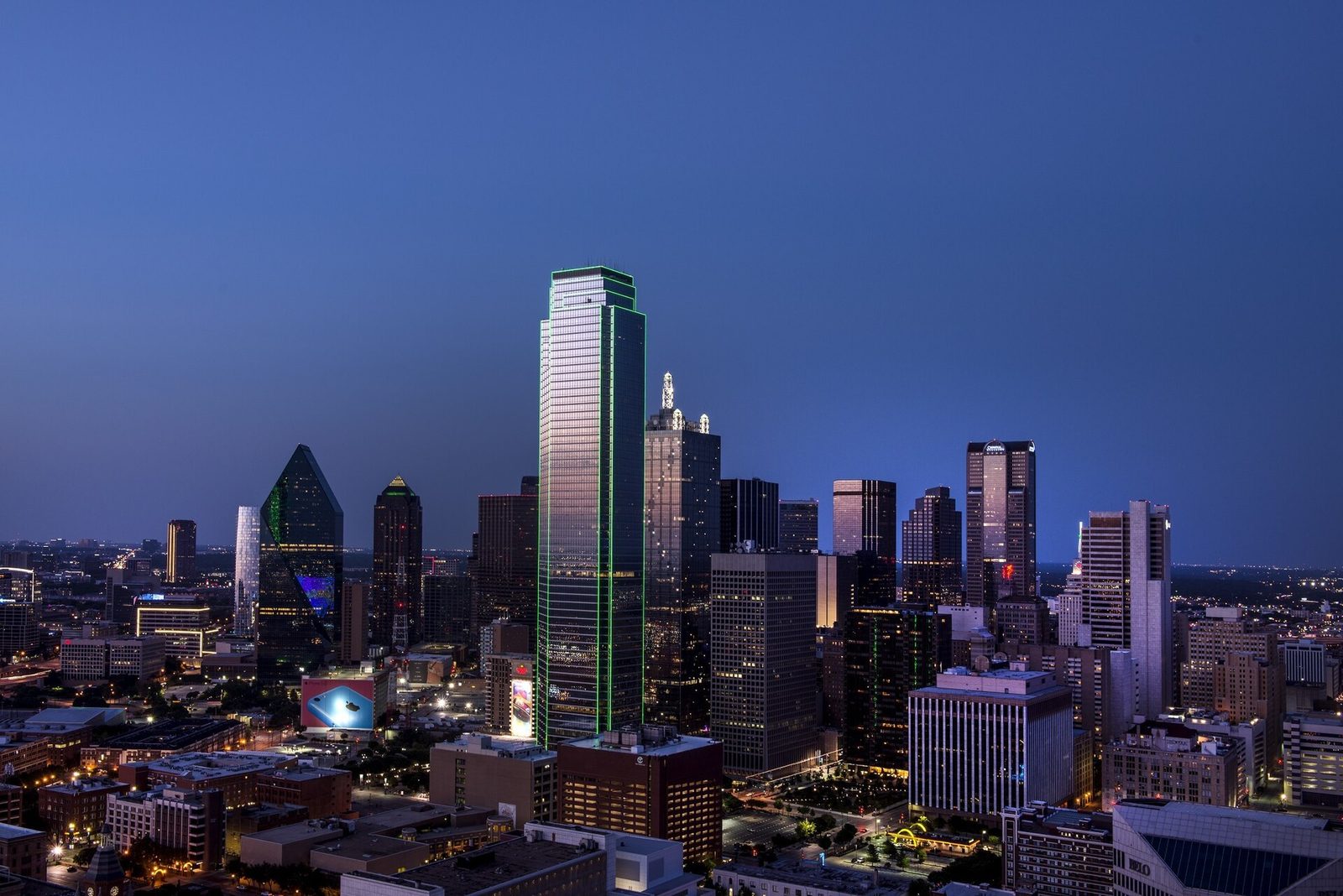
The best things to do in Dallas at night are not the ones most guides list, because most guides forget that this city closes its museums at five. What Dallas actually offers after dark is a free lit skyline you can walk to, a free trolley through the decorated districts, some of the best barbecue and Tex-Mex in America, and neighborhoods that only make sense once the temperature drops.
That last point is the one that matters most. Dallas averages summer highs near 97°F, which means that from June to September the evening is not a bonus at the end of the day — it is the only comfortable part of it. Planning a Dallas trip as a daytime city with optional nights gets the whole thing backwards for four months of the year. This page is organised the way the decision actually works: by what is open, by the clock, by the weather, by what it costs and by which district you commit to. For bars and clubs specifically, our Dallas nightlife guide covers that ground properly.
Dallas After Dark at a Glance
| If you want | Go here | Cost |
|---|---|---|
| The skyline, free | Ronald Kirk Bridge, Riverfront Blvd, Trinity levee | Free |
| The skyline, from above | Reunion Tower GeO-Deck, 470 feet, indoor and outdoor | Ticketed, sold by date and time slot |
| Culture after dark | ’til Midnight at the Nasher, third Friday, March–October | See the Nasher for the evening’s terms |
| A free ride through the lit districts | M-Line Trolley, 365 days a year | Free |
| Food as the main event | Deep Ellum, Bishop Arts, Uptown | Varies |
| A park in the evening | Klyde Warren Park | Free |
| Live sport | American Airlines Center, Victory Station on the Green and Orange lines | Ticketed |
| Getting home | DART Day Pass, valid until 3 a.m. the following morning | $6.00 Local, $3.00 reduced |
What Is Actually Open After 5 p.m. in Dallas?
Less than you would assume from the size of the city, and this is the single most useful thing to know before you plan an evening here.
| Venue | Closing time | Evening option? |
|---|---|---|
| Dallas Museum of Art | 5 p.m. Wed–Sun, closed Mon and Tue | No |
| Nasher Sculpture Center | 5 p.m. Wed–Sun, closed Mon and Tue | Yes — third Friday only |
| The Sixth Floor Museum | 5 p.m. Wed–Sun, last entry 4:15 p.m. | No |
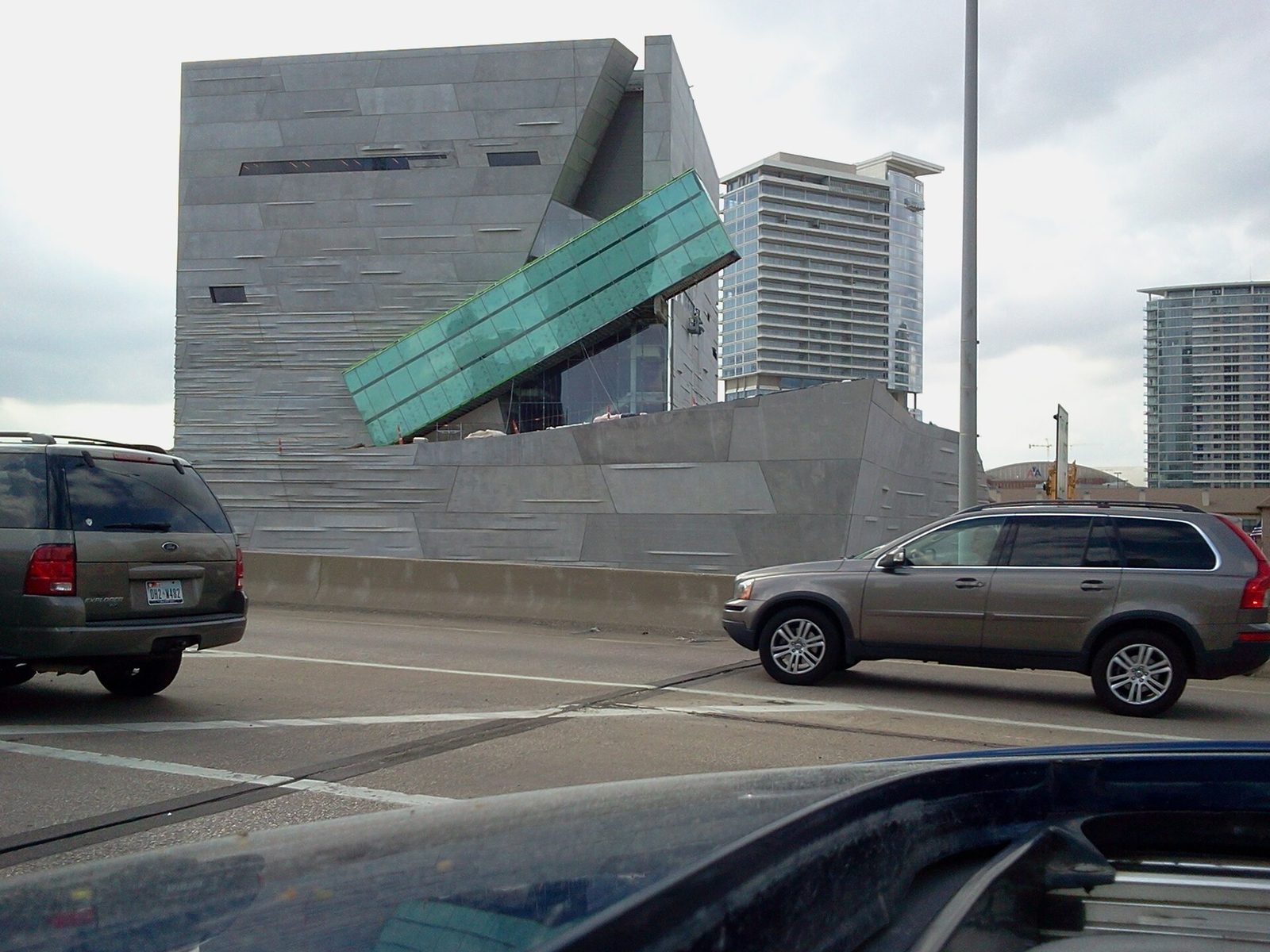
| Perot Museum | 5 p.m., closed Tue | No |
| Dallas World Aquarium | 5 p.m., last entry 4 p.m. | No |
| Dallas Arboretum | 5 p.m. | Only during seasonal evening events |
| Dallas Farmers Market, The Market | 7 p.m. daily | Early evening only |
| Reunion Tower GeO-Deck | Into the evening; check the day | Yes |
Every major museum in Dallas shuts at five. There is exactly one standing exception worth building an evening around: ’til Midnight at the Nasher, on the third Friday of the month from 6 p.m. to midnight, March through October. That is the city’s one reliable after-hours cultural fixture, and if your trip contains a third Friday in that window, it is the easiest good decision you will make. Check the Nasher for the evening’s programme and terms.
Two further practicalities follow from that table. The Sixth Floor Museum’s last entry is 4:15 p.m., which is earlier than its closing time and catches people who arrive at half past four expecting to get in. And the Reunion Tower GeO-Deck closes ticket sales and sends the final elevator up thirty minutes before closing, so a plan built around going up at the last minute does not work. Check the deck’s closing time for your specific date before you set out.
The upshot is that Dallas after dark is not a museum city. It is a food, skyline and neighborhood city, and once you accept that, the evenings are genuinely good. Our guide to Dallas museums and arts covers the daytime side.
Where Can You See the Dallas Skyline at Night for Free?
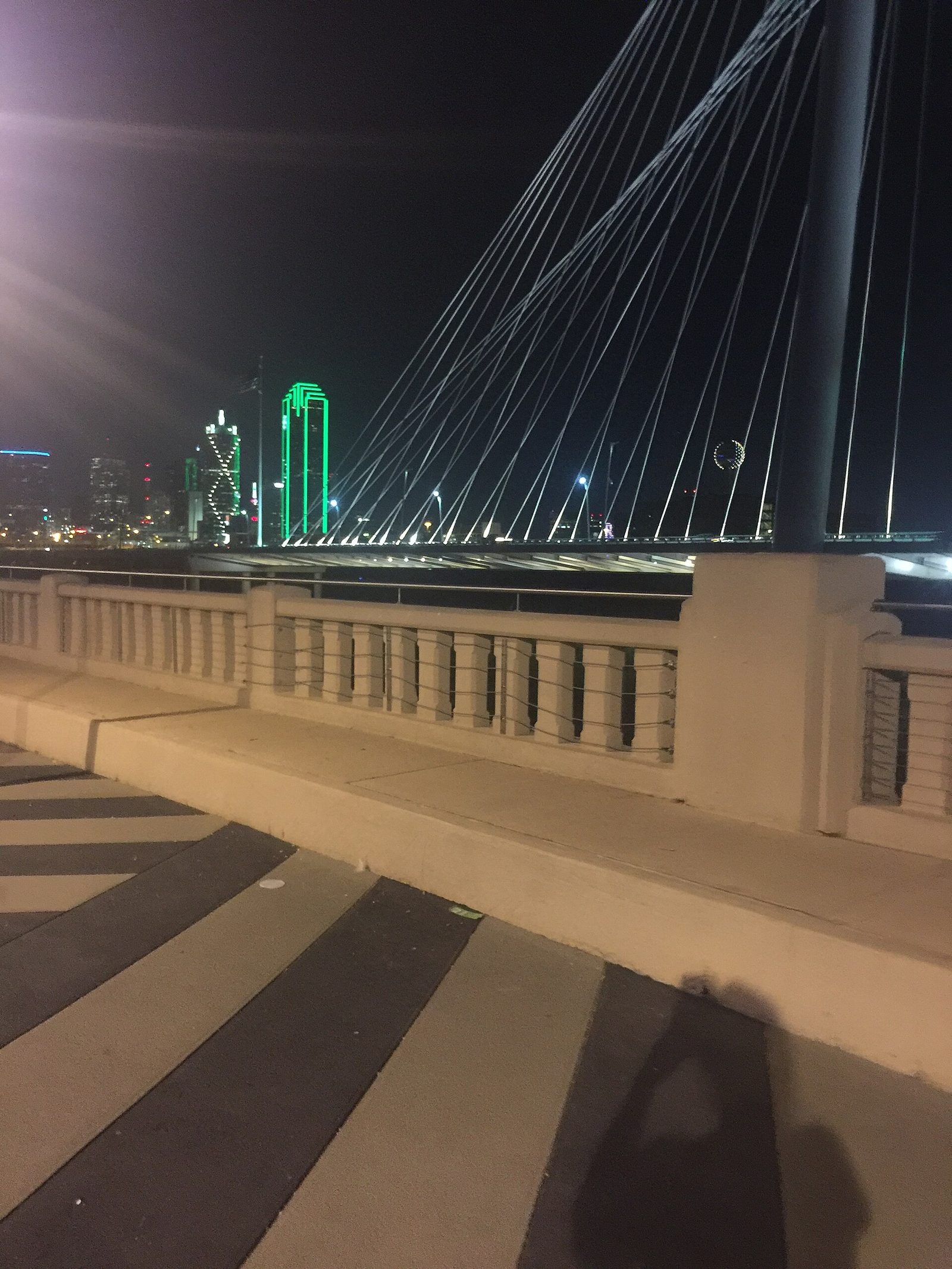
This is the city’s best after-dark asset and it costs nothing. Dallas lights its towers properly — the green-outlined Bank of America Plaza, the illuminated Reunion Tower ball, the lit bridges over the Trinity — and the whole display is visible from public ground.
The Ronald Kirk Bridge is the best of them: a pedestrian-only crossing of the Trinity, west of downtown, with an unobstructed elevated line back at the skyline and no traffic on it. Walk out to the middle and the city arranges itself in front of you. It is free, open whenever you are, and it is the shot everyone else pays a restaurant for.
Riverfront Boulevard and the Trinity levees give a lower, wider version of the same view, and the west end of the Margaret Hunt Hill Bridge at Trinity Groves pairs it with somewhere to eat. From inside downtown the towers are above you rather than in front of you, which is a different and less photogenic experience — the view of Dallas is from outside Dallas.
Timing matters more than location for the photograph. The window that produces the postcard is the half hour either side of civil twilight, when the sky still holds colour and the building lights are already on — full dark gives you bright windows against a black rectangle, which is a much less interesting picture. In mid-October that window is roughly 6:55 to 7:35 p.m.; in December it runs from about 5:26 to 6:10 p.m.; in June you are waiting until nearly nine. Arrive early, because the good spots on the bridge rail fill with people who worked this out.
If you do want height rather than distance, the Reunion Tower GeO-Deck puts you at 470 feet with indoor and outdoor viewing and a free digital photo, and it is included on the Dallas CityPASS. Reunion Tower sells its deck tickets through a date and time-slot system rather than at a flat rate, so check the price for the evening you want rather than budgeting from a figure you read somewhere. Self-parking at the tower is $10.
How Late Does It Stay Light? Planning Around Sunset
Dallas sits on the western edge of the Central time zone, which means sunsets run late for the latitude and the useful evening is longer than you would expect. Roughly 25 to 28 minutes of usable afterglow follows sunset year-round.
| Date | Sunset | Civil twilight ends | What that means |
|---|---|---|---|
| 21 June | 8:39 p.m. | 9:07 p.m. | A long evening, but the heat lingers well past dark |
| 15 October | 6:55 p.m. | 7:19 p.m. | The best balance of the year: dark by 7:30, still warm |
| 21 December | 5:26 p.m. | 5:52 p.m. | Full dark before six, so a 6 p.m. outing is a night outing |
The practical planning rule: if you want the skyline photograph with colour still in the sky, arrive about twenty minutes before sunset and stay half an hour after it. If you want full dark, add another half hour beyond civil twilight. In December that means a properly dark city by six, which is why the winter light displays work so well for families — a genuine night-time outing that still ends at a reasonable hour.
Which Neighborhood Should You Pick for the Evening?
Dallas is decentralised, and the single most common visitor mistake after dark is trying to do two districts in one night. Pick one and stay in it.
| District | Character after dark | Getting there | Best for |
|---|---|---|---|
| Deep Ellum | Live music, murals, late food, dense and loud | DART rail, then walk | A night out with energy |
| Bishop Arts, Oak Cliff | Independent restaurants and small shops, walkable, calmer | Dallas Streetcar, $1.00 one way | Dinner and a wander |
| Uptown and West Village | Restaurant density, decorated streets, polished | Free M-Line Trolley | An easy, low-effort evening |
| Arts District | Performance venues; galleries shut at 5 | DART, M-Line | A show, not a wander |
| Downtown | Lit towers, Klyde Warren Park, walk score 95 | Walk — 30 minutes end to end | Skyline and no transport |
| Trinity Groves and West Dallas | Restaurants with the skyline as the view | Drive or rideshare | The view, with dinner attached |
| Victory Park | Arena crowds on event nights, quiet otherwise | Victory Station, Green and Orange lines | Mavericks and Stars games |
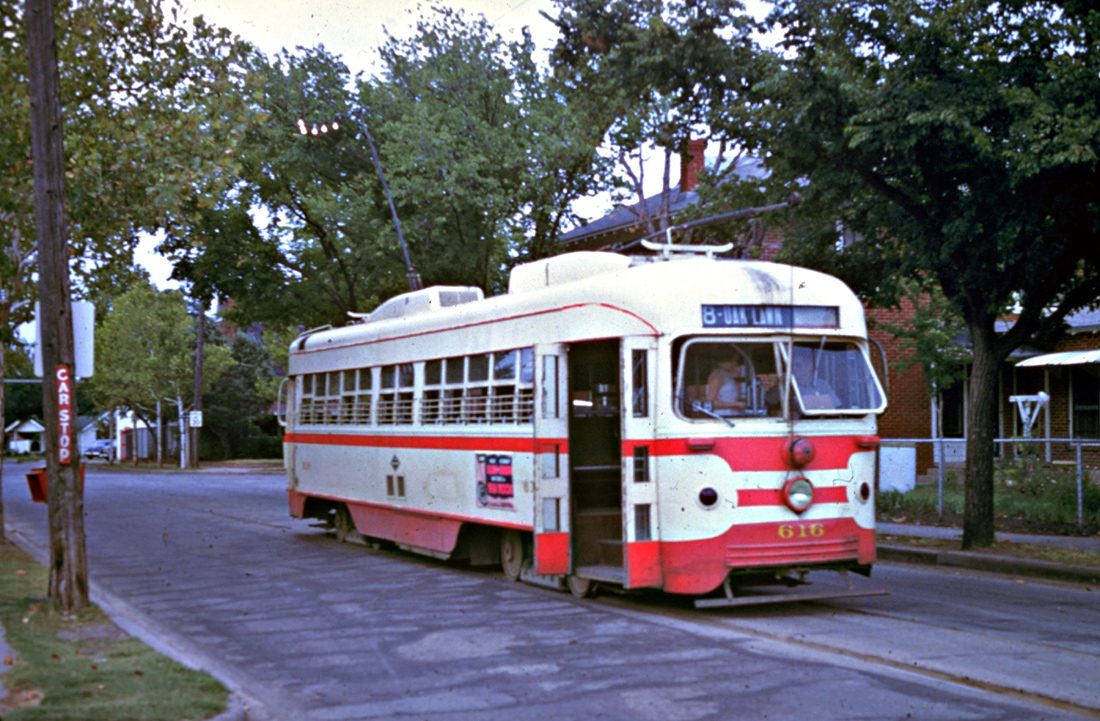
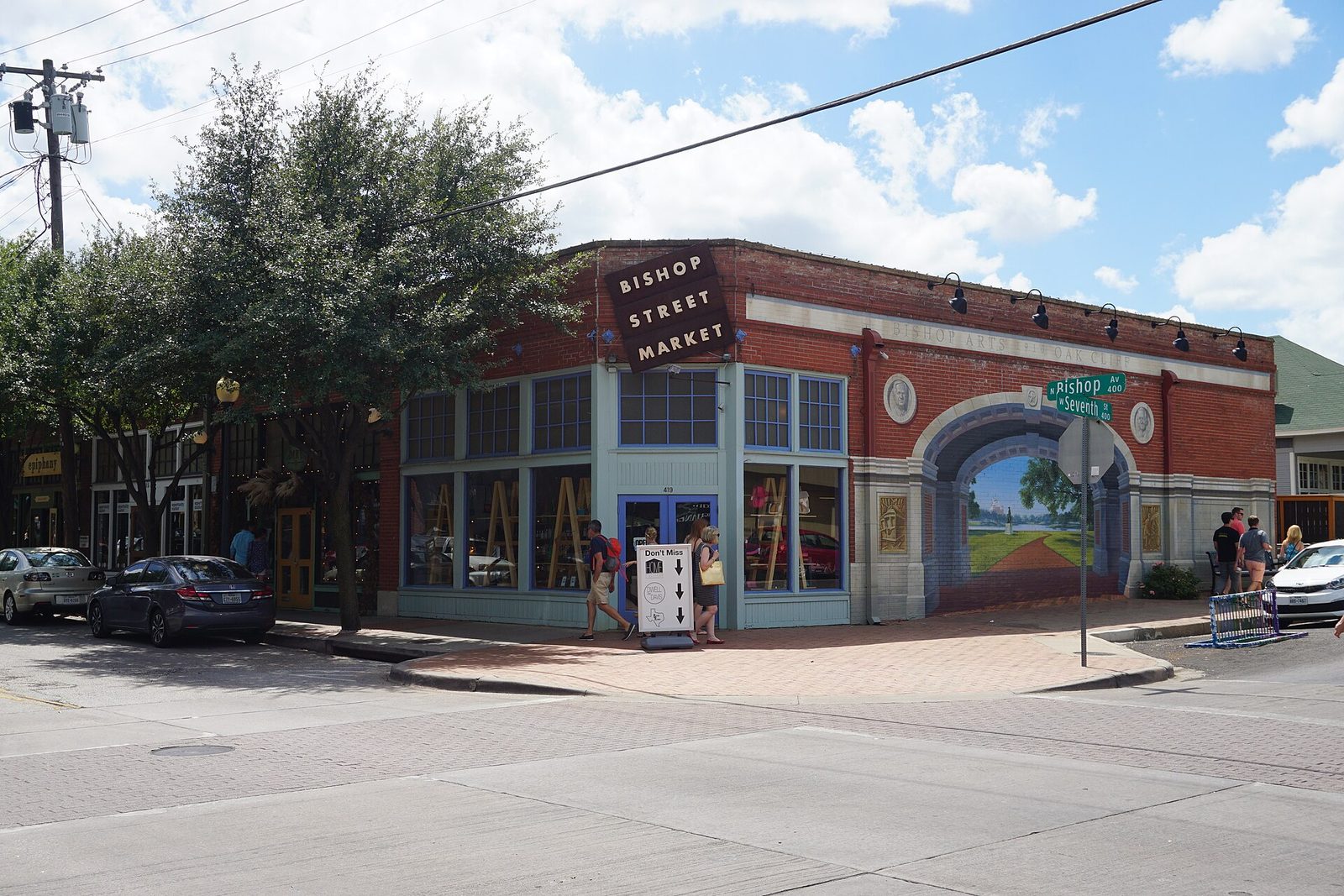
The two that surprise visitors most are Bishop Arts and Trinity Groves. Bishop Arts is a genuinely walkable grid of independent restaurants in Oak Cliff, reachable on the Dallas Streetcar for $1.00 one way, and it feels nothing like the rest of the city. Trinity Groves sits at the west end of the Margaret Hunt Hill Bridge and turns the skyline into the backdrop for dinner, which is the one place where paying for a view is arguably justified.
Our guide to Dallas neighborhoods goes into each in depth, and Dallas restaurants covers where to eat in them.
What Can You Do After Dark Without Drinking?
A great deal, and it is worth setting out because a lot of “Dallas at night” coverage assumes a bar is the destination.
Eat properly. Dallas is a serious food city and dinner is a legitimate evening in itself. Barbecue is the obvious case: Pecan Lodge in Deep Ellum runs to 8 p.m. Tuesday to Thursday, 9 p.m. Friday and Sunday and 10 p.m. Saturday, “or until we’ve sold out” — that last clause is not decoration, and it is why barbecue in Texas is an early-evening plan rather than a late one.
Walk the skyline. The Ronald Kirk Bridge, the Trinity levees and the downtown core are all free, open and lit. Downtown’s walk score of 95 means an hour on foot covers a lot of it.
Ride the free trolley. The M-Line Trolley is free, 365 days a year, running through the Arts District, downtown, Klyde Warren Park, Uptown and West Village, and connecting to DART at CityPlace/Uptown Station. Riding it end to end with no destination is a perfectly good forty minutes.
Go to a game. The American Airlines Center hosts the Mavericks and the Stars, and Victory Station is served by the Green and Orange lines seven days a week. Before events, some Red and Blue trains run direct to Victory Station — check the overhead destination sign.
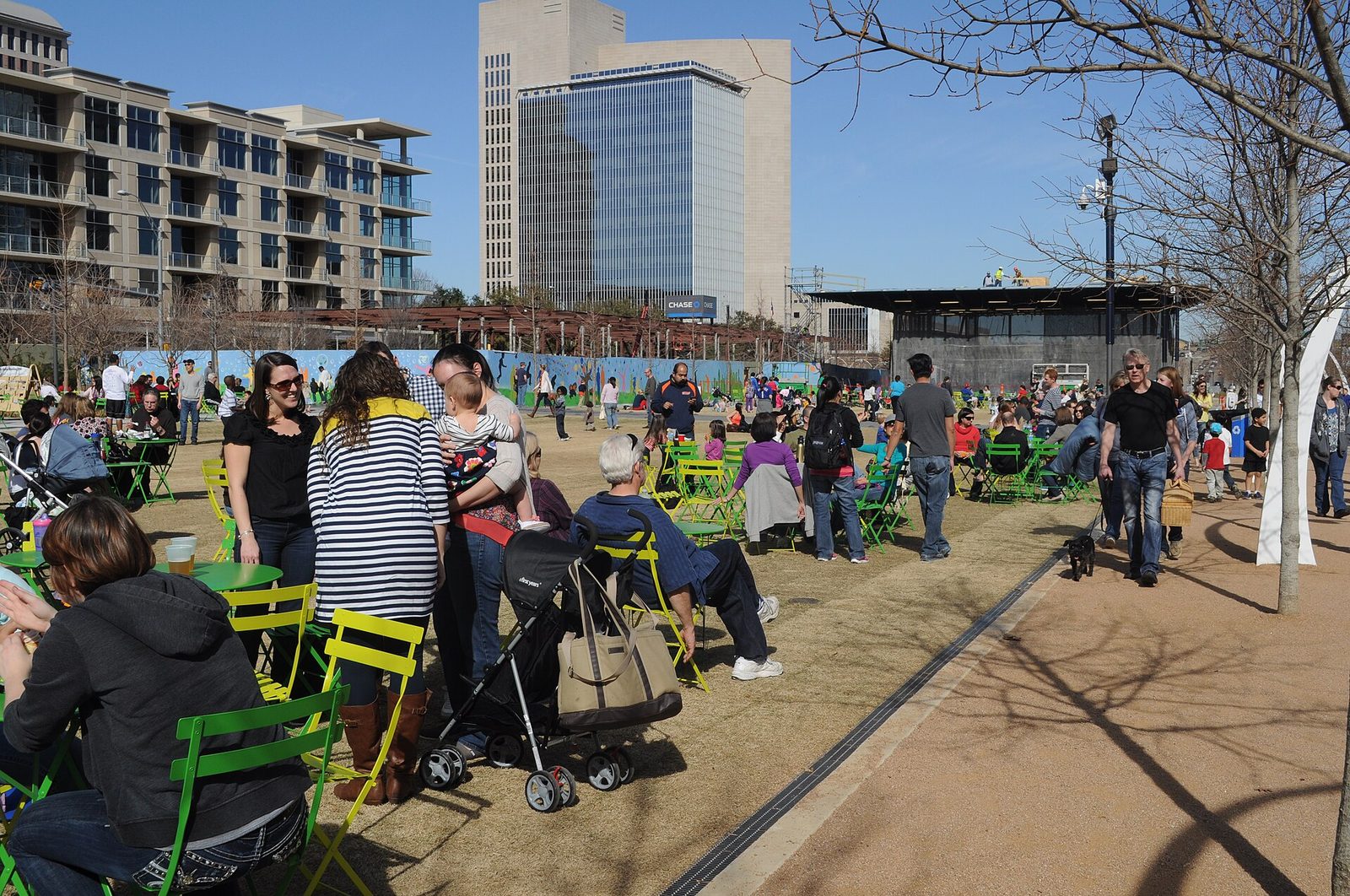
Klyde Warren Park runs free programming through the year and is free to enter, with food trucks and permanent dining partners. It is a deck park built over a freeway, which is a strange and rather good thing to stand in after dark. Our free things to do in Dallas guide has more.
How Do You Get Around Dallas at Night?
Better than the city’s reputation suggests, with two specific traps.
DART Day Passes are valid for unlimited rides on the date of purchase through 3 a.m. the following morning. That single rule makes rail a complete answer to a night out: a Local Day Pass at $6.00, or $3.00 reduced, covers DART Rail, buses, GoLink, the Dallas Streetcar and the Silver Line. Buy it in the afternoon rather than at midnight. A Regional Day Pass is $9.00, or $4.50 reduced, and you only need it for Fort Worth, Denton or Trinity Metro. Note that a 3-Hour Local Pass at $3.00 is often enough for a single evening trip out and back.
The free M-Line Trolley and the $1.00 Dallas Streetcar fill the gaps rail leaves, the trolley north through Uptown and the streetcar south to Oak Cliff and Bishop Arts. The streetcar takes the GoPass app, a GoPass Tap card or contactless payment only — no cash.
The first trap: scooters stop at 9 p.m. Bird, Lime and Superpedestrian all operate 05:00 to 21:00 in downtown Dallas, so a scooter is a daytime and early-evening tool, not a way home. The second: it is illegal to ride bikes or scooters on sidewalks in Downtown Dallas, which catches a lot of visitors who assume the pavement is the safe option after dark.
Parking downtown is surface lots, garages, meters and valet, with no published citywide rate — the district points visitors at parking apps rather than quoting prices. Our getting around Dallas guide sets out the full fare table.
What Does an Evening Cost?
| Evening | What it includes | Cost per person |
|---|---|---|
| The free one | M-Line Trolley, Klyde Warren Park, Ronald Kirk Bridge, downtown walk | $0 |
| The nearly free one | As above plus a $6.00 DART Local Day Pass | $6 |
| Bishop Arts dinner | $1.00 streetcar each way plus a meal | $2 plus food |
| Third Friday at the Nasher | ’til Midnight, 6 p.m. to midnight, March–October | Check the Nasher for terms |
| Reunion Tower GeO-Deck | 470-foot deck, free digital photo, $10 self-parking | Sold by date and time slot |
| A Mavericks or Stars game | Ticket plus DART to Victory Station | Ticket plus $6 |
The honest headline is that a genuinely enjoyable Dallas evening can cost nothing but a day pass. The free stack here — trolley, park, bridge, skyline — is unusually strong for an American city, and it is almost entirely absent from the round-ups that dominate this search. Our Dallas on a budget guide applies the same approach to the rest of a trip.
Where Should You Eat Late in Dallas?
Dinner is the real answer to what to do in Dallas at night, and the city is good enough at it that treating a meal as the whole evening is not a compromise. Two things are worth understanding before you book.
The first is that Texas barbecue is not a late-night food, and visitors get this wrong constantly. Pecan Lodge in Deep Ellum, one of the city’s best-known barbecue rooms, runs 11 a.m. to 8 p.m. Tuesday to Thursday, to 9 p.m. Friday and Sunday and to 10 p.m. Saturday — “or until we’ve sold out.” That closing clause is the operative one. Cattleack Barbeque out in Farmers Branch is even more extreme, opening only Wednesday to Friday and first Saturdays, 10 a.m. to 2 p.m. If barbecue is on your Dallas list, it is a lunch, and building a 9 p.m. evening around it will end in disappointment.
The second is that the food geography follows the district geography exactly. Deep Ellum combines live music venues with kitchens that stay open around them, which makes it the most reliable late district in the city. Bishop Arts is the independent-restaurant concentration, small rooms and short menus, and the whole neighborhood is walkable so you can change your mind at the door. Uptown and the West Village carry the highest restaurant density per block and the free M-Line Trolley runs through both, which makes them the lowest-effort evening available. Trinity Groves, at the west end of the Margaret Hunt Hill Bridge, trades some of that density for the skyline in the window.
Downtown itself has improved considerably: the AT&T Discovery District and The Exchange Food Hall sit near the convention centre and give the business district something to do after six, which it historically lacked. For anyone staying downtown with no car, that matters more than its restaurant-guide reputation suggests. Our Dallas restaurants guide goes neighborhood by neighborhood.
One planning note that applies across all of them: at weekends, book. Dallas restaurants fill on Friday and Saturday evenings in a way that surprises visitors who expect a big American city to absorb walk-ins.
What Actually Goes Wrong on a Dallas Night Out?
Not the things people worry about. In practice, evenings here fail for four boringly logistical reasons, and all four are avoidable.
The distances. Dallas is decentralised and the districts are genuinely far apart — Deep Ellum to Bishop Arts is a real journey, not a stroll. The classic ruined evening involves trying to see two districts and spending it in transit. Commit to one.
The gaps between districts. Each individual neighborhood is walkable and busy; the ground between them is mostly highway, surface parking and industrial edge, and none of it is designed for pedestrians. Walking within Deep Ellum, Bishop Arts, Uptown or downtown is normal and pleasant. Walking between them at night is not something locals do, and there is no reason for a visitor to try.
The closing times. Everything cultural shuts at five, barbecue sells out, the Farmers Market closes at seven, and scooters stop at nine. An evening built on the assumption that a big city stays open late will hit a series of locked doors. Build it on food, districts and the skyline instead.
The journey home. This is the one to decide before you go out, not after. A DART Day Pass bought in the afternoon is valid until 3 a.m. and removes the question entirely. Without one you are relying on rideshare pricing at exactly the hour it is worst, and scooters are already off the streets.
Summer Nights: When the Evening Is the Only Usable Part of the Day
From June to September, Dallas evenings are not optional. July and August average highs of 96.9°F and 97.1°F, with lows still around 77°F, and 100°F days happen several times every summer. Outdoor Dallas between noon and six in August is a proposition most visitors abandon after one attempt.
Restructure the day accordingly. Do the indoor attractions — the Perot, the aquarium, the Dallas Museum of Art — in the punishing middle of the day, and save everything outdoors for after seven. Sunset on the summer solstice is 8:39 p.m. with civil twilight to 9:07 p.m., which gives a long, late, warm evening that is the best version of this city.
The heat does not vanish at sunset — summer lows near 77°F mean an August midnight is still warm — but the sun does, and that is most of the battle. Patios fill after eight. The skyline walk that would be unbearable at four is pleasant at nine. And ’til Midnight at the Nasher runs March through October, which covers the whole of the difficult season.
Winter Nights: Dark by Six
The opposite problem, with its own advantage. December averages a high of 59.2°F and a low of 39.8°F, and the sun sets at 5:26 p.m. on the solstice with full dark before six.
That compresses the evening but it also makes it accessible. A six o’clock outing in December is a night-time outing, which is why the winter light displays work so well with children — you get the full dark experience and everyone is home by eight. The cold is real but mild by national standards; you need a coat, not an expedition.
Winter also solves the problem that governs the rest of the Dallas year: you can be outdoors at any hour. A December afternoon at 59°F and a December evening at 45°F are both perfectly comfortable with a coat, which means the walking routes that are unusable in August — the Trinity bridges, the downtown grid, the Katy Trail — are at their best. If you like a city on foot, December and January are the months to see Dallas that way, and almost nobody schedules a trip for them.
The seasonal calendar also does a lot of work here: from mid-November the city runs light displays, markets and shows that are specifically evening events. Our guide to the best time to visit Dallas compares the seasons properly.
Three Evening Routes You Can Follow
The free skyline evening. Start at Klyde Warren Park around 6 p.m. Take the free M-Line Trolley north through Uptown and back. Walk downtown — thirty minutes gets you across it — and finish on the Ronald Kirk Bridge for the lit skyline. Total cost: nothing, or $6.00 if you use DART to get in and out.
The Oak Cliff dinner evening. Dallas Streetcar south from downtown for $1.00. Bishop Arts on foot: independent restaurants, small shops, no chains, a district you can cover in an hour and eat in for three. Streetcar back, or DART on a day pass that runs to 3 a.m. This is the best value evening in the city.
The third Friday. If your dates include the third Friday of a month between March and October, build the evening around ’til Midnight at the Nasher, 6 p.m. to midnight. Eat in the Arts District beforehand, walk to the Nasher, and finish with the downtown skyline on the way back. It is the only night of the month when Dallas has a proper after-hours cultural scene, and it is genuinely worth arranging a trip around.
What Is Overrated After Dark in Dallas?
Paying for a skyline view. The Ronald Kirk Bridge is free and, for photography, better than most paid vantage points because you are far enough back to get the whole skyline in frame. Pay for height if you specifically want height; do not pay for a view you can walk to.
Trying to combine two districts. Deep Ellum and Bishop Arts are a long way apart and the evening you spend moving between them is the evening you do not spend in either. One district, one night.
Assuming late-night barbecue exists. It does not, reliably. Texas barbecue runs until it sells out, and the good places close in the early evening. If barbecue is on your list, it is a lunch or a 6 p.m. plan, not a midnight one.
Counting on scooters to get home. They stop at 9 p.m., and riding them on downtown sidewalks is illegal. Plan the journey home before you go out, not after.
An evening built around museums. Everything shuts at five except one Friday a month. Build the evening around food, the skyline and a district instead, and the city delivers. Our things to do in Dallas pillar sets out the daytime half of the trip.
Frequently Asked Questions About Dallas at Night
Are museums open at night in Dallas?
Almost never. The Dallas Museum of Art, the Nasher, the Sixth Floor Museum and the Perot all close at 5 p.m., and the DMA, Nasher and Sixth Floor also close Monday and Tuesday, with the Perot closed Tuesday. The one standing exception is ’til Midnight at the Nasher, on the third Friday of the month from 6 p.m. to midnight, March through October.
Where is the best free view of the Dallas skyline at night?
The Ronald Kirk Bridge, a pedestrian crossing of the Trinity west of downtown. It is free, elevated, traffic-free and far enough back to frame the whole skyline. Riverfront Boulevard and the Trinity levees give a similar view from lower down.
Is Dallas walkable at night?
Downtown is, with a walk score of 95 and a thirty-minute crossing on foot. The city as a whole is not — the districts are far apart and the gaps between them are not pleasant walks. Pick one neighborhood for the evening and use rail or the free trolley to reach it.
How late does DART run?
DART Day Passes are valid for unlimited rides on the date of purchase through 3 a.m. the following morning, which covers a normal night out. A Local Day Pass is $6.00, or $3.00 reduced. Check the last departure for your specific line before you rely on it, since pass validity and the timetable are different things.
Is the M-Line Trolley really free?
Yes, and it runs 365 days a year. It is sponsor-supported with optional donations, and it serves the Arts District, downtown, Klyde Warren Park, Uptown and West Village, connecting to DART at CityPlace/Uptown Station.
What is there to do in Dallas at night without going to a bar?
Dinner in Bishop Arts or Deep Ellum, the free skyline walk from the Ronald Kirk Bridge, the free M-Line Trolley, Klyde Warren Park’s evening programming, a Mavericks or Stars game at the American Airlines Center, the Reunion Tower GeO-Deck, and ’til Midnight at the Nasher on a third Friday.
Is it too hot to go out at night in Dallas in summer?
No — the evening is the usable part of a summer day. July and August average highs of around 97°F, so outdoor Dallas only works after dark. Lows stay near 77°F, so it remains warm, but the sun is the real problem and it is gone by nine.
Can you use scooters in Dallas at night?
Only until 9 p.m. Bird, Lime and Superpedestrian operate 5 a.m. to 9 p.m. downtown, and it is illegal to ride bikes or scooters on Downtown Dallas sidewalks at any hour. Plan to walk or take rail home.
If the evening is a special occasion rather than a night out, the planning changes. Book the table for about forty minutes before sunset, treat the third Friday at the Nasher as the fixed point of any March-to-October trip, and remember that the Las Colinas gondolas are private and reservation-only with no published price. Our guide to Dallas experiences for couples covers the bookable list.
Related Dallas Guides
- Things to do in Dallas — the full list, day and night.
- Dallas nightlife — bars, live music and clubs, district by district.
- Dallas restaurants — where to eat, and when kitchens close.
- Free things to do in Dallas — the no-cost list.
- Dallas neighborhoods — what each district is actually like.
- Getting around Dallas — DART fares, the trolley and the streetcar.
- Romantic Dallas — evenings out for two.
- Dallas museums and arts — the daytime cultural map.
- Best time to visit Dallas — season by season.
Photo Credits
- Ronald Kirk Bridge at night: photo by Halljenalyn, Wikimedia Commons (CC BY-SA 4.0)
- Restored Dallas streetcar: photo by Voogd Vader, Wikimedia Commons (CC BY-SA 3.0)
- Bishop Arts District: photo by Michael Barera, Wikimedia Commons (CC BY-SA 4.0)
- Klyde Warren Park: photo by Joe Mabel, Wikimedia Commons (CC BY-SA 3.0)
- Perot Museum, Victory Park: photo by Jiggy jones, Wikimedia Commons (CC BY-SA 3.0)
- Dallas at dusk (featured image): photo by 272447, Wikimedia Commons (CC0)
Sources
- Nasher Sculpture Center — Visit
- Dallas Museum of Art — Visit
- The Sixth Floor Museum — Plan Your Visit
- Perot Museum of Nature and Science — Visit
- Dallas World Aquarium — Hours and Prices
- DART — Fares and passes
- McKinney Avenue Transit Authority — M-Line Trolley
- Downtown Dallas — Getting around
- Klyde Warren Park
- American Airlines Center — Public transportation
- Pecan Lodge
- Dallas CityPASS
- Climate of Dallas — NOAA-derived monthly normals
- National Weather Service — Fort Worth/Dallas