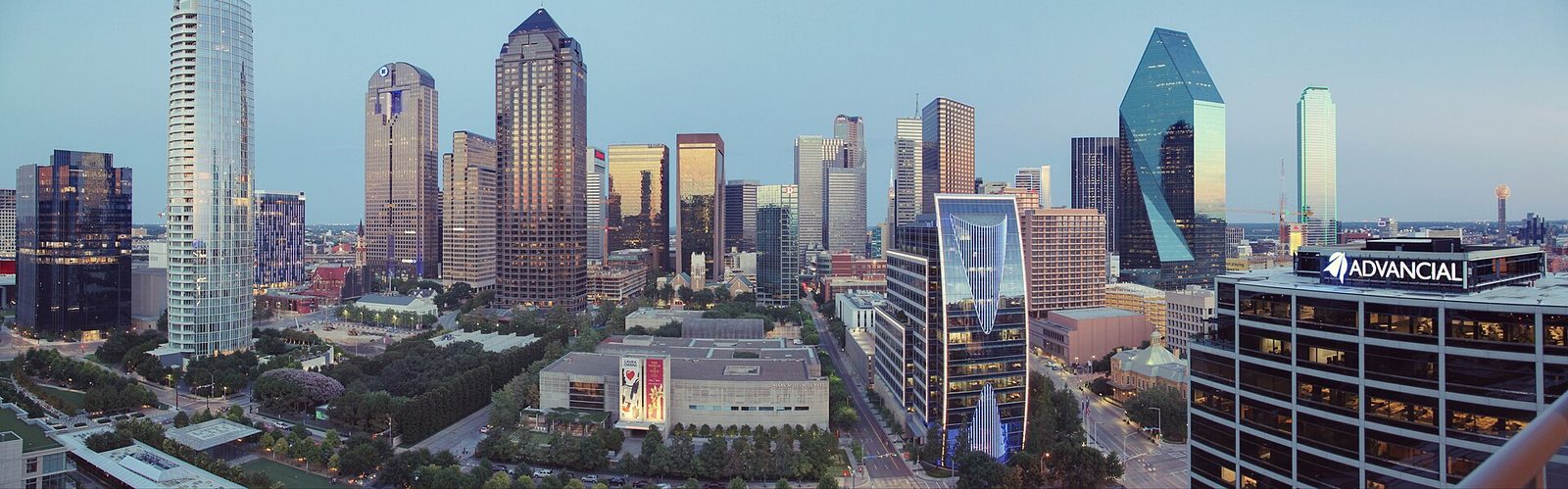
The first thing a Dallas business travel guide has to tell you is that “Dallas” is not one place. Your meeting is in downtown, Las Colinas, Plano or Legacy West, and those are effectively four different cities joined by motorway. Pick the wrong airport or the wrong hotel district and you will spend two hours a day in a car for no reason. Pick correctly and Dallas is one of the most efficient business destinations in the United States — the convention centre sits on a rail station, downtown crosses on foot in 30 minutes, and there are more than 15,000 hotel rooms in the walkable core.
This guide is organised by geography rather than by venue, because geography is the decision that determines everything else. It covers the airport-to-district pairings, realistic commute windows, what the Kay Bailey Hutchison Convention Center actually publishes about parking and access, whether you can skip the rental car, and how to turn the spare evening into something better than a hotel bar. Checked September 2026.
Which Dallas do you actually need?
Answer this before you book anything. The four business geographies behave very differently, and the hotel that looks central on a map may be 40 minutes from your meeting.
| District | What’s there | Nearest airport | Car needed? |
|---|---|---|---|
| Downtown / Arts District | Convention centre, banking and law firms, 15,000+ hotel rooms | Love Field, 7 miles | No — rail, streetcar and the free M-Line cover it |
| Uptown / Victory | Corporate offices, the arena, the best after-hours density | Love Field | No — Green and Orange lines plus the M-Line |
| Las Colinas, Irving | Corporate campuses on the canals, conference hotels | DFW, very close | Mostly yes |
| Plano / Legacy West / Frisco | Corporate headquarters, newest office stock | DFW | Yes |
The pattern is simple and worth stating plainly: downtown and Uptown are transit-served; Las Colinas and Legacy West are not, in any practical sense. If your meetings are north, budget for a car and accept it. If your meetings are downtown, a rental car is an expensive way to acquire a parking problem.
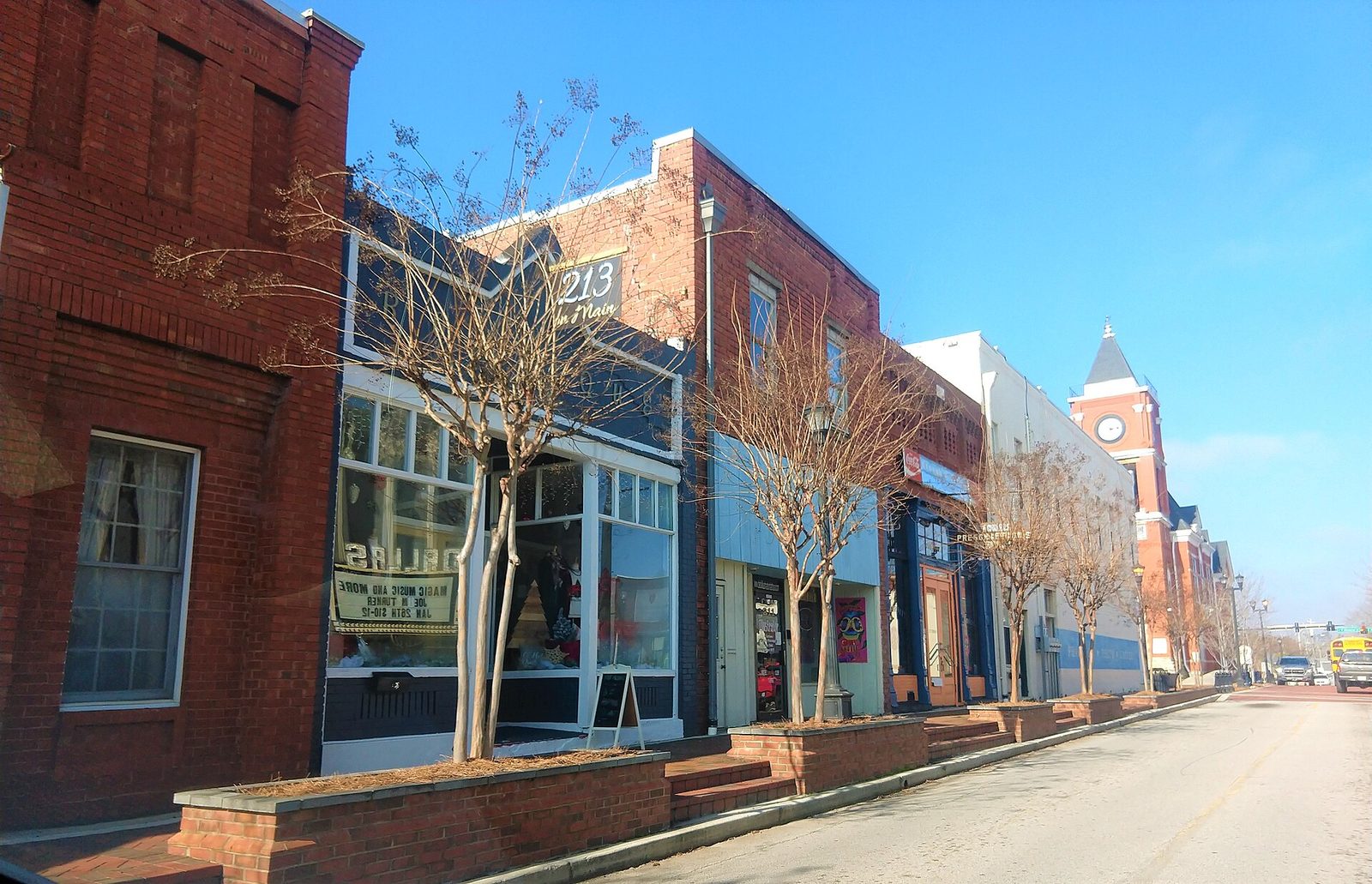
How long does it really take to get between meetings?
Longer than the mapping app says at 4:45 p.m. on a Thursday. The rule of thumb that circulates among corporate travel planners — and it is a secondary source rather than a first-party one, so treat it as a planning heuristic rather than gospel — allows 30 minutes between meetings in the same district, 45 to 60 minutes across districts outside peak, and 75 to 90 minutes in rush hour. Dallas rush hour runs roughly 7 to 9 a.m. and 4 to 6:30 p.m.
| Journey | Off-peak allowance | Rush hour allowance |
|---|---|---|
| Within downtown | 15 minutes on foot | 15 minutes on foot — unchanged |
| Downtown to Uptown | 15–20 minutes | 25 minutes; the M-Line is free but slow |
| Downtown to Las Colinas | 45–60 minutes | 75–90 minutes |
| Downtown to Legacy West | 45–60 minutes | 75–90 minutes |
| DFW to downtown by Orange Line rail | Fixed timetable — immune to traffic | Fixed timetable |
That last row is the single most useful line in this guide. Rail time is fixed; road time is not. For a flight you cannot miss after an afternoon downtown, the Orange Line from the city to DFW Terminal A removes the entire variable that ruins business trips in this region.
DFW or Love Field: which airport for which district?
They are not interchangeable, and the difference is bigger than the mileage suggests.
Dallas Love Field is seven miles from the convention centre and is a single compact terminal. For a downtown meeting it is comfortably the better airport: less walking, faster exit, shorter drive. The DART connection is Bus Route 5, the Love Link, to Inwood/Love Field Station on the Green and Orange lines — and there is a quirk worth knowing, because riding from the airport to the station is free while riding to the airport costs $2.50. There is free public parking at Inwood/Love Field Station, which makes it a good place to be collected.
DFW is about 30 minutes from the convention centre and covers 26.9 square miles across five terminals with more than 160 gates. It is the right airport for Las Colinas, Plano and Legacy West, and the wrong one for a tight downtown schedule unless you use the rail.
Three DFW rail facts that catch experienced travellers out:
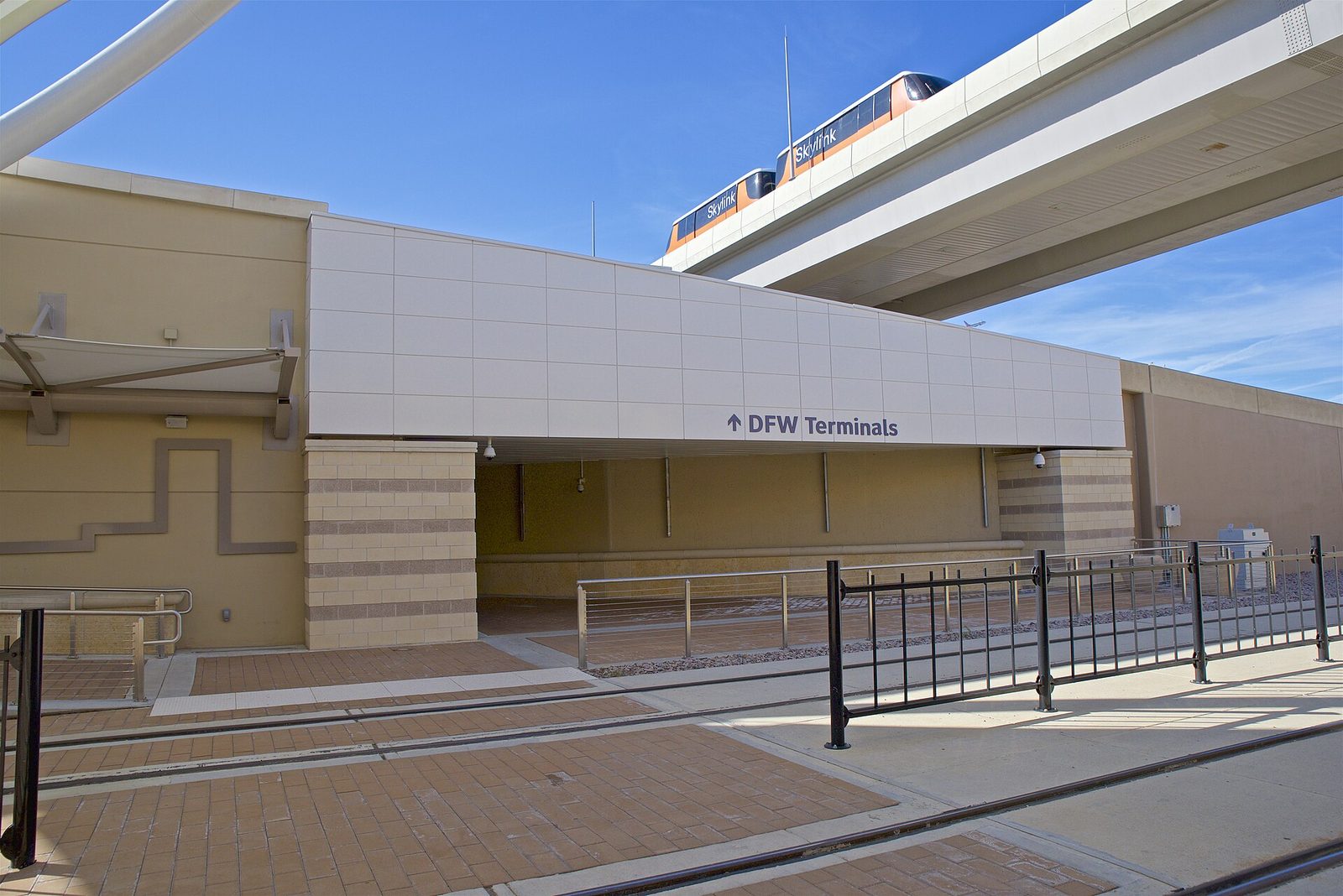
- The Orange Line serves Terminal A, near Gate A10, and reaches downtown Dallas. This is the one you want.
- The Silver Line serves Terminal B, near Gate B43 — and does not reach downtown. It runs to Cypress Waters, Carrollton, Addison, Richardson and Plano, which makes it excellent for a Legacy West meeting and useless for a convention centre one.
- Carry-on only: clear security at A or B and use the Skylink people mover airside. Checking a bag: take the free Terminal Link shuttle on the lower level. DFW’s own warning is that reaching baggage claim takes you out of the secure area and requires the Terminal Link to get back.
One more, and it matters more for business travel than for anything else: there are no luggage racks on DART light rail — not on the Red, Blue, Green or Orange lines — and operators do not assist with bags. The Silver Line does have overhead racks and a luggage area. A roller bag on the Orange Line is manageable; two suitcases and a sample case is not. Our Dallas airports guide covers both airports properly.
What should you know about the Kay Bailey Hutchison Convention Center?
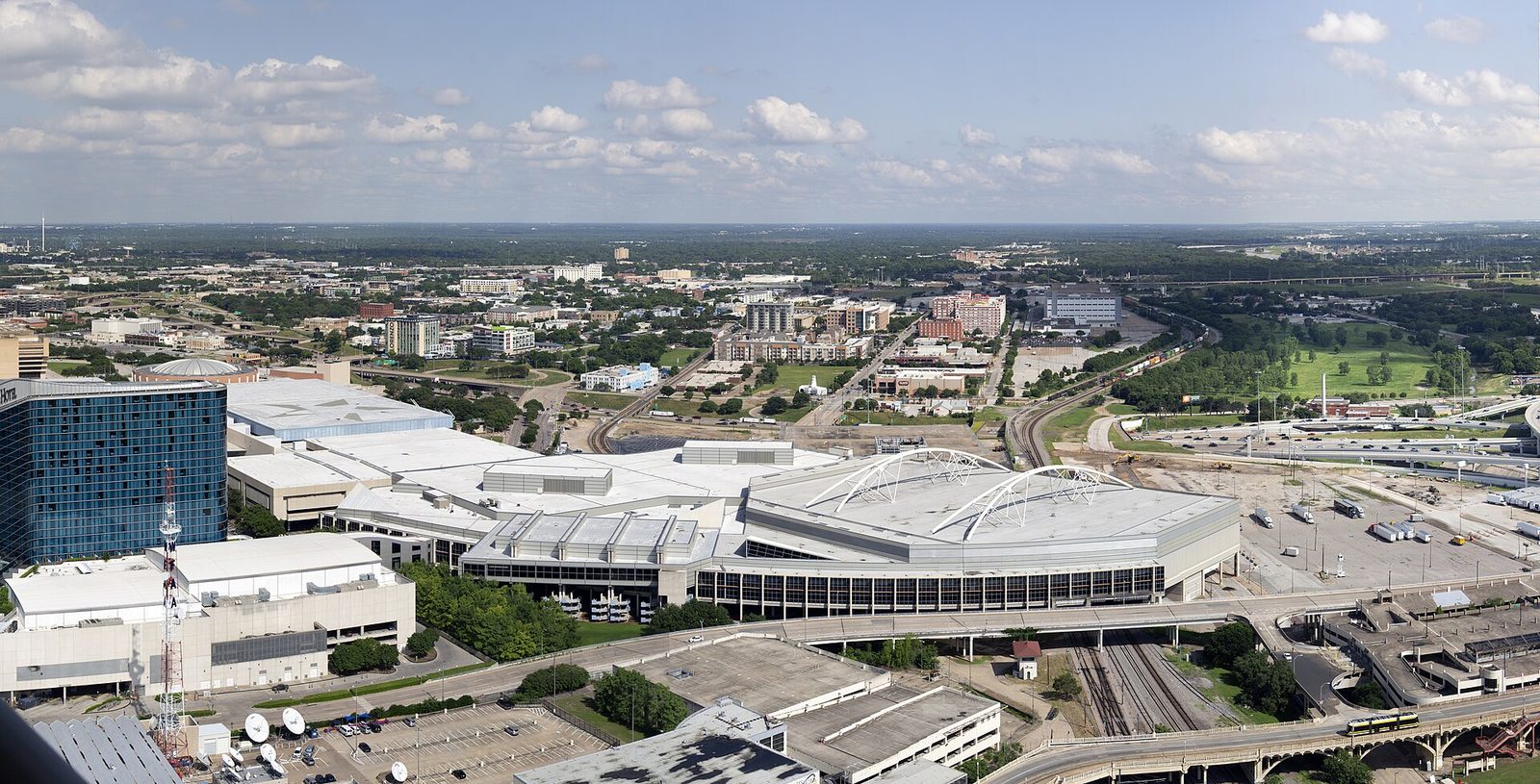
It sits at 650 S Griffin Street, on the south edge of downtown, with its own dedicated DART Convention Center Station. Note that the venue itself does not publish which rail lines serve that station, so check DART directly if your schedule depends on a specific line.
Parking, and the trap in it.
| Option | Price | Location | Capacity |
|---|---|---|---|
| Parking Garage | $20 per day | Memorial Dr. and S Griffin St., two levels | 1,200 spaces |
| Lot C | $17 per day | 502 S Lamar St. | 170 spaces |
(Checked September 2026, managed by ACE Parking.) The trap is in the terms: parking is charged per day, per entry, with no in and out privileges, and spaces are first come, first served. If you leave at lunch, you pay again on your return. For a multi-day conference that turns $20 a day into something considerably worse, which is the strongest practical argument for arriving by rail.
The construction warning is the centre’s own. It tells attendees that ongoing master plan construction and roadwork may require advance route planning and extra travel time. Take that seriously — check your route the morning of, not the week before.
Inside the building. Free Wi-Fi covers all common areas and meeting rooms; the network is called “Free Internet.” Outside food and beverages are prohibited, so the coffee you bought across the street does not come in with you. The building is ADA compliant with permanent wheelchair lifts, elevator and door width standards and accessible restrooms, and service animals are welcome under ADA guidelines. Lost property runs through the Boomerang service. If you are attending something with a costume element, simulated weapons need prior security approval, inspection at the main lobby desk and tagging before entry.
Coat check, ATMs, first aid locations, smoking rules, re-entry policy and building opening hours are not published in the attendee FAQs, so confirm those with your event organiser rather than assuming.
Where should you stay for a convention in Dallas?
The convention centre’s own framing is useful: more than 15,000 hotel rooms in the walkable downtown core. That is a genuinely large number for an American downtown and it means you do not need to compromise.
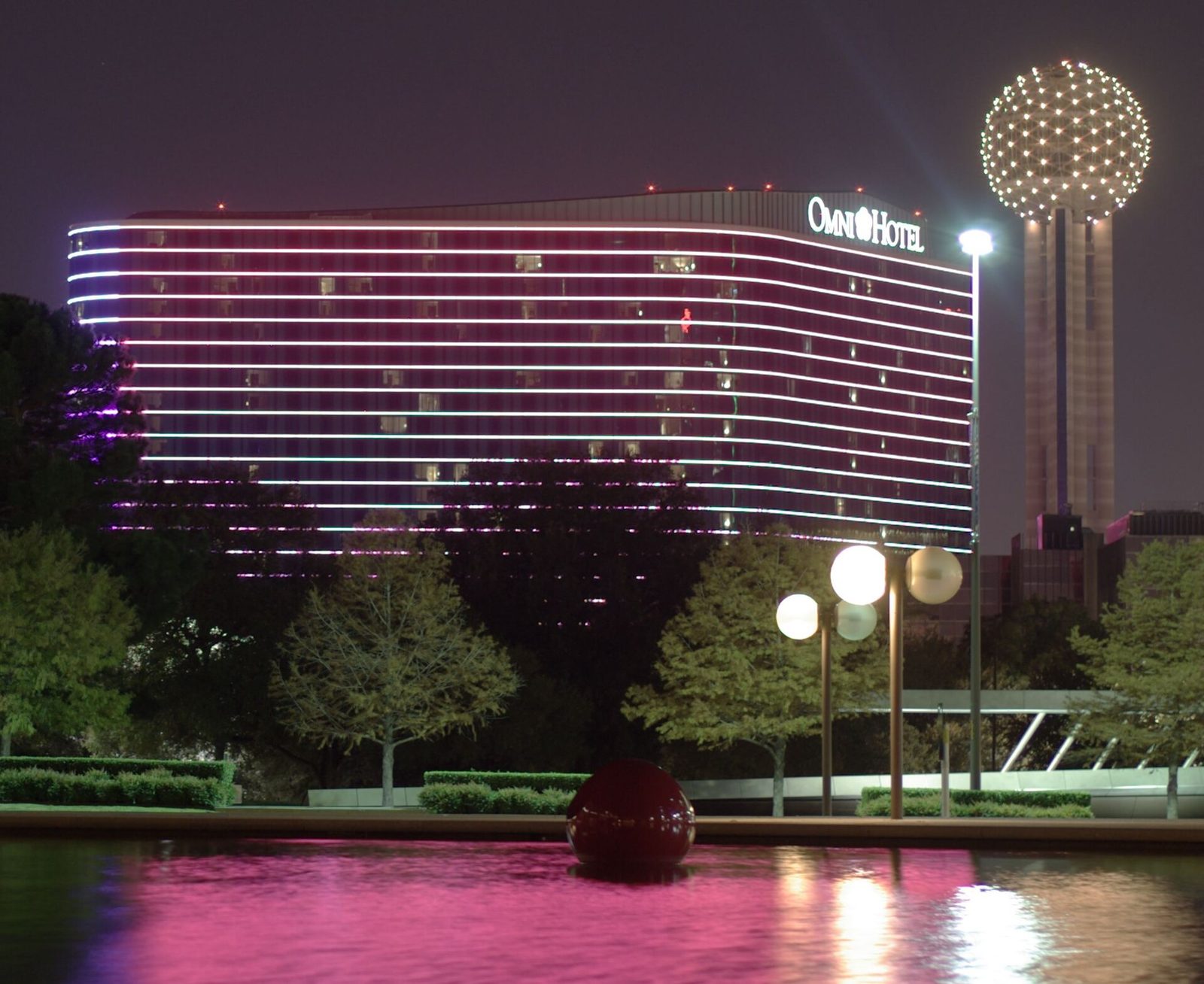
The adjacent option. The Omni Dallas Hotel has 1,001 rooms directly adjacent to the convention centre, with a fitness centre, the Mokara Spa and a heated infinity pool. For a keynote at 8 a.m. or a booth you have to open, proximity is worth paying for. For a two-day attendee schedule, it may not be.
The walkable alternative. Anywhere in the downtown core puts you within a reasonable walk or a short rail hop of the centre, usually at a materially lower rate, and closer to restaurants that are not conference catering. Downtown scores 95 for walkability.
The Uptown play. Staying in Uptown gives you a much better evening — patios, restaurants, the free M-Line Trolley — at the cost of a 15 to 20 minute commute each morning. For a conference where you are attending rather than presenting, this is usually the better trade.
One cost note that catches expense claims: Texas levies 6 percent state hotel occupancy tax, and cities and special purpose districts are authorised to add a local hotel tax on top. The rate you were quoted is not the rate that hits the card. Our where to stay in Dallas guide maps the districts properly.
Can you do a Dallas business trip without a rental car?
Downtown, yes, comfortably. North of the city, no.
| Option | Cost | Use it for |
|---|---|---|
| M-Line Trolley | Free, 365 days a year | Arts District, downtown, Klyde Warren, Uptown, West Village |
| Dallas Streetcar | $1.00 one way | Downtown to Bishop Arts; GoPass app or contactless only |
| DART 3-Hour Local Pass | $3.00 | A meeting across town and back |
| DART Local Day Pass | $6.00 | A full day of downtown and Uptown movement |
| DART Regional Day Pass | $9.00 | Adds the TRE to Fort Worth and Trinity Metro |
(DART fares checked September 2026; day passes run to 3 a.m. the following morning.) A registered GoPass Tap card applies monthly fare capping, so a long assignment never costs more than the 31-day price of $126.00 for Local. Note that the Regional pass is not sold on the Tap card — ticket machine or app only.
The honest arithmetic: a $6.00 day pass against a rental car plus downtown parking is not close. Where the car wins is a day of scattered meetings in Las Colinas, Plano and Frisco, none of which are usefully rail-connected to each other. Our getting around Dallas guide has the full network.
Where do you work between meetings?
Three tiers, depending on how long the gap is.
An hour. Klyde Warren Park has free Wi-Fi-adjacent civility, shade and food trucks, and sits between downtown and Uptown. The AT&T Discovery District and The Exchange Food Hall, near the convention centre, give you a table, power and coffee without a membership. Hotel lobbies in the downtown core are generally tolerant.
Half a day. Dallas has a deep coworking market across downtown, Uptown, Las Colinas and Legacy West, and day passes are widely available. Book the specific location the day before rather than turning up — the good downtown spaces fill during large conventions, which is precisely when you will need one.
A whole day between commitments. If you are stuck downtown with a laptop, the practical answer is a day pass at a coworking space near your next meeting rather than near your hotel, so the commute happens while you are fresh rather than while you are late.
One thing to avoid: planning to work from a museum café. The Dallas Museum of Art bans food and drink in galleries entirely and its café is not a workspace, and the Nasher is too small. They are excellent for an hour of decompression and poor for two hours of email.
What is there to do in Dallas after 5 p.m.?
More than the reputation suggests, and the geography is kind — the Arts District is a ten-minute walk from most downtown hotels.
The free option that nobody uses. On the third Friday of the month from March to October, the Nasher Sculpture Center opens its garden from 6 p.m. to midnight at no charge. A floodlit sculpture garden after a day of breakout sessions is a considerably better evening than the hotel bar, and it costs nothing.
The reliable option. Klyde Warren Park, food trucks, and the free M-Line north into Uptown for dinner. No reservation, no commitment, no car.
The client dinner option. Uptown and the downtown core both work. Book ahead — Dallas restaurants fill around 8 p.m. and the tasting-menu end of the market goes weeks out. If you want the Texas thing, note that the serious barbecue runs on a lunch schedule and sells out: Pecan Lodge in Deep Ellum posts hours that end “or until we’ve sold out,” and Cattleack Barbeque in Farmers Branch opens Wednesday to Friday 10 a.m. to 2 p.m. plus first Saturdays and nothing else. A barbecue client lunch is achievable; a barbecue client dinner largely is not.
The sports option. The American Airlines Center is on Victory Station, served by the Green and Orange lines seven days a week, with Red and Blue riders transferring at West End — and before events some Red and Blue trains run direct, with “Victory Station” on the destination sign. By contrast AT&T Stadium and Globe Life Field are both in Arlington, which has no DART rail at all, and Toyota Stadium is in Frisco, also off the map. Factor a car or a long rideshare into any Arlington evening. Our Dallas nightlife and Dallas sports guides go deeper.
How do you extend a business trip into a weekend?
Dallas is well suited to this, because the best things here are cheap and close together. One warning first, and it is the single most common way an extended Dallas trip goes wrong.
The Monday–Tuesday problem. The Dallas Museum of Art, the Nasher Sculpture Center and the Sixth Floor Museum all close on Monday and Tuesday, and the Perot Museum closes Tuesday. If your conference ends Friday and you stay the weekend, you are fine. If you arrive Sunday night for a Wednesday event and planned to sightsee Monday, you have a problem almost nobody warns you about.
A free Saturday. The DMA costs nothing, though every person needs a timed ticket. Klyde Warren Park costs nothing. The M-Line costs nothing. Sunset over the skyline from Boy Scout Hill at White Rock Lake costs nothing. That is a genuinely good day for the price of lunch.
A paid Saturday. The Sixth Floor Museum at $27, Wednesday to Sunday, last ticket 4:15 p.m. — the single most substantial thing in Dallas for a first-time visitor. Add the Nasher at $10, or $8 with proof of DART fare.
A day trip. Fort Worth by TRE from EBJ Union Station on a $9.00 Regional Day Pass, though note there is no scheduled TRE service on Sundays. The Stockyards run a cattle drive twice daily at 11:30 a.m. and 4 p.m., and the operator suggests half a day minimum — so give it a real day rather than an afternoon. Our day trips from Dallas guide covers the car-free routes, and Dallas itineraries has ready-made weekends.
What does a Dallas business trip actually cost?
Excluding flights and the hotel, which vary too much to average, here is a realistic three-day downtown total for one person.
| Line item | Rail-based trip | Car-based trip |
|---|---|---|
| Airport transfer, both ways | $6.00 (Love Link free inbound, $2.50 out, plus rail) | Rental from $60/day plus fuel |
| Local movement, 3 days | $18.00 (3 × Local Day Pass) | Included in rental |
| Convention centre parking, 3 days | $0 | $60.00, no in and out |
| Hotel parking, 3 nights | $0 | Charged separately by most downtown hotels |
| An evening out | $0–40 (Nasher late night, Klyde Warren) | Same, plus parking |
| Ground total | ≈ $24–64 | $240+ |
That gap is why the car question is the first one to settle. If every meeting is downtown, the rental car is a line item that buys you a parking problem. If your meetings are in Plano, it is unavoidable and the comparison is irrelevant. Our Dallas on a budget guide applies the same logic to leisure trips.
Where do Las Colinas and Legacy West fit?
They are the two districts most likely to be your actual destination, and neither behaves like downtown.
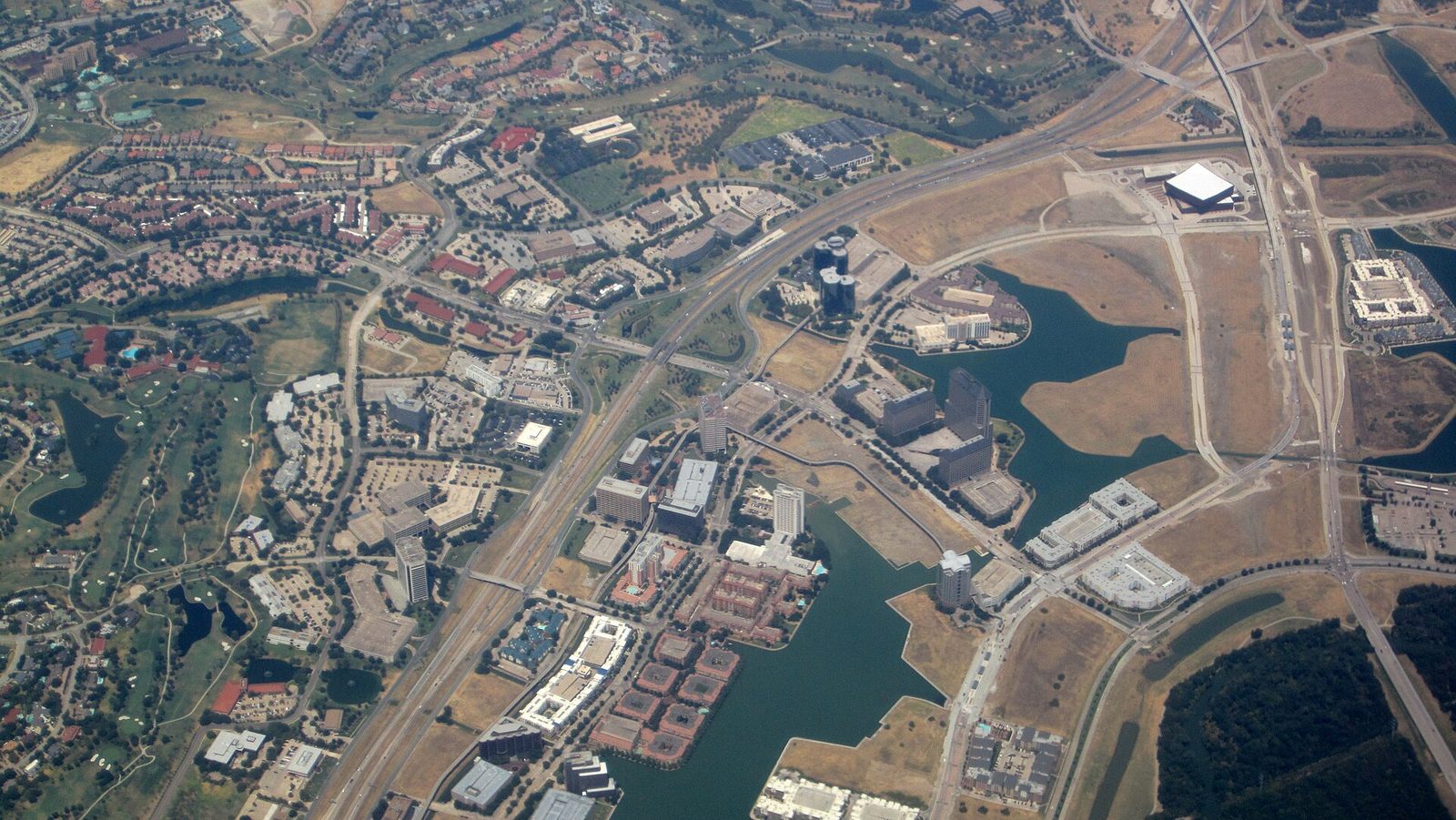
Las Colinas, Irving. A planned corporate district built around lakes and canals, very close to DFW and well supplied with conference hotels. If your meetings are here, fly into DFW, stay here, and do not try to commute from downtown — you will spend 45 to 90 minutes each way for the privilege of a nicer evening. The compensation is that the Mandalay Canal is genuinely pleasant to walk in the evening, and gondola cruises operate on it, which makes an unusual client entertainment option if you book well ahead.
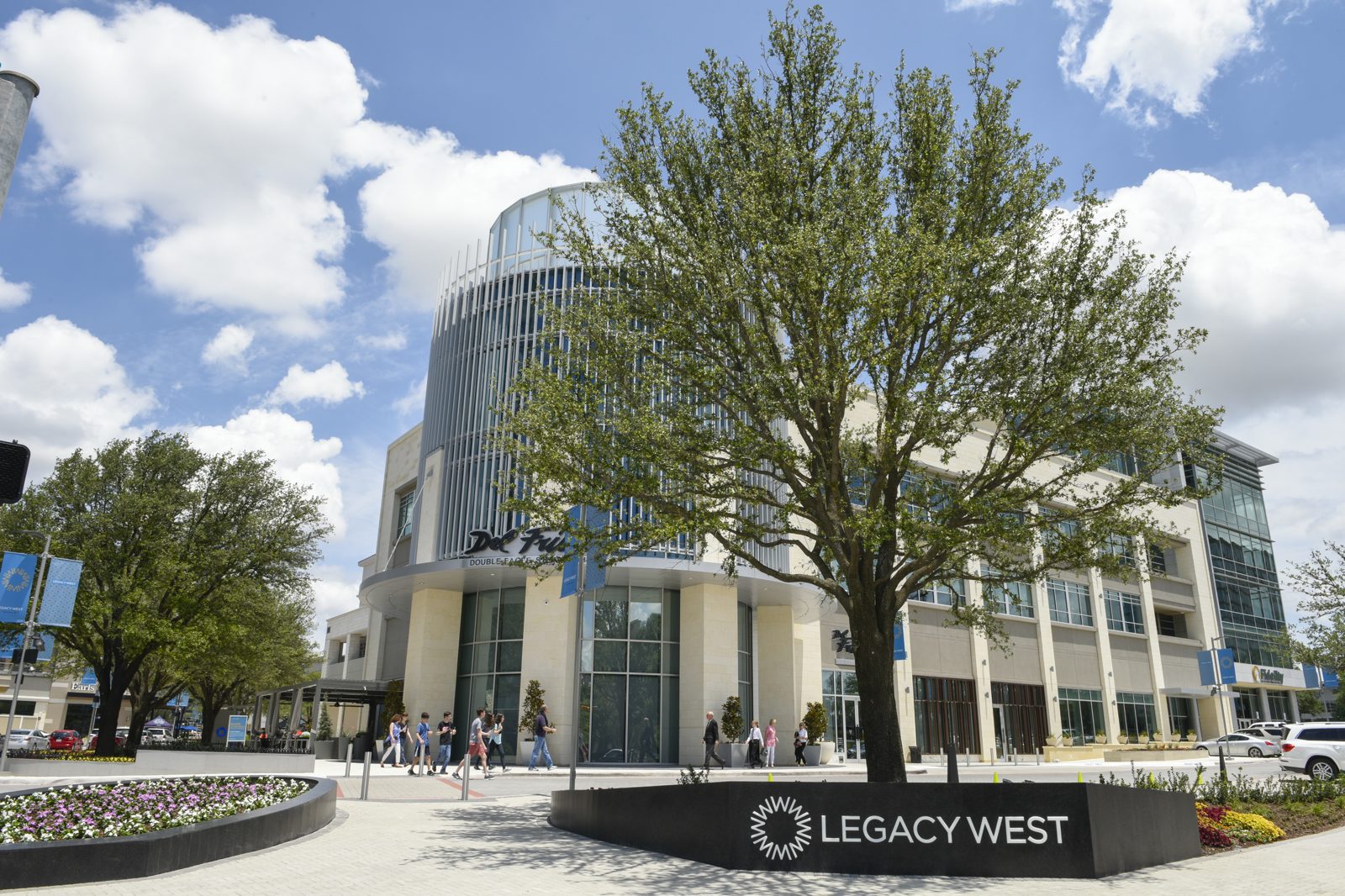
Plano, Legacy West and Frisco. The newest office stock in the region and home to a cluster of corporate headquarters. Fly into DFW. The Silver Line reaches Plano and Richardson from DFW Terminal B, which is genuinely useful — but remember it does not connect to downtown Dallas, so do not stay downtown and expect to commute north by rail. Stay locally, or accept 75 to 90 minutes each way in rush hour.
Where do you take a client in Dallas?
Four options that work, sorted by how much effort they take to arrange.
A stadium tour. AT&T Stadium in Arlington runs VIP Guided, Owner’s Experience, Self-Guided, Gameday, Educational and Art tours daily, with field access subject to availability — and you may bring your own football for the field, which is a better icebreaker than any restaurant. Tour prices are not published on the site; they sell through a booking widget, so get a quote rather than budgeting from a figure you read elsewhere. Gameday tours are booked on 817-892-TOUR, and tour tickets are required for children aged five and up. Note the bag policy is strict: a clear tote no larger than 12 by 6 by 12 inches, a clear one-gallon resealable bag, or a small clutch no bigger than 4.5 by 6.5 inches. Backpacks, briefcases, camera bags and computer bags are all prohibited, which matters if you are coming straight from a meeting.
A game. The American Airlines Center is the easy one, because it sits on Victory Station with Green and Orange line service seven days a week. Arlington is the hard one — AT&T Stadium and Globe Life Field have no rail at all.
A private gondola. If your meetings are in Las Colinas, private cruises run on the Mandalay Canal and Lake Carolyn. It is genuinely unusual, it is private rather than shared, and it books through a reservation system rather than a price list, so allow lead time.
A sculpture garden at night. The free third-Friday opening at the Nasher, March to October, 6 p.m. to midnight. Costs nothing, requires no booking, and is far more memorable than a steakhouse.
When should you schedule a Dallas event?
The calendar matters more here than in most US cities, for two reasons: heat and the State Fair.
Avoid July and August if attendees will walk anywhere. Average highs of 96.9°F and 97.1°F make the four blocks between hotel and venue a real consideration, and outdoor receptions in that window are a gamble rather than a plan. Rates are lower for a reason.
Know where the State Fair falls. In 2026 it runs 25 September to 18 October at Fair Park, and it is enormous. It fills hotels, loads the roads around Fair Park and the south-east of downtown, and competes for the city’s attention. That can be an asset — an evening at the fair is a genuinely good group outing — but only if you planned for it rather than discovering it.
The sweet spots. Late October into November, at average highs of 79.5°F falling to 67.8°F, and March into April, at 69.9°F rising to 77.4°F. Both give you comfortable outdoor receptions and functioning walkability. The caveat is rain: October is the wettest month at 4.79 inches and May second at 4.57, so an outdoor element needs a wet-weather plan in either shoulder season.
The quiet trade. December through February is mild by American standards, at highs in the high fifties and low sixties, and it is the cheapest time to bring a group to Dallas. The risk is a hard freeze, which is rare but disruptive when it happens — the city averages 1.7 inches of snow a year and does not handle it well. Our Dallas events calendar and best time to visit guides have the full year.
What goes wrong on Dallas business trips?
The honest list, in order of frequency.
Booking a downtown hotel for a north Dallas meeting. The most expensive mistake available, paid twice a day for the length of the trip. Match the hotel to the meeting, not to the city centre.
Assuming the Silver Line goes downtown. It does not. It reaches DFW Terminal B and runs north-east through Carrollton, Addison, Richardson and Plano. The Orange Line is the downtown connection, from Terminal A.
Paying for convention centre parking and then leaving at lunch. Per day, per entry, no in and out. Take the rail, or stay put.
Renting a car for a downtown-only trip. You will pay for the car, pay again to park it at the hotel, and pay a third time at the venue, in a district that crosses on foot in half an hour.
Scheduling a Monday sightseeing day. The three museums a first-time visitor actually wants are all shut Monday and Tuesday.
Underestimating August. Average highs of 97°F mean the four-block walk between your hotel and the venue is a genuine consideration in a suit. Plan the indoor route, and note that downtown’s walkability score does not account for July.
Frequently asked questions about business travel in Dallas
How far is the convention center from the airport?
Dallas Love Field is 7 miles from the Kay Bailey Hutchison Convention Center. DFW is about 30 minutes away. Dallas Executive Airport, for private aviation, is about 10 minutes. For a downtown-only trip, Love Field is materially more convenient.
How much is parking at the Kay Bailey Hutchison Convention Center?
The Parking Garage at Memorial Drive and S Griffin Street is $20 per day across 1,200 spaces, and Lot C at 502 S Lamar Street is $17 per day across 170 spaces. Both are per day, per entry, with no in and out privileges, and both are first come, first served.
Is there Wi-Fi at the Dallas convention center?
Yes — free Wi-Fi in all common areas and meeting rooms, on a network called “Free Internet.” Note that outside food and beverages are prohibited in the building.
Do I need a rental car for a Dallas business trip?
Only if your meetings are outside the downtown and Uptown corridor. Downtown is rail-served, walkable in about 30 minutes, and a DART Local Day Pass costs $6.00. Las Colinas, Plano, Legacy West and anything in Arlington require a car in practice.
Which DART line goes from DFW to downtown Dallas?
The Orange Line, from DFW Terminal A Station near Gate A10. The Silver Line serves Terminal B near Gate B43 but does not reach downtown — it runs to Cypress Waters, Carrollton, Addison, Richardson and Plano.
Can I take luggage on DART?
You can, but there are no luggage racks on DART light rail and operators do not assist with bags. The Silver Line has overhead racks and a dedicated luggage area. A single roller bag on the Orange Line is fine; heavy kit is not.
What is there to do in Dallas on a business trip evening?
The Arts District is a short walk from most downtown hotels. On the third Friday from March to October the Nasher opens its garden free until midnight. Klyde Warren Park runs food trucks and free programming. Uptown, reached by the free M-Line Trolley, has the best restaurant density.
Is Dallas walkable for business travellers?
Downtown scores 95 for walkability and crosses in roughly 30 minutes. Bear in mind that riding bikes or scooters on downtown sidewalks is illegal, that scooter operators run only from 5 a.m. to 9 p.m., and that July and August average highs near 97°F change what “walkable” means in a suit.
Is the convention center walkable from downtown hotels?
From most of the downtown core, yes — the centre sits at 650 S Griffin Street on the southern edge of downtown, and the district crosses on foot in about 30 minutes end to end. The caveat is the centre’s own warning about ongoing master plan construction and roadwork, which can close the obvious route. Check on the day, and in July or August budget for the heat rather than the distance.
What is the cheapest way to get from DFW to downtown Dallas?
The Orange Line from DFW Terminal A Station, on a DART Local Day Pass at $6.00 — which then covers the rest of your day’s travel as well, through to 3 a.m. the following morning. A 3-Hour Local Pass at $3.00 works if the airport run is the only journey you need. Both are a fraction of a rideshare, and unlike a rideshare the journey time does not move with the traffic.
Related Dallas Guides
- Dallas airports — DFW and Love Field, with the rail connections in detail
- Getting around Dallas — DART, the streetcar, the M-Line and fare capping
- Where to stay in Dallas — district by district, mapped against transit
- Dallas restaurants — client dinners and the barbecue lunch problem
- Dallas nightlife — what each district is actually good at after dark
- Dallas itineraries — ready-made plans for the extended weekend
- Day trips from Dallas — Fort Worth by rail on a $9 pass
- Dallas museums and arts — and the Monday–Tuesday closure trap
- Dallas sports — which venues are rail-served and which are not
- Dallas on a budget — the same transport arithmetic, for leisure
- Accessible Dallas travel guide — venue access and DART provisions
- Best time to visit Dallas — the heat, month by month
Photo Credits
- Downtown Dallas street: photo by Kreeder13, Wikimedia Commons (CC BY-SA 4.0)
- DFW Airport Terminal B rail station: photo by Danazar, Wikimedia Commons (CC BY-SA 4.0)
- Kay Bailey Hutchison Convention Center Dallas: photo by IcedCowboyCoffee, Wikimedia Commons (CC0)
- Omni Dallas Hotel: photo by Richard Murphy, Wikimedia Commons (CC BY-SA 3.0)
- Las Colinas, Irving: photo by La Citta Vita, Wikimedia Commons (CC BY-SA 2.0)
- Legacy West, Plano: photo by Karen Almond
http://www.karenalmondphoto.com/, Wikimedia Commons (CC BY-SA 3.0)
- Downtown Dallas skyline (featured image): photo by Gattacal, Wikimedia Commons (CC BY-SA 4.0)
Sources
- Kay Bailey Hutchison Convention Center — Getting Here and Parking (checked September 2026)
- Kay Bailey Hutchison Convention Center — Attendee FAQs (checked September 2026)
- Kay Bailey Hutchison Convention Center — Plan Your Visit (checked September 2026)
- DART — Fares (checked September 2026)
- DART — Rail to DFW Airport (checked September 2026)
- DFW Airport — Facts and Figures (checked September 2026)
- Dallas Love Field — Ground Transportation (checked September 2026)
- American Airlines Center — Public Transportation (checked September 2026)
- Downtown Dallas Inc — Getting Around (checked September 2026)
- Texas Comptroller — Hotel Occupancy Tax (checked September 2026)
- Nasher Sculpture Center — Visit (checked September 2026)
- Dallas Museum of Art — Visit (checked September 2026)
- The Sixth Floor Museum at Dealey Plaza (checked September 2026)
- Fort Worth Stockyards (checked September 2026)