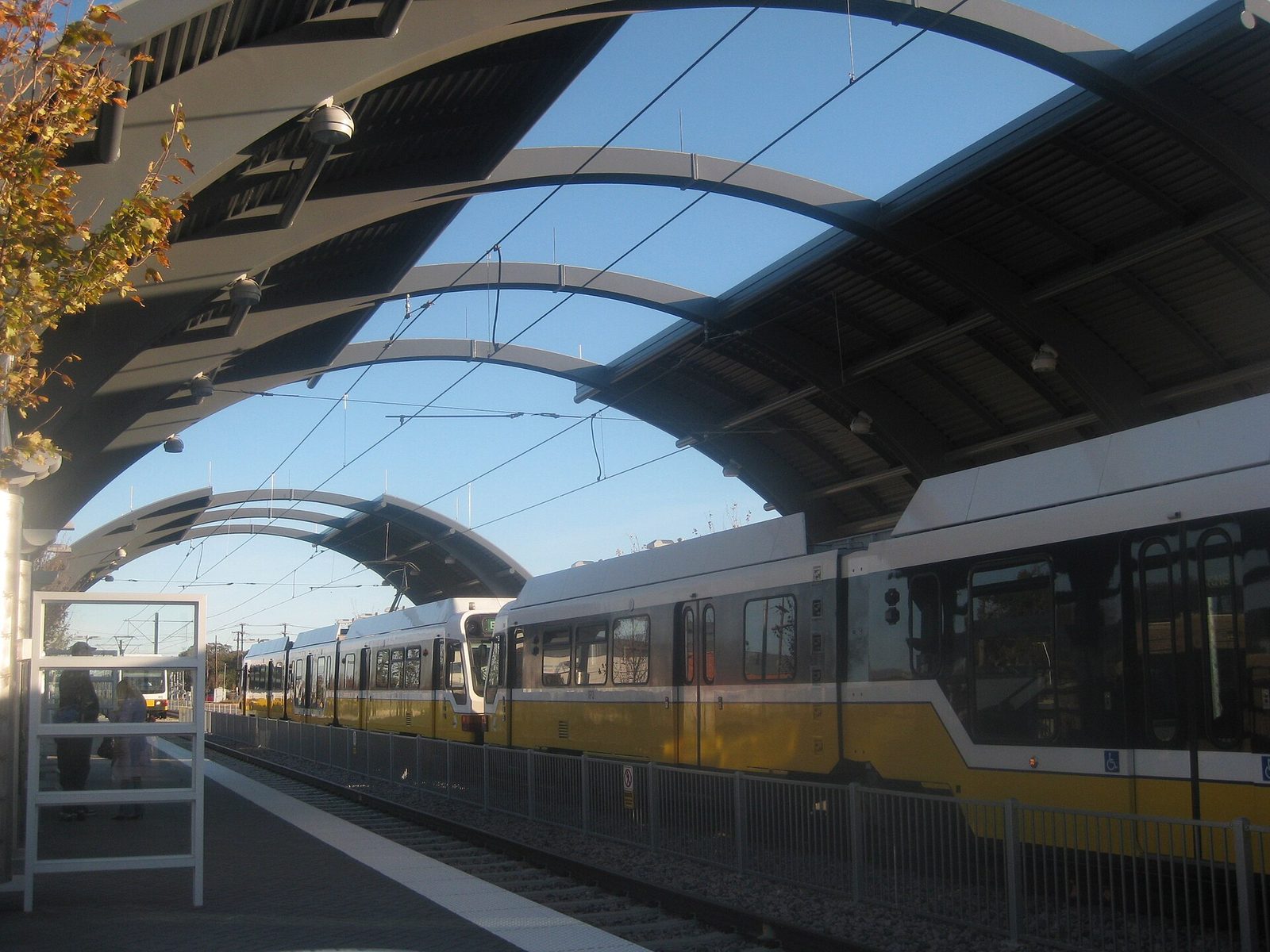
An honest accessible Dallas travel guide has to start with the thing the tourism copy skips: Dallas is a car city with an unusually good light rail spine, which means accessibility here is excellent in a narrow corridor and difficult outside it. Stay inside that corridor — downtown, the Arts District, Uptown, Fair Park and the rail line to both airports — and Dallas is one of the easier large American cities to travel in with a mobility device. Book a hotel three miles off it and the same trip becomes a sequence of rideshare negotiations.
This guide covers what the venues actually publish, what they don’t, and what to do when the answer isn’t online. Where a detail was not verifiable from the operator’s own site in September 2026, it says so rather than guessing, because a wrong kerb height or a wrong entrance costs you far more than an admission of uncertainty.
What does Dallas get right, and what does it get wrong?
Right: the rail. Every DART bus and train meets ADA requirements. Buses carry wheelchair lifts, and on light rail the centre car has level boarding aligned with the platform, with two designated wheelchair spaces marked in the low-floor section. You roll on. There is no ramp deployment, no waiting for a driver, no gap to negotiate. For a city of this size and sprawl, that is a genuinely strong baseline.
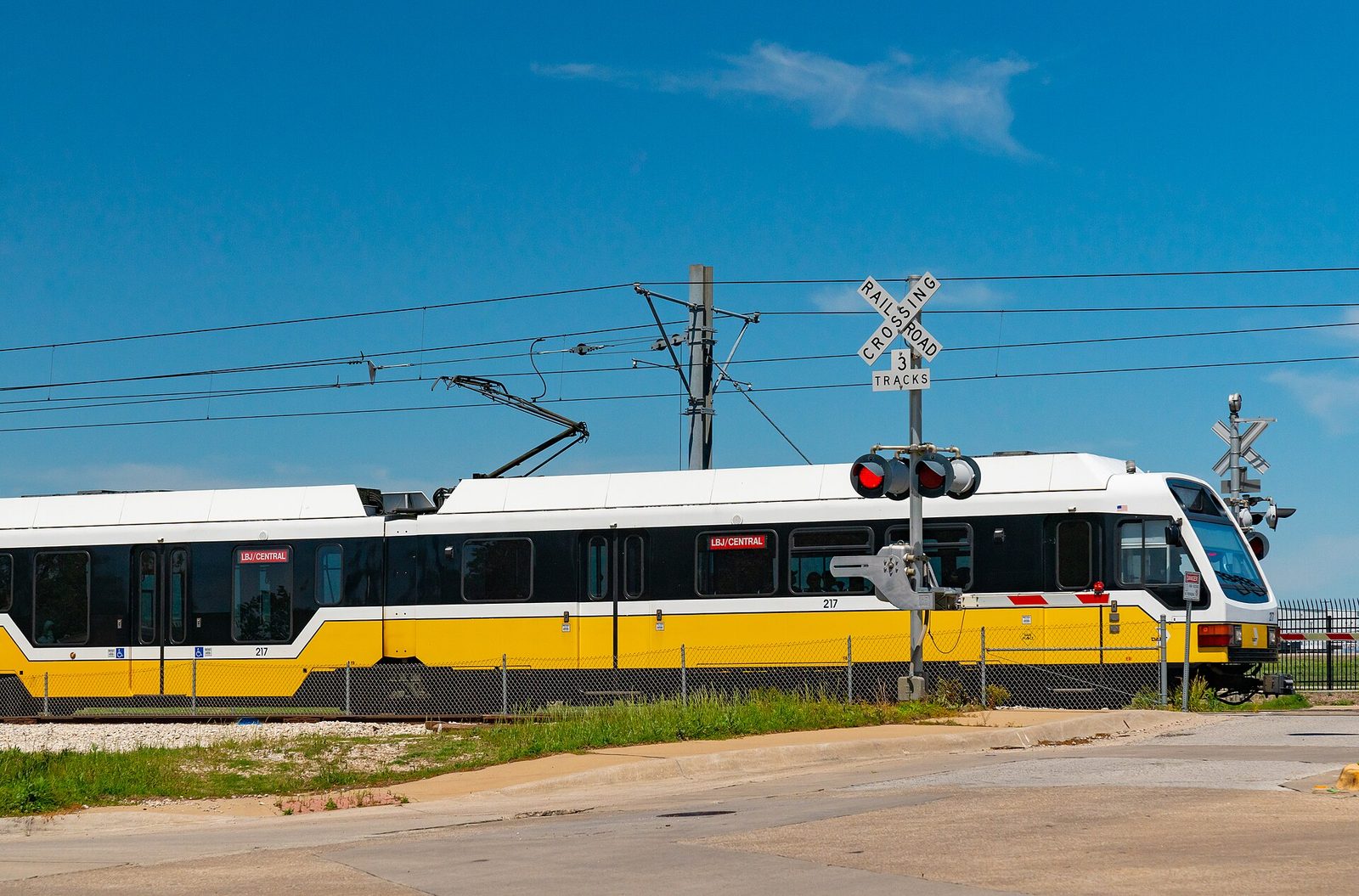
Right again: the price. Reduced fares cut everything in half for seniors, riders with disabilities and Medicare card holders. A Regional Day Pass drops from $9.00 to $4.50, a Local Day Pass from $6.00 to $3.00. That is a meaningful saving across a week, and it applies to the same network everyone else uses rather than a segregated service.
Wrong: the last mile. Dallas blocks are long, shade is scarce, and crossing distances at major downtown intersections are wide. The gap between a rail station and a hotel door is where accessible trips here actually fail, not on the train.
Also wrong: the publishing. Several Dallas operators simply do not put their access information online in usable form. The Dallas Zoo’s accessibility page returns a 404. DART’s own former accessibility URL 404s and the live page omits mobility device size limits and station elevator status. That is not a reason to avoid these places — it is a reason to phone ahead, and this guide tells you where that’s necessary.
Which Dallas venues are genuinely step-free?
The table below only states what each operator publishes itself, checked September 2026. An empty claim is worse than none, so where a venue does not publish something, the column says so.
| Venue | Access provision published by the operator | Loaner equipment | Watch out for |
|---|---|---|---|
| Dallas Museum of Art | Fully wheelchair accessible | Limited loaner wheelchairs at Guest Services | Free entry but a timed ticket is required for every person |
| Nasher Sculpture Center | KultureCity Certified Sensory Inclusive | Sensory kits at the admission desk | Closed Monday and Tuesday |
| Dallas Arboretum | 66 acres of gardens | Complimentary wheelchairs, first come first served | No trams or golf carts during evening hours |
| George W. Bush Presidential Center | Wheelchairs free at the Box Office | Yes, but they may not leave the museum area | Airport-style security; no bags over 17 x 26 in |
| Frontiers of Flight Museum | Wheelchair accessible, KultureCity certified | Loaner wheelchairs available | Off the rail line — plan the drive |
| Sixth Floor Museum | KultureCity partner, sensory bags at the visitors centre | Sensory bags, free to check out | Entrance and lift detail not published — call first |
| Dallas Zoo | Sensory-friendly exploration days | Not published online as of September 2026 | Accessibility page currently 404s; email ahead |
| Klyde Warren Park | Free, flat deck park, paved throughout | None needed | Shade is limited in summer |
Two patterns are worth extracting from that. First, the free and cheap venues are among the most accessible — the DMA and Klyde Warren Park cost nothing and ask nothing of you. Second, the federal facility is the one with the real friction: the Bush Center runs metal detectors, caps bag size at 17 by 26 inches, allows one purse or diaper bag per person and lets no food or drink through security, which changes how you pack for the day if you carry medical supplies.
How accessible is DART in practice?
Better than its reputation, with three specific caveats that matter more than any of the marketing.
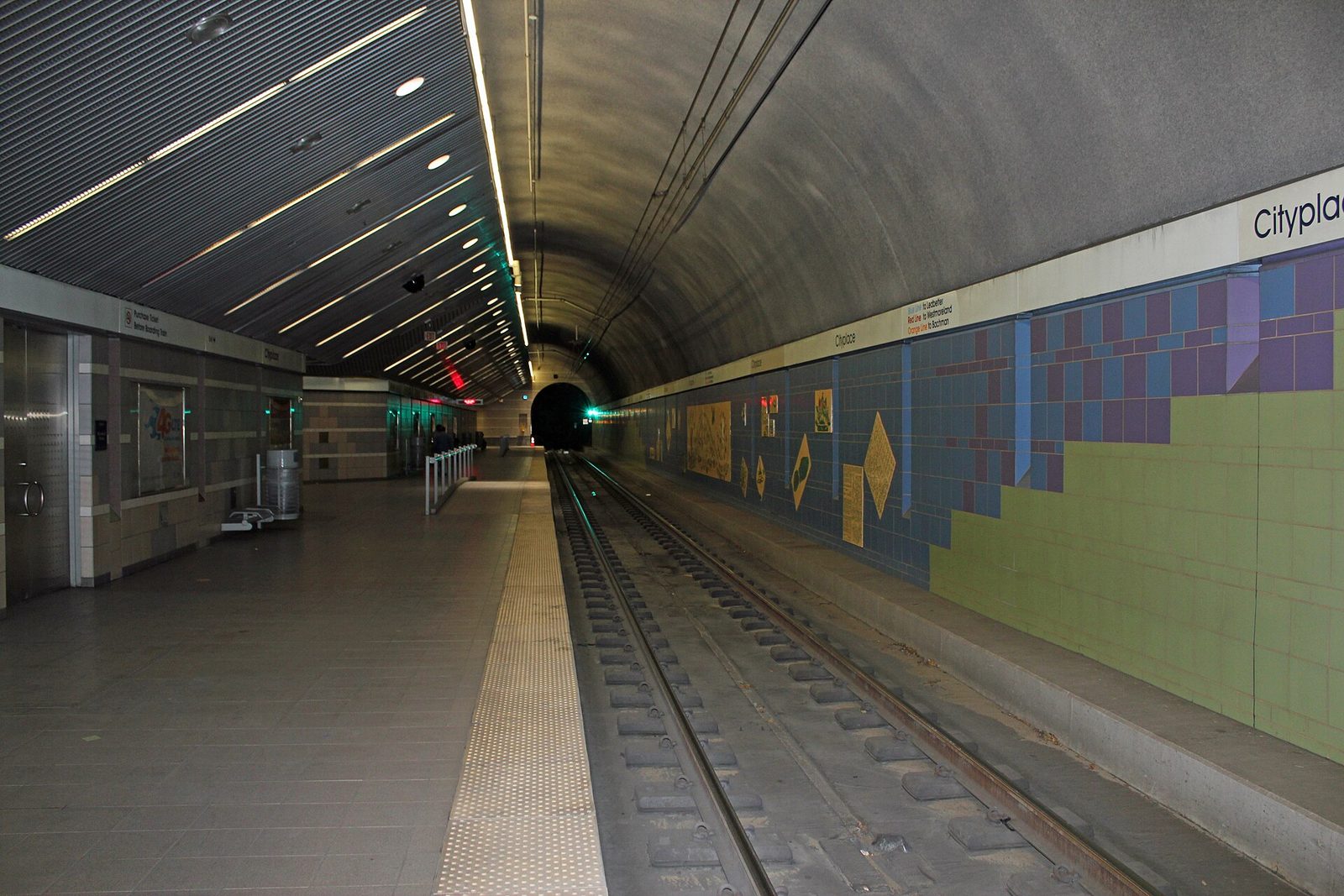
Caveat one: there are no luggage racks on DART light rail, on any of the Red, Blue, Green or Orange lines, and operators do not assist with bags. If you are travelling with a mobility device and luggage, that is a real constraint on the airport run. The Silver Line is the exception — it has overhead racks and a dedicated luggage area.
Caveat two: paratransit is curb-to-curb, not door-to-door. DART’s paratransit runs origin to destination with accessible vehicles and taxi cabs, and it stops at the kerb. It costs $3.50 one way, or $35.00 for a book of ten coupons. Eligibility is not automatic and needs arranging in advance, so a visitor should not treat it as a turn-up service.
Caveat three: service animals are welcome with no permit required, but staff may ask you to confirm the animal is a service animal. That is the whole policy, and it is refreshingly simple.
| Fare | Standard | Reduced | What it covers |
|---|---|---|---|
| 3-Hour Local Pass | $3.00 | $1.50 | Rail, buses, GoLink, streetcar, Silver Line |
| Local Day Pass | $6.00 | $3.00 | The same, all day to 3 a.m. |
| Regional Day Pass | $9.00 | $4.50 | Adds TRE, Trinity Metro, Denton County transit |
| 31-Day Local | $126.00 | $63.00 | Fare capping applies on a registered GoPass Tap card |
| Paratransit | $3.50 one way | — | Curb-to-curb; eligibility required |
(DART fares checked September 2026. Reduced fares cover seniors, riders with disabilities and Medicare card holders.) DART also runs travel training for people with disabilities, aimed particularly at riders not eligible for paratransit or who want help with one specific journey — worth a call on 214-979-1111 before a longer stay. GoLink, the on-demand zone service, books on 214-515-7272. Our getting around Dallas guide has the wider network detail.
Which Dallas museums handle access best?
The Arts District is the strongest single cluster in the city, and not only because the buildings are modern. The DMA, the Nasher and Klyde Warren Park sit within a few blocks of each other on flat, paved ground, so a bad day can be shortened without a long return journey.
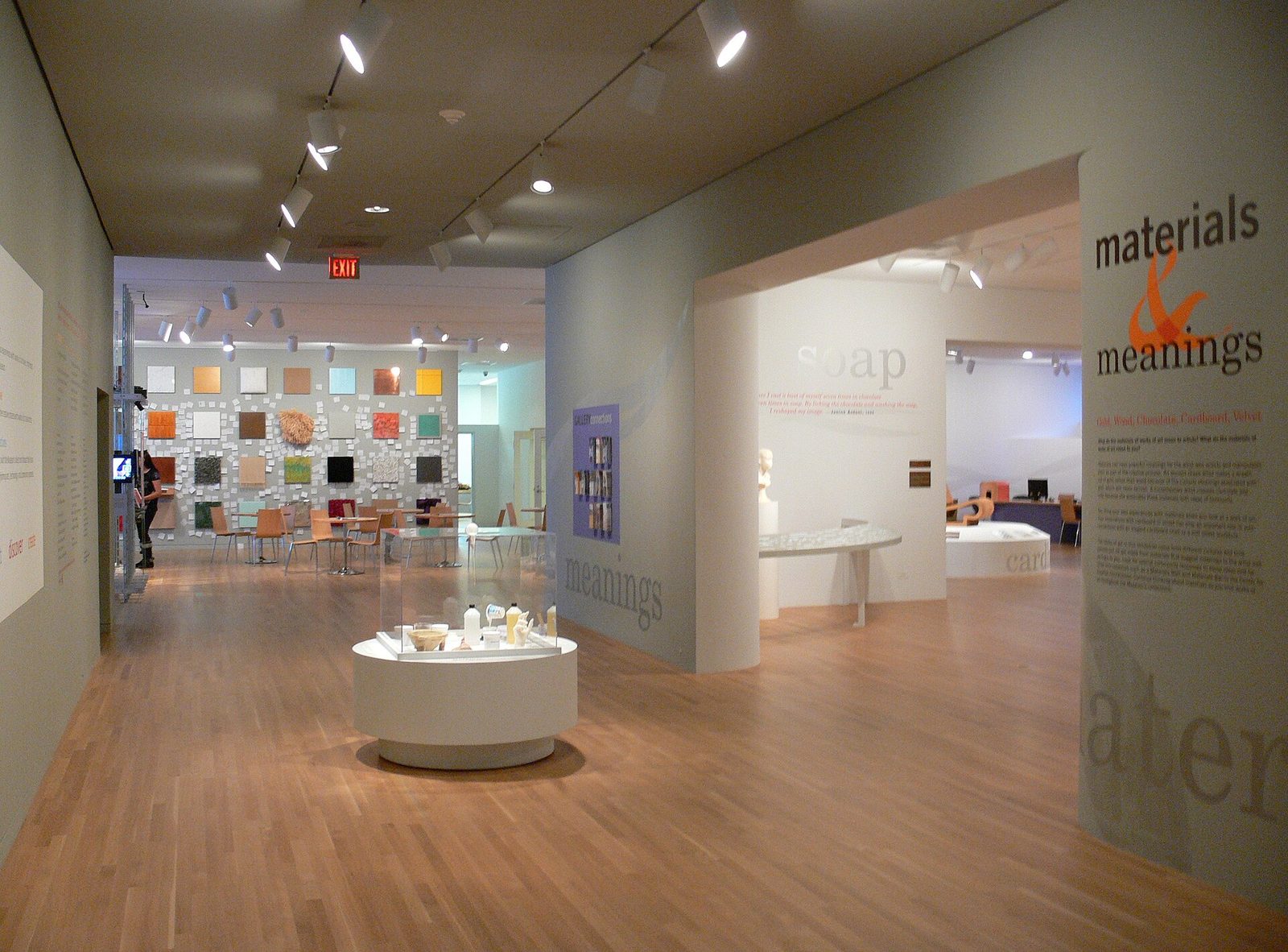
Dallas Museum of Art. Fully wheelchair accessible, with a limited number of loaner wheelchairs at Guest Services — call 214-922-1803 ahead if you need one held, because “limited” is doing real work in that sentence. There is a free coat check at the Main Entrance, which matters because bags may not be worn on the back in the galleries. No food or drink is permitted in the galleries at all, including sippy cups and baby bottles, so plan medication and hydration breaks around the café. Open Wednesday to Sunday, 11 a.m. to 5 p.m.
Nasher Sculpture Center. A KultureCity Certified Sensory Inclusive venue with a private quiet room available on request. Admission is $10 for adults, $7 for seniors 65 and over, $5 for students, and free for under-12s — and $2 off with proof of DART fare. Free for military, first responders and SNAP EBT card holders. Also closed Monday and Tuesday.
Sixth Floor Museum. A KultureCity partner with free sensory bags to check out at the visitors centre. Adult admission $27, seniors $25, youth 6 to 18 $23, under-6s free, Wednesday to Sunday 10 a.m. to 5 p.m. with the last ticket at 4:15 p.m. The museum does not publish its entrance and lift arrangements in a form we could verify in September 2026, and since the collection occupies the sixth and seventh floors of a 1901 warehouse, that is precisely the detail to confirm by phone before you travel.
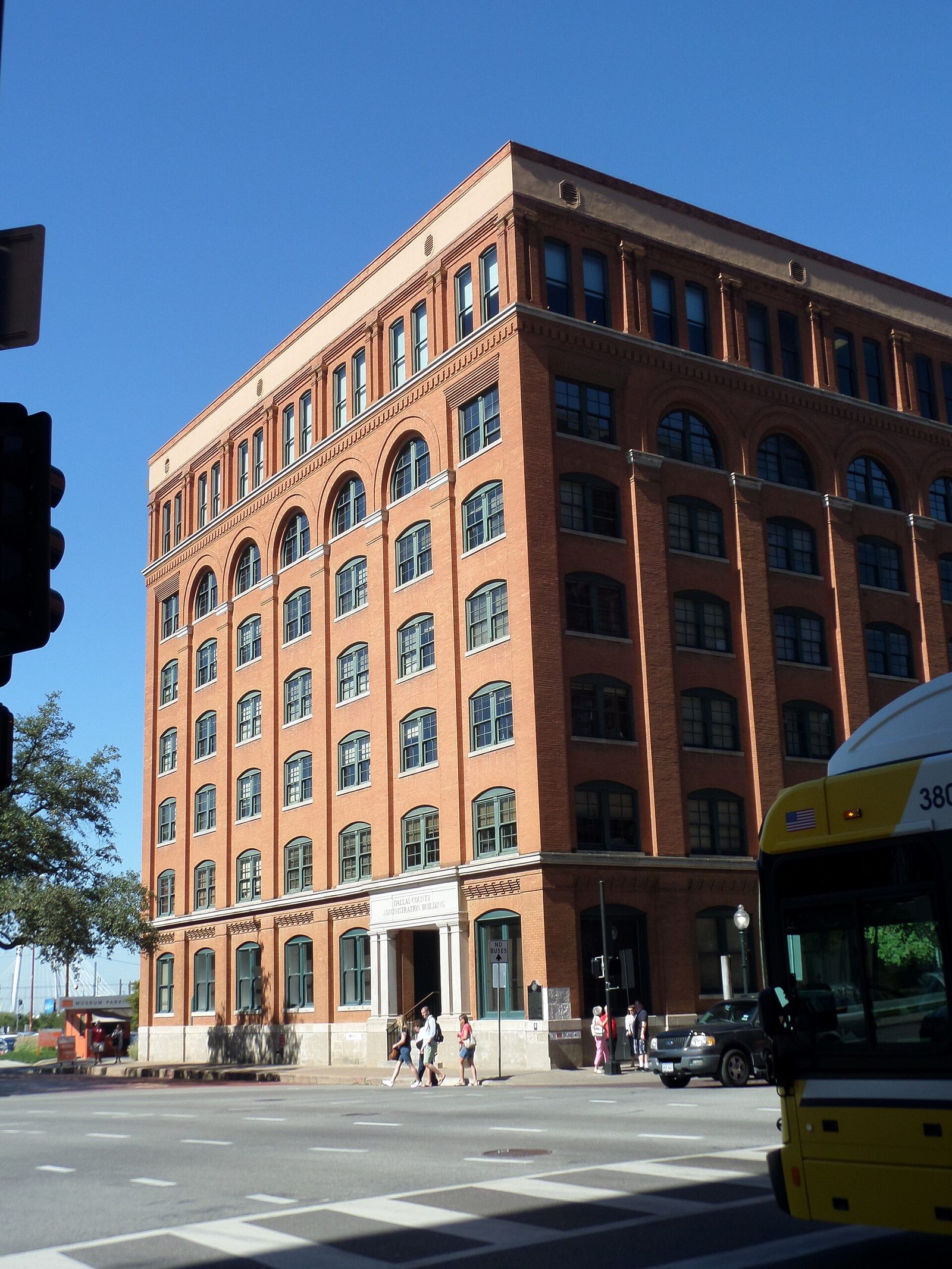
More on the wider museum calendar, including which venues close which days, is in our Dallas museums and arts guide.
What sensory support does Dallas actually offer?
More than almost any comparable US city, and this is the part of Dallas accessibility that genuinely outperforms. The Dallas Sensory Consortium coordinates across venues rather than leaving each one to improvise, and the results are concrete rather than aspirational.
| Venue or programme | What is provided | When |
|---|---|---|
| Nasher Sculpture Center | Sensory kit: map, social story, headphones, calming object, feeling thermometer. Private quiet room on request | Any open day, from the admission desk |
| Sixth Floor Museum | Free sensory bags to check out | Any open day, visitors centre |
| Dallas Museum of Art | Programmes for autistic visitors, colour vision deficiency, hearing loss, limited mobility, dementia and Parkinson’s | Scheduled — check before travelling |
| Dallas Zoo | Sensory-friendly exploration days | Email [email protected] or call 469-554-7300 |
| State Fair of Texas | Sensory-friendly mornings, run with IBCCES | Selected mornings during the fair |
| AMC cinemas | Sensory Friendly Films: lights up, sound down, movement welcome | 2nd and 4th Saturday, plus Wednesday evenings |
| Studio Movie Grill | Special Needs Screenings, free tickets from the box office | Saturdays 11 a.m., tickets from the prior Wednesday |
| Globe Life Field, Arlington | Sensory room to decompress | Inside the Toyota Southwest Entrance |
| Meow Wolf Grapevine | Certified Autism Center | Standard opening hours |
The practical takeaway: if sensory load is the constraint, build the trip around the Nasher and the Sixth Floor Museum rather than the big-box attractions, because those two hand you the kit at the door without a conversation.
What about hearing and vision access in Dallas?
This is where Dallas is weakest — not necessarily in provision, but in publication. Mobility and sensory support are well documented across the city’s venues. Hearing loops, captioning schedules, ASL interpretation, audio description and tactile tours largely are not, and a guide that invented that detail would be doing you active harm.
What is verifiable is worth having. The Dallas Museum of Art runs programming specifically for visitors with hearing loss and for visitors with colour vision deficiency, alongside its autism, mobility, dementia and Parkinson’s programmes — the breadth is unusual, though the schedule is not fixed, so contact the museum for dates rather than turning up expecting it. The George W. Bush Presidential Center offers audio tours through its own app and tells visitors to bring headphones, which is a small detail that changes the visit considerably if you want narration at your own pace. KultureCity kits at the Nasher and sensory bags at the Sixth Floor Museum both include noise-reducing headphones, which serve hearing sensitivity as much as they serve autism.
For the rest, the pattern that works in Dallas is to ask the venue directly and to ask specifically. “Are you accessible?” produces a yes from almost everyone. “Do you have an assistive listening system in the auditorium, and does it work with a telecoil?” produces a real answer. The city’s venues are generally responsive by phone even when their websites say nothing, and the Dallas Sensory Consortium’s coordination means staff at the participating venues are used to the question.
One structural advantage worth knowing: DART’s service animal policy has no permit requirement at all, so a guide dog travels the whole network without paperwork. Staff may ask you to confirm the animal is a service animal, and that is the extent of it.
What does an accessible Dallas trip cost?
Less than most visitors expect, because the reduced fare structure and the free venues stack. Here is a realistic two-day total for two people, one paying reduced fares, excluding hotel and flights.
| Item | Standard | With reduced fare | Note |
|---|---|---|---|
| Two Local Day Passes × 2 days | $24.00 | $18.00 | One standard, one reduced, both days |
| Dallas Museum of Art, two people | $0 | $0 | Timed ticket still required for each |
| Nasher Sculpture Center, two adults | $20.00 | $16.00 | $2 off each with proof of DART fare |
| Sixth Floor Museum, adult + senior | $52.00 | $52.00 | No transit-linked discount |
| Klyde Warren Park and the M-Line | $0 | $0 | Free, flat, paved |
| Two-day total | $96.00 | $86.00 | Before food |
Swap the Sixth Floor Museum for the Arboretum and the total drops again, though the Arboretum sells dated tickets through a booking widget rather than at a flat rate, so check the specific day. If the budget is the binding constraint rather than access, our Dallas on a budget guide pushes the same logic further.
The hidden cost is transport that isn’t DART. Every rideshare leg you add because a hotel sits off the rail line compounds across a trip, and in a car city those legs are the difference between an $86 two days and a $300 one. That is the strongest financial argument for paying more for a room in the corridor.
Which airport is easier, DFW or Love Field?
Love Field, for most accessible trips, and by a wide margin — but only if the flights work.
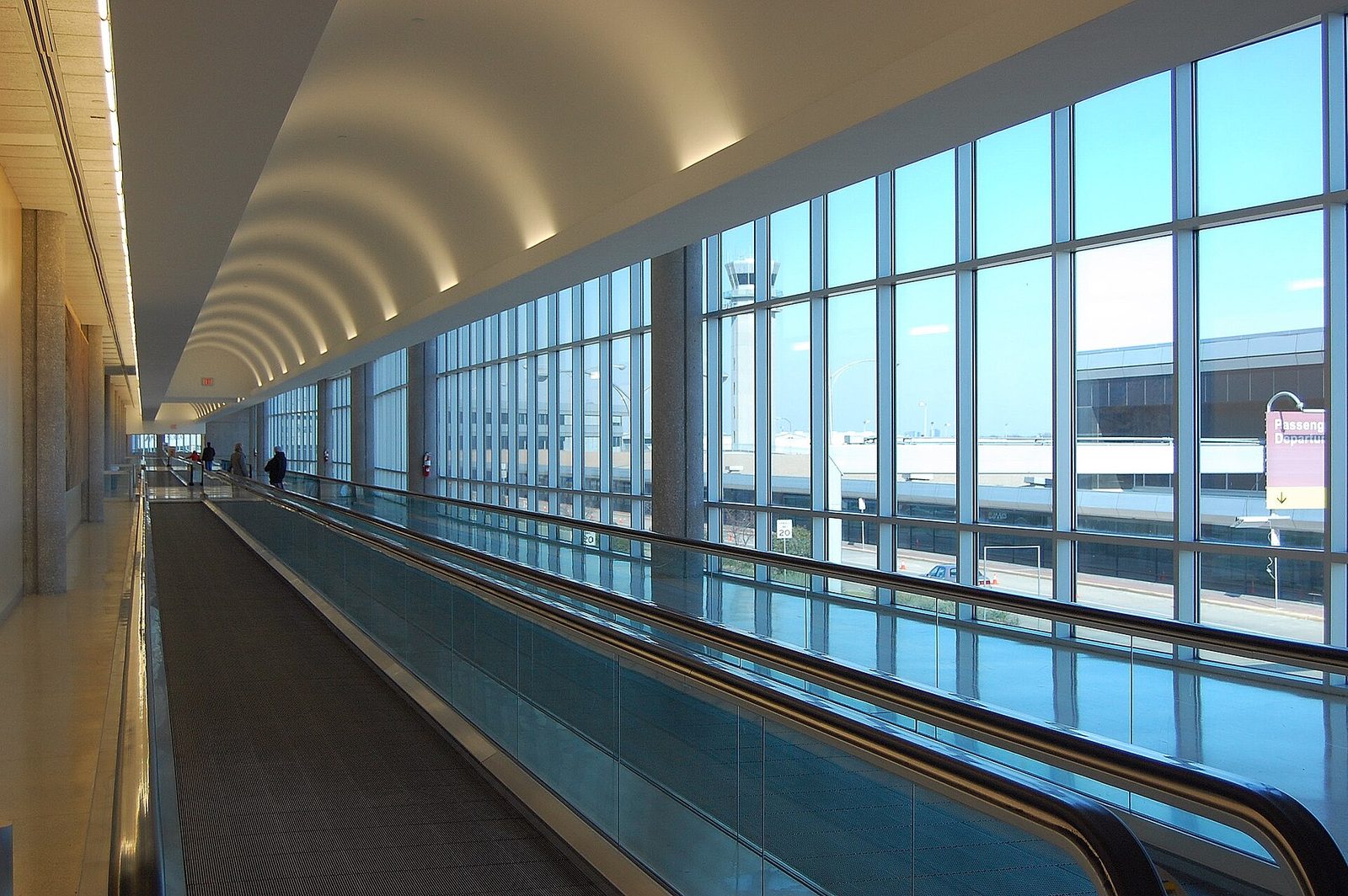
Dallas Love Field is one terminal, six miles from downtown. The DART Love Link, Bus Route 5, connects it to Inwood/Love Field Station on the Green and Orange lines. The quirk worth knowing: riding from the airport to the station is free — there is no card reader at the airport because the outbound trip costs nothing — while riding to the airport costs $2.50. Love Link picks up from either far end of Ground Transportation on the lower level, with a kiosk inside Baggage Claim by door 2. There is free public parking at Inwood/Love Field Station, which makes it a genuinely good meet-and-greet point. Love Field’s own parking rates were not reachable from a first-party page in September 2026, so do not budget from a figure you find elsewhere.
DFW is 26.9 square miles — larger than the island of Manhattan — with five terminals, more than 160 gates and seven runways. Distances are the issue. The Orange Line reaches Terminal A near Gate A10 and the Silver Line reaches Terminal B near Gate B43. If you are travelling carry-on only, clear security at A or B and use the Skylink people mover airside. If you are checking a bag, take the free Terminal Link shuttle on the lower level instead — and note DFW’s own warning that reaching baggage claim carousels takes you out of the secure area and requires the Terminal Link shuttle to get back. Plan an extra hour you would not need at Love Field.
One more DFW note that catches people: the Silver Line does not reach downtown Dallas. It runs to Cypress Waters, Carrollton, Addison, Richardson and Plano. For downtown, you want the Orange Line. Our Dallas airports guide covers both in full.
Can you get around Dallas on the sidewalks?
Downtown, mostly yes. Downtown Dallas scores 95 for walkability and crosses on foot in about 30 minutes, on paved, largely level ground. The Arts District, Klyde Warren Park and the West End are all navigable without a car.
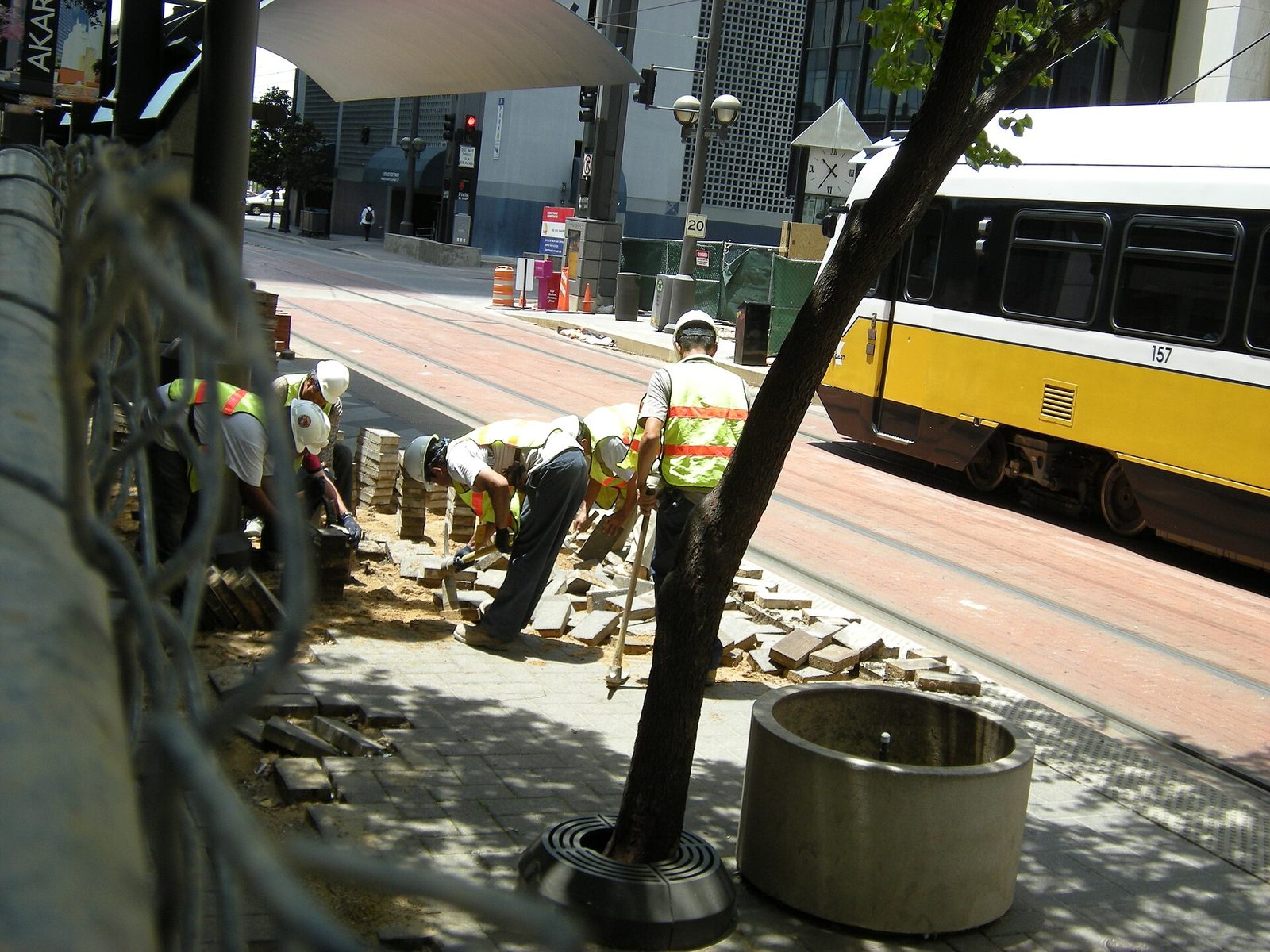
Two things degrade that. The first is construction: downtown Dallas is perpetually rebuilding something, and a closed sidewalk with a signed detour into the roadway is a different proposition on wheels than on foot. Check your route on the day rather than the week before. The second is heat, covered below, which turns a manageable four-block push into an unmanageable one between June and September.
Micromobility is not the workaround it looks like. Scooters from Bird, Lime and Superpedestrian operate only from 5 a.m. to 9 p.m., and riding bikes or scooters on downtown Dallas sidewalks is illegal. The genuinely useful free option is the M-Line Trolley, which runs 365 days a year at no charge through the Arts District, downtown, Klyde Warren Park, Uptown and West Village — though as a heritage streetcar fleet, confirm vehicle access directly with the operator for a specific trip rather than assuming every car is equipped.
Where should you stay for an accessible Dallas trip?
The single highest-leverage decision of the whole trip, and the one most visitors make on price alone.
The rule is simple: stay within a comfortable roll of a rail station, and treat anything else as a car-dependent booking regardless of what the listing claims about accessibility. A hotel with an immaculate roll-in shower that sits four lanes and a mile from the nearest station has solved the easy half of the problem. Downtown, the Arts District and Uptown all put you on the network, on flat ground, and within reach of the free M-Line Trolley, which covers the Arts District, downtown, Klyde Warren Park, Uptown and West Village at no charge every day of the year.
Two things to verify with the property directly rather than through a booking site, because the standard filters are unreliable: the actual step situation at the entrance the taxi will drop you at, which is often not the photographed main door, and whether the accessible rooms are genuinely held for guests who need them. Ask for the room type in writing on the confirmation.
On cost, remember that Texas levies 6 percent state hotel occupancy tax and cities and special districts are authorised to add their own on top, so the rate you were quoted is not the rate you will pay. Read the final breakdown rather than the headline. Our where to stay in Dallas guide maps each neighbourhood against the rail line and says plainly which ones require a car.
Why is Dallas heat an accessibility issue?
Because it is not a comfort question here, it is a planning constraint, and most guides file it under weather rather than access.
Average highs reach 96.9°F in July and 97.1°F in August, and triple-digit days occur several times every summer. For anyone who fatigues easily, uses a manual chair, takes medication affected by heat, or regulates temperature poorly, an outdoor Dallas afternoon in August is not a slightly worse version of the same day — it is a different and riskier day. The Arboretum explicitly runs no trams or golf carts during evening hours, so an evening visit means covering 66 acres under your own power.
The workaround is structural. Move everything outdoors to before 10 a.m. or after 6 p.m., and put the Arts District, the aquarium or the Perot in the middle of the day. October is the most comfortable month at an average high of 79.5°F, though it is also the wettest at 4.79 inches. April, at 77.4°F, is the other good window. Our best time to visit Dallas guide breaks the year down month by month.
A two-day step-free Dallas itinerary
Built entirely on rail, level ground and venues that publish their access provisions.
Day one. Start at the Dallas Museum of Art when it opens at 11 a.m. — free, level, timed ticket reserved the night before, loaner wheelchair reserved by phone if you need one. Ninety minutes. Walk or roll two blocks to Klyde Warren Park for lunch from the food trucks on flat paving. Afternoon at the Nasher, $8 with your DART fare, collecting a sensory kit at the desk if that’s useful and asking about the quiet room. Ride the free M-Line north for the evening, or take the rail back if the trolley doesn’t suit.
Day two. Rail to the West End in the morning for the Sixth Floor Museum, having phoned ahead about the entrance. Afternoon indoors if it’s hot — the Dallas World Aquarium opens at 8:30 a.m. and takes its last entry at 4 p.m., which makes it the rare Dallas attraction that suits a morning-heavy schedule. If it’s cool, take the rail out to the Arboretum instead and use a complimentary wheelchair on the flat lawn overlooking White Rock Lake. Keep a Local Day Pass at $3.00 reduced in your pocket and the whole day’s transport is covered.
For longer stays, our Dallas itineraries extend the same logic to three and five days.
What should you call ahead about?
A short, specific list. These are the things Dallas venues do not reliably publish, ranked by how badly it goes if you don’t ask.
- Loaner wheelchair availability at the DMA — 214-922-1803. They are limited and not reservable through the website.
- The Sixth Floor Museum’s entrance and lift arrangement — not published in verifiable form; the galleries are on the sixth and seventh floors of a historic building.
- Dallas Zoo equipment rental and terrain — the accessibility page 404s. Email [email protected] or call 469-554-7300.
- Bush Center security and medical items — bag limits are strict and it is a federal facility; ask before you pack.
- Arboretum evening logistics — no trams or golf carts after hours across 66 acres.
- DART paratransit eligibility — arrange it well before you travel, not on arrival.
- Love Field parking rates — not published on a reachable first-party page as of September 2026.
What doesn’t work in Dallas, and what to do instead?
The honest verdicts, because an access guide that says everything is fine is worse than useless.
Don’t plan a Monday or Tuesday around museums. The DMA, the Nasher and the Sixth Floor Museum all close both days, and the Perot closes Tuesday. For an accessible trip this hurts twice, because the fallbacks are further apart and involve more transport. Use those days for the Arboretum, the Dallas World Aquarium or the Bush Center, all of which open seven days.
Don’t rely on DART for an airport run with luggage and a mobility device. No luggage racks, no operator assistance with bags. Either travel carry-on only, use the Silver Line if your route allows, or budget for an accessible vehicle. This is the single most common way an otherwise well-planned Dallas trip goes wrong.
Don’t book a hotel on price alone if it’s off the rail line. Three miles from a station in Dallas is not three miles from anything — it is a rideshare dependency for every single movement, in a city where summer afternoons make waiting outside genuinely unpleasant. Pay the premium for the corridor. Our where to stay in Dallas guide maps the neighbourhoods against transit.
Don’t assume a venue’s silence means it’s inaccessible. Several Dallas operators have strong provisions and weak websites — the Zoo runs sensory-friendly days while its accessibility page 404s. A phone call frequently produces a better answer than the site does.
Frequently asked questions about accessible Dallas
Is DART fully wheelchair accessible?
DART states that all its buses and trains meet ADA requirements. Buses have wheelchair lifts; light rail has level boarding in the centre car with two designated wheelchair spaces. The gaps are practical rather than structural: no luggage racks on light rail, no operator assistance with bags, and curb-to-curb rather than door-to-door paratransit.
How do I get a reduced DART fare as a visitor with a disability?
Reduced fares cover seniors, riders with disabilities and Medicare card holders, and halve every pass — $4.50 for a Regional Day Pass, $3.00 for a Local Day Pass, $1.50 for a 3-Hour Pass. Eligibility and documentation are handled by DART directly on 214-979-1111; sort it before you travel rather than at a ticket machine.
Which Dallas attraction is best for an autistic visitor?
The Nasher Sculpture Center. It is a KultureCity Certified Sensory Inclusive venue, hands out kits containing a map, social story, headphones, a calming object and a feeling thermometer at the admission desk, and offers a private quiet room on request. It is also small, outdoors and quiet by nature, which matters more than any certification.
Are there free accessible things to do in Dallas?
Several of the best ones. The Dallas Museum of Art is free and fully accessible, Klyde Warren Park is free and flat, the M-Line Trolley costs nothing, and the Laura W. Bush Native Texas Park is free and open sunrise to sundown. Our free things to do in Dallas guide has the wider list.
Is Dallas walkable with a wheelchair?
Downtown is, with a walk score of 95 and roughly 30 minutes to cross. Outside the downtown-to-Uptown corridor, block lengths and crossing distances grow quickly and shade disappears. Constant construction detours are the most common practical obstacle rather than kerbs.
Does Dallas have accessible taxis and rideshare?
Both ridehailing platforms operate in Dallas and DFW lists 19 taxi operators, with a guest assistant managing the taxi flow at the lower level of every terminal from 8 a.m. to midnight and a phone line after that on 972-973-4061. Wheelchair-accessible vehicle availability varies by time of day and is worth confirming before you rely on it for a fixed appointment.
What is the most accessible time of year to visit Dallas?
Mid-October or April. October averages a high of 79.5°F and April 77.4°F, both a world away from the 97°F of August. Heat is the single largest accessibility variable in Dallas and it is entirely avoidable by choosing the month.
Can I use DART paratransit as a visitor?
Not without arranging eligibility first. It is curb-to-curb, costs $3.50 one way or $35.00 for ten coupons, and runs with accessible vehicles and taxis — but it is not a service you can simply book on arrival. Contact DART before your trip.
One venue worth singling out for publishing its provisions properly: the Dallas World Aquarium states that ramps and elevators reach every exhibit, lends manual wheelchairs on production of an ID, and offers a two-page sensory guide in English and Spanish, with a nursing station on Level 2 and a quiet seating area on Level 1. We go through it all in our Dallas World Aquarium visitor guide.
Indoor venues carry most of the city’s sensory and mobility provision. The Nasher is KultureCity Certified Sensory Inclusive with kits at the admission desk and a private quiet room on request, the Sixth Floor Museum offers free sensory bags, and the Bush Center runs airport-style security with free wheelchairs at the Box Office. Our guide to indoor things to do in Dallas covers each venue’s rules.
Related Dallas Guides
- Getting around Dallas — DART, the M-Line, the streetcar and the fare structure in full
- Dallas airports — DFW and Love Field compared, with the rail connections
- Dallas museums and arts — the closure calendar and what each venue is for
- Where to stay in Dallas — neighbourhoods mapped against the rail line
- Best time to visit Dallas — the heat, month by month
- Dallas with kids — where the sensory-friendly programming overlaps with family travel
- Free things to do in Dallas — the no-ticket list, most of it step-free
- Dallas attractions — the full set, with hours and prices
- Dallas itineraries — one, three and five-day plans to adapt
- Dallas travel guide — the starting point for a first trip
Photo Credits
- DART light rail train: photo by Tony Webster from Minneapolis, Minnesota, United States, Wikimedia Commons (CC BY 2.0)
- CityPlace/Uptown DART station: photo by Jeffrey Beall, Wikimedia Commons (CC BY-SA 3.0)
- Dallas Museum of Art gallery: photo by Photo: Andreas Praefcke, Wikimedia Commons (Public domain)
- Dallas Love Field skybridge: photo by LoneStarMike, Wikimedia Commons (CC BY 3.0)
- Sidewalk construction, downtown Dallas: photo by Joe Mabel, Wikimedia Commons (CC BY-SA 3.0)
- The Sixth Floor Museum at Dealey Plaza: photo by Per-Olof Forsberg, Wikimedia Commons (CC BY 2.0)
- DART rail station platform (featured image): photo by Dark Serge, Wikimedia Commons (CC BY-SA 3.0)
Sources
- DART — Accessibility (checked September 2026)
- DART — Fares (checked September 2026)
- DART — Paratransit Services (checked September 2026)
- Dallas Office of Arts and Culture — Sensory-Friendly Activities (checked September 2026)
- Dallas Museum of Art — Visit (checked September 2026)
- Nasher Sculpture Center — Visit (checked September 2026)
- The Sixth Floor Museum at Dealey Plaza (checked September 2026)
- George W. Bush Presidential Center — Visit (checked September 2026)
- Dallas Arboretum — Visitor Information (checked September 2026)
- Dallas World Aquarium — Hours and Prices (checked September 2026)
- DFW Airport — Ground Transportation (checked September 2026)
- Dallas Love Field — Ground Transportation (checked September 2026)
- Downtown Dallas Inc — Getting Around (checked September 2026)
- McKinney Avenue Transit Authority — M-Line Trolley (checked September 2026)