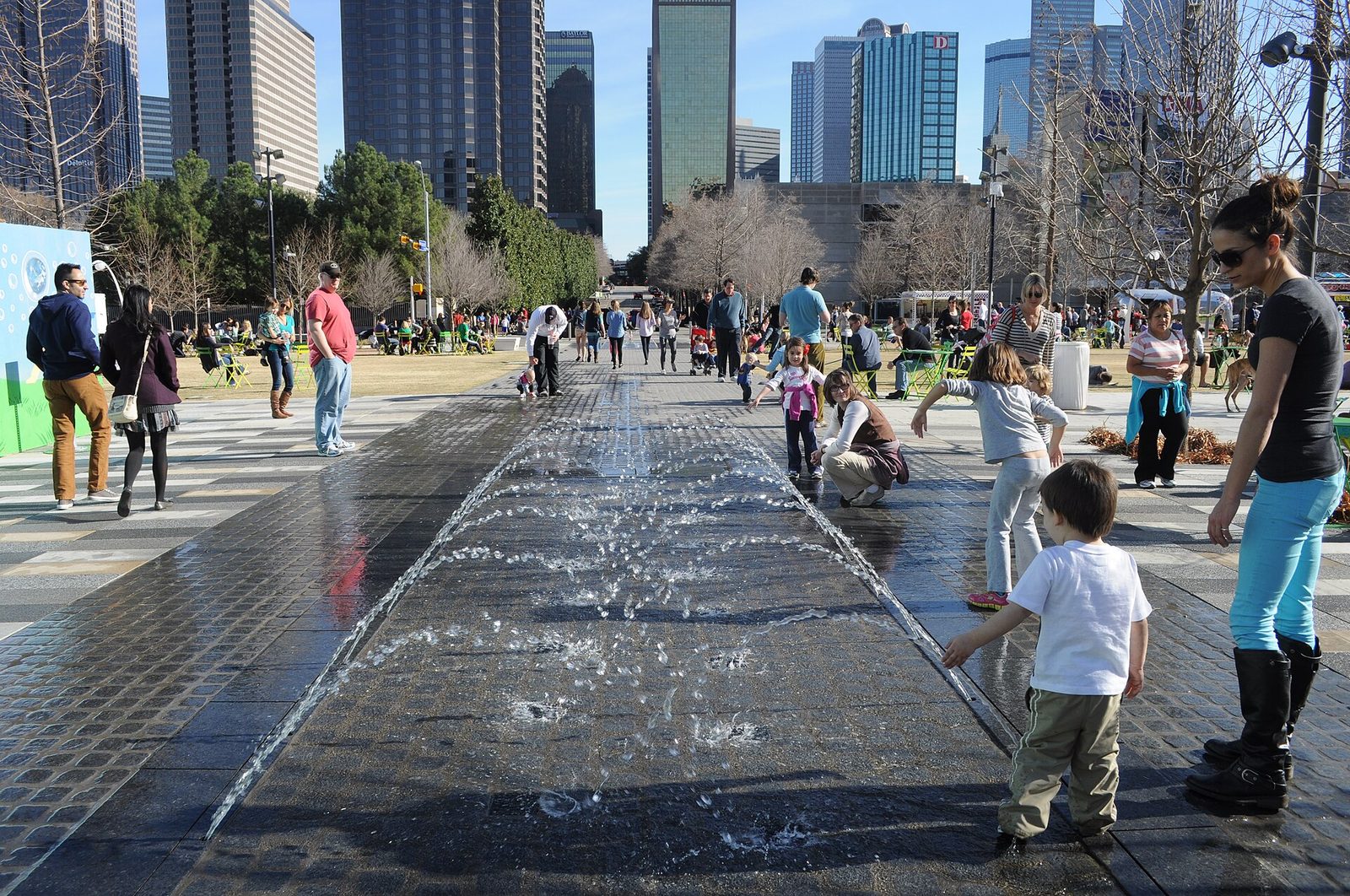
The best Dallas attractions sit in three tight clusters — the downtown Arts District, Fair Park and the corridor running north through Uptown — and the single most useful thing to know before you book anything is that the Dallas Museum of Art, the Nasher Sculpture Center and the Sixth Floor Museum all close on Monday and Tuesday. Get those two days right and the rest of the city falls into place.
That closure pattern is the reason so many first trips to Dallas feel disjointed. Visitors land Sunday night, spend Monday driving between locked doors, and conclude the city is thin on things to see. It is not. It has a free encyclopedic art museum, a presidential library, the most-visited assassination site in the country, a rainforest built inside a downtown warehouse and a 66-acre botanical garden on a lake — but the calendar is unforgiving, the distances are real, and almost nothing here is walkable from anything else without a plan.
This guide is built as a decision system rather than a countdown. Every major attraction gets the four numbers that actually change your day — what it costs, how long it holds you, when it is shut, and whether you can reach it without a car — followed by an honest verdict on whether it earns the slot. Prices and hours below were checked in September 2026 against each operator’s own site, and the ones that move fastest are flagged so you know where to re-check.
Dallas Attractions at a Glance: Cost, Time and Closing Days
Start here. This is the table to screenshot before you leave the hotel, because four of the city’s marquee sites are dark on at least one weekday and two of them sell admission through a dated calendar rather than a fixed price.
| Attraction | Adult admission | Time needed | Closed | Verdict |
|---|---|---|---|---|
| Dallas Museum of Art | Free (timed ticket still required) | 2–3 hrs | Mon, Tue | Unmissable, and free |
| The Sixth Floor Museum | $27 | 1.5–2 hrs | Mon, Tue | Worth it once, book ahead |
| Perot Museum of Nature and Science | $27 | 3 hrs | Tue | Strong with kids, skip without |
| Nasher Sculpture Center | $10 ($8 with DART fare) | 1–1.5 hrs | Mon, Tue | Best value in the city |
| Dallas World Aquarium | $34.95 + tax | 2 hrs | Open daily | Pricey; brilliant for under-10s |
| George W. Bush Presidential Museum | $26 | 2–4 hrs | Open daily | Better than skeptics expect |
| Dallas Zoo | From $18 | 3–4 hrs | Open 364 days | Go early or not at all |
| Reunion Tower GeO-Deck | Dated pricing, no flat rate | 45–60 min | Open daily | Only for the view at dusk |
| Dallas Arboretum | Dated pricing, no flat rate | 2–3 hrs | Open daily | Seasonal — time it or skip it |
| Klyde Warren Park | Free | 30–90 min | Open daily | Always yes, costs nothing |
Two entries there deserve a flag rather than a figure. Reunion Tower and the Dallas Arboretum both sell admission through a date-and-time-slot widget, which means the price you pay depends on the day you pick and, at the Arboretum, on whichever festival is running. Any guide quoting you a single flat number for either one is quoting a price that may not exist on your date. Check the operator’s calendar for the day you intend to go.
Which Dallas Attractions Are Worth the Money?
Most city guides will not tell you what to skip. Here is where the money actually goes further, and where it does not.
The Nasher Sculpture Center is the best-value ticket in Dallas. Ten dollars gets you a Renzo Piano building, a garden that works as a garden and a collection of modern sculpture that any European capital would headline. If you arrive with a valid DART fare, it drops to $8. Under 12s are free, as are military, first responders and SNAP EBT cardholders. On the first Saturday of the month it is free to everyone. Nothing else in the city returns that much per dollar.
The Dallas Museum of Art is free and still underrated. General admission costs nothing, though everyone — every adult, every child, every infant — needs a timed ticket, which trips up walk-ups who assume free means turn-up-and-in. Reserve online or at the Guest Services desk. Special exhibitions are ticketed separately. Budget two to three hours; the collection spans ancient Mediterranean work to contemporary, and the building is large enough to lose an afternoon in.
The Dallas World Aquarium is the hardest call. At $34.95 plus tax for an adult it is the most expensive standard admission in this guide, and it is neither a conventional aquarium nor a conventional zoo but a vertical rainforest you descend through, with sloths and toucans at eye level. Families with children under ten tend to rate it the highlight of the trip. Adults travelling without kids frequently find it cramped and overpriced for the two hours it takes. Both reactions are correct; decide which party you are.
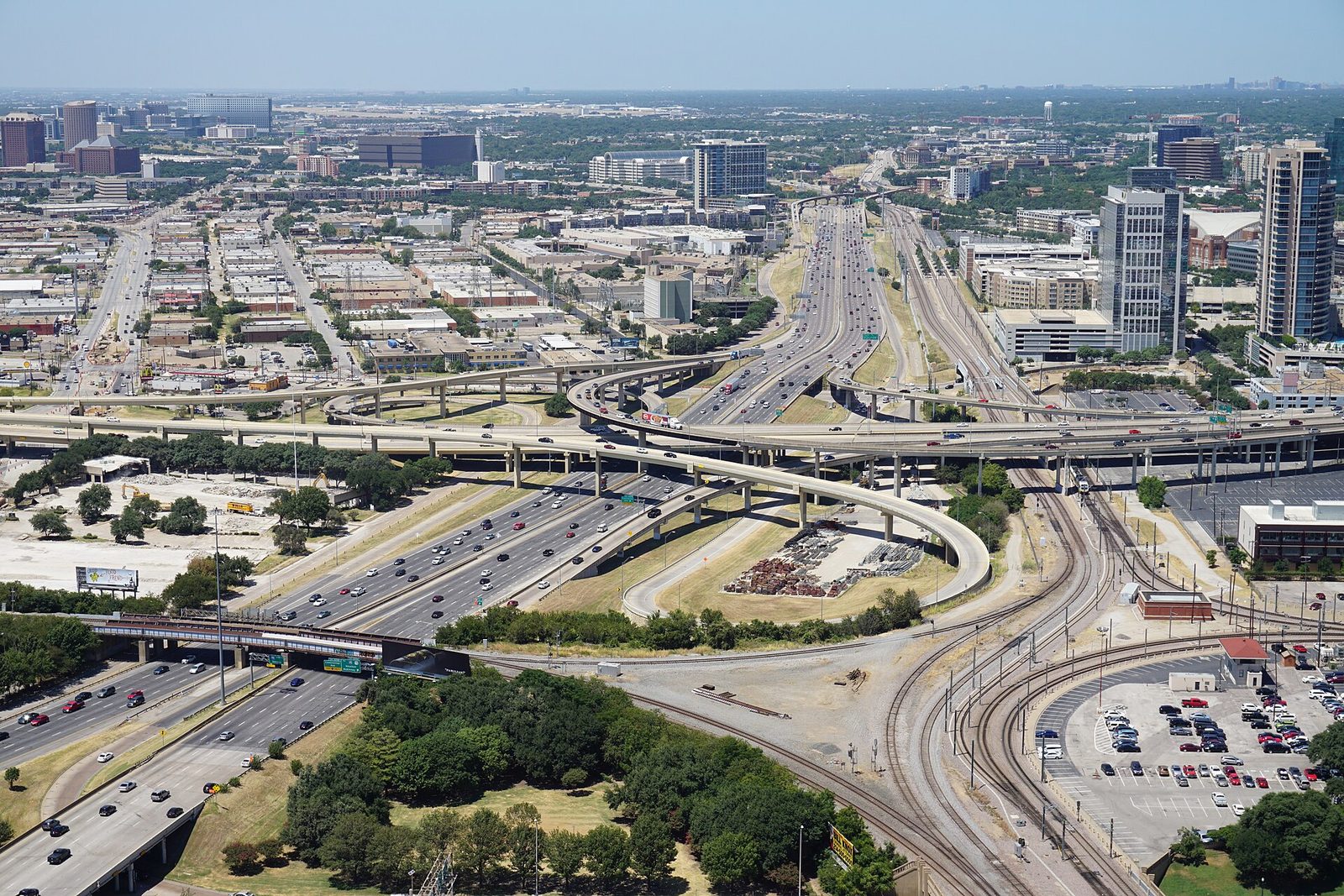
Reunion Tower is a view, not an attraction. The GeO-Deck at 470 feet has indoor and outdoor viewing, a free digital photo, and a genuinely good sightline across a flat city that photographs well at golden hour. But if your budget is tight, the Ronald Kirk Pedestrian Bridge gives you a free skyline view of the same downtown from the west, and the bar at the top of several downtown hotels will sell you a drink for less than a family’s worth of deck tickets. If you go up, go at dusk — the daylight view of North Texas is a lot of parking lot.
The honest summary: in Dallas your money is best spent on the Nasher, the Sixth Floor Museum and the Bush Museum, your time is best spent in the Arts District, and the free tier here — the DMA, Klyde Warren Park, Pioneer Plaza, the Native Texas Park — is unusually strong for an American city. For a wider sweep of options beyond the ticketed sites, our guide to things to do in Dallas covers the neighborhoods, nightlife and seasonal events this page deliberately leaves alone.
Why Do the Best Museums Close on Monday and Tuesday?
It is a quirk of how Dallas’s major institutions set their weeks, and it catches out an enormous number of visitors. The Dallas Museum of Art, the Nasher Sculpture Center and the Sixth Floor Museum all run Wednesday to Sunday and are dark Monday and Tuesday. The Perot Museum is open Monday but closed Tuesdays — a schedule the museum has confirmed runs through April 7, 2027.
Stack those together and Tuesday is the single worst day to be a first-time visitor in Dallas. Four of the five headline museums are shut. Monday is nearly as bad, with three closed. If your trip includes either day, do not spend it trying to force a museum itinerary. Spend it on the sites that never close.
| If it’s… | Closed | Open and worth your day |
|---|---|---|
| Monday | DMA, Nasher, Sixth Floor Museum | Perot Museum, Bush Museum, Dallas Zoo, Dallas World Aquarium, Arboretum, Klyde Warren Park |
| Tuesday | DMA, Nasher, Sixth Floor Museum, Perot | Bush Museum, Dallas World Aquarium, Dallas Zoo, Arboretum, Fair Park grounds, Katy Trail |
| Wednesday–Sunday | Nothing major | Everything — this is when to schedule the Arts District |
The practical version: if you get to choose your dates, land on a Wednesday. A Wednesday-to-Sunday trip sees every significant attraction in the city without a single wasted morning. A Sunday-to-Wednesday trip loses two days to closed doors and no amount of good planning buys them back.
What Can You Actually See in the Arts District in One Day?
The Dallas Arts District is the densest cluster of attractions in the city and the only part of Dallas where you can string together a full day entirely on foot. It runs along Flora Street and its immediate cross streets, and it packs the DMA, the Nasher, the Crow Museum of Asian Art, the Meyerson Symphony Center and the Winspear Opera House into a walkable grid, with Klyde Warren Park at its western edge.
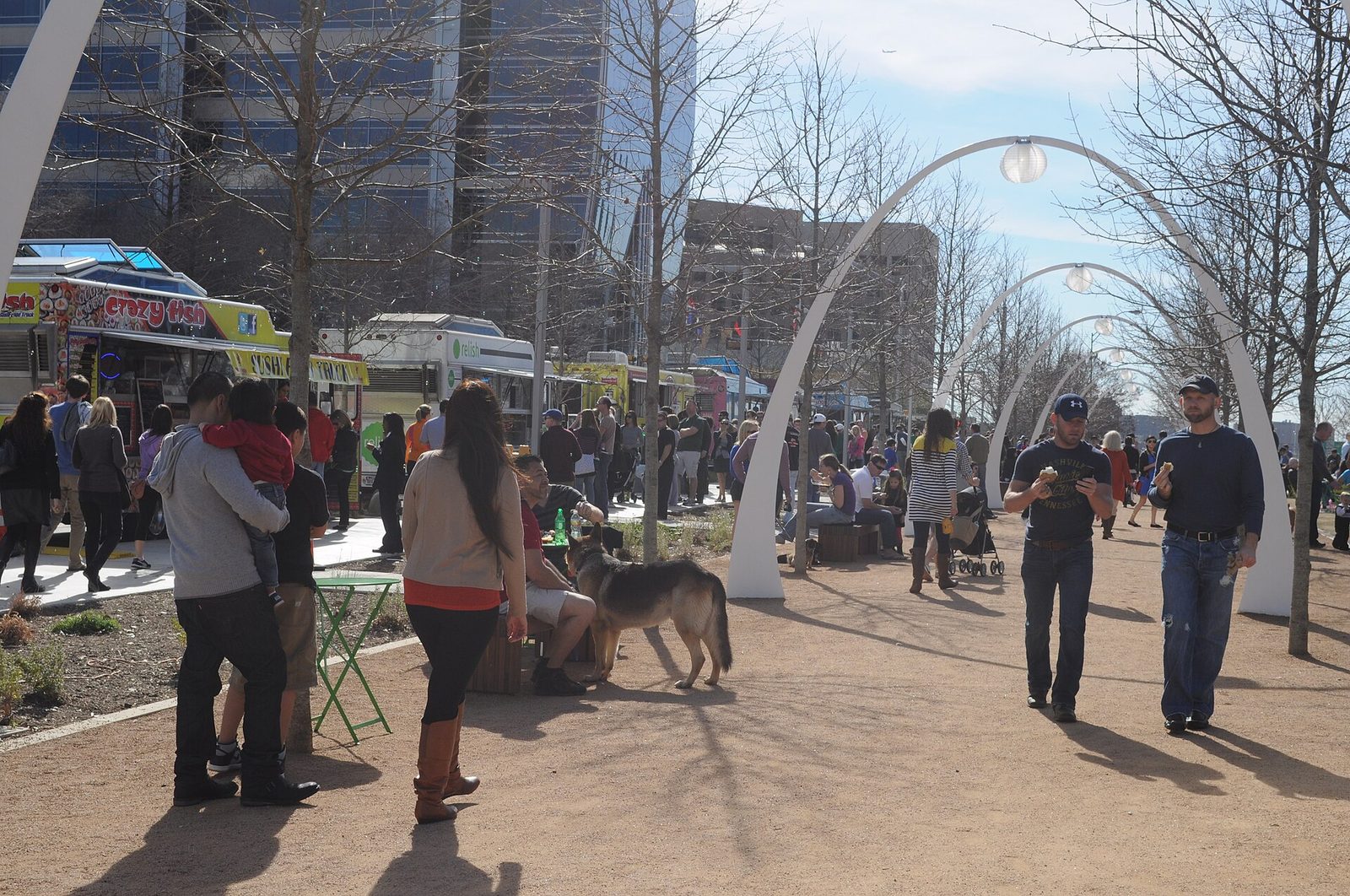
A realistic one-day shape looks like this. Start at the DMA at 11:00 when it opens, with a timed ticket already reserved, and give it two and a half hours. Walk five minutes to the Nasher for an hour and a half — the sculpture garden is the part people remember, so leave time to sit in it. Cross to Klyde Warren Park in the late afternoon for a food truck and whatever free programming is running; the park hosts fitness classes, chess, a running club, Piano in the Park and children’s programming on a rotating calendar, and draws more than two million visitors a year without charging any of them.
From the park the free M-Line Trolley runs north through Uptown to West Village, which is where you eat. The trolley costs nothing — it is sponsor-supported and donations are optional — and it connects to the DART network at CityPlace/Uptown Station, so the Arts District day requires no car and no parking fee at any point.
One scheduling note worth having: the Nasher runs ’til Midnight at the Nasher on the third Friday of the month from March to October, opening 18:00 to midnight with the garden lit. If your dates line up, it is the best evening the Arts District offers and it is not on most itineraries.
How Do You Plan Dealey Plaza and the Sixth Floor Museum?
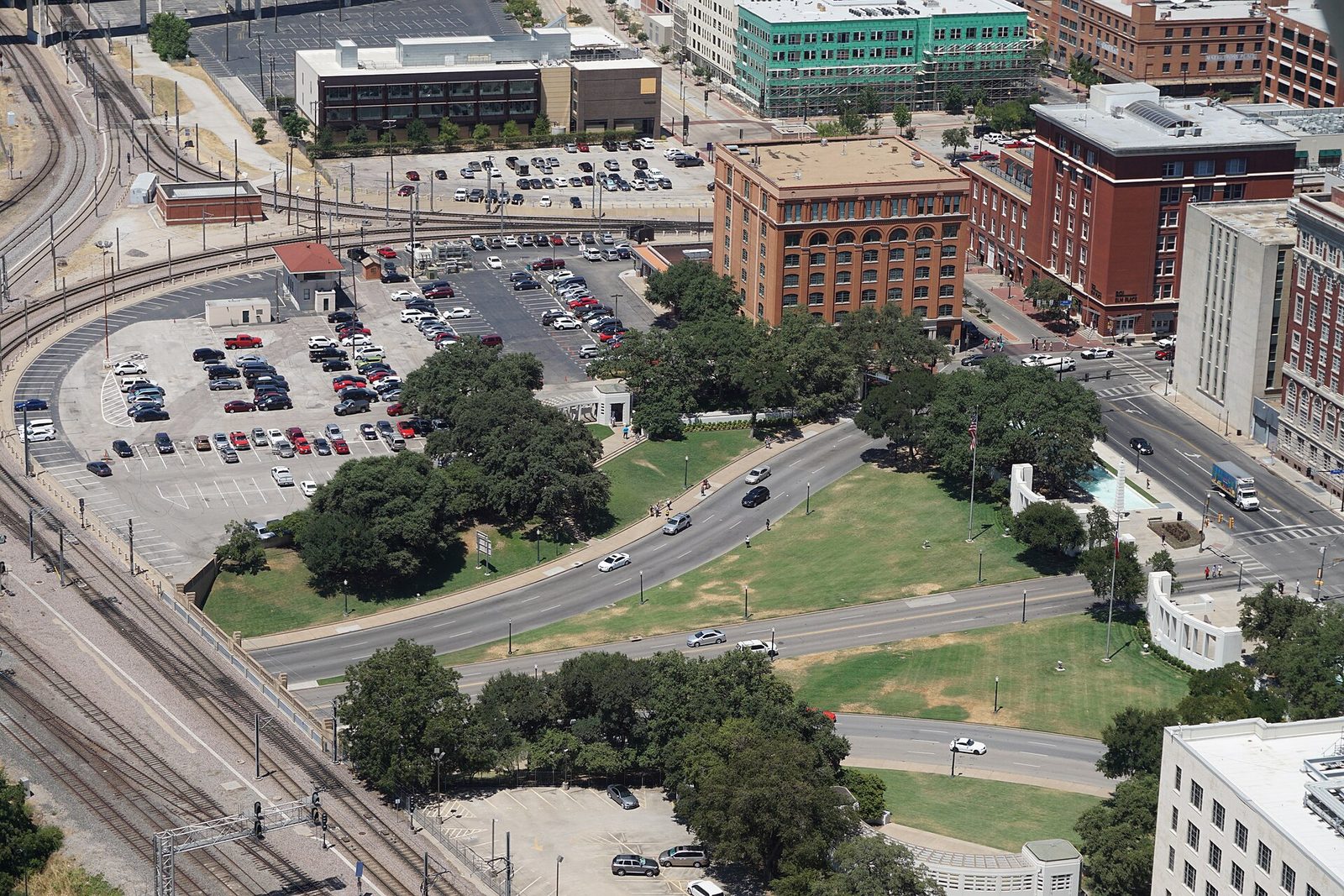
The Sixth Floor Museum at Dealey Plaza occupies the floor of the former Texas School Book Depository from which President Kennedy was shot in 1963, and it is the most-visited paid attraction in Dallas. It is also the one most often visited badly.
Admission is $27 for adults, $25 for seniors 65 and over, $23 for youth aged 6 to 18, and free for children 5 and under. Hours are Wednesday to Sunday, 10:00 to 17:00, and the detail that ruins afternoons is the cut-off: the last ticket is sold and the last entry permitted at 16:15. Arrive at 16:30 with a valid ticket for that day and you will not get in. Closed Monday and Tuesday, like most of the city’s museums.
Give it ninety minutes to two hours. The audio guide is included and worth using — the exhibit is dense with text and the narration moves you through it at a sensible pace. The corner window itself is enclosed in glass, exactly as it was found, and viewing it takes about ninety seconds; the value is in the six rooms of context around it.
Then go outside. Dealey Plaza is a public park, it is free, and the grassy knoll, the triple underpass and the street markings are all there to walk. Many visitors spend more time in the plaza than in the museum and come away with more. Give yourself thirty minutes outside after the exhibit, and be prepared for the informal guides who work the sidewalk selling their own theories — they are part of the experience but they are not affiliated with the museum.
The West End district surrounding Dealey Plaza is also where you will find the Dallas World Aquarium, at 1801 N. Griffin Street, roughly ten minutes on foot. If you are pairing them, do the aquarium first — it opens at 08:30, seven days a week, with last entry at 16:00 — and the museum after lunch.
Is the Dallas CityPASS Worth Buying?
Sometimes. The math is better than the marketing suggests, and the fit is worse.
Dallas CityPASS costs $64.00 for an adult aged 13 and up and $46.00 for a child aged 3 to 12, and it covers your choice of four from six attractions: the Perot Museum, the Reunion Tower GeO-Deck, the Dallas Zoo, the George W. Bush Presidential Museum, the Dallas Holocaust and Human Rights Museum and AT&T Stadium Tours. It is valid for a nine-day window beginning on the first day you use it, which is generous.
| Buying separately | Adult gate price | Running total |
|---|---|---|
| Perot Museum of Nature and Science | $27 | $27 |
| George W. Bush Presidential Museum | $26 | $53 |
| Dallas Zoo | From $18 | $71 |
| Reunion Tower GeO-Deck | Dated pricing | $71 plus |
| Dallas CityPASS (any four) | $64.00 | $64.00 |
Read that table carefully, because it says something the official savings claim does not. Three of the six attractions already cost more at the gate than the whole pass. The adult break-even is not four visits, it is three — and on the pass’s own arithmetic the fourth is free. If you were genuinely going to do the Perot, the Bush Museum and the Zoo anyway, buy the pass and treat Reunion Tower as a bonus.
The problem is the word “anyway.” Look at what the pass does not include: the Sixth Floor Museum, the Dallas Museum of Art, the Nasher Sculpture Center and the Dallas Arboretum. That is most of what a first-time visitor to Dallas actually wants to see, and one of those is free already. A couple doing the Arts District, Dealey Plaza and the Arboretum will get no value from CityPASS at all.
The second problem is geography. The Dallas Zoo sits south of downtown, the Bush Museum is north near SMU, AT&T Stadium is in Arlington, a substantial drive west, and the Perot is downtown. Using all four of those in a short trip means a lot of time in a car, and the nine-day window exists precisely because the operators know you cannot reasonably do it in two days.
Buy it if you are travelling with children, staying four days or more, and your list already leans toward the Perot, the Zoo and the Bush Museum. Skip it if you are here for a long weekend, centred downtown, and more interested in art and history than in science museums and stadium tours.
Which Attractions Hold Up With Kids?
Dallas is stronger for families than its business-travel reputation suggests, but the hit rate varies sharply by age.
Dallas World Aquarium is the most reliable win for children under ten. You enter at the top and walk down through a rainforest canopy, so the animals — sloths, toucans, monkeys, manatees — are at child height rather than behind glass above it. Adult $34.95 plus tax, child aged 3 to 12 $24.95 plus tax, under 2s free, seniors 65 and over $28.95 plus tax. Open daily 08:30 to 17:00 with last entry at 16:00. Note that it runs no reciprocal membership programs, so your home zoo or aquarium membership buys you nothing here.
The Perot Museum is the right call for roughly ages six to fourteen. Adult tickets are $27, youth aged 2 to 12 are $17, and the building itself — a cube with an exterior escalator — does half the work. Parking in Lot B beneath Woodall Rodgers runs $15 per vehicle, $5 for members, which is worth factoring in. Remember Tuesday: it is the one major museum open on Mondays and closed on Tuesdays.
The Dallas Zoo starts at $18 with pricing that varies by entry date, kids 2 and under go free, and it is open 364 days a year. The critical instruction is timing. From roughly May to September, go at opening or do not go — by noon the animals are inactive and the paths are exposed. This is a 9:00 attraction in summer, full stop.

For teenagers and adults travelling with older children, the Bush Museum works better than families expect. The Decision Points Theater puts you in a simulated crisis with a time limit and a vote, the replica Oval Office is a photo opportunity with a professional photographer on hand, and the September 11 exhibit is serious and well handled. Children aged 5 to 12 pay $20, youth aged 13 to 17 pay $24, and infants aged 4 and under are free.
Can You See Dallas Without Renting a Car?
More than you would guess, but not everything. Dallas is a driving city with a light rail spine, and the split between what the spine reaches and what it does not is the most important logistical fact of your trip.
A DART Regional Day Pass costs $9.00, or $4.50 at the reduced rate for seniors, riders with disabilities, Medicare card holders and qualifying students. That fare fell from $12.00 on March 1, 2026, a 25 percent cut that makes transit meaningfully cheaper than a single downtown parking session. The pass covers unlimited rides on the day you buy it and stays valid until 03:00 the following morning, so an evening out does not require a second fare. Buy through the GoPass app, a reloadable GoPass Tap card, a vending machine at any rail station or on board a bus.
| Attraction | Reachable without a car? | How |
|---|---|---|
| DMA, Nasher, Klyde Warren Park | Yes, easily | Arts District is walkable; free M-Line Trolley serves it |
| Sixth Floor Museum, Dallas World Aquarium | Yes | West End, walkable from downtown rail |
| Reunion Tower | Yes | Downtown, walkable; self-parking $10 if you drive |
| Dallas Zoo | Yes | Has its own named light rail station at the gate |
| Bush Museum | Yes | Rail to Mockingbird Station, then a short walk |
| Dallas Arboretum | Awkward | Bus or rideshare; no rail station nearby |
| AT&T Stadium (Arlington) | No | Drive or rideshare; outside the rail network |
Two free rides are worth knowing about. The M-Line Trolley costs nothing and links the Arts District, downtown, Klyde Warren Park, Uptown and West Village, connecting to DART at CityPlace/Uptown Station. And the Nasher’s $2 DART discount means the day pass effectively refunds a quarter of itself if you use it to get there. Check the current line map on dart.org before you rely on a specific route — DART has restructured service in recent years and station names outlast line colors.
The honest limit: if your list includes the Arboretum, AT&T Stadium or anything in Fort Worth, you are renting a car or paying for rideshare. Everything downtown, in the Arts District, in the West End and along the northern rail corridor is genuinely car-free.
What Are the Best Free Attractions in Dallas?
Dallas has an unusually good free tier, and it is not a consolation prize. Several of the entries below would be ticketed in another city.
The Dallas Museum of Art leads it. A full encyclopedic collection at no charge, with the standing caveat that every visitor needs a timed ticket regardless of age. Be aware of the house rules before you arrive: no food or drink anywhere in the galleries, including sippy cups and baby bottles, and bags may not be worn on the back. Coat check at the Main Entrance is free.
Klyde Warren Park is free, open daily, and programmed relentlessly — rotating food trucks, permanent dining partners, fitness classes, chess, Piano in the Park and a children’s calendar. It works as a destination for ninety minutes and as a pressure valve between museums.
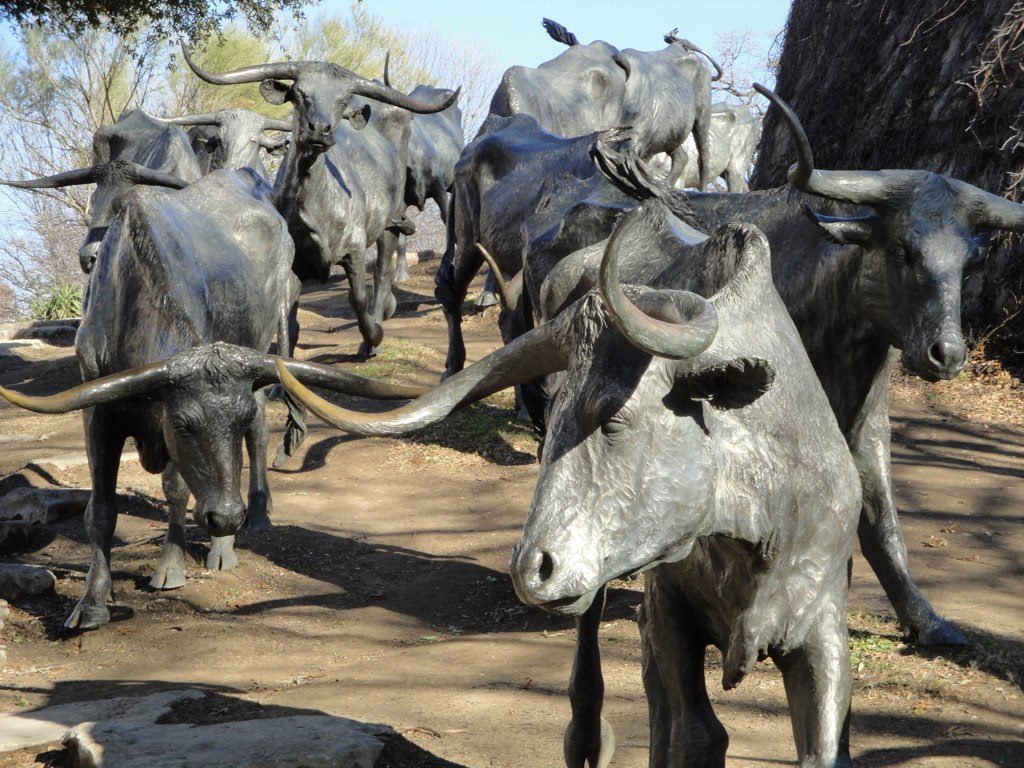
Pioneer Plaza puts a bronze cattle drive across a downtown hillside beside the convention center, free and open at all hours. It is the most photographed sculpture installation in the city and takes twenty minutes. The AT&T Discovery District, also downtown, is free to walk through, with a very large outdoor media wall, seating and a food hall — best after dark, when the wall is the point.
Dealey Plaza is free, as noted. So is the Laura W. Bush Native Texas Park, fifteen acres of native landscape at the Bush Center, open to everyone from sunrise to sundown year-round with no museum ticket required. White Rock Lake gives you a loop trail of roughly nine miles around open water ten minutes from downtown, and it is where Dallas actually spends its weekends.
The Dallas Farmers Market charges nothing to enter. The Shed — the open-air producer stalls — runs Saturday 09:00 to 17:00 and Sunday 10:00 to 17:00 only, which is the detail most visitors get wrong; the indoor Market hall with its food stalls and shops is open daily 10:00 to 19:00 at 920 S. Harwood Street.
How Does the Heat Change Your Plan?
Substantially, and it is the factor most out-of-state visitors underestimate. Dallas summers are not warm; they are a constraint on the shape of the day.
| Month | Average high °F | What it means for outdoor attractions |
|---|---|---|
| April | 77.4 | Peak conditions — Arboretum, zoo, White Rock Lake all at their best |
| June | 92.7 | Outdoor sites before 11:00 only |
| July | 96.9 | Indoor by default; zoo at opening or not at all |
| August | 97.1 | The hardest month; build the day around air conditioning |
| September | 90.0 | Still hot, but evenings turn usable |
| October | 79.5 | The best month in Dallas, and the State Fair is running |
Triple-digit days happen several times every summer and the record stands at 113°F, set in 1980. From June through early September, treat any outdoor attraction as a morning activity and anything with air conditioning as afternoon cover. The Dallas Zoo, the Arboretum and White Rock Lake all become genuinely unpleasant after about 11:00, and the animals at the zoo agree with you.
October is the reward. Average highs of 79.5°F, the State Fair of Texas running September 25 to October 18, 2026 at Fair Park, and Autumn at the Arboretum from September 19 to November 1, 2026. It is also the wettest month at about 4.79 inches, so the trade is a chance of rain against a genuine chance of walking around comfortably. Take the trade.
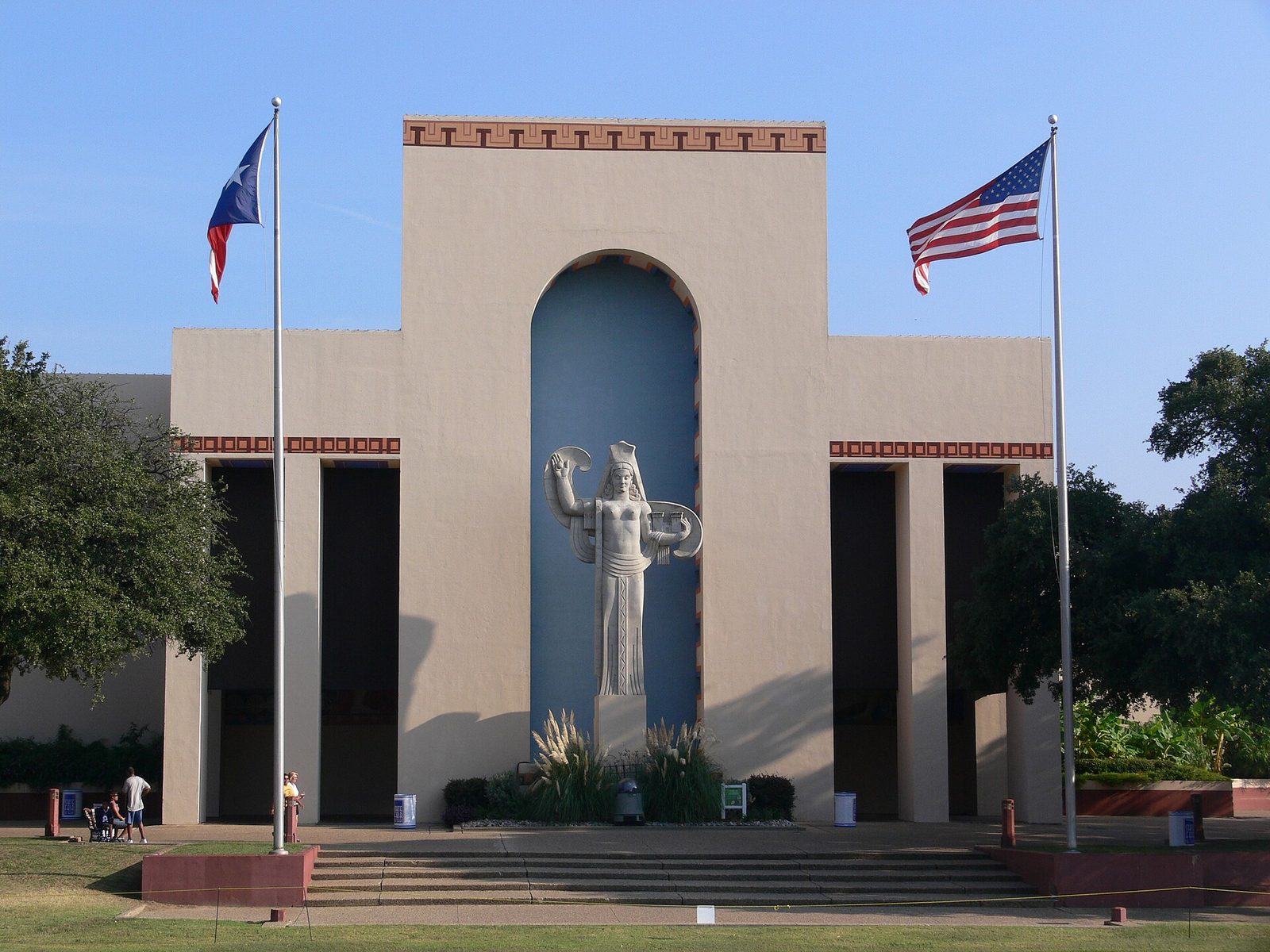
One warning about the State Fair window: while it runs, Fair Park is the fair. If you wanted the park’s art deco architecture, its museums or the Cotton Bowl in isolation, visit outside those dates. During the fair, admission runs on 1-Day FLEX tickets, combo packs and season passes, and food and midway rides run on coupons bought separately — which is how a “cheap” day at the fair quietly stops being cheap.
How Accessible Are the Major Attractions?
Broadly good, with specific restrictions worth knowing in advance rather than at the door.
The Dallas Museum of Art is fully wheelchair accessible and keeps a limited number of loaner wheelchairs at Guest Services; call 214-922-1803 ahead if you need to be certain one is available. The Bush Museum offers free wheelchairs from the Box Office on a first-come basis, but they may not leave the museum area — not to Café 43, not to the Museum Store, not to the street for pick-up — so if you need mobility support across the whole campus, bring your own chair or scooter, which is explicitly permitted everywhere including the café and store. The Dallas Arboretum provides complimentary wheelchairs first come, first served, and runs no trams or golf carts during evening hours, which matters across 66 acres.
The Bush Center carries one restriction no other Dallas attraction does. It is a federal facility, so every visitor passes through airport-style security and metal detectors. No weapons of any kind, no backpacks, and bags are limited to one purse or diaper bag per person at no larger than 17 by 26 inches. No food or drink comes through security at all. Guided tours are not offered; the museum expects you to move at your own pace, and it suggests 30 to 45 minutes for a highlights pass or four hours and up to see everything. Download the Bush Center app and bring headphones for the audio tour.
Only service animals as defined by the ADA are admitted at the Bush Center, and that is the standard across the city’s museums. At the Arboretum, children under 16 must be accompanied by an adult — worth knowing if you had imagined dropping teenagers off for an afternoon.
How Should You Order Everything Across Two or Three Days?
Order matters more in Dallas than in most cities, because the closures are rigid and the clusters are far apart. Two sequences that work, both assuming a Wednesday arrival:
Two days, no car. Day one is the Arts District: DMA at opening with a reserved timed ticket, the Nasher after lunch, Klyde Warren Park late afternoon, M-Line Trolley to Uptown for dinner. Day two is the West End: Dallas World Aquarium at 08:30 when it opens and before the crowds, lunch, the Sixth Floor Museum in the early afternoon — well before that 16:15 last entry — then Dealey Plaza on foot and Reunion Tower for sunset. A $9.00 day pass covers both days’ transit if you buy one each day, and the trolley is free.
Three days, with a car. Keep days one and two above. Add a third that runs north and south: the Bush Museum in the morning, with its 09:00 opening Monday through Saturday and midday opening on Sundays, then the Dallas Arboretum in the late afternoon when the heat breaks, or the Dallas Zoo first thing instead if you have children. Do not attempt the Zoo and the Arboretum on the same day — they are on opposite sides of the city and you will spend the good hours driving.
What not to do: do not schedule the Arts District on a Monday or Tuesday, do not arrive at the Sixth Floor Museum after 16:00, do not book the Zoo for a July afternoon, and do not try to add Fort Worth as a half-day. Fort Worth is a real day out with its own museum district and stockyards; squeezed into an afternoon it ruins both cities. Leave it for a separate trip.
Frequently Asked Questions About Dallas Attractions
How many days do you need in Dallas?
Three full days covers the city comfortably: one for the Arts District, one for the West End and downtown, one for whichever of the Bush Museum, the Zoo or the Arboretum suits your party. Two days is enough if you stay central and skip the outlying sites. Four or more only pays off if you are adding Fort Worth as a genuine day trip.
What is the one attraction you should not miss?
The Sixth Floor Museum, if you only do one paid site — it is the reason a great many people come to Dallas and it handles its subject seriously. If you want free, the Dallas Museum of Art. If you want the best return per dollar, the Nasher at $10, or $8 with a DART fare.
Do you need to book Dallas attractions in advance?
For the DMA, yes, even though it is free — every visitor needs a timed ticket. For the Sixth Floor Museum, strongly recommended, especially at weekends. The Bush Museum recommends timed entry but permits same-day reservations. Reunion Tower and the Arboretum sell through dated calendars, so booking ahead also locks in your price.
Is Dallas walkable for tourists?
In pockets. The Arts District is genuinely walkable, the West End is walkable, and the two are about a twenty-minute walk apart. Beyond that, the city was built for cars and the distances between clusters are not pedestrian distances. Use the free M-Line Trolley and the $9.00 DART day pass to bridge them.
What is there to do in Dallas when it rains?
Rain is a gift here, not a problem. The DMA, the Nasher, the Perot, the Sixth Floor Museum, the Bush Museum and the Dallas World Aquarium are all indoors, and the Arts District puts three of them within a few minutes of each other. October is the wettest month at about 4.79 inches and it is still the best month to visit.
Are Dallas attractions free on any particular day?
The Dallas Museum of Art is free every day it is open. The Nasher runs Free First Saturdays from 11:00 to 17:00 with family programming from 11:00 to 14:00. Dealey Plaza, Pioneer Plaza, Klyde Warren Park, the AT&T Discovery District, White Rock Lake, the Dallas Farmers Market and the Native Texas Park cost nothing on any day.
Is the Dallas Arboretum worth the trip from downtown?
In spring and during Autumn at the Arboretum, yes — it is 66 acres on White Rock Lake and the seasonal displays are the draw. In midsummer it is a hot walk with less in bloom. Check the dated ticket calendar for your day, because admission price varies by date and by whichever festival is running, and there is no flat rate to quote.
Can you do Dallas attractions on a Monday?
You can, but not the art ones. Monday closes the DMA, the Nasher and the Sixth Floor Museum. It leaves the Perot Museum, the Bush Museum, the Dallas World Aquarium, the Dallas Zoo, the Arboretum, Klyde Warren Park and Fair Park’s grounds open — enough for a strong day, provided you plan it as a Monday rather than discovering the closures at the door.
One scheduling point the attraction hours above do not cover: barbecue in Texas is a midday meal, not an evening one, because the meat is cooked once a day and service ends when it sells out. Slotting it into lunch rather than dinner fixes most visitors’ eating problems here, and our guide to the best restaurants in Dallas lays out the rest — which district to eat in, how far ahead to book, and where the famous names are coasting.
All of which argues for picking your base before you book anything, because the clusters above are what make a Dallas trip work or not. Our guide to where to stay in Dallas maps each area to a trip type with walking and transit times, and does the total-cost math the comparison sites leave out — tax, parking, fees and the event weeks when rates double.
If you are still working out the frame around all of this — how many days to give the city, which month to come, what a day realistically costs and whether Dallas is worth the trip at all — start with our Dallas travel guide, which handles the top-level planning questions and sends you back here for the site-by-site detail.
Knowing what each site costs and when it is shut is half the job; the other half is putting them in an order that does not waste your afternoons on the freeway. Our day-by-day Dallas itineraries take the attractions above and sequence them into timed routes by cluster, from a single day up to five.
Two of the sites above change character entirely at certain times of year. Fair Park becomes the State Fair for three and a half weeks from late September, and the Arboretum runs date-priced seasonal festivals in both spring and autumn. Our guide to Dallas events and festivals covers when each one runs and whether it is worth timing a visit around.
Not all of the above costs money, and the free tier here is stronger than most American cities manage — a free encyclopedic art museum, a free deck park programmed year-round, a free trolley and a free public plaza where the assassination happened. Our guide to the best free things to do in Dallas gives the all-in number for each one, including the parking and rideshare costs that quietly make several “free” attractions expensive.
The age of your party changes these verdicts more than anything else on this page: the Sixth Floor Museum is unsuitable below about eleven and the best thing in the city above it, while the zoo and the aquarium work in reverse. Our guide to things to do in Dallas with kids sorts every attraction here by age band, and adds the nap, heat and sensory planning the ticket pages leave out.
Worth checking before you book anything: not every attraction on this list sits near a train. The museums, the zoo and Fair Park do; the Arboretum and White Rock Lake do not. We map all of it in our guide to Dallas public transport and parking, with walk times from the platform and a verdict on each one.
The museums deserve their own treatment, because the opening days are the trap and the pricing is uneven. Our guide to Dallas museums and the Arts District compares each one by cost, subject and time needed, lists the five that are free, and sets out what is actually open on a Monday or a Tuesday.
Several of these sights make far more sense with the background attached. Our guide to Dallas history and historic sites covers Dealey Plaza and the Sixth Floor Museum, Fair Park’s art deco, Freedman’s Cemetery and the founding city, with the opening days and the free options flagged.
One practical note on the Arboretum before you budget for it: base admission runs $21.95 on weekdays and $25.95 at weekends, with parking charged separately at $15, and timed tickets requested online. It is also open daily, which makes it the obvious Monday or Tuesday option when the Arts District museums are shut. Full detail in our Dallas Arboretum visitor guide.
Two things to know about the Dallas World Aquarium before you budget for it: it is a multi-level rainforest with an aquarium attached rather than a big-tank aquarium, and at $34.95 plus tax it is the most expensive attraction in the city per hour. It is also open seven days from 8:30 a.m., which makes it one of the best options on a Monday or Tuesday. Full detail in our Dallas World Aquarium visitor guide.
If you have one ticket to spend in Dallas, this is usually the one. The Sixth Floor Museum charges $27 for adults, runs about ninety minutes on its own estimate, and requires a timed ticket bought ahead — and the half of the visit that happens outside in Dealey Plaza costs nothing. Full detail in our Sixth Floor Museum visitor guide.
Related Dallas Guides
- Things to Do in Dallas — the wider view, including neighborhoods, nightlife, seasonal events and the activities that sit outside the ticketed attractions covered here.
Photo Credits
- The view from Reunion Tower: photo by Michael Barera, Wikimedia Commons (CC BY-SA 4.0)
- Klyde Warren Park food trucks: photo by Joe Mabel, Wikimedia Commons (CC BY-SA 3.0)
- Dallas Zoo: photo by Eric Kilby from Somerville, MA, USA, Wikimedia Commons (CC BY-SA 2.0)
- Pioneer Plaza: photo by Dfwcre8tive, Wikimedia Commons (CC BY 3.0)
- Fair Park Esplanade: photo by Photo: Andreas Praefcke, Wikimedia Commons (CC BY 3.0)
- Dealey Plaza from above: photo by Michael Barera, Wikimedia Commons (CC BY-SA 4.0)
- Klyde Warren Park (featured image): photo by Joe Mabel, Wikimedia Commons (CC BY-SA 3.0)
Sources
- Dallas Museum of Art — Visit
- Nasher Sculpture Center — Visit
- Perot Museum of Nature and Science — Plan Your Visit
- The Sixth Floor Museum at Dealey Plaza — Plan Your Visit
- Reunion Tower GeO-Deck
- Dallas Arboretum — Visitor Information
- Dallas Zoo — Buy Tickets
- Dallas World Aquarium — Hours and Prices
- George W. Bush Presidential Center — Admission and Hours
- Klyde Warren Park — Visitor FAQs
- Dallas Farmers Market — Hours and Location
- Dallas CityPASS — Pricing and Included Attractions
- DART — Fares and Passes
- McKinney Avenue Transit Authority — M-Line Trolley
- State Fair of Texas — Dates and Admission