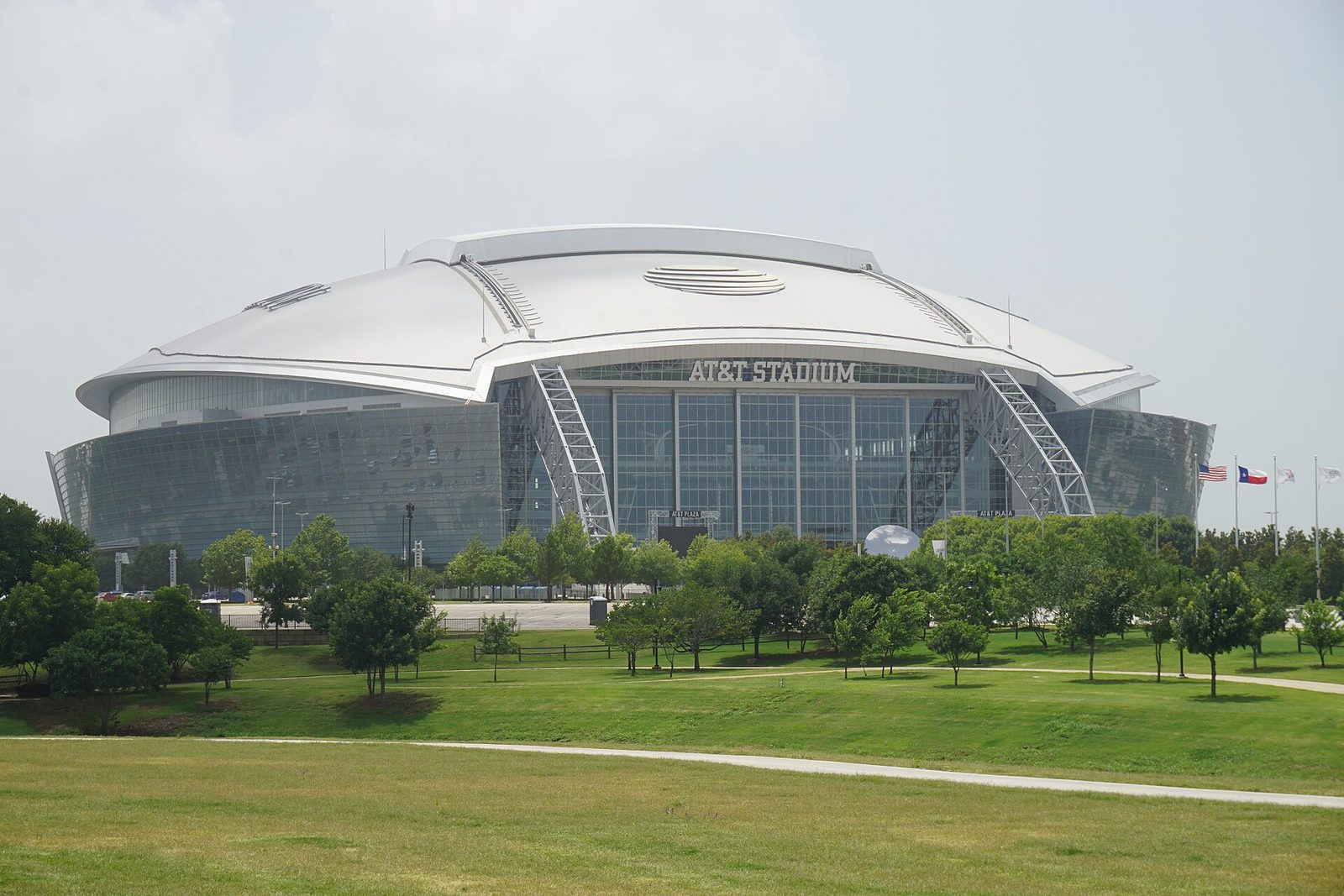
Dallas sports happen in three places, and only one of them is in Dallas. The Mavericks and the Stars play at American Airlines Center in Victory Park, five minutes from downtown by train. The Cowboys and the Rangers play in Arlington, twenty miles west, with no rail service at all. FC Dallas plays in Frisco, twenty-five miles north. Get that geography right and everything else follows.
This guide builds one game-day workflow for each team: when the season runs, how you actually get there, what you can carry through the gate, what to budget, and where the trip goes wrong. The Arlington venues in particular are planned around parking in a way that catches visitors who assumed a big American city means a train to the stadium.
Policies, transport arrangements and venue details below were checked in September 2026 against the venues’ own pages. Ticket prices, parking rates and tour prices are not published as flat figures by most of these operators, so we have not invented any — where a number is missing here, it is missing because the venue does not publish one.
The Dallas Sports Map: Who Plays Where
| Team | League | Venue | City | Season, roughly | Rail? |
|---|---|---|---|---|---|
| Dallas Cowboys | NFL | AT&T Stadium | Arlington | September to January | No |
| Texas Rangers | MLB | Globe Life Field | Arlington | Late March to October | No |
| Dallas Mavericks | NBA | American Airlines Center | Dallas, Victory Park | October to April | Yes — Victory Station |
| Dallas Stars | NHL | American Airlines Center | Dallas, Victory Park | October to April | Yes — Victory Station |
| FC Dallas | MLS | Toyota Stadium | Frisco | Late February to October | No |
| Dallas Wings | WNBA | Confirm on the team’s site | — | May to September | Check before booking |
Two of the six are reachable by train. That is the single most important line in this guide, and it is the one most visitor-facing pages skip entirely. Seasons overlap in October, which is the one month when you could in theory see four different sports in the same week.
Dallas or Arlington? The Geography That Decides Your Day
Arlington sits roughly halfway between Dallas and Fort Worth and is not a DART member city. There is no light rail, no commuter line and no station. AT&T Stadium and Globe Life Field stand about a ten-minute walk from each other in a sea of surface parking designed for people who drove.
The consequences for a visitor without a car are real. You are looking at a rideshare in both directions across roughly twenty miles, with the return leg competing against tens of thousands of people leaving at once. On an NFL Sunday that is an expensive and slow hour. Some hotels and tour operators run coaches on game days, and organized transport is a legitimate answer rather than a cop-out.
Victory Park, by contrast, is the easiest arena arrival in the United States. Victory Station sits immediately beside the building, the Green and Orange Lines serve it seven days a week, and the walk from platform to turnstile is about ninety seconds.
The honest planning rule: if you want a game and you do not have a car, take the Mavericks or the Stars. If the Cowboys are the point of the trip — and for many visitors they are — accept the car or the coach as part of the cost, book it in advance, and do not improvise it on the day. Our transport guide covers the wider picture, including why the rail map stops where it does.
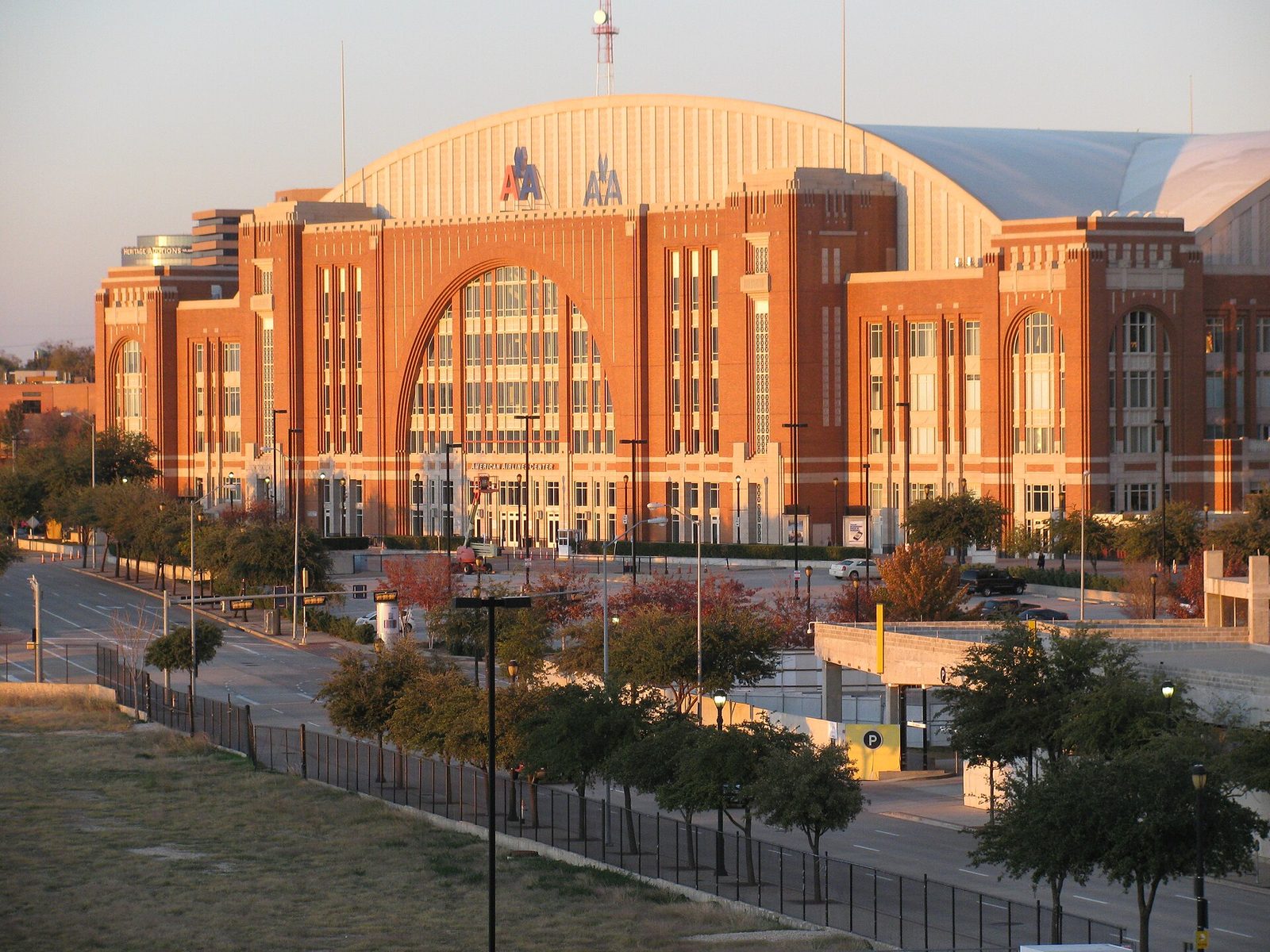
American Airlines Center: The Easy One
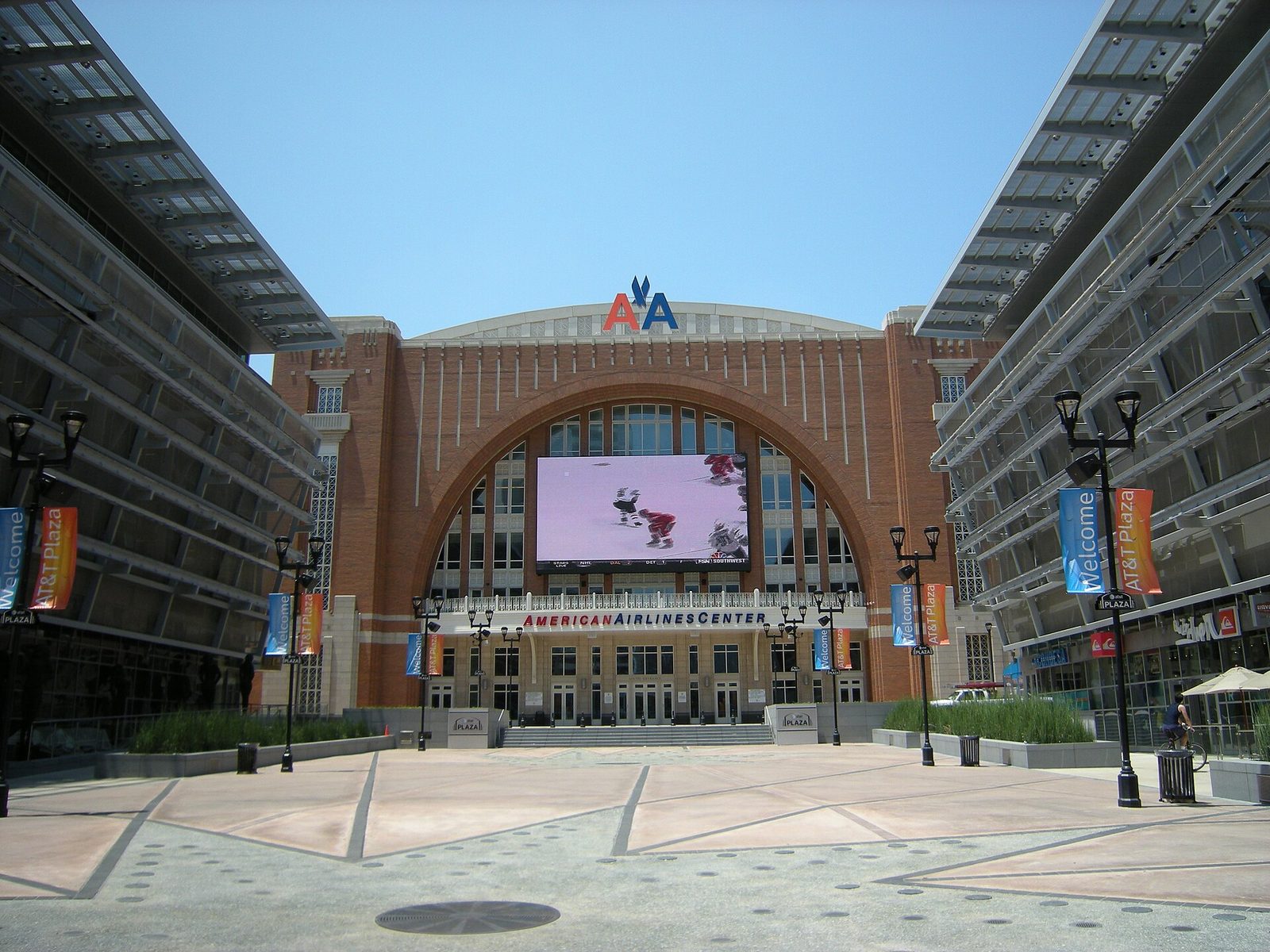
The arena in Victory Park hosts both the Mavericks and the Stars, which means that from October to April there is something on most weeks and often several times a week. It also takes the region’s biggest touring concerts, so check what is on even if neither team is playing.
Victory Park itself is a purpose-built entertainment district — bars, restaurants and hotels wrapped around the arena — which solves the usual problem of what to do for the two hours before a game. It is not the most characterful part of Dallas, but on a game night that is beside the point.
The arena is within walking distance of downtown for anyone comfortable with a fifteen-minute walk, and the M-Line Trolley connects Uptown to the wider area for free. For most visitors, though, the train is the answer, and the detail below is worth reading properly because the venue publishes more of it than almost any comparable arena.
How Do You Get to a Mavericks or Stars Game?
The arena’s own transport guidance is unusually specific, and it solves problems visitors do not know they have.
- Green and Orange Lines run to Victory Station seven days a week. This is the default route and it puts you next to the building.
- Red or Blue Line riders transfer at West End Station. But before events, some Red and Blue trains run straight through to Victory Station — if the overhead destination sign reads “Victory Station”, stay in your seat.
- The TRE also stops at Victory Station, from any station between Fort Worth T&P and Dallas Union, which makes the arena reachable from Fort Worth without a car. There is no scheduled TRE service on Sundays.
- For Mavericks and Stars games starting after 18:00, a westbound train toward Fort Worth departs Victory Station 20 minutes after the game. That is a genuinely useful piece of scheduling and almost nobody outside Fort Worth knows about it.
- DART Bus Route 49 runs seven days a week from Rosa Parks Plaza at Elm and Lamar, near West End Station, to the Houston at Payne stop — cross the street for the east arena entrance. Coming back, board on Victory Avenue beside Victory Station.
- Taxis after the event stage on the east side at the curb of Houston Street south of Payne Street, with a second stand on the south side of Nowitzki Way.
- Accessible transport: DART’s paratransit division can be reached on 214-515-7272; general DART information is 214-979-1111.
A DART Local Day Pass at $6.00 covers all of the rail and bus options above. A Regional Day Pass at $9.00 is the one to buy if you are coming in from Fort Worth on the TRE, since two one-way TRE tickets would cost $12.00.
AT&T Stadium and the Cowboys: Planning a Game Day
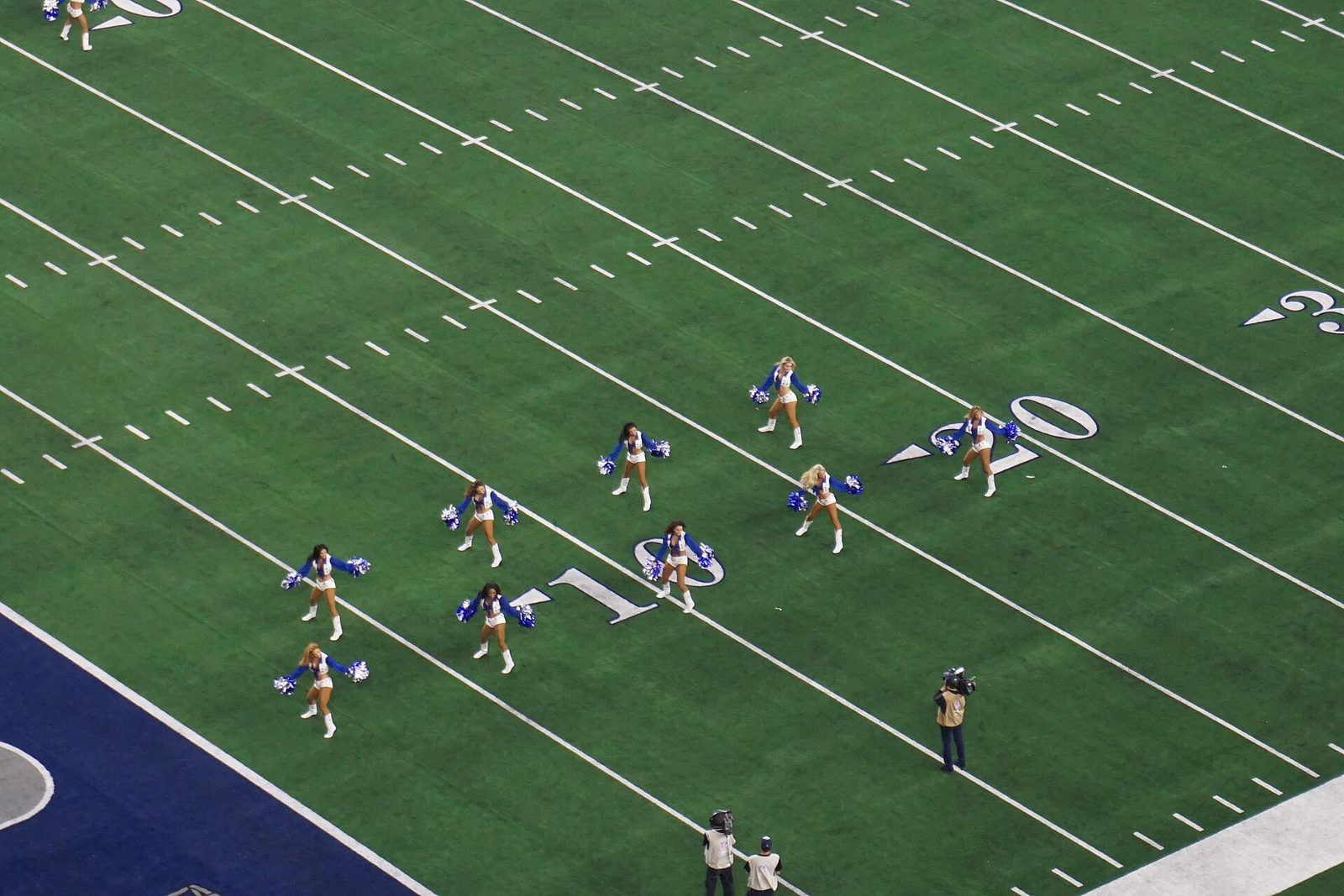
AT&T Stadium is the largest domed structure in the world and it behaves like it. A Cowboys home game is a full-day commitment rather than an afternoon out, and the difference between a good one and a bad one is almost entirely logistics.
Plan the day backwards from the exit. Getting in is straightforward; getting out is where three hours can disappear. Decide before you leave your hotel how you are leaving the stadium — a pre-booked car, an organized coach, a designated meeting point at a specific lot — and stick to it.
Parking is the system, not an afterthought. The stadium is surrounded by official and unofficial lots at a wide range of prices, and the ones closest to the gates cost the most and empty the slowest. A lot slightly further out with an easier route to a main road is frequently the better trade. The stadium does not publish a single flat parking rate, and prices vary by event, so buy in advance through official channels rather than deciding at the barrier.
Tailgating is genuine here in a way it is not everywhere, and if you have any interest in American football culture it is worth arriving early for. The lots fill hours before kickoff and the atmosphere outside is a meaningful part of the experience.
Inside, the building is the attraction. The center-hung video board is the thing everyone photographs, and it is large enough that most of the crowd watches it rather than the field for long stretches — which is either the point or the problem, depending on your view of modern stadiums. The retractable roof and the vast glass end walls mean the interior is bright and climate-controlled whatever September in Texas is doing outside, and the contemporary art collection runs through the concourses rather than being tucked away in one corner.
Rally Days run the day before Cowboys home games — alumni and cheerleader autographs, food and drink, games in the Miller Lite House and a behind-the-scenes stadium tour. For a visitor who cannot get a match ticket, this is the closest substitute and it is far easier to arrange.
What Can You Take Into AT&T Stadium?
Very little, and the policy is enforced. This is the most common way a game day goes wrong for a visitor, so read it before you pack.
Approved bags, exactly as the stadium defines them:
- A clear tote of plastic, vinyl or PVC that does not exceed 12 by 6 by 12 inches.
- A clear, one-gallon, re-sealable plastic storage bag.
- A small clutch purse, approximately hand-sized, no larger than 4.5 by 6.5 inches, with or without a handle or strap. It can be carried separately or inside an approved plastic bag.
Prohibited: all purses, bags or containers larger than a small clutch; backpacks; binocular cases, though binoculars may be worn around the neck; briefcases; camera bags; cinch bags; computer bags; coolers; fanny packs; luggage of any kind; and seat cushions.
An exception is made for medically necessary items after inspection at a designated gate. The stadium asks that you limit the number of items you bring on event days generally.
The practical translation: leave everything at the hotel. Phone, a card, a clear bag if you need one. A day bag you have carried around Dallas all morning will not come in with you, and there is no left-luggage solution that makes this painless.
AT&T Stadium Tours: Which One, and Is It Worth It?
Tours run daily and are the best way to see the building if you cannot get to a game — or if you can and want to see the parts of it you would otherwise miss.
| Tour | What it gives you | Who it suits |
|---|---|---|
| VIP Guided Tour | Small groups, extra stops, a guide who knows the building | Most visitors. This is the one on Dallas CityPASS. |
| Owner’s Experience | The most exclusive areas, plus the Meet Jerry Jones interactive hologram | Serious Cowboys fans and repeat visitors |
| Self-Guided Tour | Access to the most popular areas at your own pace, limited availability | Budget visitors and families with short attention spans |
| Gameday Tour | Players’ tunnel, press conference podium, warm-ups from the Field Club, postgame field pass | Anyone already holding a match ticket. Book on 817-892-TOUR. |
| Art Tour | The stadium’s museum-quality contemporary art collection | People who did not think they wanted a stadium tour |
| Educational Tour | Structured visits for school groups | Groups only |
Two notes worth knowing. Field access on any tour is subject to availability — and if the field is open, bring your own football, because playing catch on it is permitted and the stadium does not supply one. Tour tickets are required for children aged 5 and up.
The art tour is the surprise. The stadium holds a substantial collection of contemporary art, commissioned and displayed throughout the concourses, and it is genuinely good. If you are traveling with someone who has no interest in football, this is the version of the visit that works for them.
On price: AT&T Stadium does not publish flat tour prices on its site — they are sold through a booking widget that varies by date and tour — so check for your specific day. Dallas CityPASS includes the VIP Guided Tour as one of its four choices, which is worth factoring in if you are already considering the pass. Our attractions guide runs the CityPASS arithmetic properly.
Globe Life Field and the Texas Rangers
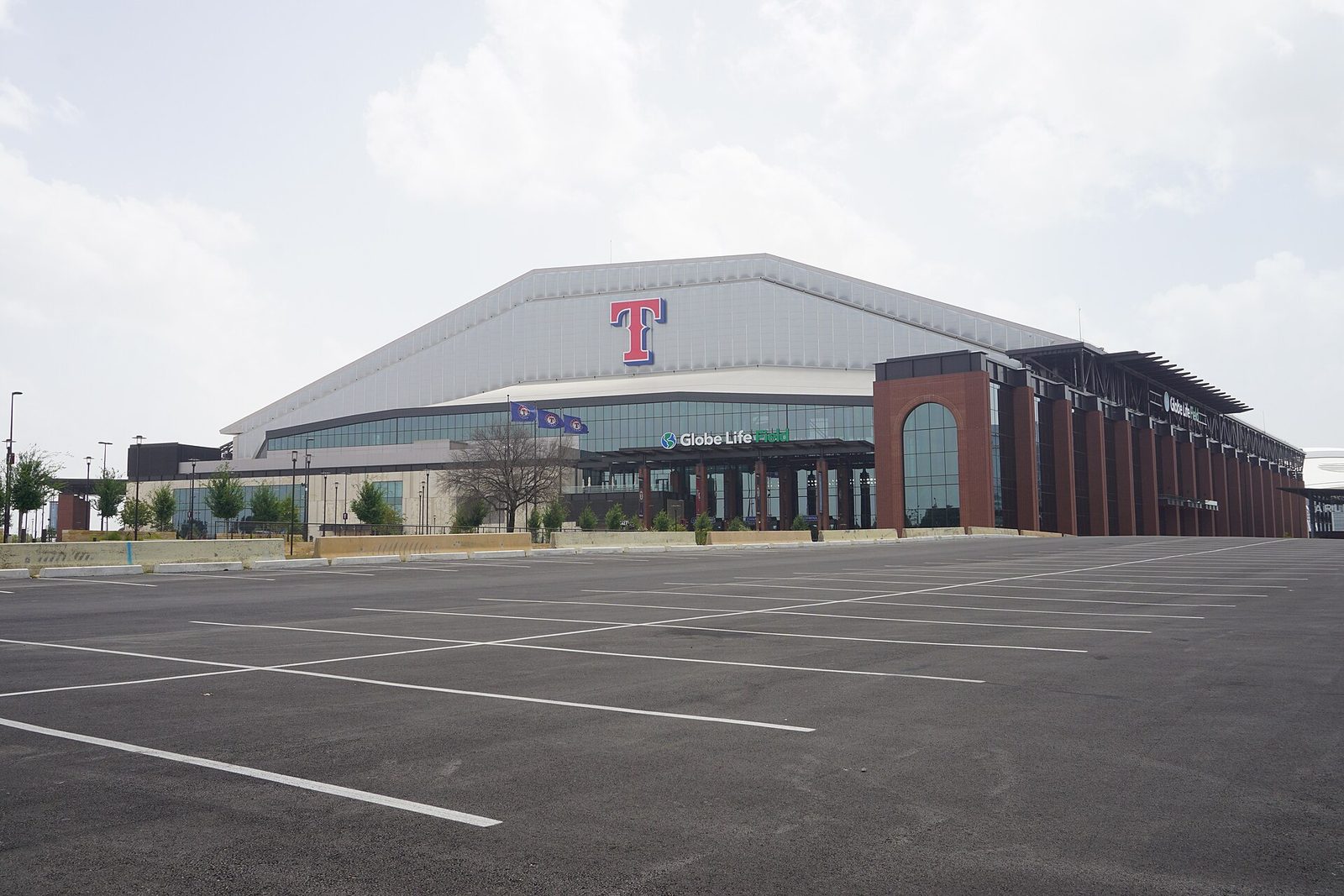
The Rangers moved into Globe Life Field for the 2020 season, and for a visitor it is the most comfortable big-venue experience in the region for one specific reason: the roof. This is a fully air-conditioned ballpark, which in a city where July and August highs average 97°F is not a luxury but the difference between a good evening and a miserable one.
The stadium sits a short walk from AT&T Stadium in the same Arlington entertainment district, so a visitor who wants both venues can see them in one trip. Baseball’s long season is also an advantage: with a home schedule running from late March to the end of September, there are far more available dates than for football, and tickets are correspondingly easier and cheaper to get.
The honest verdict: if you want to see live American sport on a Dallas trip and you are not wedded to a particular team, a Rangers game is the best-value ticket in the region. More dates, lower prices, air conditioning, and a ballpark built recently enough that the sightlines and the food are good throughout.
Getting there is the same problem as the Cowboys — Arlington, no rail, drive or ride. The difference is that a midweek baseball game does not empty 80,000 people onto the same roads at the same moment, so the exit is far less painful.
FC Dallas, Toyota Stadium and Frisco
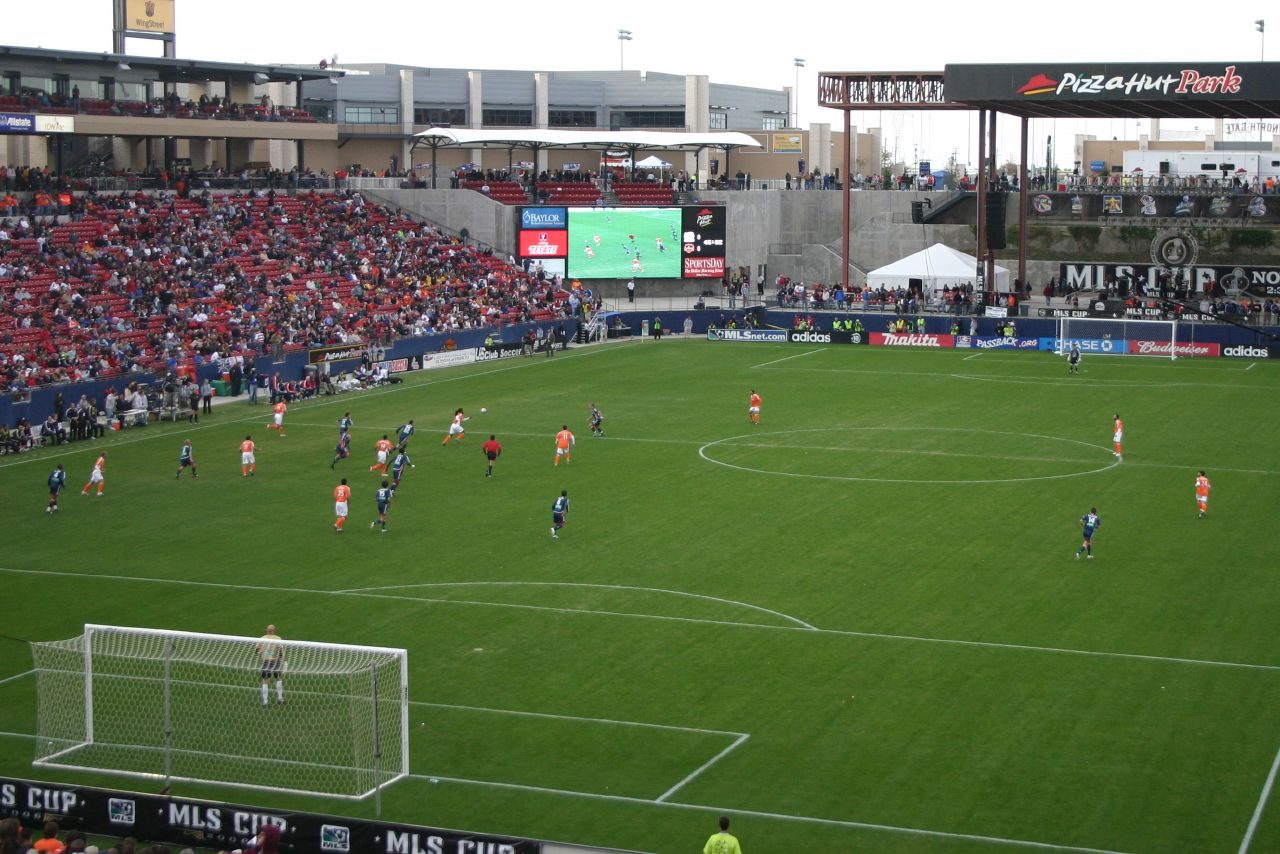
FC Dallas play MLS at Toyota Stadium in Frisco, about twenty-five miles north of downtown. Like the Arlington venues, it is off the rail map, which means driving or riding.
What you get for the journey is a purpose-built soccer stadium rather than a converted football ground, a season running from late February to October, and tickets that are typically the cheapest of any professional sport in the region. For a visiting family, or for a European visitor curious about how MLS actually feels, it is a worthwhile evening.
Toyota Stadium also houses the National Soccer Hall of Fame, which is built into the stadium itself rather than standing separately — worth knowing if you are making the drive north and want more than ninety minutes of football out of it.
Frisco also holds The Star, the Cowboys’ world headquarters and practice facility, which runs its own tours separately from the stadium in Arlington. If you are making the trip north anyway, the two combine into a reasonable day.
College Football, the Cotton Bowl and Fair Park
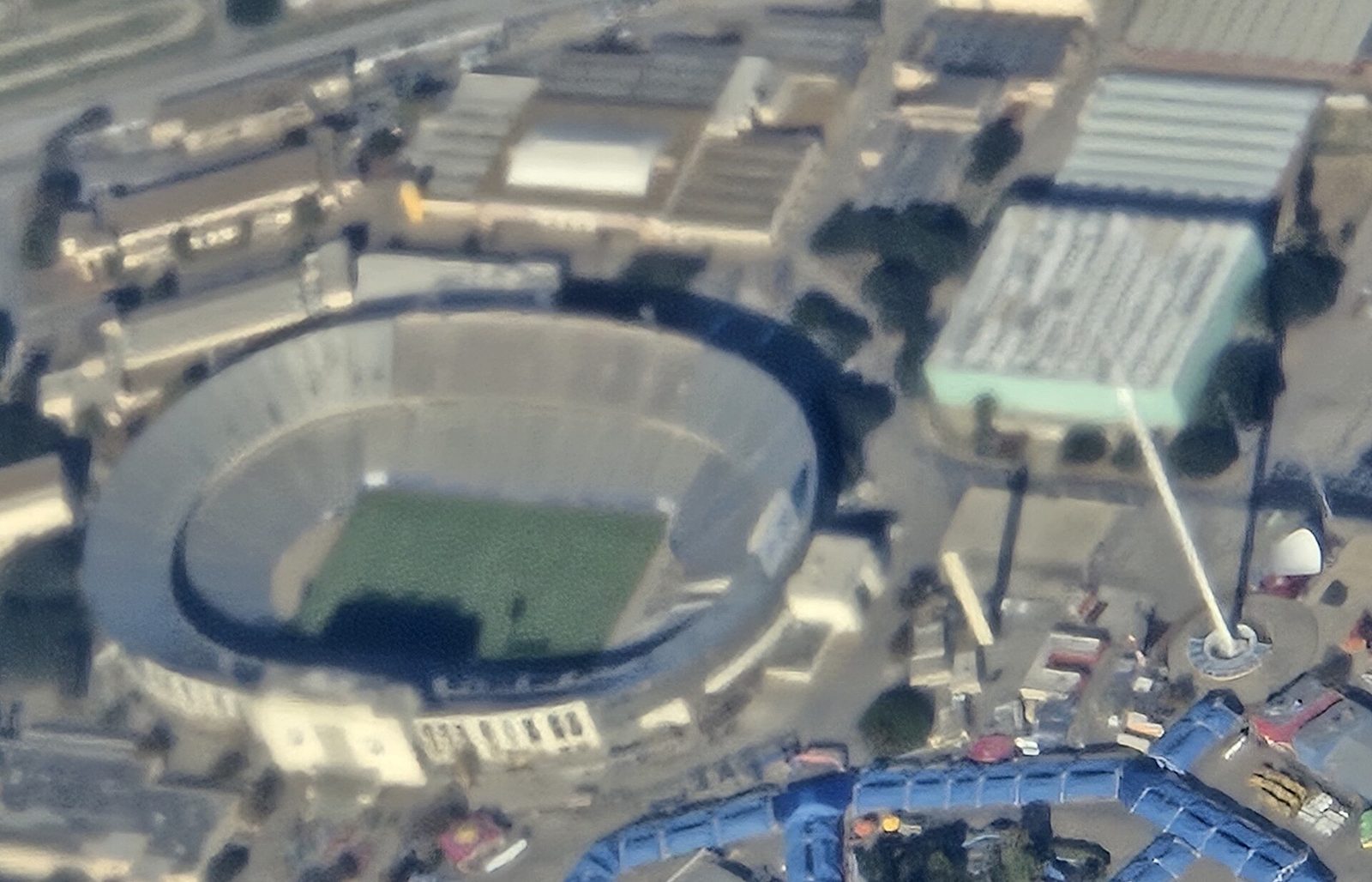
College football matters enormously in Texas, and the Cotton Bowl at Fair Park is where a visitor is most likely to encounter it. The stadium sits inside Fair Park among the art deco buildings, and — unusually for a large venue in this region — it is on the Green Line.
The biggest date on the calendar there is the annual Texas–Oklahoma game, played during the State Fair of Texas, which in 2026 runs from 25 September to 18 October. That combination — a sold-out rivalry game inside a state fair — is one of the genuinely distinctive American sporting experiences, and it is also a day when driving to Fair Park is close to impossible. Take the train.
SMU plays its home games on campus near Mockingbird Station, and TCU plays in Fort Worth, both of which are more accessible to a casual visitor than the professional venues in Arlington. Our events guide tracks the calendar dates worth planning around.
Tickets: Where to Buy and What to Expect
Buy from the team or the venue first. Every one of these franchises sells directly, and the direct channel is the only one where the seat you think you are buying is definitely the seat that exists. Resale platforms are legitimate and often necessary for sold-out Cowboys games, but they add fees that are not always visible until the final screen.
A few patterns hold across the region. Cowboys tickets are the hardest and dearest, with only eight or nine regular-season home dates and demand from an entire state; if a specific game is the reason for your trip, buy before you book flights rather than after. Rangers tickets are the easiest, with more than eighty home dates and weekday games that go for a fraction of weekend prices. Mavericks and Stars tickets sit in between and vary enormously by opponent — a marquee visiting team costs multiples of a midweek fixture against the same conference.
Three practical warnings. Mobile ticketing is standard at all the major venues, so charge your phone and download the ticket before you leave the hotel rather than relying on stadium signal. Most of these venues are cashless or close to it, so bring a card. And if you are buying for a group, buy in one transaction — seats released separately are frequently nowhere near each other, and the venue cannot fix it at the gate.
For visitors who cannot get a match ticket at all, the fallback is better than it sounds: an AT&T Stadium tour, a Rally Day the afternoon before a Cowboys home game, or a midweek Rangers game where you can walk up. None of those require planning months ahead.
Two Sporting Weekends, Planned
| The weekend | Plan | Transport | What it costs you |
|---|---|---|---|
| Car-free, October | Friday: Stars or Mavericks at Victory Station. Saturday: college football at the Cotton Bowl inside the State Fair. Sunday: Arts District. | DART Local Day Pass, $6.00 a day | Tickets and food only. No parking, no rideshare, no stress. |
| Cowboys weekend, with a car | Saturday: AT&T Stadium VIP tour plus Rally Day. Sunday: the game, arriving early for the lots. | Rental car or pre-booked coach both ways | The most expensive sporting weekend in Texas, and worth it once. |
The first of those is the one we would actually recommend to a first-time visitor. It costs a fraction as much, it works without a car, and October is the only month when the schedule makes it possible.
Game Day Costs and What to Budget
The published fares below are current DART prices. Everything else is a planning note rather than a quoted figure, because these venues price dynamically and none of them publishes a flat rate.
| Item | What to expect |
|---|---|
| DART Local Day Pass | $6.00 — covers rail and bus to Victory Station and Fair Park |
| DART Regional Day Pass | $9.00 — adds the TRE, for arriving from Fort Worth |
| Rideshare to Arlington and back | The largest single cost of an Arlington game day. Price it before you commit. |
| Stadium parking, Arlington | Varies by event and lot. Buy in advance; closest is dearest and slowest to exit. |
| Cowboys tickets | The most expensive ticket in the region by a wide margin |
| Rangers, FC Dallas tickets | The cheapest, with far more available dates |
| AT&T Stadium tour | Sold by date through the stadium’s booking system; the VIP tour is on Dallas CityPASS |
The cheapest good sporting day in Dallas: a $6.00 day pass, the Green Line to Fair Park for college football, or the Green or Orange Line to Victory Station for a midweek Stars or Mavericks game. The most expensive: a Cowboys Sunday with a rideshare in each direction and a premium lot.
Families at a Dallas Game
Baseball is the easy answer. A Rangers game is long, air-conditioned, interruptible, and nobody minds if a child loses interest in the fourth inning. Globe Life Field’s roof removes the single biggest risk with children in a Texas summer, which is heat.
Basketball and hockey at American Airlines Center work well for slightly older children, partly because the arena is easy to reach by train and partly because the events are a predictable two and a half hours rather than a whole day.
An NFL Sunday is a harder sell for younger children: the day is long, the crowds are enormous, the noise is genuine, and the exit is slow. The AT&T Stadium self-guided tour is a much better introduction to the building for a family than a match is, and it costs a fraction as much.
Remember that the bag policy applies to everyone. A family arriving with a changing bag needs to plan for it — medically necessary items are handled at a designated gate, but a standard family day bag is not getting through. Our family guide covers what to carry and what to leave behind across the city.
Accessibility at the Big Venues
All the major venues in the region provide accessible seating, and each publishes its own ADA information — book accessible seats directly through the venue or team rather than a resale platform, because the seat type has to be matched to the need.
For American Airlines Center specifically, DART’s paratransit division handles accessible transport to the arena and can be reached on 214-515-7272. DART’s light rail has level boarding into the center car of every vehicle, which makes the Victory Station approach straightforward for wheelchairs and mobility scooters.
For the Arlington venues, accessible parking is closer to the gates than general parking, but it still involves a considerable distance inside a very large building. Allow more time than you think, and use the venue’s own accessibility page to plan the specific gate.
Where to Eat and Drink Before and After
Victory Park has the easiest answer: the district around American Airlines Center is built for exactly this, with bars and restaurants within a few minutes of the doors. It gets busy before a game and empties quickly after, so book if you are eating beforehand.
Downtown and Deep Ellum are both a short ride from the arena and both give you a better meal than the district immediately around it. Deep Ellum in particular makes a good post-game destination on a Green Line evening, though remember the trains stop well before the bars do — our nightlife guide covers that gap.
In Arlington, the entertainment district between the two venues holds a reasonable cluster of chain restaurants and bars, and on a game day they are all full. If the meal matters, eat in Dallas or Fort Worth and travel to the game rather than trying to do both at the stadium. Our restaurants guide has the alternatives.
Dallas Sports: Frequently Asked Questions
Can you get to AT&T Stadium on DART?
No. AT&T Stadium is in Arlington, which is not a DART member city and has no rail service. Plan on driving, a rideshare in both directions, or an organized coach. The same applies to Globe Life Field next door.
What is the AT&T Stadium bag policy?
Clear totes up to 12 by 6 by 12 inches, one-gallon clear re-sealable plastic bags, and small clutch purses no larger than 4.5 by 6.5 inches. Backpacks, fanny packs, camera bags, coolers and seat cushions are all prohibited. Medically necessary items are handled at a designated gate.
How do I get to a Dallas Mavericks or Stars game?
Take the DART Green or Orange Line to Victory Station, which sits beside American Airlines Center and runs seven days a week. Red and Blue Line riders transfer at West End Station, though some pre-event trains run straight to Victory — check the overhead destination sign.
Which Dallas sporting event is best value for a visitor?
A Texas Rangers game. The season runs from late March to October, there are far more home dates than for football, tickets are cheaper, and Globe Life Field has a roof and air conditioning, which matters enormously in a Texas summer.
Are AT&T Stadium tours worth doing?
Yes, particularly if you cannot get a match ticket. The VIP Guided Tour is the standard choice and is included on Dallas CityPASS. The art tour is a genuine surprise, and the Gameday Tour adds the players’ tunnel and a postgame field pass for people already attending.
Can I get from Fort Worth to a Dallas game by train?
Yes. The TRE stops at Victory Station from any station between Fort Worth T&P and Dallas Union. For Mavericks and Stars games starting after 6pm, a westbound train to Fort Worth leaves Victory Station 20 minutes after the game. There is no scheduled TRE service on Sundays.
Do I need to worry about the heat at a Dallas game?
Less than you would expect at the big venues. AT&T Stadium and Globe Life Field both have roofs and air conditioning, and American Airlines Center is indoors. Toyota Stadium in Frisco and the Cotton Bowl at Fair Park are open-air, so a summer or early-autumn match there needs water, shade and sunscreen.
Can I see two games in one Dallas trip?
Easily in October, when the NFL, MLB, NBA, NHL and MLS seasons all overlap. The simplest pairing is a Mavericks or Stars game at Victory Station with a Rangers game in Arlington, since baseball has by far the most available dates.
When do the Dallas sports seasons run?
Roughly: NFL September to January, NBA and NHL October to April, MLB late March to October, MLS late February to October, WNBA May to September. October is the one month with almost everything running at once.
Is there a train to the Cotton Bowl at Fair Park?
Yes — the Green Line serves Fair Park, which makes the Cotton Bowl one of the few large venues in the region with a genuine rail connection. On State Fair dates, taking the train rather than driving is not optional advice, it is the only sensible plan.
How early should I arrive for a Cowboys game?
Earlier than feels necessary. The lots fill hours before kickoff, tailgating is a real part of the day, and arriving late means the slowest parking and the longest walk. More importantly, decide how you are leaving before you arrive.
Related Dallas Guides
- Getting Around Dallas — fares, the rail map and why Arlington is not on it
- Dallas Attractions — including the CityPASS arithmetic
- Things to Do in Dallas — the wider list
- Dallas Events — season dates and the State Fair calendar
- Dallas Nightlife — where to go after the final whistle
- Where to Eat in Dallas — better than the stadium concourse
- Where to Stay in Dallas — including hotels near Victory Park
- Dallas With Kids — which games work for which ages
- Dallas Itineraries — fitting a game into a short trip
- Dallas Neighborhoods — Victory Park, Deep Ellum and the rest
- Best Time to Visit Dallas — when the seasons overlap
- Dallas Airports — arriving for a game weekend
- Dallas Travel Guide — the full planning overview
Photo Credits
- American Airlines Center at sunset: photo by NoTalkMan, Wikimedia Commons (CC0)
- American Airlines Center plaza: photo by Joe Mabel, Wikimedia Commons (CC BY-SA 3.0)
- AT&T Stadium on a Cowboys game day: photo by Michael Barera, Wikimedia Commons (CC BY-SA 4.0)
- Globe Life Field, Arlington: photo by Michael Barera, Wikimedia Commons (CC BY-SA 4.0)
- Toyota Stadium, Frisco: photo by Jarrett Campbell from Cary, NC, USA, Wikimedia Commons (CC BY 2.0)
- Cotton Bowl and Fair Park: photo by Spatms, Wikimedia Commons (CC BY-SA 4.0)
- AT&T Stadium, Arlington (featured image): photo by Michael Barera, Wikimedia Commons (CC BY-SA 4.0)
Sources
- AT&T Stadium — bag policy
- AT&T Stadium — tours
- Dallas Cowboys — stadium tours
- American Airlines Center — public transportation
- American Airlines Center — parking and directions
- Texas Rangers — Globe Life Field
- Dallas Mavericks
- Dallas Stars
- FC Dallas — Toyota Stadium
- The Star in Frisco — Cowboys headquarters tours
- DART — fares and passes
- Trinity Railway Express — schedules
- Dallas CityPASS — included attractions
- State Fair of Texas — 2026 dates
- Arlington, Texas — professional sports venues