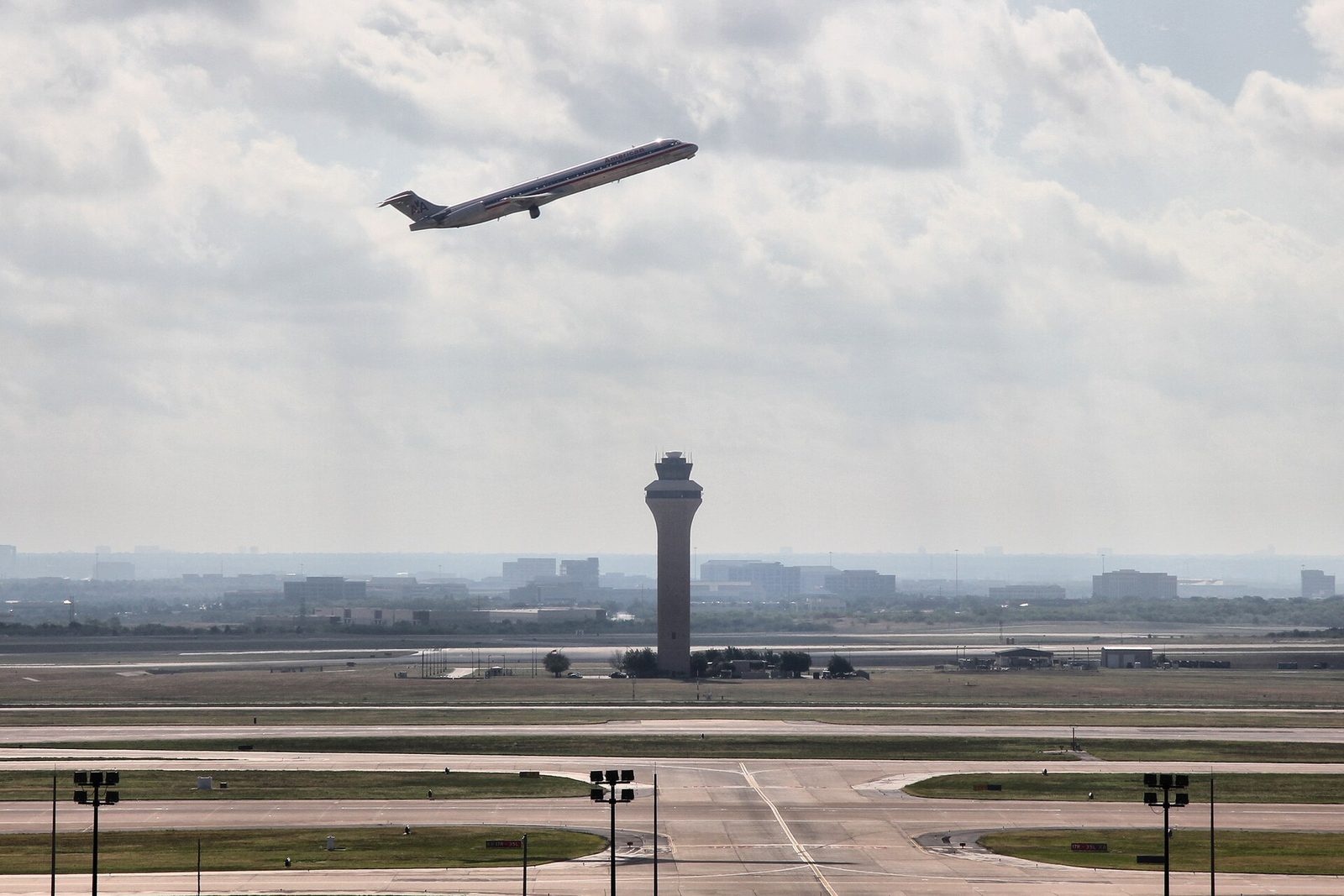
Both Dallas airports work, and they are not interchangeable. DFW International is a five-terminal global hub about 20 miles west of downtown with a direct DART Orange Line train into the city. Dallas Love Field is a single small terminal roughly six miles from downtown, dominated by Southwest, with a free connecting bus to the rail network.
That is the short version. The long version is where the money and the missed connections live: which rail line at DFW actually reaches downtown and which one quietly does not, when you need the Skylink and when you need the Terminal Link, why a checked bag changes your entire arrival plan, and how to get from either airport to a downtown hotel for $3.00 if you are traveling light.
Fares, hours and operating details below were checked in September 2026 against the airports’ and DART’s own pages. Airport arrangements change with construction more often than almost anything else in this guide, so confirm anything time-critical on the day.
DFW or Love Field: The Decision Table
Find your row. The right airport is usually obvious once you have written down where you are actually sleeping.
| Your situation | Fly into | Why | The catch |
|---|---|---|---|
| International arrival | DFW | It is the region’s international gateway; Love Field is overwhelmingly domestic | Immigration and baggage reclaim add real time. Do not book a tight onward connection. |
| Flying Southwest | Love Field | Southwest’s Dallas operation is based there | Fewer nonstop options to smaller cities than DFW offers. |
| Downtown or Uptown hotel, light luggage | Love Field, then DFW | Six miles versus twenty, and the connecting bus from Love Field is free | You still need a rail fare after the free bus. |
| Staying in Irving, Las Colinas or west of the city | DFW | You are already on that side of the metroplex | Crossing the metroplex east to west in rush hour is genuinely slow. |
| Two big cases, a stroller, or three or more people | Either — but take a car from the curb | DART light rail has no luggage racks at all | The $6.00 day pass saving disappears the moment you are wrestling suitcases on a train. |
| Arriving after 22:00 | Whichever is cheaper, then rideshare | Late-night transit options thin out fast | Check the last train before you assume rail is an option. |
| Connecting on to Fort Worth | DFW | The TRE LINK shuttle from Terminal D reaches the Trinity Railway Express | The shuttle runs every 20 minutes at weekday peak and every 40 minutes otherwise. |
Which Dallas Airport Should You Fly Into?
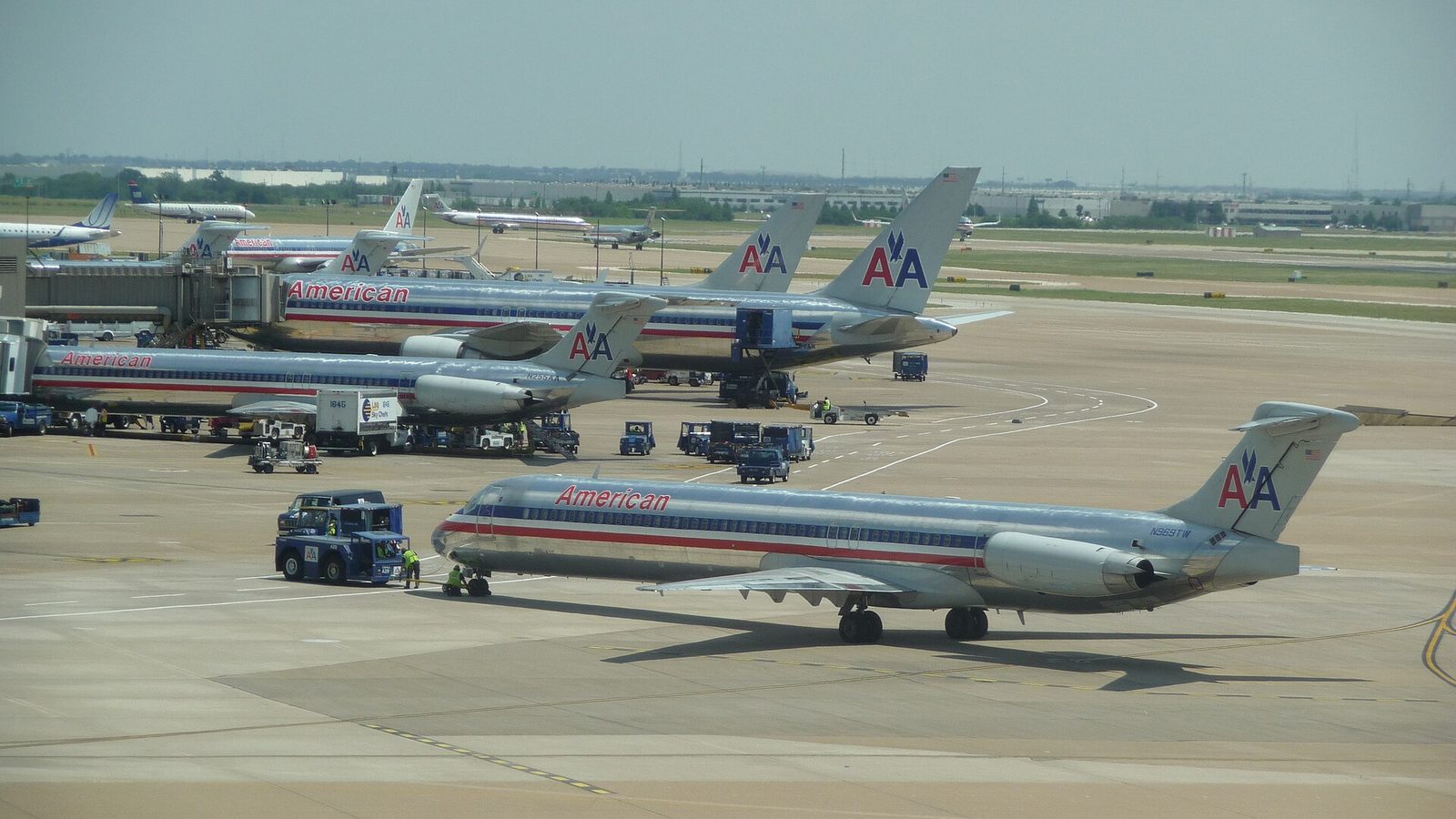
The instinct is to book whichever is cheaper. That is usually right, but the gap has to be meaningful, because the two airports produce genuinely different arrival days.
DFW gives you options. Five terminals, more than 160 gates, seven runways and better than 86 million passengers a year make it one of the busiest airports on earth — third globally by aircraft movements and fourth by passengers. If you want a nonstop from almost anywhere, DFW has it. It also has a direct rail line into downtown Dallas for the price of a day pass, which very few American hub airports can claim.
Love Field gives you time back. One terminal, short security lines, a baggage belt you can see from the gate area, and a location six miles from the city center rather than twenty. On a short trip, landing at Love Field can put you at your hotel forty-five minutes earlier than the same arrival time at DFW. If the fare difference is $40 and your trip is two nights, Love Field usually wins.
Love Field spent decades under federal restrictions on where its flights could fly, which is why it stayed small while DFW grew into a giant. Those limits have since lifted, and the airport now handles serious coast-to-coast traffic — but it kept the compact footprint, and that footprint is the entire reason to choose it.
The honest tiebreaker is your luggage and your party size, not the airport. Two adults with carry-ons should look hard at the transit option from either airport. A family of four with checked bags is taking a car from the curb regardless, and at that point the only question is which curb is closer to the hotel — which is Love Field, almost always.
How Big Is DFW, Really?
Bigger than visitors expect, and the numbers are worth internalizing before you book a 50-minute connection.
DFW covers 26.9 square miles — larger than the island of Manhattan — across 17,183 acres of real property. It has five terminals arranged around a central spine, more than 160 gates, and seven runways ranging from 8,500 to 13,400 feet. The airport has its own ZIP code, its own police force and its own weather.
Practically, this means three things. Terminal-to-terminal movement is a train ride, not a walk. Curbside pickup at the wrong terminal is a twenty-minute error, not a two-minute one. And the phrase “the airport” is not specific enough to coordinate a meeting — always name a terminal and a level.
Love Field, by contrast, is a single main terminal you can cross in a few minutes. It is a different category of building and it should be planned differently.
How Do You Get From DFW to Downtown Dallas?
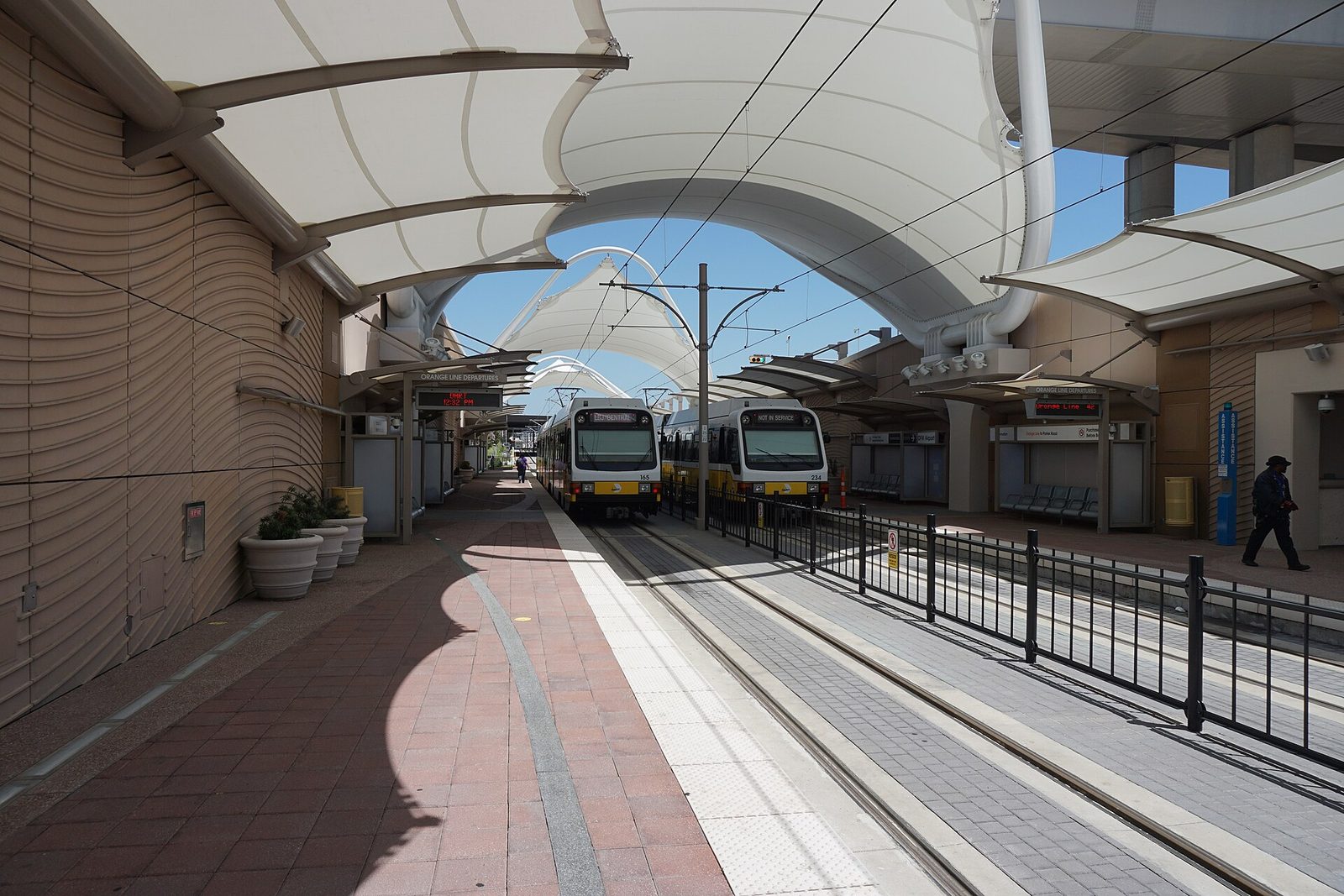
There are four real options and one that only looks like an option. Costs are per adult, checked September 2026.
| Option | Cost | Best for | Honest verdict |
|---|---|---|---|
| DART Orange Line from Terminal A Station | $3.00 on a 3-Hour Pass, or $6.00 for a Local Day Pass | Carry-on travelers heading downtown or to Uptown | The best value in Dallas ground transport by a wide margin. No luggage racks — that is the trade. |
| Rideshare or taxi | Varies sharply by demand and time of day | Groups, heavy bags, late arrivals, hotels off the rail line | The right answer more often than transit evangelists admit. Split three ways it is competitive. |
| TRE via the Terminal D shuttle | Covered by a Local pass to CentrePort; Regional beyond | Anyone continuing to Fort Worth | Sensible westbound, roundabout if you are going to downtown Dallas. |
| Rental car | Rental plus tolls plus city parking | Trips with suburbs, the Arboretum or day trips on the list | Pick it up only if the itinerary needs it. Parking it downtown is expensive. |
| Silver Line from Terminal B Station | Same fare as any Local service | Plano, Richardson, Addison, Carrollton | Not an option for downtown. See the next section before you board it. |
Budget roughly an hour each way on the train and check DART’s trip planner for the actual timetable on your day. The fare is the certainty here; the journey time is not, and it moves with the schedule and any construction in progress. Our wider guide to getting around Dallas covers what those passes buy you once you are in the city.
Orange Line or Silver Line: The Mistake That Costs an Hour
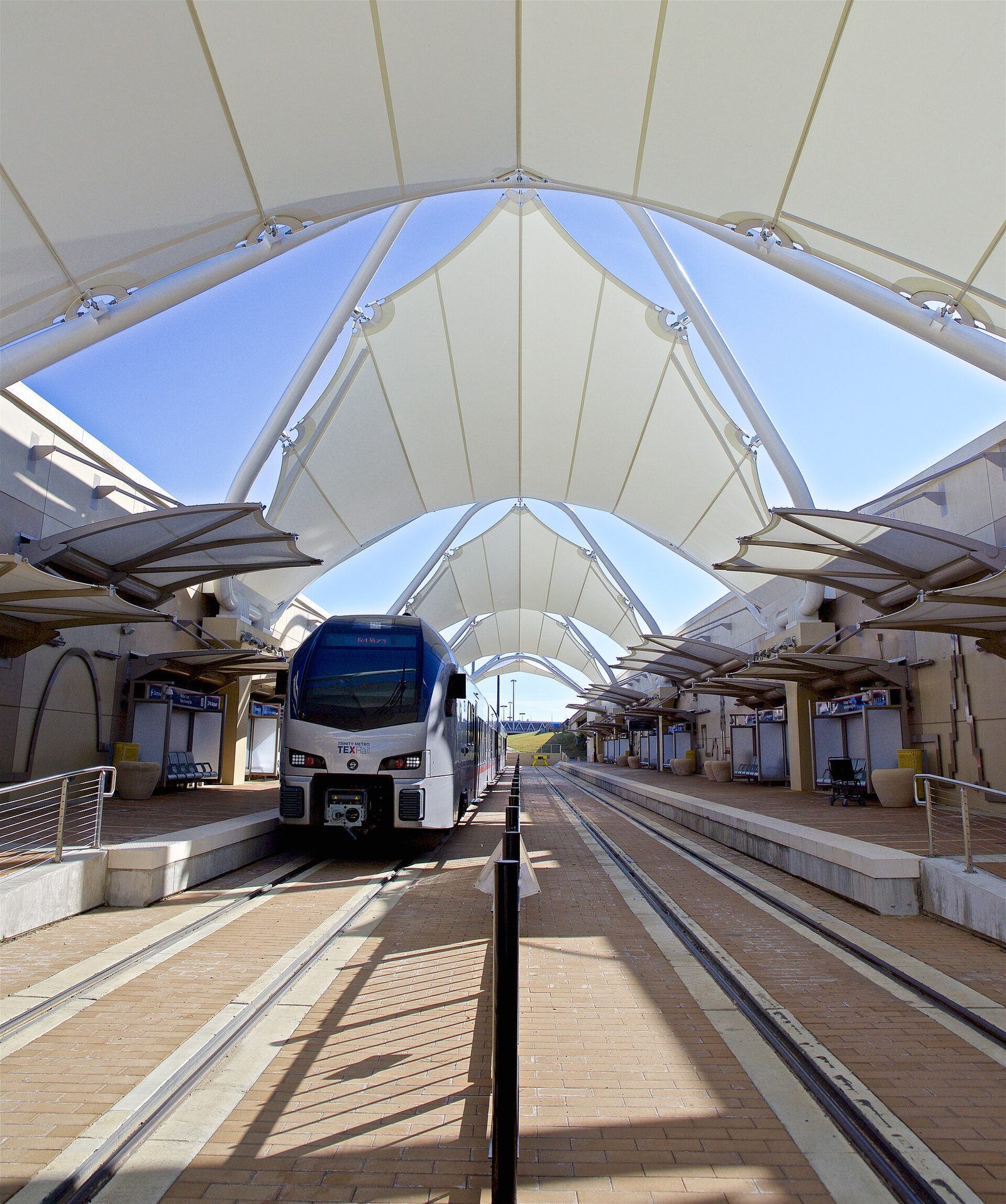
This is the single most useful paragraph on this page, so here it is plainly.
The Orange Line serves DFW Airport Terminal A Station, near Gate A10, and it runs to downtown Dallas. It connects Irving and Dallas at all times, and continues to Richardson and Plano during weekday peak hours.
The Silver Line serves DFW Airport Terminal B Station, near Gate B43, and it does not go to downtown Dallas at all. It runs to Cypress Waters, Carrollton, Addison, Richardson and Plano. It is a regional rail line for the northern suburbs, and it happens to terminate at an airport.
Both are trains. Both are at DFW. Both are covered by the same Local fare. A visitor who lands at Terminal B, sees a rail station, and boards the train sitting there will end up in Plano. That is an hour gone plus the cost of fixing it, and it is an entirely reasonable mistake to make because nothing at the platform shouts “wrong direction for tourists.”
There is one genuine upside to the Silver Line worth knowing: unlike DART’s light rail, it has overhead luggage racks and a dedicated luggage area. If your destination is genuinely in the northern suburbs, it is the more comfortable ride. For downtown, Uptown, Deep Ellum, the Arts District or anywhere a visitor usually stays, you want Terminal A and the Orange Line.
Skylink or Terminal Link: Which Shuttle Do You Need?
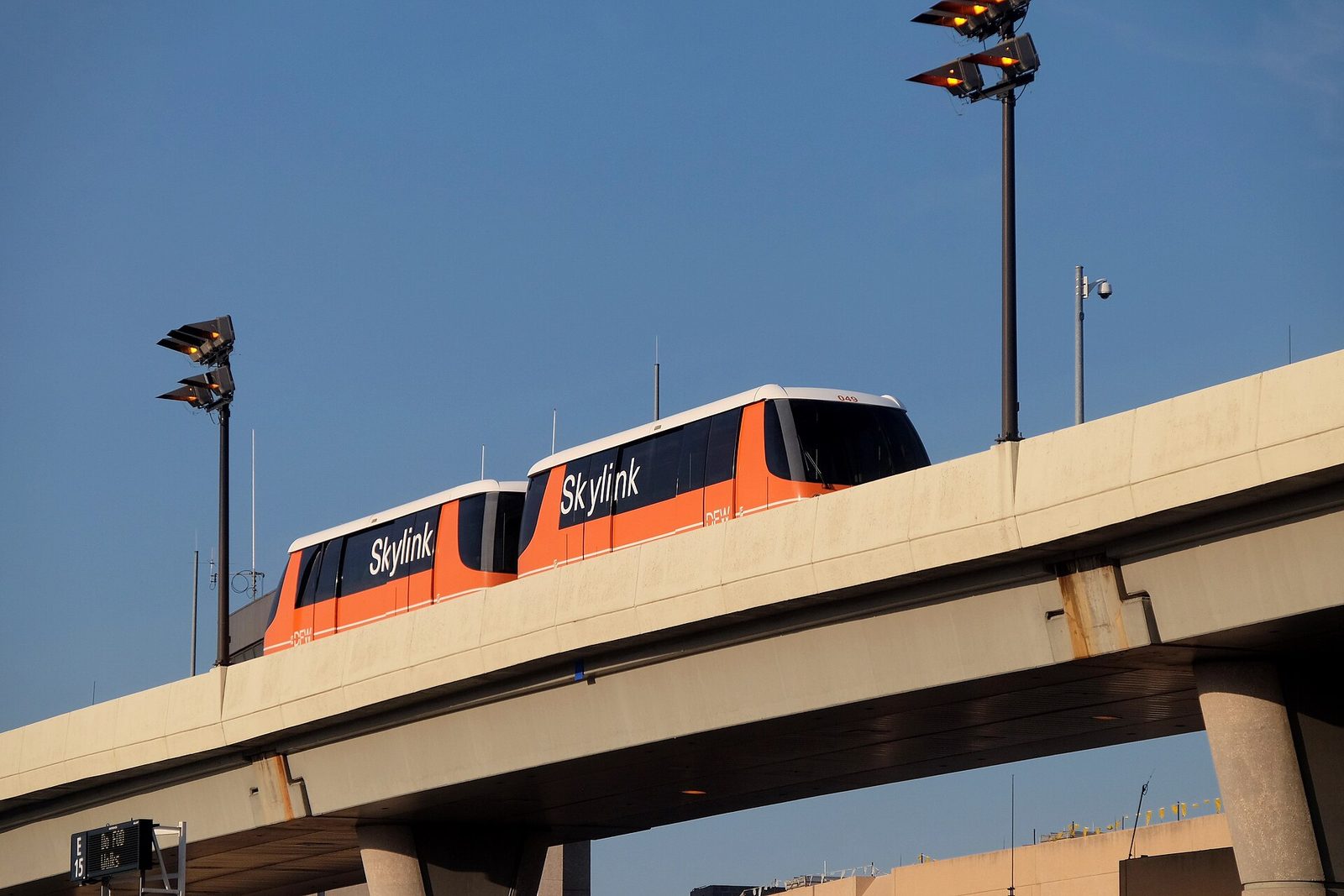
DFW runs two internal shuttle systems and they serve opposite purposes. Choosing wrong costs you a security queue.
Skylink is the airside people mover. It runs inside security, connecting all five terminals. If you have already cleared security and you are moving between gates, Skylink is fast and free and you never leave the secure area.
Terminal Link is the landside bus. It runs on the lower level, outside security, and it is also free. You need it when you are checking a bag, when you are heading to a specific terminal’s check-in desks, or when you are collecting luggage.
DART’s own guidance for arriving rail passengers is the clearest statement of the rule. Arriving at Terminal A or B with carry-on only, you clear security there and use Skylink to reach your departure terminal. Checking a bag, you take the free Terminal Link shuttle on the lower level to the terminal you are actually flying from. And crucially: “Accessing baggage claim carousels will take you out of the secure part of the terminal and will require you to use the Terminal Link shuttle.”
The practical failure mode is a connecting passenger who exits security to grab something, then discovers that getting back to a different terminal means a landside bus and a second trip through screening. If you are airside and staying airside, stay airside.
Getting From Love Field Into the City
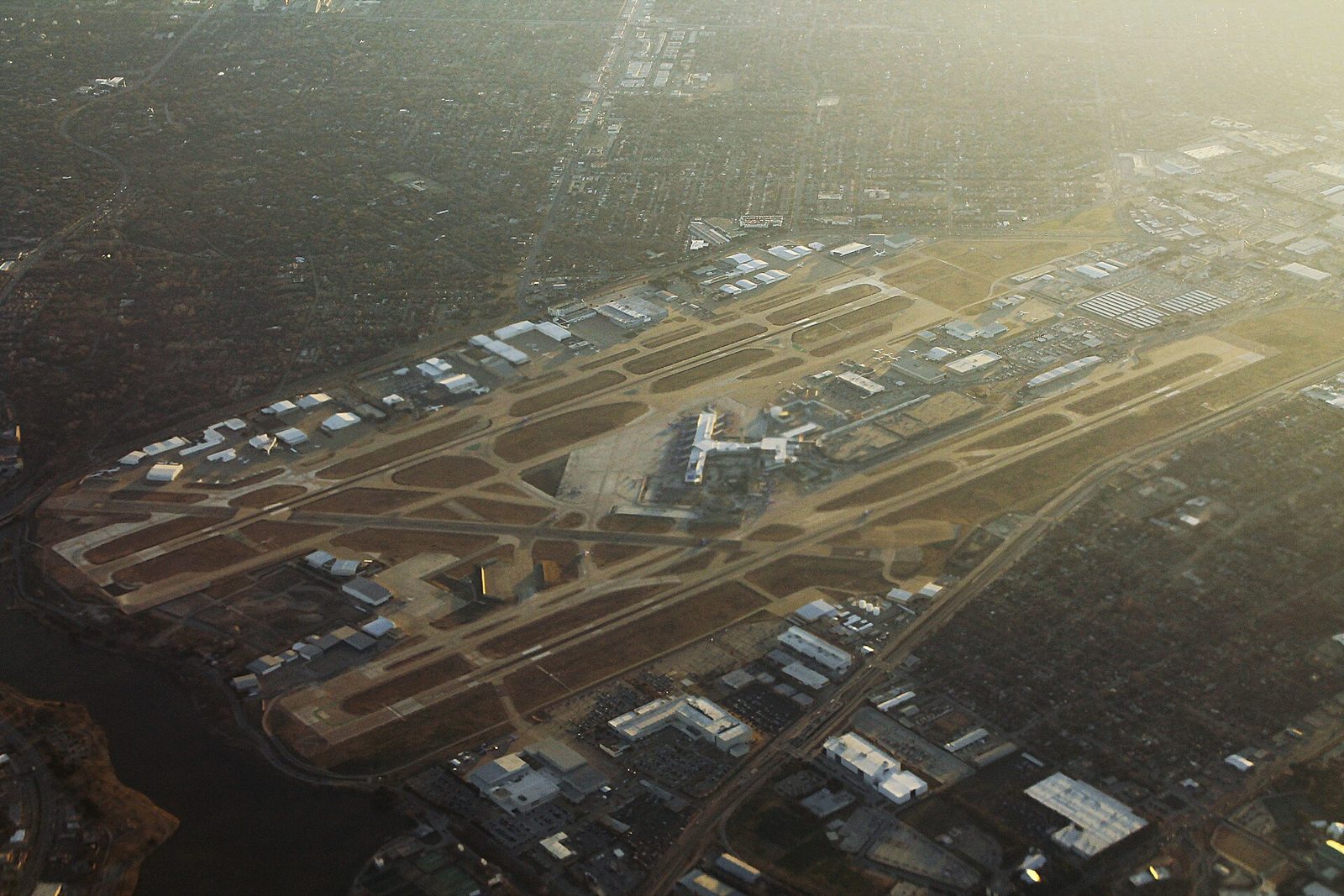
Love Field has no rail station of its own. What it has instead is a free bus, and almost nobody writes about it.
DART Bus Route 5, the Love Link, runs between Love Field and Inwood/Love Field Station, and riding it from the airport is free. There is no card reader at the airport stop because there is nothing to pay. The return leg, from the station to the airport, costs $2.50 as a single ride — exact change if you pay cash, or use a contactless card, a phone wallet or a GoPass Tap card. Buying several mobile tickets at once requires the GoPass app; one contactless card covers one person.
At Inwood/Love Field Station you pick up the Green or Orange Line. That means the genuine minimum cost of getting from Love Field to a downtown hotel is a $3.00 3-Hour Pass, because the bus leg costs nothing. There is no cheaper legitimate way into Dallas from either airport.
Finding the bus: the Love Link kiosk is inside Baggage Claim by door 2. Pickup is at the northwest end by Arrivals and Baggage Claim, and the bus collects from either far end of Ground Transportation on the lower level. Drop-off on the return journey is at the southeast side by Parking Garage A. If you are meeting someone, note that there is free public parking at Inwood/Love Field Station — a cheap alternative to circling the airport.
Rideshare and taxis at Love Field are straightforward by comparison with DFW, simply because there is one building and one set of curbs. Follow the signage from baggage claim to the designated pickup zone rather than stepping out of the nearest door — the app pin and the airport’s own zone are the same place, but the nearest door frequently is not. For a downtown hotel this is a short trip by any American airport standard, which is precisely why so many repeat visitors to Dallas book Love Field and never look at DFW again.
From Inwood/Love Field you can also reach DFW Airport directly, or connect onward to the DCTA A-train and the Trinity Railway Express. It is a better-connected station than its unglamorous setting suggests.
What Does Airport Ground Transport Cost?
Here is the comparison table nobody publishes, because it requires admitting that the cheapest option is often also the most annoying one.
| Route | Cheapest legitimate fare | What it involves |
|---|---|---|
| DFW to downtown Dallas | $3.00 (3-Hour Pass) | Orange Line from Terminal A Station. About an hour. No luggage racks. |
| DFW to downtown, whole day of travel | $6.00 (Local Day Pass) | Same train, plus unlimited onward rail, bus, streetcar and GoLink until 3am. |
| Love Field to downtown Dallas | $3.00 (3-Hour Pass) | Free Love Link bus, then Green or Orange Line. The bus leg costs nothing. |
| Downtown back to Love Field | $3.00, or $2.50 for the bus alone | The return bus leg is $2.50 if you are already at the station. |
| DFW to Fort Worth | $9.00 (Regional Day Pass) | TRE LINK shuttle from Terminal D, then the TRE west. |
| Either airport, taxi or rideshare | Market rate | No published flat fare. Varies by time, demand and destination. |
A note on that last row: DFW lists 19 licensed taxi operators and does not publish a flat rate to downtown, and rideshare pricing moves constantly. Anyone quoting you a precise taxi fare from DFW to downtown Dallas is guessing. Get the estimate in the app before you commit, and expect it to climb at peak arrival times.
Taxis, Rideshare and Shared Shuttles at DFW
Taxis queue at the lower level of Terminals A, B, C, D and E. A guest assistant manages the rank from 08:00 to midnight. After midnight the rank is unstaffed and you request service by calling +1-972-973-4061 — worth saving in your phone before a red-eye, because standing at an empty curb at 01:30 working out who to call is a bad first hour in a new city.
Rideshare, limousines, charter buses, courtesy hotel vehicles and shared-ride vans all operate from designated zones that are signposted inside each terminal. DFW handles these as separate categories with separate pickup points, so follow the signage for your specific service rather than walking to the taxi rank and hoping. The app pin is authoritative; the terminal signs confirm it.
Shared-ride shuttles are the middle option and they behave predictably: cheaper than a private car, slower because you are not the only stop, and best value when you are traveling solo to a mainstream hotel. For two or more people the arithmetic usually favors a single rideshare.
One more DFW-specific habit worth forming: agree a meeting point by terminal, level and door number, not by airport. “I’ll meet you at arrivals” is meaningless across five terminals spread over 26.9 square miles, and the cost of getting it wrong is a shuttle ride plus a phone call in a building where everyone’s signal is patchy. Terminal letter, lower level, door number. That is the whole protocol, and it removes the most common airport argument in North Texas.
Hotel courtesy vehicles are underused. If you have booked an airport-area hotel for a first night, check whether it runs a free shuttle before you pay for anything — many do, and the pickup zones are already built into the terminal layout.
Parking at the Two Airports: What We Can and Cannot Tell You
We are not going to print an airport parking rate we could not verify, so here is the state of play as of September 2026.
DFW operates a full tier structure — terminal parking closest to the doors, express lots further out, and remote lots with shuttles — with rates that vary by tier and by how long you stay. Love Field runs garages and surface lots on a similar principle at a smaller scale. Both publish current rates on their own sites, and both change them.
What we can tell you is the decision logic, which does not change:
- One or two nights: terminal or garage parking is usually worth the premium for the walking time it saves, particularly at DFW where the remote lots involve a real shuttle ride.
- Four nights or more: the remote and express lots start to win decisively, and the shuttle time is a rounding error against the saving.
- A week or more: compare the total against a rideshare in both directions before you drive at all. For a solo traveler it is frequently cheaper not to bring the car.
- Love Field specifically: the free public parking at Inwood/Love Field Station plus the free Love Link bus is a genuinely cheap park-and-ride, and almost nobody uses it that way.
Book online in advance where the airport offers it. Walk-up parking at either airport on a holiday weekend is the worst price available, and both airports fill.
Connecting Between DFW and Love Field
It happens more than you would think — a cheap inbound to one and a cheap outbound from the other — and it is not a trivial hop. The two airports sit on opposite sides of the city, roughly fourteen miles apart as the crow flies and considerably more by road.
By transit, it is genuinely doable: Orange Line from DFW Terminal A, ride to Inwood/Love Field Station, then the Love Link bus. All of it is covered by a single Local Day Pass at $6.00, and the last leg costs $2.50 or is included in your pass. Budget a generous hour and a half and do not attempt it with checked bags.
By road, take a rideshare and add a serious buffer for traffic. This is a cross-metroplex trip that passes through some of the region’s busiest corridors, and the difference between 11:00 and 17:00 is substantial.
The honest verdict: if a split-airport itinerary saves you less than about $100 per person, book both legs from the same airport. The transfer eats half a day and all of your goodwill.
Layovers: What Can You Actually Do?
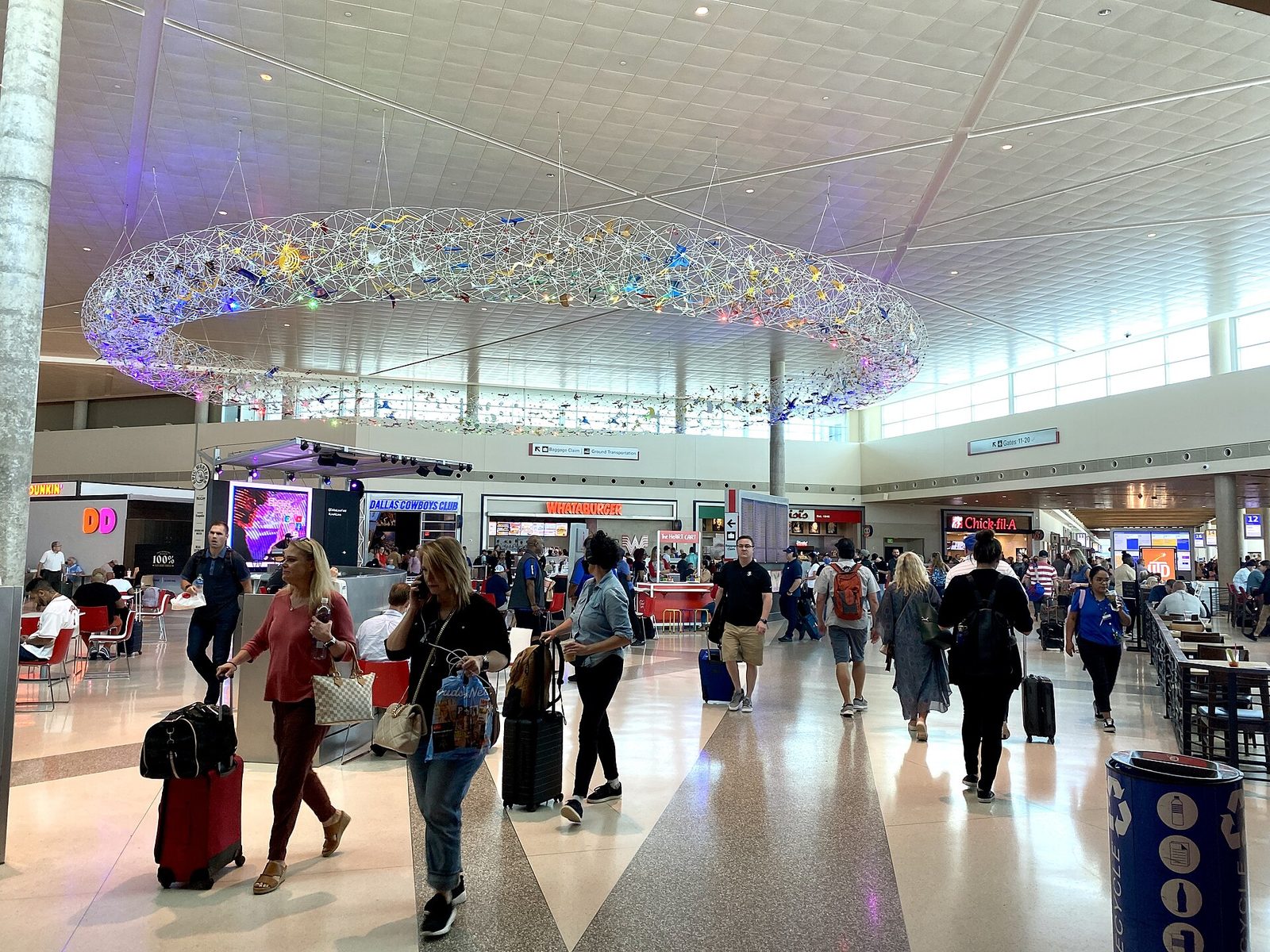
Short answer: less than the internet suggests. Here is the realistic version.
| Layover | Realistic plan | Leave the airport? |
|---|---|---|
| Under 2 hours | Go straight to your gate. Use Skylink if terminals change. | No |
| 2 to 4 hours | Eat properly, ride Skylink, find the quieter end of a concourse. | No |
| 4 to 6 hours | Still airside. The round trip to anything worth seeing eats the whole window. | No |
| 6 to 8 hours | Technically possible to reach downtown and return. Tight, stressful, and you will see one thing. | Only with carry-on and nerve |
| 8 hours or more | Orange Line to downtown, one museum or one meal, back with margin. | Yes |
| Overnight | Airport-area hotel with a courtesy shuttle, or a downtown hotel and the train. | Yes |
Two things sink layover plans in Dallas specifically. The first is re-clearing security at a very large airport at a busy hour. The second is that the city’s marquee sights keep awkward hours — the Sixth Floor Museum, the Dallas Museum of Art and the Nasher all close on Mondays and Tuesdays, so a Monday layover has fewer targets than the same layover on a Thursday. Our attractions guide lists the opening days for each, and the short-itinerary page has a half-day plan that works from a train station.
Late Arrivals and the Last Train
DART’s customer service line runs 05:00 to midnight daily, which is a fair guide to the shape of the service day but not a timetable. The last Orange Line departure from DFW and the last Love Link bus from Love Field are the two numbers that matter, and they are published per line and per direction on DART’s schedules.
Check them before you fly, not after you land. A delayed evening arrival is exactly when you least want to be researching bus timetables in an arrivals hall, and it is also when rideshare pricing is least forgiving.
The sensible late-arrival plan is simple: assume you will pay for a car, price it into the trip, and treat catching a train as an upside. Day passes stay valid until 3am the following morning, which helps if you land at 23:00 and want to move again early the next day on the same ticket — but it does not mean a train will be waiting.
If your flight lands after midnight at DFW, save the taxi dispatch number above. The rank is unstaffed at that hour and knowing this in advance turns a problem into a phone call.
Accessibility, Luggage and Traveling With Children
Luggage is the deciding factor for most arriving visitors, and it is badly under-reported. DART light rail — the Red, Blue, Green and Orange lines — has no luggage racks. None. You board into the level center section of the car with your cases and you manage them yourself for the whole journey; operators do not assist. The Silver Line from Terminal B is the exception, with overhead racks and a dedicated luggage area, but it goes to the northern suburbs rather than downtown.
So the rule is: carry-on only, take the Orange Line and enjoy the $3.00 fare. Checked bags, especially more than one each, take a car and stop agonizing about it. This is not a failure of planning, it is the right call.
On accessibility, DART’s level boarding is genuinely good — the center car of every light rail vehicle sits flush with the platform, so wheelchairs, mobility scooters and strollers roll straight on. Both airports provide wheelchair assistance on request through your airline, which should be arranged at booking rather than at the desk. Reduced DART fares at half price cover riders with disabilities and Medicare card holders.
With children, the calculation is about stamina rather than logistics. A DFW arrival, a Skylink ride, an hour on the Orange Line and a walk to the hotel is a long tail end to a flight. Love Field plus a car is kinder. Our family guide and the accommodation guide between them cover which hotel districts shorten that last leg most.
Getting to Fort Worth From the Airport
DFW sits between the two cities, which makes it a perfectly reasonable arrival airport for a Fort Worth trip.
The transit route is the TRE LINK shuttle bus from Terminal D to the Trinity Railway Express at CentrePort/DFW Airport Station, then the TRE west to Fort Worth T&P Station. The shuttle runs every 20 minutes on weekdays during peak periods and every 40 minutes off-peak and on Saturdays, so check which window your arrival falls into — a 40-minute headway with a flight delay is how people end up in a taxi anyway.
Fares: a Local pass covers the TRE only as far as CentrePort/DFW Airport Station. To continue to Fort Worth you need a Regional Day Pass at $9.00, which also covers everything else you might ride that day. Two one-way TRE tickets cost $12.00, so the pass is the obvious buy for any round trip.
Weekend TRE service is thinner than weekday service. If you are arriving on a Sunday, confirm the schedule before you plan around it.
Dallas Airports: Frequently Asked Questions
Is there a train from DFW Airport to downtown Dallas?
Yes. The DART Orange Line runs from DFW Airport Terminal A Station, near Gate A10, into downtown Dallas. A 3-Hour Pass costs $3.00 and a Local Day Pass costs $6.00. Budget about an hour and check the timetable on the day.
Does the Silver Line go to downtown Dallas?
No, and this catches people out. The Silver Line serves DFW Terminal B Station near Gate B43 and runs to Cypress Waters, Carrollton, Addison, Richardson and Plano. For downtown you need the Orange Line from Terminal A.
How much does it cost to get from Love Field to downtown Dallas?
As little as $3.00. The DART Love Link bus, Route 5, is free from the airport to Inwood/Love Field Station; from there a $3.00 3-Hour Pass covers the Green or Orange Line into the city. Returning, the bus leg costs $2.50.
Which is better, DFW or Love Field?
Love Field if you are flying domestically with light bags and staying near the center, because it is six miles out rather than twenty. DFW if you are arriving internationally, want maximum route choice, or are staying on the western side of the metroplex.
What is the difference between Skylink and Terminal Link?
Skylink is the automated people mover inside security, connecting all five DFW terminals airside. Terminal Link is the free bus on the lower level, outside security. Use Skylink if you have cleared security with carry-on only; use Terminal Link if you are checking or collecting bags.
Can I take luggage on the DART train from the airport?
You can, but light rail has no luggage racks. You keep your cases with you in the level center section and manage them yourself. The Silver Line from Terminal B does have racks and a luggage area, but it does not serve downtown. With more than a carry-on each, take a car.
How far apart are the two Dallas airports?
Roughly fourteen miles as the crow flies and a good deal more by road, on opposite sides of the city. Transferring between them takes about ninety minutes by transit on a $6.00 Local Day Pass, or a substantial rideshare fare by road.
Is a DFW layover long enough to see Dallas?
Not under six hours, realistically. Eight hours or more gives you time for the Orange Line into downtown, one museum or one good meal, and a comfortable return. Remember that several headline museums close Mondays and Tuesdays.
Where do taxis pick up at DFW?
On the lower level of Terminals A, B, C, D and E. A guest assistant manages the rank from 08:00 to midnight. After midnight, call +1-972-973-4061 to request service.
Do I need a car if I land at DFW?
Not necessarily. If you are staying downtown, in Uptown or near a rail station and traveling with carry-on luggage, the Orange Line plus occasional rideshares covers a typical visitor itinerary. You need a car if your plans include the Arboretum, White Rock Lake, an Arlington stadium or the suburbs.
Is there free parking near Dallas Love Field?
There is free public parking at Inwood/Love Field Station, the DART rail stop connected to the airport by the free Love Link bus. It is a genuinely cheap park-and-ride for anyone meeting an arriving passenger, and it is rarely mentioned anywhere.
The choice between DFW and Love Field changes considerably if you are travelling with a mobility device. Love Field is one compact terminal six miles from downtown with a free bus connection to the rail; DFW covers 26.9 square miles across five terminals, and reaching baggage claim takes you out of the secure area entirely. We compare the two properly in our accessible Dallas travel guide.
Travelling with a pet changes the terminal calculation. DFW lists relief areas inside security at Gates A29, B28, D18 and E31, with pre-security sites at several doors — but Terminal C currently has no post-security area listed at all and its outdoor site has been displaced by construction. The full gate-by-gate list is in our dog friendly Dallas guide.
For anyone travelling on business the choice sharpens further. Love Field sits seven miles from the convention centre and clears in minutes; DFW is roughly thirty minutes out but is the right airport for Las Colinas, Plano and Legacy West. The detail that catches experienced travellers is that the Orange Line reaches downtown from Terminal A while the Silver Line, from Terminal B, does not. Our Dallas business travel guide pairs each airport with each district.
Related Dallas Guides
- Getting Around Dallas — DART fares, parking, tolls and rideshare once you are in the city
- Dallas Travel Guide — the complete planning overview
- Where to Stay in Dallas — which districts are quickest from which airport
- Dallas Itineraries — including plans that work from a short layover
- Dallas Attractions — opening days, prices and honest verdicts
- Things to Do in Dallas — the master list
- Best Time to Visit Dallas — what each season does to an arrival day
- Dallas Neighborhoods — where the rail line actually helps
- Dallas With Kids — arriving with children and surviving it
- Where to Eat in Dallas — first-night dinner near the center
- Dallas Events — event weekends change airport and hotel pricing
- Free Things to Do in Dallas — including one genuinely free bus ride
Photo Credits
- American Airlines aircraft at DFW: photo by David Brooks from Port Chester, NY, USA, Wikimedia Commons (CC BY 2.0)
- DFW Airport Station: photo by Michael Barera, Wikimedia Commons (CC BY-SA 4.0)
- DFW Airport Terminal B station: photo by Danazar, Wikimedia Commons (CC BY-SA 4.0)
- DFW Skylink: photo by Lars Plougmann from United States, Wikimedia Commons (CC BY-SA 2.0)
- Dallas Love Field from the air: photo by formulanone from Huntsville, United States, Wikimedia Commons (CC BY-SA 2.0)
- Dallas Love Field main terminal: photo by EEJCC, Wikimedia Commons (CC BY-SA 4.0)
- Southwest Airlines Boeing 737: photo by Sixflashphoto, Wikimedia Commons (CC BY-SA 4.0)
- DFW Airport control tower (featured image): photo by Larry D. Moore, Wikimedia Commons (CC BY 4.0)
Sources
- DFW Airport — ground transportation
- DFW Airport — airport facts and figures
- DFW Airport — parking options and rates
- DART — rail to DFW Airport and Love Field
- DART — fares and passes
- DART — rail system, lines and schedules
- DART — airport trip planning
- Dallas Love Field — DART Love Link
- Dallas Love Field Airport
- GoPass — app, Tap card and ticketing
- Trinity Railway Express
- TSA — security screening guidance
- National Weather Service — Fort Worth/Dallas