Most lists of free things to do in Dallas are not lists of free things. They include attractions with free admission and $20 parking, museums that need a reserved ticket you did not know about, and parks that cost $25 in rideshare to reach. This guide gives the all-in number for each one — admission, parking, transit and any hidden requirement — so that “free” means free.
The good news is that Dallas has an unusually strong zero-cost tier for an American city. A major encyclopedic art museum charges nothing. A deck park over a freeway programmes fitness classes, music and children’s activities for free all year. The trolley that links the Arts District to the restaurant district costs nothing to ride. Several of these would be ticketed attractions elsewhere.
The catch is geography. Everything genuinely free sits in or near downtown, and everything outside that ring costs money to reach. Stay central and a zero-cost day is easy; stay by the airport and it is not. Prices and hours below were checked in September 2026 against each operator’s own site.
What “Free” Actually Costs in Dallas
The all-in view, which is the thing the list pages leave out.
| Attraction | Admission | Getting there | Real all-in cost |
|---|---|---|---|
| Dallas Museum of Art | Free — timed ticket required | Walk from downtown | $0 |
| Klyde Warren Park | Free | Walk, or free trolley | $0 |
| Dealey Plaza | Free, open always | Walk from downtown | $0 |
| Pioneer Plaza | Free, open always | Walk from downtown | $0 |
| AT&T Discovery District | Free | Walk from downtown | $0 |
| Dallas Farmers Market | Free to enter | Walk, 15 min from downtown | $0 |
| Nasher, Free First Saturday | Free, first Saturday only | Walk from downtown | $0, date-dependent |
| Laura W. Bush Native Texas Park | Free, sunrise to sundown | Rail plus a walk | $9 day pass |
| White Rock Lake | Free | Rideshare, no rail nearby | $30–50 round trip |
| Katy Trail | Free | Free trolley to Uptown, then walk | $0 |
| Fair Park grounds | Free outside the State Fair | Own DART rail station | $9 day pass |
Two lines in that table do most of the work. The downtown cluster is genuinely, completely free if you are staying downtown — no admission, no transit, no parking. And White Rock Lake, which appears on every free list, costs $30 to $50 in rideshare for a couple because it has no rail station. It is a lovely place and it is not a free thing to do unless you have a car and free parking.
What Are the Genuinely Free Things to Do in Dallas?
Ranked by how much they are worth rather than by how close they are, with the honest caveats attached.
The Dallas Museum of Art is the best free thing in the city and it is not close. A full encyclopedic collection — ancient Mediterranean through contemporary — at no charge, Wednesday to Sunday, 11:00 to 17:00. Budget two to three hours. Special exhibitions are ticketed separately, and there is one requirement people miss, covered in the next section.
Klyde Warren Park is free, open daily, and programmed relentlessly: fitness classes, chess, Piano in the Park, a running club and children’s programming rotate through the week, with food trucks and permanent dining partners on site. It takes over two million visitors a year and none of them pay to enter. It is built on a deck over the Woodall Rodgers Freeway, which is itself worth seeing.
Dealey Plaza is a free public park, open at all hours, and it is the reason a great many people come to Dallas. The grassy knoll, the triple underpass and the street markings are all there to walk. Many visitors get more out of thirty minutes in the plaza than out of the paid exhibit above it. Expect informal guides working the sidewalk with their own accounts; they are not affiliated with the museum and you need not engage.
Pioneer Plaza puts a bronze cattle drive — dozens of longhorn steers driven by three trail riders — across a downtown hillside beside the convention center. Free, open always, twenty minutes, and the most photographed sculpture installation in the city.
The AT&T Discovery District is a free downtown plaza with a very large outdoor media wall, seating and public art. Go after dark, when the wall is the entire point.
The Dallas Arts District itself is free to walk. It covers more than twenty square blocks and is the largest contiguous urban arts district in the United States, with the Meyerson Symphony Center and the Winspear Opera House alongside the museums. Walking Flora Street costs nothing and is one of the better architectural hours in Texas.
The Dallas Farmers Market charges nothing to enter. The indoor Market hall with its food stalls and shops runs daily 10:00 to 19:00 at 920 S. Harwood Street; the open-air Shed with the growers runs Saturday 09:00 to 17:00 and Sunday 10:00 to 17:00 only. Turning up on a Wednesday expecting farmers gets you a food hall instead.
Is the Dallas Museum of Art Really Free?
Yes, genuinely — with one procedural catch that turns people away at the door.
Every visitor needs a timed ticket, regardless of age. Every adult, every child, every infant. Admission costs nothing, but you must reserve a slot online in advance or collect one at the Guest Services desk on arrival. Walk-ups who assume free means turn-up-and-in are the most common wasted hour in Dallas, and no list page mentions it.
Hours are Wednesday to Sunday, 11:00 to 17:00. It is closed Monday and Tuesday, along with Thanksgiving, Christmas Day and New Year’s Day. Special exhibitions are ticketed separately and are free for members.
The house rules are stricter than most museums and worth knowing before you arrive with a toddler. No food or drink anywhere in the galleries at all — that includes sippy cups and baby bottles. Bags may not be worn on the back. Coat check at the Main Entrance is free, which solves both problems.
On accessibility, the museum is fully wheelchair accessible and keeps a limited number of loaner wheelchairs at Guest Services. If you need to be certain one is available, call ahead on 214-922-1803.
The all-in cost, if you are staying downtown: nothing. Walk there, reserve online, leave your coffee at the door. There is no parking charge to work around because there is no reason to drive.
Which Museums Have Free Days or Free Admission?
Three routes to a free museum in this city, and they are not equally well known.
Always free: the Dallas Museum of Art, with the timed-ticket requirement above, and the Crow Museum of Asian Art, a few minutes away in the Arts District, which is open to the public at no charge. Two serious collections, both free, both within a five-minute walk of each other, is a combination few American cities can match.
Free on a set date: the Nasher Sculpture Center runs Free First Saturdays, 11:00 to 17:00 on the first Saturday of each month, with family programming from 11:00 to 14:00. Outside that, admission is $10 for adults, $7 for seniors 65 and over and $5 for students or educators with ID, with under-12s free.
Free for certain visitors, any day: the Nasher admits military, first responders and SNAP EBT cardholders free. The George W. Bush Presidential Museum admits SMU students, staff and faculty with ID free, and K-12 teachers with a school ID free.
And the near-free category worth knowing: the Nasher gives $2 off to DART riders with valid proof of fare, which brings adult admission to $8. If you already hold a day pass for the transit you were using anyway, the museum effectively refunds part of it.
| Museum | Free when | Otherwise |
|---|---|---|
| Dallas Museum of Art | Always — timed ticket required | Special exhibitions ticketed |
| Crow Museum of Asian Art | Always | — |
| Nasher Sculpture Center | First Saturday, 11:00–17:00 | $10, or $8 with a DART fare |
| Nasher, specific groups | Military, first responders, SNAP EBT | — |
| Bush Museum, specific groups | SMU ID, K-12 teachers with school ID | $26 adult |
| Perot, Sixth Floor, aquarium | Never | $27, $27, $34.95 + tax |
What Can You Do Free Outdoors?
A great deal, provided you get the timing right — this is a city where an outdoor plan at 14:00 in August is a mistake rather than a bargain.
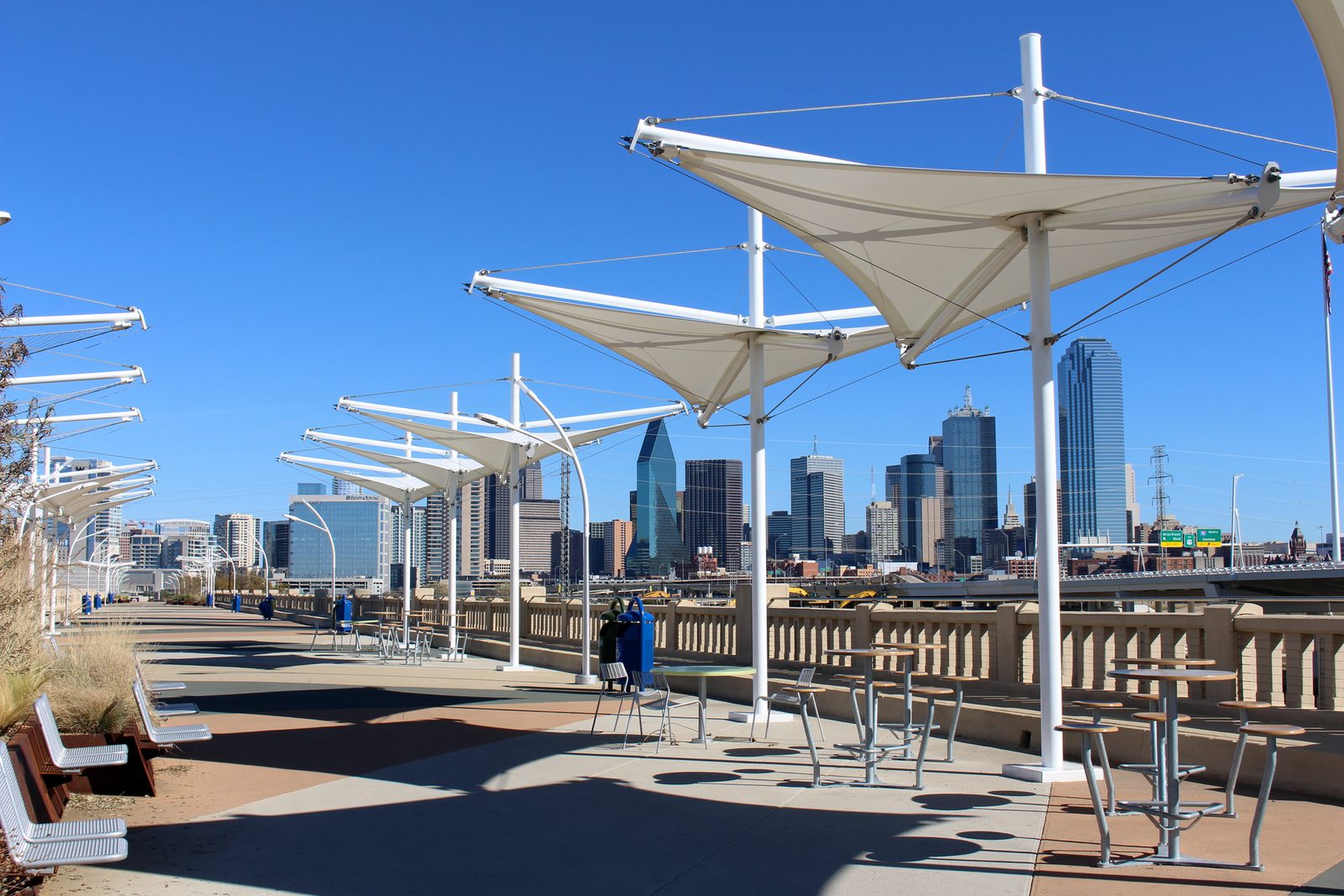
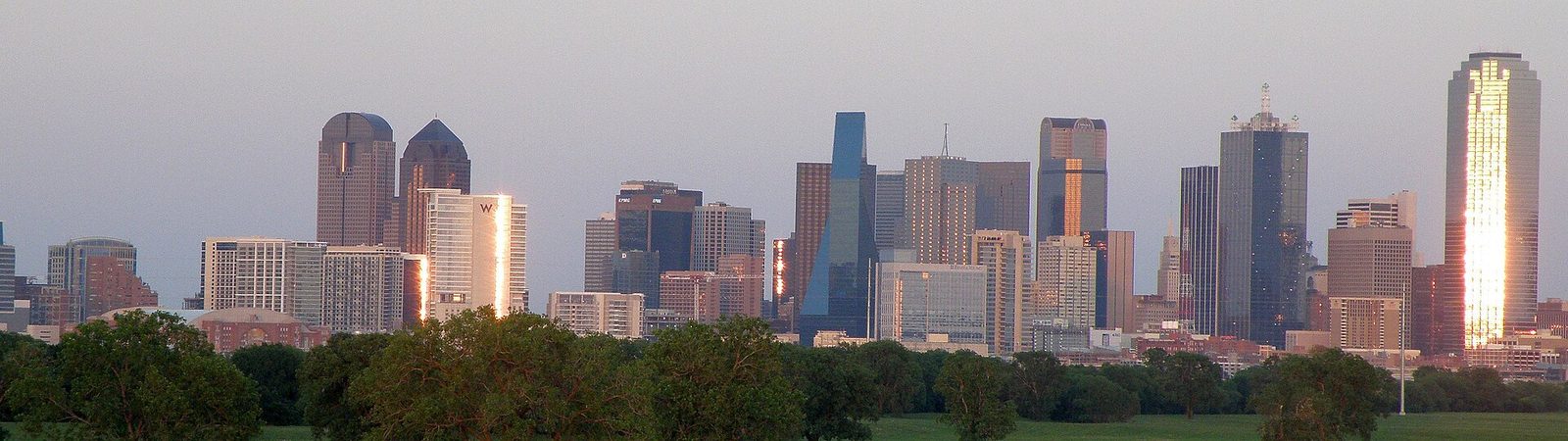
Walk the Trinity River bridges. West of downtown, the pedestrian crossings over the Trinity give you the skyline view that Reunion Tower charges for. It is the single best free substitute for a paid attraction in Dallas, and at sunset it is arguably better than the deck.
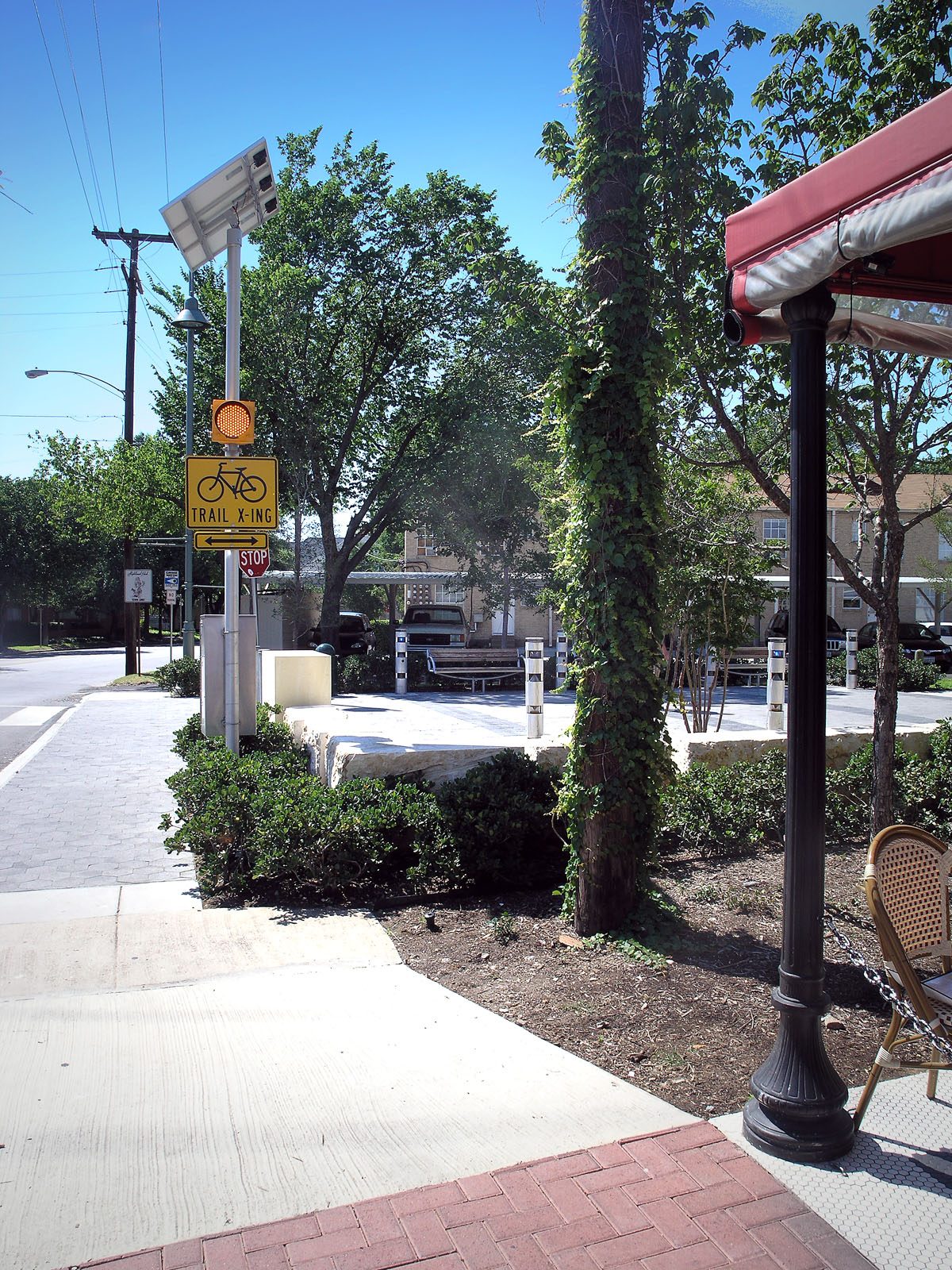
The Katy Trail is a rail-to-trail path running north through Uptown and Knox-Henderson, and it is where the city exercises. Reach it for free on the M-Line Trolley, walk as much of it as you like, and stop for a drink at one of the places that back onto it.
White Rock Lake has a loop trail of roughly nine miles ten minutes from downtown, and it is where Dallas actually spends its weekends. Be honest about the cost: there is no rail station, so it is $15 to $25 each way by rideshare unless you have a car.
Fair Park’s grounds are free to walk outside the State Fair, and the 1936 Texas Centennial Exposition architecture is one of the most remarkable things in the city. It has its own DART rail station. The timing rule is absolute: while the State Fair runs — September 25 to October 18 in 2026 — Fair Park is the fair, and you are paying admission.
The Laura W. Bush Native Texas Park is 15 acres of native landscape at the Bush Center, free to everyone, open sunrise to sundown year-round, with no museum ticket required. Almost nobody visits it without buying a museum ticket they did not need.
Timing, because it matters more here than the list does: average highs run 92.7°F in June, 96.9°F in July and 97.1°F in August. From June to early September, treat every outdoor item above as a before-11:00 activity. In October, at 79.5°F, all of them work all day.
How Do You Get Around for Free?
Partly for free, and the part that is free is the useful part.
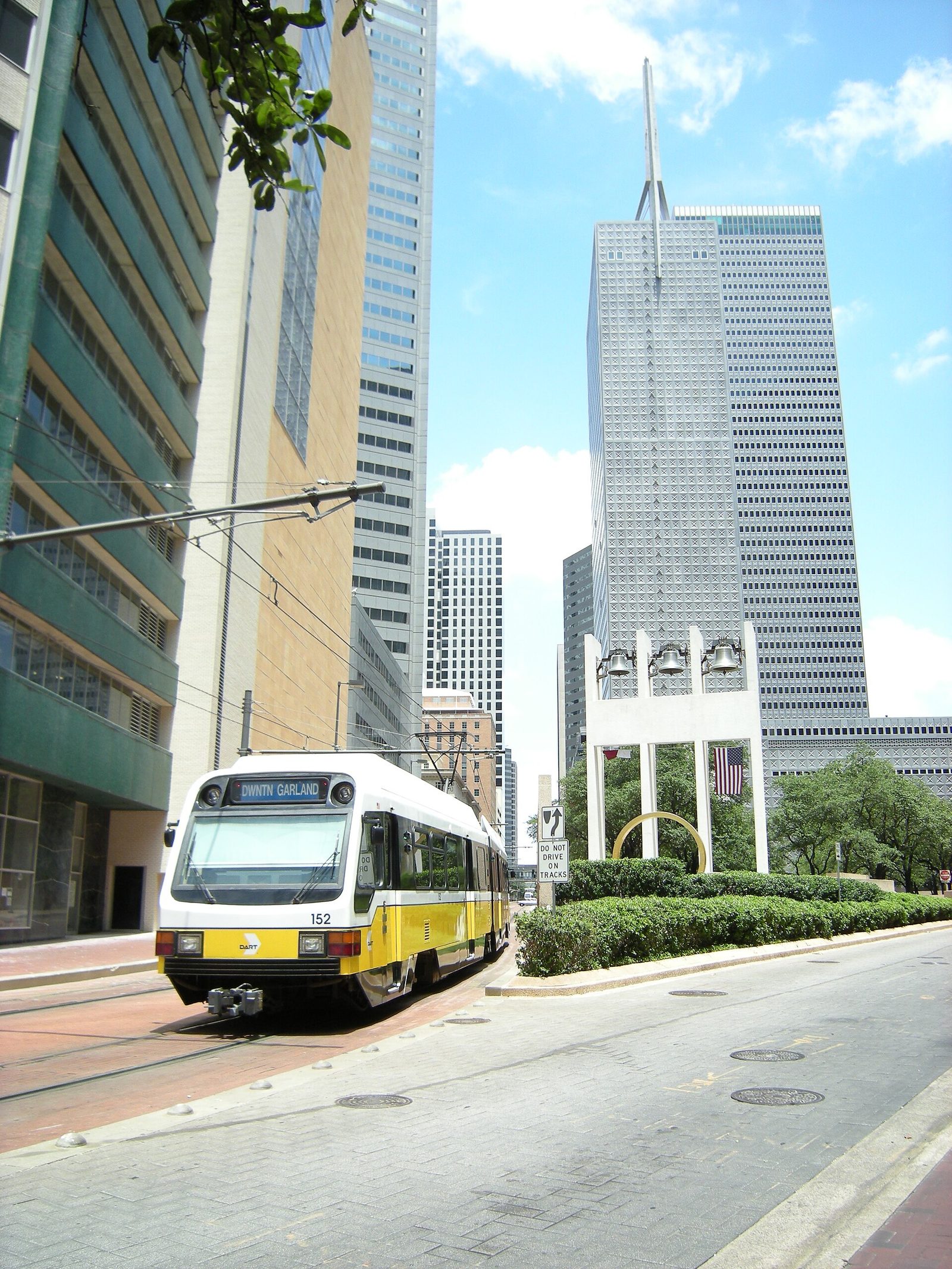
The M-Line Trolley costs nothing. It is sponsor-supported with donations optional, and it links the Arts District, downtown, Klyde Warren Park, Uptown and West Village — which is to say it connects the free museum to the free park to the restaurant district at no charge. It meets the DART rail network at CityPlace/Uptown Station.
Walking covers more than you think. The Arts District to Klyde Warren Park is seven minutes. Downtown to the West End and Dealey Plaza is twelve. Downtown to Deep Ellum is fifteen. Pioneer Plaza and the AT&T Discovery District are both downtown. That is an entire day’s sightseeing on foot.
Where it stops being free: a DART Regional Day Pass is $9.00, or $4.50 reduced, and it is what you need for Fair Park, the Dallas Zoo, the Bush Center and either airport. The pass stays valid until 03:00 the following morning, so one purchase covers a long day. If you will travel only on DART’s own services, the cheaper Local Pass is the better buy — check the current fare page.
The practical upshot: a downtown-based visitor can do a complete day of free sightseeing without spending anything on transport at all. Add $9.00 and the range extends to Fair Park and the Bush Center’s free park. Stay outside the core and every free thing acquires a $15 to $25 rideshare attached to it, which is the hidden cost the list pages never state.
What Is Free for Families With Kids?
More than you would expect, and the best of it is not marketed at children at all.
Klyde Warren Park is the anchor. Free children’s programming runs on a rotating calendar, there is space to run, the food trucks solve lunch cheaply, and it sits between two museums so it works as a release valve rather than a destination. It is the single most useful free thing in Dallas for a family.
The Dallas Museum of Art is free for children too — but remember that every child and every infant needs their own timed ticket, and that no food or drink is permitted in the galleries, including sippy cups and baby bottles. Use the free coat check at the Main Entrance.
The Nasher’s Free First Saturdays run family programming from 11:00 to 14:00 within the free 11:00 to 17:00 window, which is the best-value family morning on the Dallas calendar.
Pioneer Plaza works surprisingly well with younger children: it is outdoors, it takes twenty minutes, the sculptures are life-sized cattle and children can walk among them.
What is honestly not free for families: the zoo, from $18 with under-2s free; the Perot Museum at $17 for youth aged 2 to 12 and $27 for adults, with Lot B parking at $15 per vehicle; and the Dallas World Aquarium at $24.95 plus tax for children aged 3 to 12. All three are good and none of them belong on a free list.
What Is Free Indoors When It Rains or Hits 100°F?
The question that matters for a third of the year, and Dallas answers it better than most cities.
The Dallas Museum of Art is the main answer: free, large enough to absorb three hours, air-conditioned, and open Wednesday to Sunday 11:00 to 17:00. The Crow Museum of Asian Art is the second, also free, a few minutes away.
The Dallas Farmers Market hall is free to enter, indoors, and open daily 10:00 to 19:00. It is a genuine option on a wet afternoon and it does not require you to buy anything.
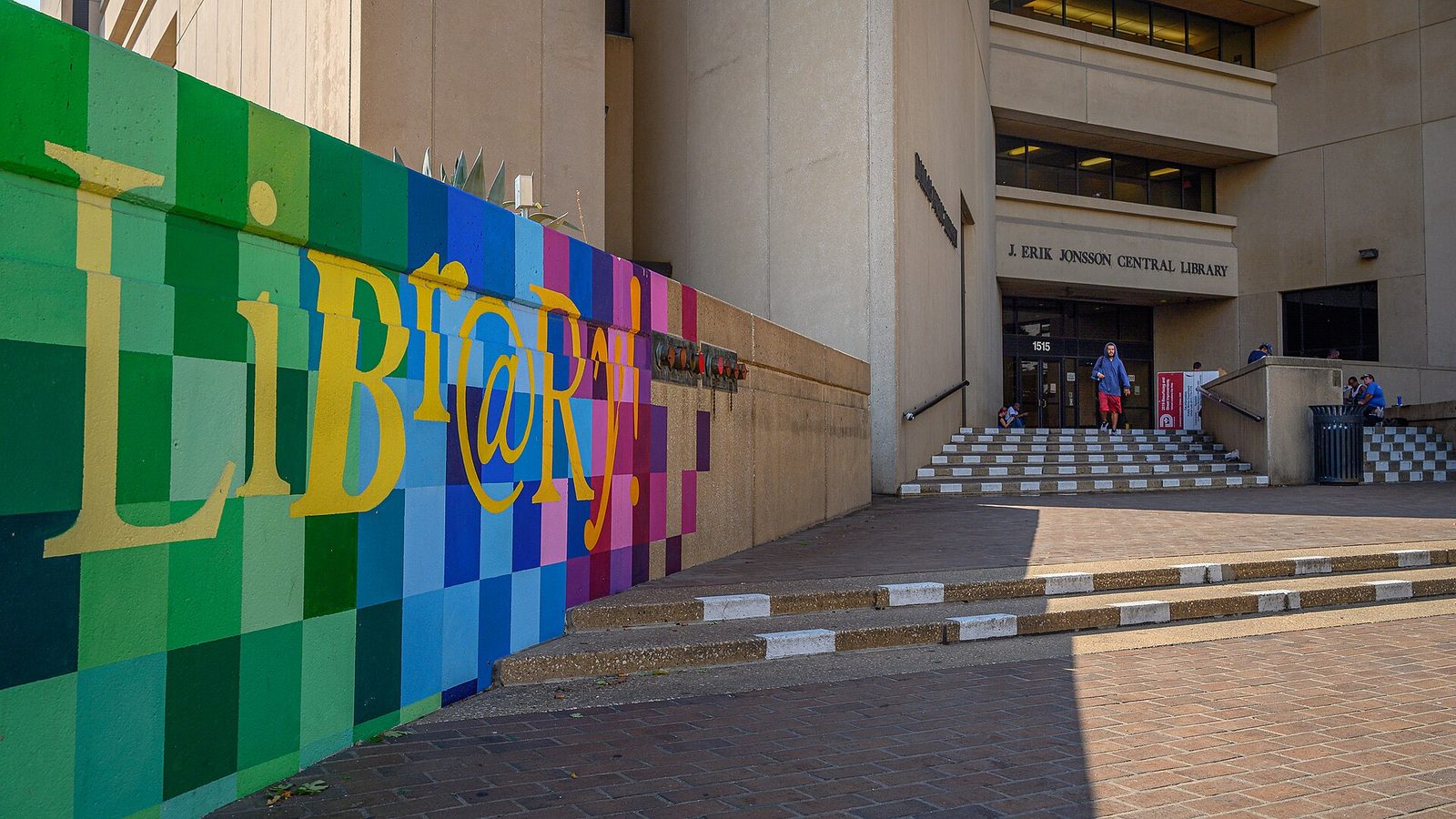
The J. Erik Jonsson Central Library downtown is free to walk into, air-conditioned and open to the public, with a rotating programme of exhibitions and one of the better quiet hours available in the city centre at no cost.
The Arts District’s public buildings — the lobbies and public spaces of the performance venues, the walkways between them — give you an hour of architecture under cover between museums.
The seasonal context: October is the wettest month at 4.79 inches, and July and August are the driest at 2.54 and 2.31 inches. Texas rain generally arrives hard and clears fast rather than settling in, so a two-hour museum visit frequently outlasts it. Heat is the harder constraint, and the answer is the same: the free indoor tier is where a July afternoon belongs.
What a wet day genuinely costs you is the free outdoor tier — Dealey Plaza, Pioneer Plaza, Klyde Warren Park, the Trinity bridges — which is where a zero-cost Dallas day gets most of its value. Budget for a paid museum as a fallback if the forecast is bad, because a rained-out free day is not free.
Can You Do a Whole Free Day in Dallas?
Yes, and it is a genuinely good day rather than a compromise. Here it is, hour by hour, assuming a downtown hotel.
| Time | What | Cost |
|---|---|---|
| 08:30 | Walk to Dealey Plaza; the knoll, the underpass, the markings | $0 |
| 09:30 | Walk to Pioneer Plaza for the bronze cattle drive | $0 |
| 10:15 | Walk the Trinity bridges for the skyline view | $0 |
| 11:15 | Dallas Museum of Art, timed ticket reserved in advance | $0 |
| 13:45 | Crow Museum of Asian Art, five minutes away | $0 |
| 15:00 | Klyde Warren Park — programming, shade, a sit down | $0 |
| 16:30 | Free M-Line Trolley north to Uptown and the Katy Trail | $0 |
| 19:30 | AT&T Discovery District after dark for the media wall | $0 |
Total admission and transport: nothing. You will want to eat, and that is where the money goes — but the Dallas Farmers Market hall, the Klyde Warren food trucks and a barbecue counter in Deep Ellum all feed two people well for under $50 between them.
Two adjustments. On a Monday or Tuesday, replace the DMA and the Nasher, which are closed, with Fair Park’s grounds via its rail station and a longer walk at White Rock Lake — though the latter adds a rideshare. In July or August, front-load everything outdoors before 11:00 and spend the middle of the day inside the DMA.
What Looks Free But Is Not?
The section every other list omits. These appear on free-things-to-do pages and are not free.
| Frequently listed as free | What it actually costs |
|---|---|
| White Rock Lake | Free to enter; $30–50 round trip by rideshare with no rail nearby |
| Dallas Arboretum grounds | Ticketed, priced by date through a calendar, no flat rate |
| Fair Park during the State Fair | Admission, plus coupons for all food and rides |
| “Free” museum days without checking | Only the Nasher’s first Saturday is reliably free |
| Reunion Tower observation deck | Ticketed by date; the free bridges beat it at midday |
| Anything with “free admission, paid parking” | $10–20 a visit downtown, $15 at the Perot’s own lot |
| Free outdoor events in July and August | Free, but frequently unpleasant at 97.1°F |
The pattern is consistent: in Dallas, the cost of a free attraction is almost always the cost of reaching it. That is why the downtown cluster is the genuinely free tier and everything beyond it carries a fare, and why “free things to do” lists that ignore geography are not much use to a visitor without a car.
One more that deserves naming: free-admission attractions with mandatory reservations. The Dallas Museum of Art is the honest version of this — the ticket costs nothing and the requirement is clearly stated. Watch for anything that advertises free entry and then requires a booking fee, which is a different thing entirely.
What Free Architecture Is Worth Walking Past?
An underrated free category, because Dallas built seriously in the twentieth century and none of it charges admission.
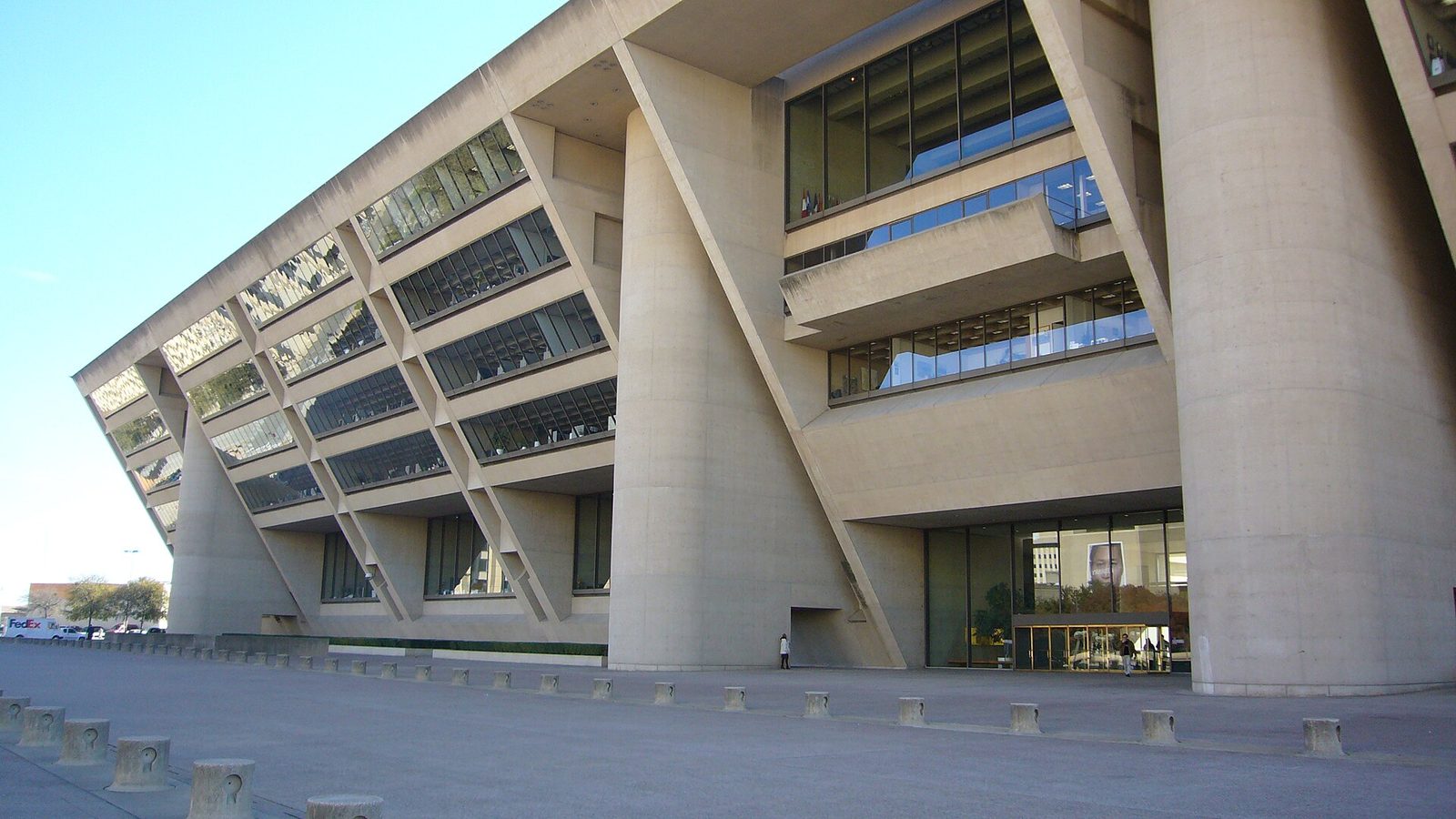
Dallas City Hall is I. M. Pei’s inverted pyramid, a vast cantilevered slab of concrete leaning out over a plaza. It is one of the more confident pieces of civic architecture in the United States and you can stand in front of it for nothing. The plaza in front is a public space.
The Dallas Arts District’s buildings are a free architectural tour in themselves. Renzo Piano designed the Nasher, whose garden you can glimpse from Flora Street even without a ticket. Norman Foster designed the Winspear Opera House. I. M. Pei designed the Meyerson Symphony Center. Walking that street takes twenty minutes and puts you past three Pritzker Prize winners’ work without opening your wallet.
The Perot Museum’s exterior — a cube with an escalator running up the outside of it — is worth a look even if you are not paying the $27 to go in. It sits at the northern edge of downtown near Klyde Warren Park, so it costs you nothing to walk past on the way somewhere else.
Fair Park’s 1936 exposition architecture is the largest intact collection of art deco exposition buildings anywhere, and the grounds are free to walk outside the State Fair. Its own DART rail station means a $9.00 day pass covers the trip. In January, with nobody there, it is one of the quiet highlights of the city.
Reunion Tower from the outside is free, and the ball of lights on top is a landmark you will see from everywhere. Going up costs money and is priced by date. Looking at it does not.
How Do You Eat Cheaply on a Free Day?
Food is where a zero-cost day stops being zero-cost, so it is worth planning rather than improvising.
The Dallas Farmers Market hall is free to enter, open daily 10:00 to 19:00, and its food stalls will feed two people for $20 to $30. It is a fifteen-minute walk from the downtown core and it doubles as your indoor fallback if the weather turns.
Klyde Warren Park’s food trucks rotate, sit in the middle of the free-attraction cluster, and let you eat outdoors between museums without moving. Prices are food-truck prices rather than park-concession prices, which is not always true of a city-centre park.
Barbecue by the pound in Deep Ellum is the best value proper meal in Dallas: two people sharing three-quarters of a pound of meat and two sides eat extremely well for under $50 total. Go at lunch rather than dinner — the meat is cooked once a day and the good cuts go first.
Old-line Tex-Mex runs $20 to $30 a head including a drink, which is the cheapest sit-down dinner in the city that is also genuinely worth eating. The good rooms are in Oak Lawn, Oak Cliff and the older residential neighborhoods rather than on a downtown hotel block.
The lever that saves the most money is lunch. Serious Dallas kitchens run real midday menus at $20 to $28 where dinner is $70, a legacy of the city’s business-lunch culture. Eating your good meal at noon and something casual at night can halve a day’s food budget without lowering the quality at all. Our Dallas restaurant guide has the full picture by district and price band.
How Accessible Are the Free Attractions?
Generally well, and the free tier is flatter and easier than the paid one.
The Dallas Museum of Art is fully wheelchair accessible with a limited number of loaner wheelchairs at Guest Services — call 214-922-1803 ahead to be certain. Klyde Warren Park is a purpose-built modern deck park, entirely level and step-free. The Arts District is flat, paved and compact: the walk from the museum to the Nasher to the park is about twelve minutes with no hills.
Dealey Plaza is a public park with paved paths and gentle slopes, though the grassy knoll is grass and the sidewalks around it are busy. Pioneer Plaza is built on a hillside with paths running through the sculpture, so some of it involves gradient.
The Laura W. Bush Native Texas Park is a 15-acre native landscape with trails; it is free but it is a park rather than a paved plaza, so check conditions if that matters to you. The Bush Center itself lends wheelchairs free from the Box Office, but they may not leave the museum area.
On transit, DART light rail uses platform-level boarding into the centre section of each vehicle, which is step-free with extra floor space. That makes the $9.00 day-pass extensions to Fair Park and the Bush Center genuinely workable.
Frequently Asked Questions About Free Things to Do in Dallas
What is the best free thing to do in Dallas?
The Dallas Museum of Art, without much competition — a full encyclopedic collection at no charge, Wednesday to Sunday, 11:00 to 17:00. Reserve a timed ticket for every person in your party, including children and infants, because free admission still requires one.
Is Klyde Warren Park free?
Entirely. There is no admission and most of the programming — fitness classes, chess, Piano in the Park, the running club, children’s activities — is free as well. The food trucks and dining partners cost money, and nothing obliges you to use them.
Are there free museums in Dallas?
Two that are always free: the Dallas Museum of Art, with a timed ticket, and the Crow Museum of Asian Art. One that is free on a set date: the Nasher Sculpture Center on Free First Saturdays, 11:00 to 17:00. The Perot, the Sixth Floor Museum and the Dallas World Aquarium are never free.
Can you visit Dealey Plaza for free?
Yes. The plaza is a public park, open at all hours, and walking the knoll, the triple underpass and the street markings costs nothing. Only the Sixth Floor Museum inside the former Texas School Book Depository is ticketed, at $27 for an adult with last entry at 16:15.
How do you get around Dallas for free?
The M-Line Trolley costs nothing and links the Arts District, downtown, Klyde Warren Park, Uptown and West Village. Beyond that, walking covers the whole downtown cluster: seven minutes from the Arts District to the park, twelve to Dealey Plaza, fifteen to Deep Ellum.
Is there anything free to do in Dallas with kids?
Klyde Warren Park is the best of it — free programming, space to run and cheap food trucks. Add the Dallas Museum of Art, free for children with their own timed ticket, the Nasher’s Free First Saturdays with family programming from 11:00 to 14:00, and Pioneer Plaza, which is outdoors and takes twenty minutes.
Is the Dallas Arboretum free?
No. Admission is sold through a dated ticket calendar, the price varies by date and by whichever festival is running, and no flat rate is published. It appears on free lists regularly and it does not belong there. The free equivalent is White Rock Lake, on whose shore the Arboretum sits — though reaching the lake costs $15 to $25 each way by rideshare.
What free things are open on a Monday in Dallas?
Dealey Plaza, Pioneer Plaza, Klyde Warren Park, the AT&T Discovery District, the Trinity bridges, the Katy Trail, White Rock Lake, Fair Park’s grounds and the Laura W. Bush Native Texas Park — all of which are outdoors and never close. What is shut on Mondays is the free indoor tier: the Dallas Museum of Art and the Nasher are both closed Monday and Tuesday.
Families get more out of this free tier than anyone, because it is what makes a one-paid-attraction-a-day rhythm affordable — Klyde Warren Park’s playground and splash area, the free trolley, Pioneer Plaza and the Nasher’s Free First Saturdays with family programming from 11:00 to 14:00. Our guide to things to do in Dallas with kids sets them against the paid attractions age by age.
Several of the city’s best museums belong on this list. The Dallas Museum of Art charges nothing for general admission, the Crow Museum of Asian Art has always been free, the Nasher opens free on First Saturdays and the Meadows is free after 5pm on Thursdays. Our Dallas museums guide has the timings and the catches.
Almost every good outdoor space in this city is free, and several of them are better than the ticketed attractions nearby. Klyde Warren Park, the Katy Trail, the nine-mile White Rock Lake loop and the Ronald Kirk Bridge cost nothing at all. Our outdoor guide to Dallas rates each of them on shade, water and surface, and gives the hours it is actually safe to be out.
The history is where free Dallas is strongest. Dealey Plaza, the JFK Memorial, Pioneer Plaza, Founder’s Plaza, Freedman’s Cemetery Memorial and the whole art deco ensemble at Fair Park cost nothing at all. Our history guide routes them into walks and says which ones reward twenty minutes and which reward an hour.
Free is only half the picture — the other half is knowing which paid things are worth it and what the taxes quietly add. Our Dallas on a budget guide costs out three full days from published prices, stacks the free museum days into a single week, and explains where the CityPASS math works and where it does not.
Several of the best free things on this page are also the best date in the city, which is one of Dallas’s genuine advantages. A free museum, a free trolley, a free deck park and a free skyline sunset add up to a weekend for two that costs about seventy-five dollars all in. We do that arithmetic properly in our guide to date ideas and romantic weekends in Dallas.
The holiday season adds several more to this list without adding to the bill. The Dallas Holiday Parade draws a reported 450,000 people to the downtown streets and costs nothing to watch, Deck the Plaza runs free music and a tree lighting, and the M-Line Trolley keeps running free every day of the year. We cover the free half of the season in our guide to Christmas in Dallas.
Two of the most significant free sites in Dallas sit within a couple of blocks of each other in the West End: Dealey Plaza, which is open public space with no admission and no opening hours, and the John F. Kennedy Memorial, Philip Johnson’s roofless cenotaph paid for by public subscription. Our Sixth Floor Museum visitor guide covers both alongside the ticketed museum.
Come December the free list gets noticeably longer. Highland Park and Swiss Avenue put on residential light displays that hold their own against anything charging admission, the downtown skyline is lit every night at no cost to anyone looking at it, and Deck the Plaza runs free music, a tree lighting and fireworks. The full breakdown of what costs nothing and what does not is in our guide to Christmas lights in Dallas.
Even at a ticketed event there is a free layer if you know where it is. At the State Fair, coupons are only required for food, rides and games, which means the exhibition halls, the livestock areas and Fair Park’s 1936 art deco architecture all come with the gate ticket, and chocolate milk is free in the GO TEXAN Pavilion. More in our guide to the State Fair of Texas on a budget.
The free list gets stronger after dark. The M-Line Trolley costs nothing 365 days a year, Klyde Warren Park is free to enter and programmes into the evening, and the Ronald Kirk Bridge gives you the lit downtown skyline from a traffic-free pedestrian deck. A genuinely good Dallas evening can cost a $6.00 day pass and nothing else — see our guide to Dallas at night.
Two of the best free things in Dallas are indoors and in the same street. The Dallas Museum of Art is free, though every person needs a timed ticket, and the Crow Museum of Asian Art is free year-round a couple of doors along Flora Street. Add the Nasher at $8 with proof of a DART fare and you have three serious collections for eight dollars — see our guide to indoor Dallas.
Related Dallas Guides
- Best Dallas Attractions — what the paid sites cost and whether each one earns the money.
- Dallas Itineraries — full day plans, including the transit legs that decide whether a free day stays free.
- Best Dallas Neighborhoods — timed walking routes through the districts where the free attractions cluster.
- Best Time to Visit Dallas — the months when the free outdoor tier is usable all day rather than before 11:00.
- Dallas Events and Festivals — including the free year-round programming at Klyde Warren Park and the Nasher.
- Dallas Travel Guide — trip length, budgets and the wider planning frame.
- Things to Do in Dallas — the full range, paid and free.
Photo Credits
- Thanks-Giving Square: photo by Joe Mabel, Wikimedia Commons (CC BY-SA 3.0)
- Katy Trail, Dallas: photo by Drumguy8800 at English Wikipedia, Wikimedia Commons (CC BY-SA 3.0)
- Thanks-Giving Square and DART: photo by Joe Mabel, Wikimedia Commons (CC BY-SA 3.0)
- Dallas Public Library: photo by Shiva Shenoy from Flower Mound, United States, Wikimedia Commons (CC BY 2.0)
- Trinity River Greenbelt Park: photo by Cordphaeton, Wikimedia Commons (CC BY-SA 3.0)
- Dallas City Hall: photo by Kent Wang, Wikimedia Commons (CC BY-SA 2.0)
- Ronald Kirk Pedestrian Bridge (featured image): photo by IcedCowboyCoffee, Wikimedia Commons (CC0)
Sources
- Dallas Museum of Art — Free Admission, Timed Tickets and House Rules
- Nasher Sculpture Center — Free First Saturdays and DART Discount
- Klyde Warren Park — Free Programming and Visitor FAQs
- Dallas Farmers Market — The Shed and The Market Hours
- George W. Bush Presidential Center — Native Texas Park and Admission
- The Sixth Floor Museum — Admission and Last Entry
- Perot Museum — Admission and Parking Rates
- Dallas World Aquarium — Prices
- Dallas Zoo — Tickets
- Dallas Arboretum — Date-Based Ticketing
- Reunion Tower — Date-Based Ticketing
- DART — Fares and Passes
- McKinney Avenue Transit Authority — Free M-Line Trolley
- State Fair of Texas — Fair Park Dates and Admission
- Climate of Dallas — monthly temperature and rainfall averages