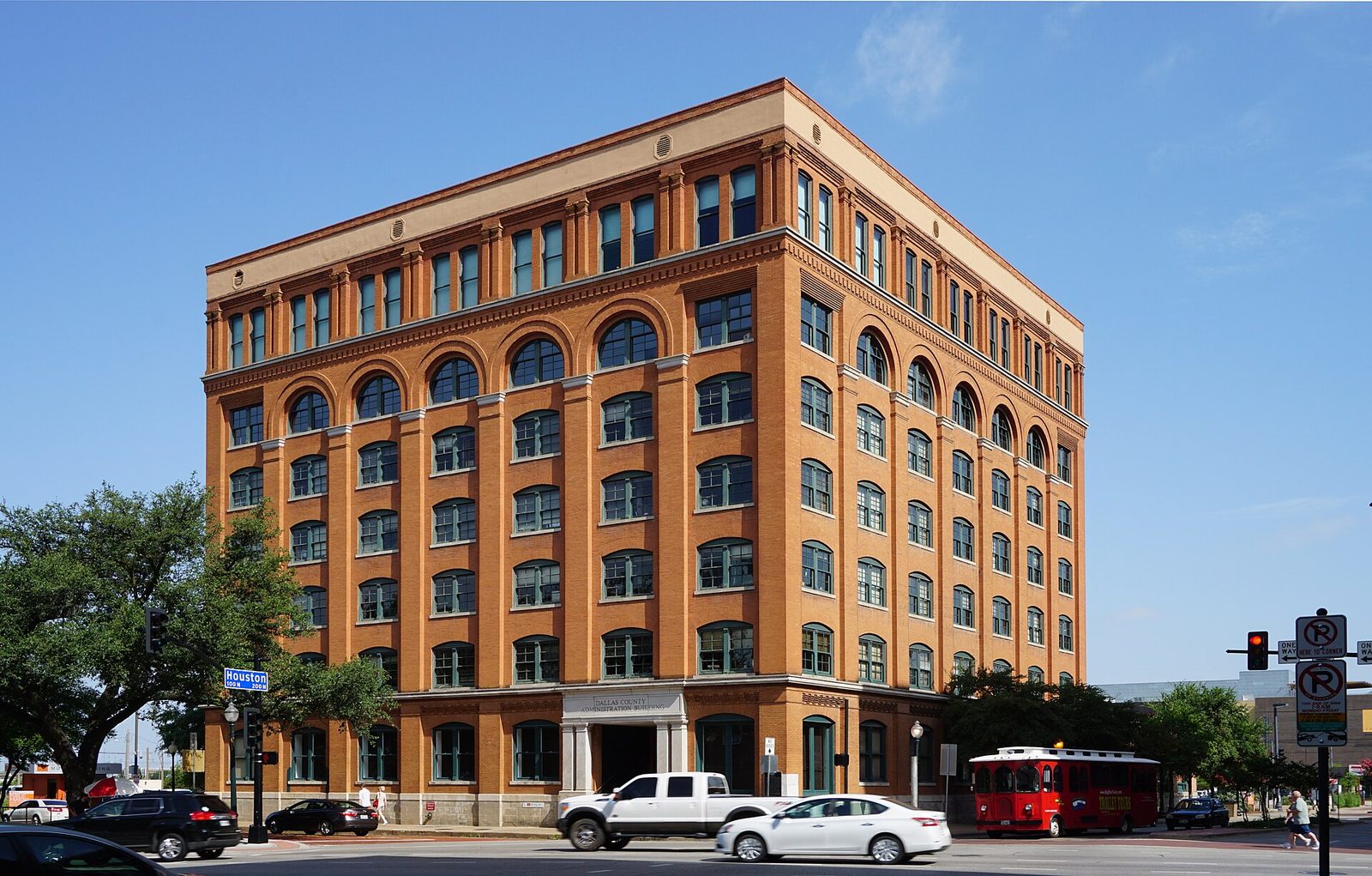
This Sixth Floor Museum visitor guide covers the most visited historic site in Dallas and the one most likely to catch you out on logistics. The museum occupies the sixth and seventh floors of the former Texas School Book Depository at 411 Elm Street, overlooking Dealey Plaza. It costs $27 for an adult, it requires a timed ticket bought in advance, it takes about ninety minutes, and — the part that ruins more trips than anything else in this city — it is closed every Monday and Tuesday, with the last ticket of the day sold at 4:15 p.m.
Everything below was checked against the museum’s own pages in September 2026. It also covers Dealey Plaza itself, which is outside, free, and a genuinely important part of the visit that plenty of people skip. Our guide to Dallas history places it in the wider context of the city’s historic sites.
What does the Sixth Floor Museum cost, and when is it open?
The decision box.
| Detail | Information |
|---|---|
| Adult | $27 |
| Senior, 65+ | $25 |
| Youth, ages 6–18 | $23 |
| Children, 0–5 | Free |
| Hours | Wednesday–Sunday, 10 a.m. – 5 p.m. |
| Closed | Monday and Tuesday |
| Last ticket and last entry | 4:15 p.m. |
| Tickets | Timed entry — must be bought in advance |
| Address | 411 Elm Street, Dallas TX 75202 |
(Checked September 2026. The prices above are the on-site rates; booking online in advance is cheaper, with a saving of around $3 a head commonly quoted — check the figure at checkout.)
Two things follow immediately. The 4:15 p.m. cut-off is 45 minutes before closing, and given that the core exhibition takes about ninety minutes, a 4:15 arrival is a compressed visit rather than a full one. Aim to be through the door by 3 p.m. at the latest.
And the Monday–Tuesday closure is not an isolated quirk. The Dallas Museum of Art and the Nasher Sculpture Center close the same two days, and the Perot Museum closes Tuesday. A Dallas trip that starts on a Sunday night and plans to sightsee Monday hits four closed doors at once. Plan the Arboretum, the Dallas World Aquarium, the Dallas Zoo or the Bush Center for those days instead.
Do you need to book in advance?
Yes. The museum states plainly that timed tickets must be purchased in advance, so this is not an attraction you can wander into on the strength of a free hour.
If you hold a voucher — from a tour operator, a gift or a package — it is not a ticket. Vouchers have to be exchanged for dated tickets at the Visitors Center, so build that step into your timing rather than arriving at your intended entry slot with a voucher in hand.
Booking ahead also saves money, since the published $27, $25 and $23 are the on-site prices and the online rate is lower. For a family of four that difference is worth the two minutes it takes.
One planning note: because entry is timed and the exhibition takes about ninety minutes, the museum is easy to slot precisely into a day. A 10 a.m. slot puts you out by 11:30 with the whole day ahead; a 2 p.m. slot finishes comfortably before closing.
What is actually inside?
Two floors, and they do different jobs.
The sixth floor holds the permanent exhibition, John F. Kennedy and the Memory of a Nation. It occupies the floor of the former book depository from which evidence of a sniper was recovered after the assassination of President Kennedy on 22 November 1963, and it sets the events of that day within the wider story of Kennedy’s presidency, the era, and how the country absorbed what happened. This is the core of the museum and the ninety minutes the museum itself allows for.
The seventh floor hosts temporary exhibitions and public programmes. What is showing changes, and when something substantial is on it adds meaningfully to the time you need — so check what is up before you decide how long to book for.
The audio guide is included with admission rather than sold separately, which is worth knowing because at many comparable museums it is an upsell. It is the intended way to move through the exhibition, and the pacing of the guide is effectively what produces the ninety-minute figure.
On tone: the museum handles a killing, and it does so as a history museum rather than a spectacle. It is measured, document-led and quiet. Visitors expecting either sensationalism or advocacy for a particular theory of the day will find neither, which is the right call and worth knowing in advance.
How long does a visit take?
About 90 minutes for the core exhibition, on the museum’s own estimate, with more if the seventh floor has a temporary show on.
Add 30 to 45 minutes for Dealey Plaza outside, which most people underestimate, and you have a two to two-and-a-half hour block. That is a genuinely useful number because it makes the museum easy to combine with something else rather than treating it as a half-day commitment.
The audio guide sets the pace, and it is worth letting it. The temptation on a timed ticket is to move faster than the narration, and the exhibition is built around the sequence rather than around objects you can browse in any order.
What about Dealey Plaza outside?
Free, public, and the half of the visit that people most often skip. Do not.
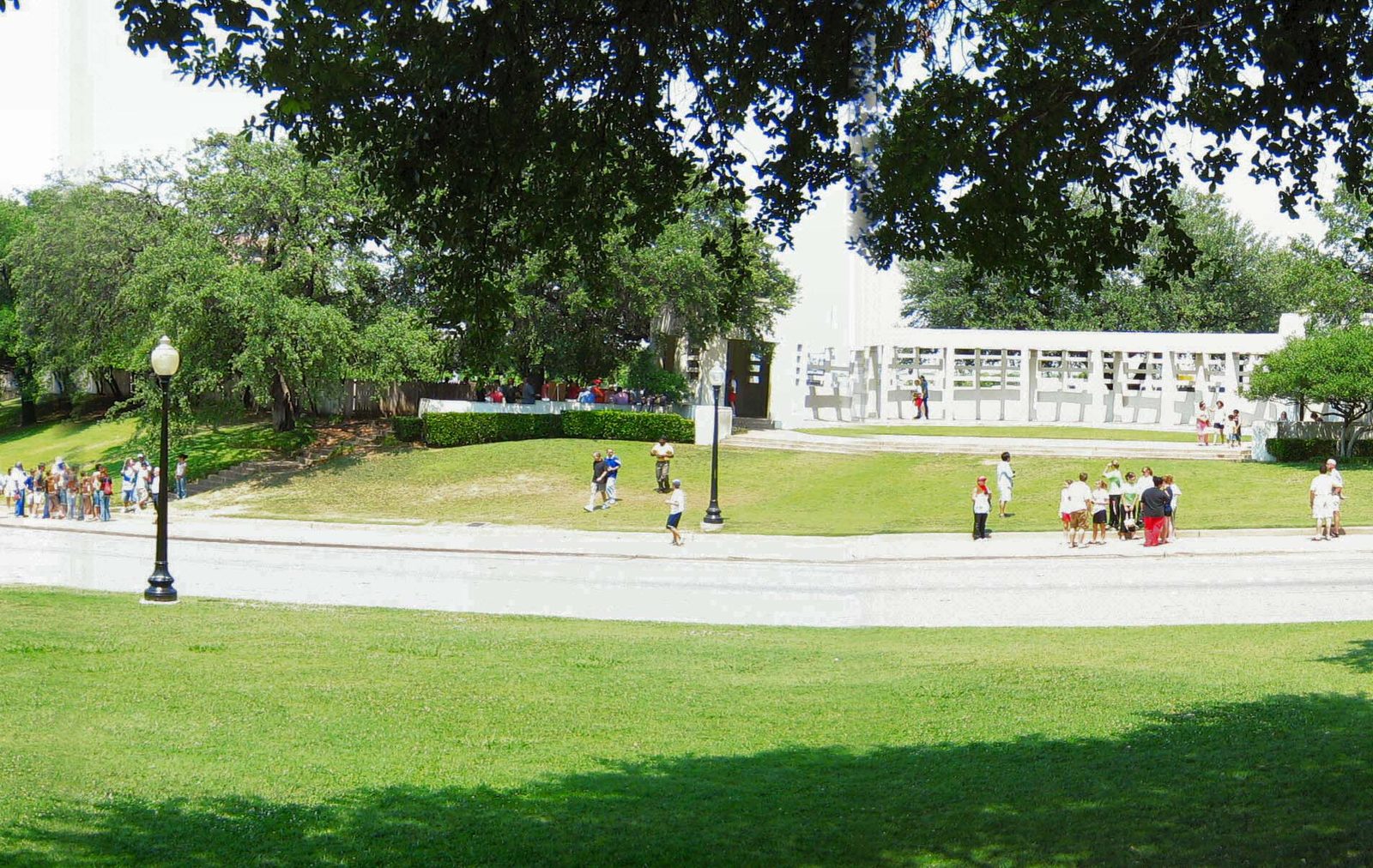
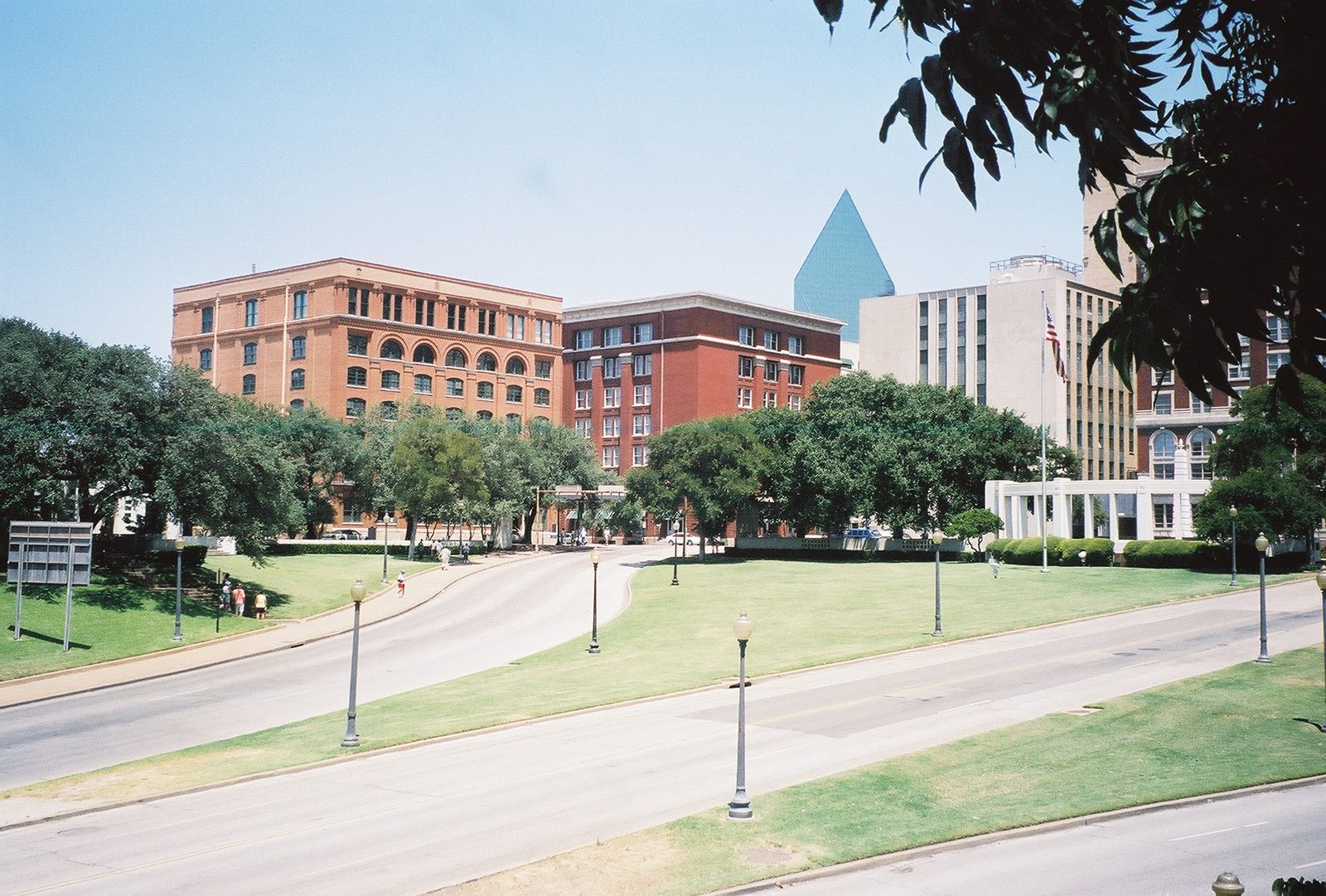
Dealey Plaza is a small triangular park where three streets converge and drop under a railway bridge, and the single thing a visit gives you that no photograph does is scale. The distances are much shorter than the footage suggests. Standing in the plaza and then looking up at the sixth-floor window, or walking the slope on the north side, makes the geography legible in a way the exhibition alone cannot.
Two practical notes. The plaza is open public space with no admission and no opening hours, so you can walk it before your timed slot or after you come out — and doing it afterwards is better, because the exhibition gives you the context to read what you are looking at.
Second, the plaza attracts informal vendors and people selling their own accounts of the day. That is part of the character of the place and has been for decades. They are not affiliated with the museum, and nothing they sell carries the museum’s authority — treat it as street commerce rather than interpretation.
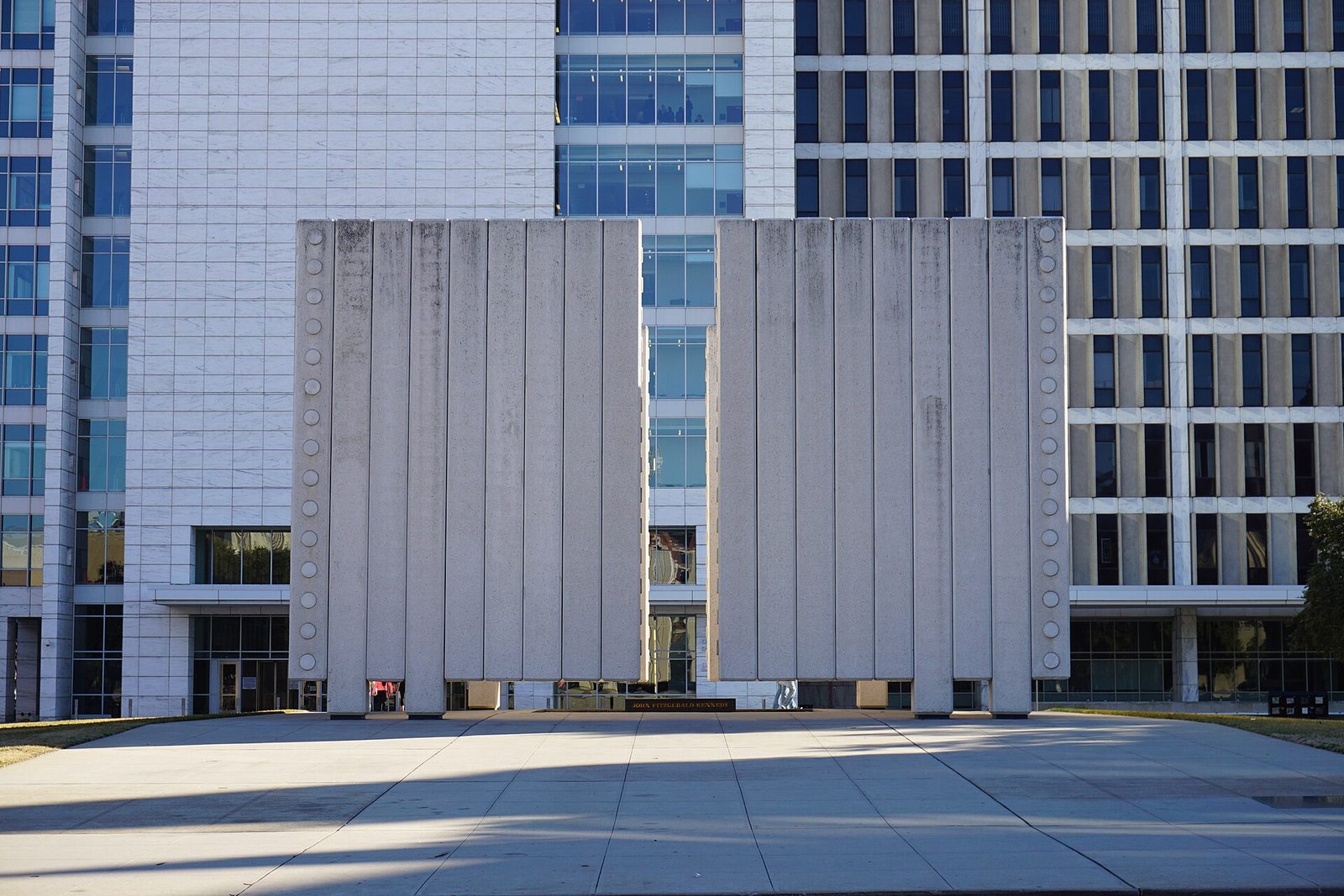
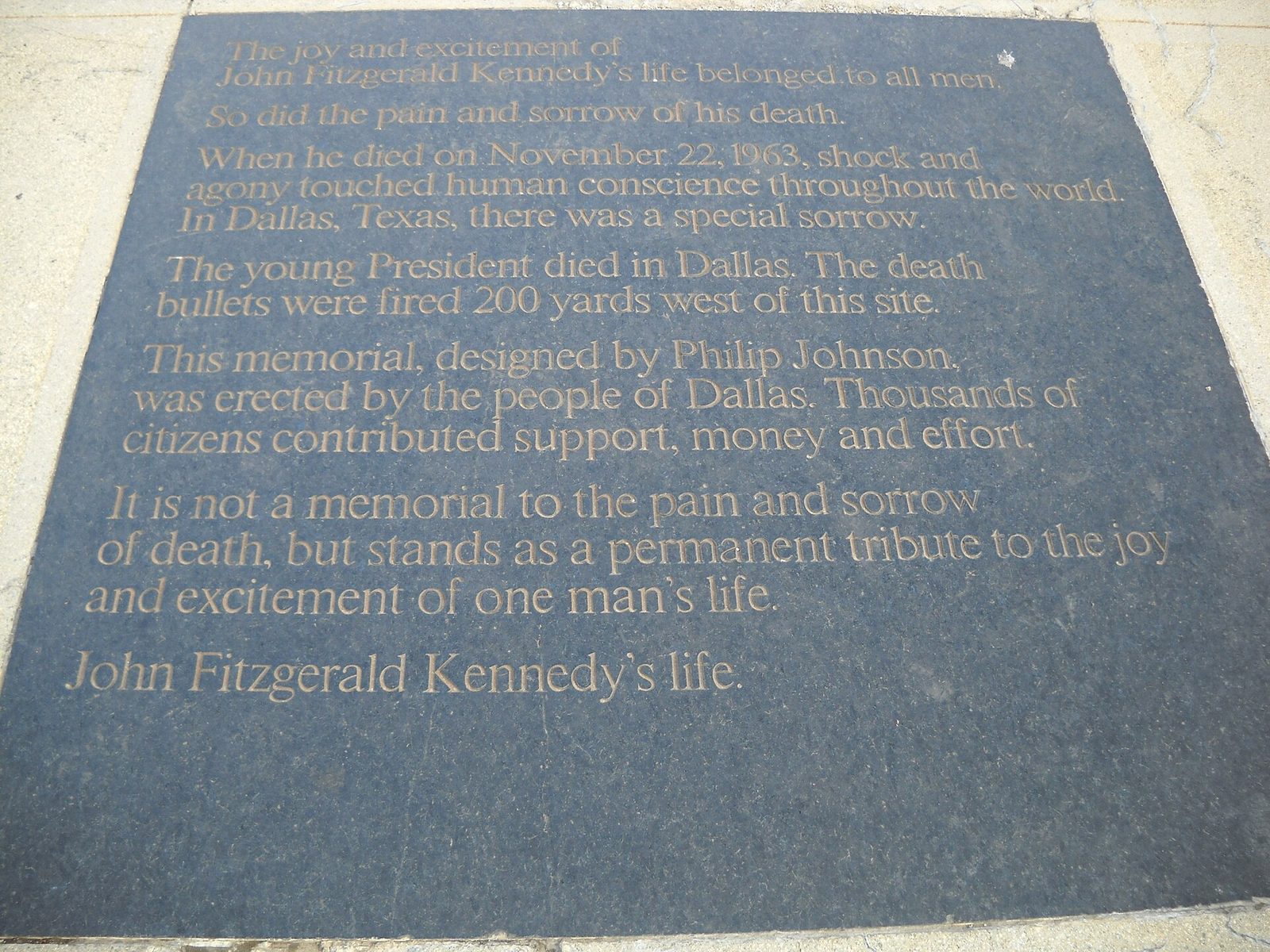
A short walk east brings you to the John F. Kennedy Memorial, a roofless white cenotaph designed by Philip Johnson and paid for by public subscription. It is free, it takes ten minutes, and it is quieter than the plaza. Its inscription describes it explicitly as a tribute to Kennedy’s life rather than a memorial to his death, which is a useful corrective after an hour and a half inside the museum.
How do you get there, and where do you park?
This is one of the easiest addresses in Dallas to reach without a car.
By rail. West End Station is a short walk away and is one of the best-connected stations on the DART network. A Local Day Pass costs $6.00 — $3.00 reduced — and covers rail, buses, GoLink, the Silver Line and the Dallas Streetcar through to 3 a.m. the following morning. A 3-Hour Local Pass at $3.00 is enough if this is your only journey.
By car. There is paid parking adjacent to the museum at 411 Elm Street, and accessible parking is available in the museum lot at the standard rate. Downtown Dallas does not publish a citywide parking rate and the district points visitors at the parking apps rather than quoting prices, so check your specific lot.
On foot. Downtown Dallas scores 95 for walkability and crosses in about half an hour, so from most downtown hotels this is a walk rather than a journey. In July and August, when highs average around 97°F, allow for the heat rather than the distance. Our getting around Dallas guide has the network in full.
Can you take photographs?
Yes, within limits, and the museum publishes the rule clearly.
Non-flash photography is permitted on both the sixth and seventh floors, for personal use only. Commercial use requires written approval in advance.
That is a more generous policy than many history museums operate, and it is worth using thoughtfully. The window view over Dealey Plaza is the photograph most people take, and it is also the moment when the room is most crowded — if the shot matters to you, a 10 a.m. slot on a weekday is a very different experience from a Saturday afternoon.
How accessible is the Sixth Floor Museum?
Well provided, and the museum publishes its provisions rather than leaving you to ask.
The venue is fully wheelchair accessible, with ramps and accessible restrooms. Wheelchairs are available on a first-come, first-served basis — so arrive at the start of your slot rather than the end of it if you need one.
Service animals, as defined by the ADA, are welcome.
Sensory bags are provided for guests who need them, free to check out at the visitors centre — the museum is a KultureCity partner. This matters more here than at many museums: the exhibition covers a violent event, includes archival broadcast material, and is often busy and enclosed. A sensory bag with noise-reducing headphones is a genuinely practical provision rather than a token one.
Accessible parking is in the museum lot at standard parking rates. Our accessible Dallas travel guide compares venues across the city.
Is the Sixth Floor Museum worth $27?
Yes, with one qualification: it is worth it because of where it is, not because of how much is in it.
| Attraction | Adult price | Time | Open |
|---|---|---|---|
| Sixth Floor Museum | $27 | ~90 minutes | Wed–Sun 10–5, last entry 4:15 |
| Perot Museum | $27 | 2–3 hours | Closed Tuesdays |
| Dallas World Aquarium | $34.95 + tax | 2–3 hours | Daily 8:30–5 |
| George W. Bush Presidential Center | $26 | Under 1 hour to 4+ hours | Mon–Sat 9–5, Sun 12–5 |
| Nasher Sculpture Center | $10, or $8 by DART | 1–1.5 hours | Wed–Sun 11–5 |
| Dallas Museum of Art | Free, timed ticket | 1.5–3 hours | Wed–Sun 11–5 |
| Dealey Plaza and the JFK Memorial | Free | 30–45 minutes | Always |
(Checked September 2026.) On pure hours-per-dollar the Sixth Floor Museum is mid-table, and the Nasher and the DMA both beat it comfortably. What none of them offer is standing in the room itself. The exhibition is good — carefully researched, restrained, well paced — but the thing you are actually paying for is the place, and it is unrepeatable.
The honest recommendation: if you are in Dallas for one day and have one ticket to spend, spend it here. If you are in Dallas for four days and the history does not interest you, Dealey Plaza and the JFK Memorial are free and give you the geography without the $27.
One budgeting note: the Sixth Floor Museum is not on the Dallas CityPASS, along with the DMA, the Nasher and the Arboretum. The pass covers four of six other attractions, so this is a separate line whichever way you plan.
Should you take children?
It depends on the child rather than the age, and the museum’s pricing acknowledges that — under-6s are free, and 6 to 18 pay $23.
The subject is an assassination, and the exhibition does not soften it. There is archival news footage, contemporary reporting and photographic material, and the emotional register of the room is sober. Children old enough to have covered the period at school generally find it absorbing; younger children usually do not, and a bored child in a ninety-minute audio-guided exhibition is difficult for everyone.
If you are travelling with mixed ages, the practical answer is to split. The Dallas World Aquarium is a short walk away, opens at 8:30 a.m. and is much better suited to younger children; one adult takes them there while the other does the museum, and you meet in the West End afterwards. Our Dallas with kids guide covers the alternatives.
What should you pair it with?
The West End makes this easy — almost everything is within a few hundred metres.
Dealey Plaza and the JFK Memorial, both free, immediately outside. Do these after the museum rather than before.
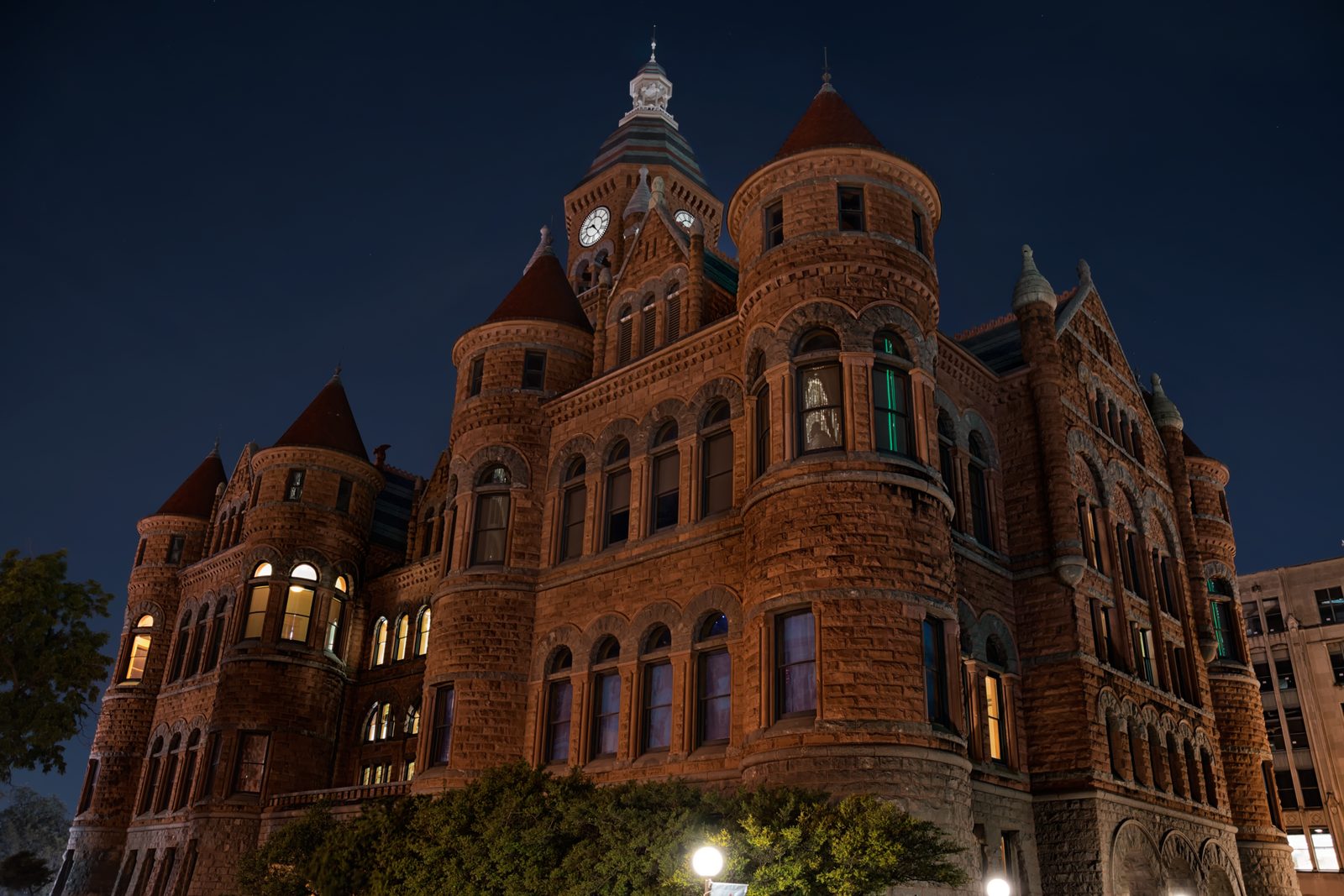
The Old Red Courthouse, the red sandstone Romanesque pile on the edge of the plaza, now a county history museum. Even if you do not go in, it is worth walking round.
The Dallas World Aquarium, a short walk north on N. Griffin Street, open seven days from 8:30 a.m. — the natural pairing on a Wednesday to Sunday, and the thing to do instead on a Monday or Tuesday when the museum is shut.
The Arts District, one rail stop or a 15-minute walk: the Dallas Museum of Art is free with a timed ticket and the Nasher is $10, or $8 with proof of DART fare. Both open at 11 a.m. and both close Monday and Tuesday, same as here. Our Dallas itineraries guide sequences the whole cluster into a day.
When is the museum quietest?
Because entry is timed, the museum never gets to the point of a queue outside the door. What varies is how crowded the sixth floor feels once you are on it, and that varies a lot.
| Slot | How it feels | Best for |
|---|---|---|
| Wednesday–Friday, 10–11 a.m. | Quietest of the week | Photography, and anyone who wants time at the window |
| Wednesday–Friday, afternoon | Steady | A normal, comfortable visit |
| Saturday and Sunday, midday | Busiest | Avoid if you have a choice |
| Any day after 3 p.m. | Thinning, but the clock is against you | Only if the morning is impossible |
| Late November | Noticeably busier around the anniversary | Book well ahead |
The pattern is the same one that governs most of Dallas: weekday mornings are dramatically better than weekend middays, and almost nobody acts on it. A 10 a.m. Wednesday slot and a 1 p.m. Saturday slot are the same $27 and two quite different experiences.
One date worth flagging: the anniversary of 22 November draws larger numbers both to the museum and to the plaza outside. If your trip falls in that window and the museum matters to you, book as far ahead as you can.
What should you read or know beforehand?
Nothing is required — the exhibition is built for visitors arriving cold, and the audio guide carries you through the sequence without assuming prior knowledge. But two small pieces of preparation improve the visit considerably.
Know roughly where you are in the geography. Elm Street runs downhill and west through the plaza and under a railway bridge; the depository stands on the corner at the top. Ten minutes on a map beforehand, or a walk through the plaza before your slot, means the exhibition’s references to specific points land rather than washing over you.
Decide in advance how you want to handle the conspiracy question. The museum takes the historical record seriously and presents the evidence and the investigations rather than advocating a theory. Outside, the plaza has for sixty years attracted people selling rival accounts. Both things are part of visiting Dealey Plaza, and knowing which you are engaging with at any moment makes the day considerably less confusing. If you want the documented history, it is inside and it costs $27. If you want the atmosphere of a place people still argue over, that is outside and free.
What you do not need is a booking for anything else. This is a fixed ninety minutes with a hard start, which makes it one of the easiest attractions in Dallas to build a day around rather than plan a day for.
What does it cost to do the whole JFK story in Dallas?
Less than people expect, because most of the associated sites are free.
Two adults doing the museum pay $54, or a few dollars less booking online. Add nothing at all for Dealey Plaza, the grassy slope, the pergola and the John F. Kennedy Memorial, all of which are public space with no admission and no opening hours. The Old Red Courthouse on the plaza’s edge charges its own separate admission if you want to go in, and is free to walk around if you do not.
Transport is $12 for two Local Day Passes, which also covers everything else you do that day. So a thorough half-day, for two people, on foot and by rail, comes to about $66 — and the free component is genuinely substantial rather than a consolation prize.
That is the strongest argument for doing the plaza properly rather than treating it as the walk back to the car. Our free things to do in Dallas guide has the rest of the no-ticket list, and Dallas on a budget works through a fuller trip.
Where does it fit in a Dallas trip?
It works best as a fixed point that the rest of the day is built around, for one simple reason: the opening days are the constraint, not the opening hours.
Dallas divides cleanly into two kinds of attraction. The Sixth Floor Museum, the Dallas Museum of Art and the Nasher Sculpture Center open Wednesday to Sunday only; the Perot closes Tuesday. Against that, the Dallas Arboretum, the Dallas World Aquarium, the Dallas Zoo and the George W. Bush Presidential Center all open seven days a week.
So the sequencing rule for any Dallas trip of three days or more is: put the Wednesday-to-Sunday attractions on the days they are actually available, and fill Monday and Tuesday with the seven-day ones. Visitors who plan chronologically rather than by opening day are the ones who arrive at 411 Elm Street on a Monday morning and find the door shut.
Within a single day, the museum’s timed entry and fixed ninety minutes make it unusually easy to schedule. A 10 a.m. slot leaves you free from 11:30. A 1 p.m. slot lets you do the Dallas World Aquarium at 8:30 a.m. first, which is the tightest pairing available in the West End. Either way you are not committing a whole day to it, which is the mistake people make when they assume a major historic site needs one.
If your trip is short — a weekend, a conference extension, a stopover — this is the one ticket to buy. It is the thing people ask you about when you say you went to Dallas.
What is the West End like around the museum?
Better than its reputation, and it changes what the visit feels like.
The West End is the district of restored red-brick warehouses immediately north-west of downtown’s glass towers, and it is the closest thing Dallas has to a walkable historic quarter. Within a few hundred metres of the museum door you have Dealey Plaza, the John F. Kennedy Memorial, the Old Red Courthouse, the Dallas World Aquarium, a DART station served by multiple lines, and a run of restaurants and bars along the brick streets.
That density does two useful things. It means you can arrive without a plan for the rest of the morning and still have one — which matters when a ninety-minute visit ends at 11:30 and nobody has thought about lunch. And it means nobody in your group is stranded if they would rather not go into the museum at all: the plaza, the memorial and the streets around them are free and absorbing on their own.
The West End is also where the emotional register of the day resets. Going straight from the sixth floor to a car park is an abrupt end to a sober ninety minutes. Walking the plaza, then sitting outside with a coffee two streets away, is a considerably better shape for the morning. Our Dallas neighborhoods guide covers the district and what else is worth finding in it.
What’s not worth it at the Sixth Floor Museum?
The honest verdicts.
A 4 p.m. arrival. Last ticket is 4:15 p.m. and the exhibition takes ninety minutes against a 5 p.m. close. You will be moved along at the end. Book a morning slot.
Turning up without a ticket. Timed entry is required and must be bought in advance. A voucher is not a ticket either — exchange it at the Visitors Center first.
Skipping the plaza. Half the understanding is outside, it is free, and it takes half an hour. Visitors who go straight from the exit to the car park miss the point of coming.
Buying a CityPASS for this. It is not included. Check what the pass actually covers before assuming.
Anything bought on the plaza as history. The informal sellers outside are not affiliated with the museum and their material carries no institutional standing. Enjoy the scene; buy your history from the museum shop.
Frequently asked questions
How much are Sixth Floor Museum tickets?
On site, $27 for adults, $25 for seniors aged 65 and over, $23 for youth aged 6 to 18, and free for children under 6. Booking online in advance is cheaper — a saving of around $3 a head is commonly quoted, so check at checkout.
Is the Sixth Floor Museum open on Mondays?
No. It opens Wednesday to Sunday, 10 a.m. to 5 p.m., and closes Monday and Tuesday. The last ticket is sold and the last entry taken at 4:15 p.m. The Dallas Museum of Art and the Nasher close the same two days, and the Perot closes Tuesday.
How long does the Sixth Floor Museum take?
About 90 minutes for the core sixth-floor exhibition, on the museum’s own estimate, plus more if there is a temporary exhibition on the seventh floor. Allow another 30 to 45 minutes for Dealey Plaza outside.
Do you need to book Sixth Floor Museum tickets in advance?
Yes — timed tickets must be purchased in advance. If you hold a voucher rather than a ticket, exchange it for a dated ticket at the Visitors Center before your slot.
Can you take photos inside the Sixth Floor Museum?
Yes. Non-flash photography is permitted on both the sixth and seventh floors for personal use. Commercial use requires written approval from the museum.
Is Dealey Plaza free to visit?
Yes. Dealey Plaza is public space with no admission charge and no opening hours, as is the John F. Kennedy Memorial a couple of blocks away. You can see both without buying a museum ticket at all.
Is the Sixth Floor Museum wheelchair accessible?
Yes — fully, with ramps and accessible restrooms, and wheelchairs available first come, first served. Service animals as defined by the ADA are welcome, sensory bags are provided free, and accessible parking is in the museum lot at standard rates.
Is the Sixth Floor Museum worth visiting?
For a first-time visitor to Dallas, yes — it is the single most significant historic site in the city and the exhibition is careful and well made. What you are paying for is the place itself rather than the volume of material, and that is not something the free alternatives can substitute for.
Related Dallas Guides
- Dallas history — the wider historic sites, beyond a single day in 1963
- Dallas World Aquarium visitor guide — the easiest pairing, a short walk north
- Dallas attractions — everything else worth a ticket
- Dallas museums and arts — and the Monday–Tuesday closure calendar
- Getting around Dallas — West End Station and DART fares
- Accessible Dallas travel guide — venue access compared
- Dallas with kids — whether to bring children, and what to do instead
- Free things to do in Dallas — including Dealey Plaza and the JFK Memorial
- Dallas neighborhoods — the West End and the downtown core
- Dallas itineraries — a full day built around this cluster
- Dallas on a budget — the free version of this visit
Photo Credits
- Dealey Plaza: photo by Brodie319, Wikimedia Commons (Public domain)
- Dealey Plaza pergola: photo by No machine-readable author provided. Bradipus assumed (based on copyright claims)., Wikimedia Commons (CC BY-SA 3.0)
- John F. Kennedy Memorial: photo by Michael Barera, Wikimedia Commons (CC BY-SA 4.0)
- John F. Kennedy Memorial inscription: photo by Tom Ipri, Wikimedia Commons (CC BY-SA 2.0)
- Old Red Courthouse: photo by MichaelMeyers, Wikimedia Commons (CC BY-SA 4.0)
- Former Texas School Book Depository (featured image): photo by Michael Barera, Wikimedia Commons (CC BY-SA 4.0)
Sources
- The Sixth Floor Museum — Plan Your Visit (checked September 2026)
- The Sixth Floor Museum — Frequently Asked Questions (checked September 2026)
- The Sixth Floor Museum — Accessibility (checked September 2026)
- Dallas Office of Arts and Culture — Sensory-Friendly Activities (checked September 2026)
- DART — Fares (checked September 2026)
- Downtown Dallas Inc — Getting Around (checked September 2026)
- Dallas CityPASS — included attractions (checked September 2026)
- Dallas Museum of Art — Visit (checked September 2026)
- Nasher Sculpture Center — Visit (checked September 2026)
- Perot Museum of Nature and Science — Visit (checked September 2026)
- Dallas World Aquarium — Hours and Prices (checked September 2026)
- George W. Bush Presidential Center — Visit (checked September 2026)