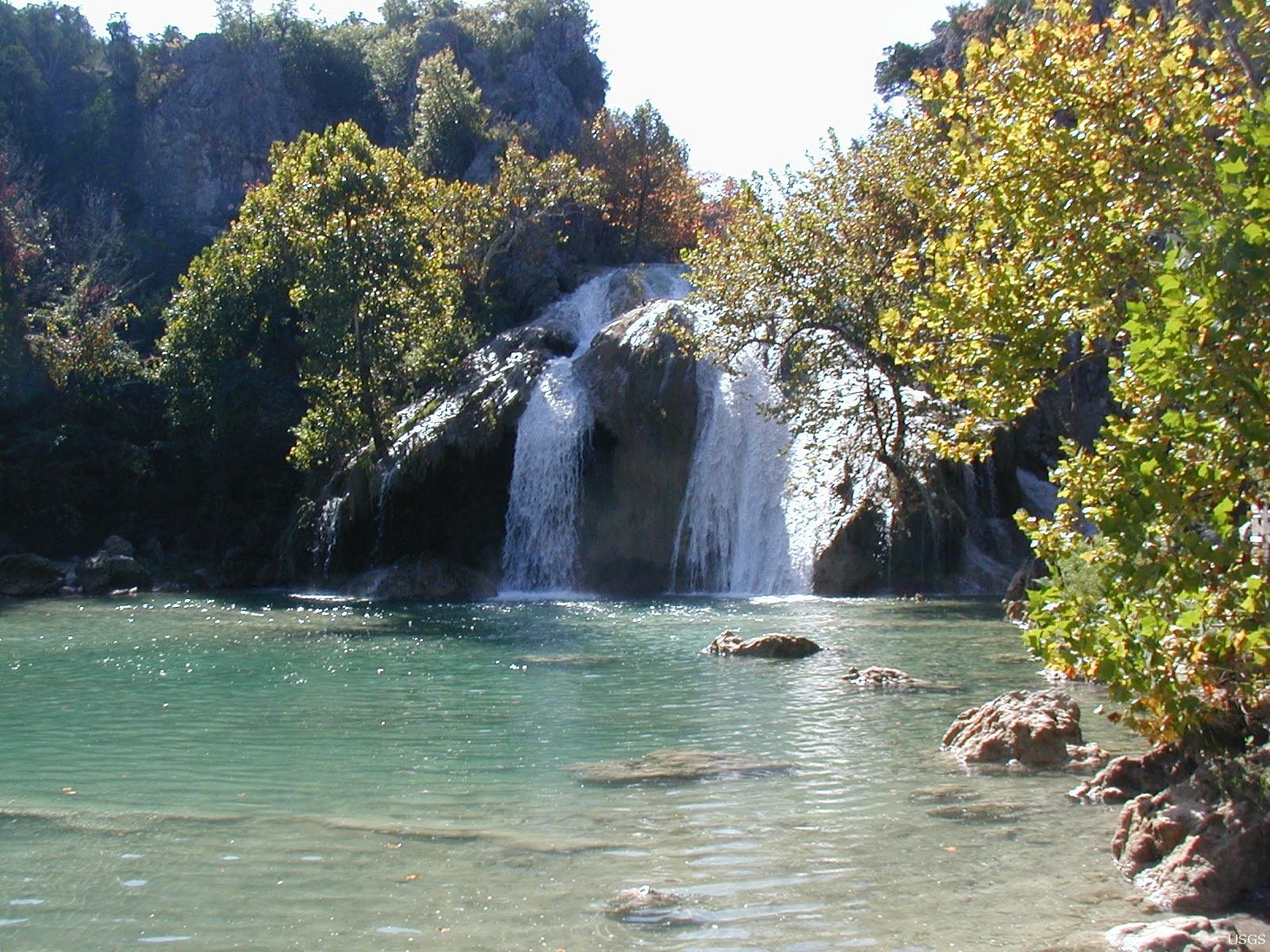
A Turner Falls day trip from Dallas is about two hours north up I-35 to Davis, Oklahoma, where a 77-foot waterfall — the largest in the state — drops into a spring-fed swimming pool in the Arbuckle Mountains. Admission runs $9 to $20 per adult depending on the season and the day of the week, and parking is charged separately on top.
That last sentence is the one that catches people out, and it is the reason this page exists. Turner Falls has three parking levels priced at $25, $15 and free, and the $25 level costs more than a peak-weekend adult ticket. A family of four who park on Level 1 on a July Saturday spend more on the car than on themselves. Nobody tells you that before you arrive at the gate, and by then you are two hours from home with a car full of expectant children.
Turner Falls at a Glance
Everything below was checked against turnerfallspark.com in September 2026.
| Detail | What to know |
|---|---|
| Where | I-35 & US Highway 77, Davis, OK 73030. (580) 369-2988 |
| Drive from Dallas | About two hours north on I-35, crossing into Oklahoma |
| The falls | 77 feet, billed as Oklahoma’s largest waterfall, fed by a spring-fed creek |
| Summer hours (1 May – 30 Sep) | Entry 7 a.m. to sunset; check-in until 9:30 p.m. |
| Winter hours (1 Oct – 30 Apr) | Entry 8 a.m. to sunset; check-in until 8 p.m. Sun–Thu, 9:30 p.m. Fri–Sat |
| Adult admission | $9 to $20 depending on season and weekday or weekend |
| Parking | Level 1 $25, Level 2 $15, Level 3 free. Separate from admission |
| Children in the water | All children 12 and under must wear a Coast Guard certified flotation device |
| Pets | No pets allowed in the park at all |
| ID | Guests must present ID to enter |
What Does a Turner Falls Day Trip Actually Cost?
Turner Falls prices by season and by day of the week, and then charges for parking on a completely separate scale. Here is the whole structure in one place, because the park splits it across two pages.
| Ticket | Summer weekday | Summer weekend | Winter weekday | Winter weekend |
|---|---|---|---|---|
| Adult | $16 | $20 | $9 | $12 |
| Child 6–12 | $9 | $16 | $6 | $9 |
| Senior or military 55+ | $9 | $13 | $6 | $9 |
| Child under 5 | Free | Free | Free | Free |
Summer runs 1 May to 30 September; winter runs 1 October to 30 April. Two things jump out of that grid. The first is the sheer size of the spread: an adult pays $20 on a summer Saturday and $9 on a winter weekday, a difference of well over half. The second is that children 6 to 12 cost nearly as much as adults at summer weekends — $16 against $20 — while on a summer weekday they cost $9 against $16. The weekend premium falls hardest on families, which is exactly backwards from how most attractions price.
Now add parking, which is where the real money goes.
| Parking level | Cost per day | What you get |
|---|---|---|
| Level 1 | $25 | Closest to the Blue Hole and the waterfall |
| Level 2 | $15 | Access to the trails and amenities |
| Level 3 | Free | Furthest out, but it costs nothing |
Run the numbers for two adults and two children aged eight and ten on a summer Saturday: $40 for the adults, $32 for the children, and $25 for Level 1 parking. That is $97 before you have bought a bottle of water. The same family on a winter weekday with free Level 3 parking pays $30 total. Same waterfall.
The park does not publish whether advance online purchase is mandatory, what its capacity or sell-out policy is, or its refund terms. Secondary reports say it can sell out on busy summer weekends and recommend buying ahead. We could not confirm either from the park’s own pages, so if your trip depends on getting in, call (580) 369-2988 before you drive.
When Should You Go? Summer Prices Against Winter Prices
The honest answer for most visitors is a weekday in May, September or early October, and the reasoning is worth spelling out because it cuts against instinct.
Summer is when everyone goes, because Turner Falls is fundamentally a swimming destination and North Texas summers are brutal — Dallas averages highs near 97°F in July and August. But summer is also when the park charges the most, fills the fastest and turns the Blue Hole into a crowd. The water is spring-fed, which means it stays cold regardless of the air temperature, and that is the actual draw.
The shoulder weeks do something clever. In May and September you are still inside the summer pricing window and the summer 7 a.m. opening, but the crowds are school-term thin on a weekday. In early October the winter rate kicks in on the 1st and an adult weekday ticket drops from $16 to $9 — a 44% cut that arrives overnight, while North Texas and southern Oklahoma are often still warm enough to swim.
That 1 October changeover is the single best-value date on the calendar, and it is entirely invisible unless you read the pricing page carefully.
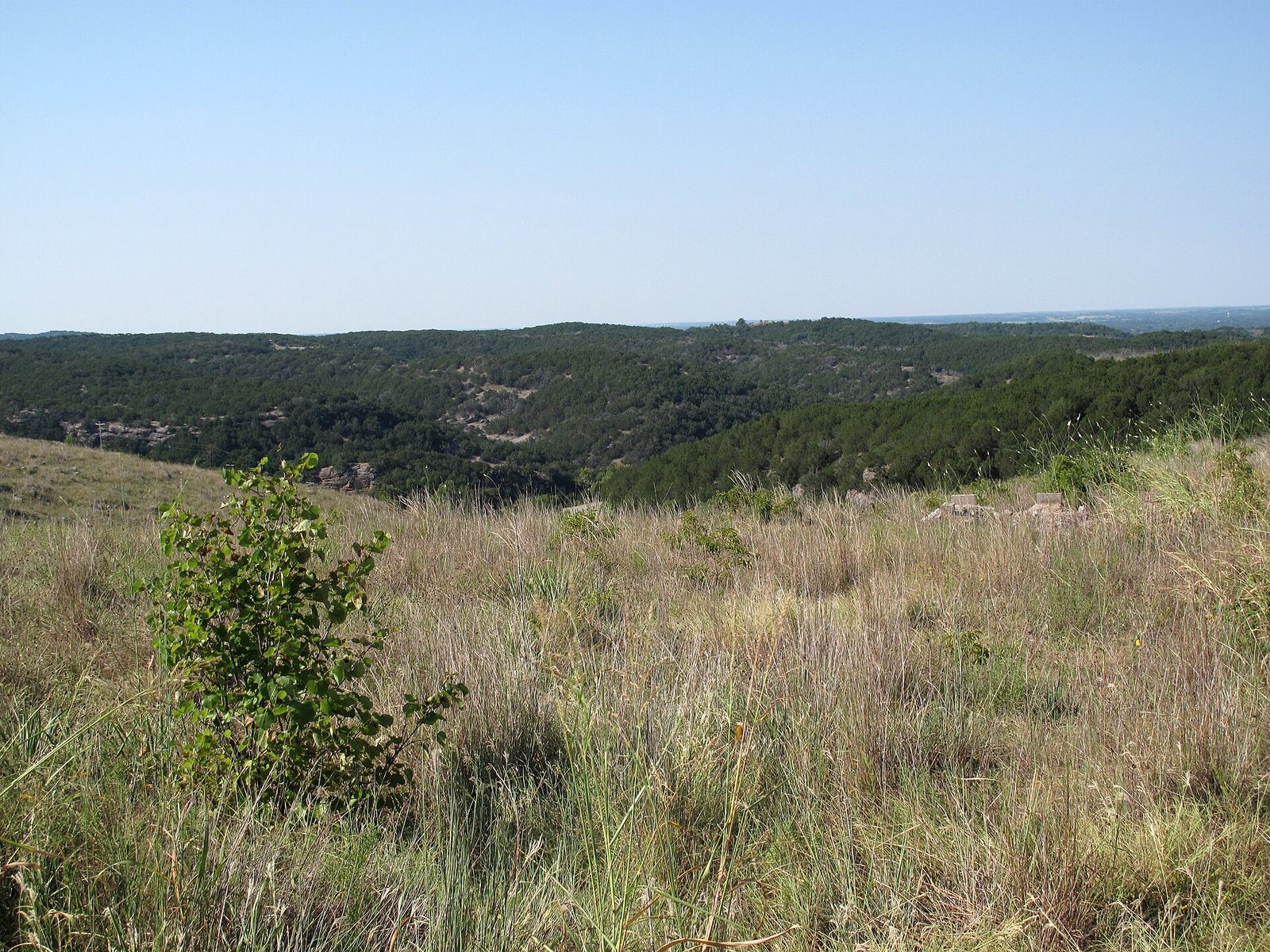
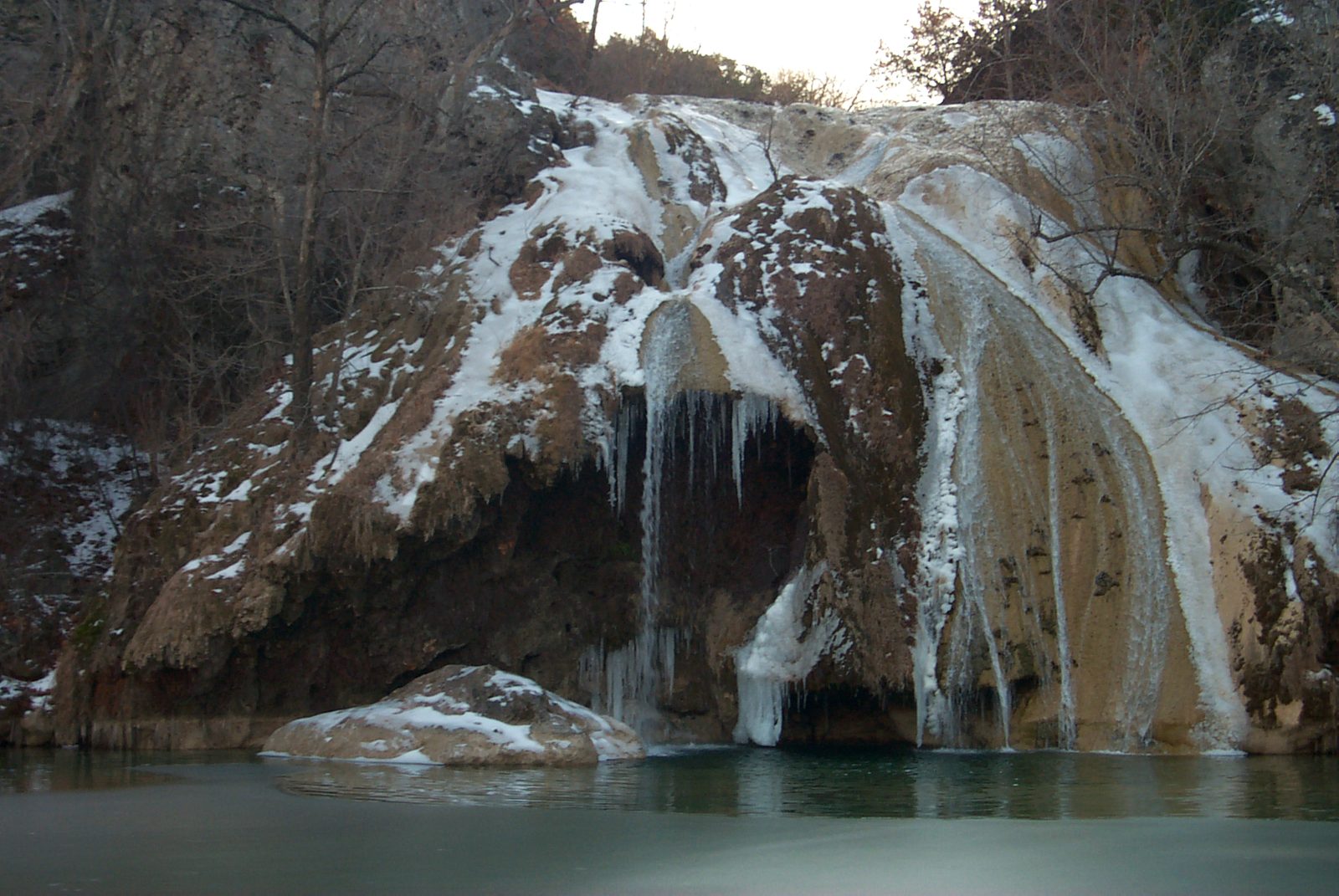
Winter proper is underrated but it is a different trip. The falls run, the ice formations on the rock face are genuinely spectacular after a hard freeze, and you will have the place close to yourself for $9. You will not be swimming. Treat a winter visit as a walk and a photograph rather than a day at the water, and it is one of the better cheap days out within reach of Dallas. For how the seasons work across the region generally, see our guide to the best time to visit Dallas.
How Long Is the Drive, and What Is the Route?
Straightforward, and that is most of the appeal. Turner Falls sits at the junction of I-35 and US Highway 77 at Davis, Oklahoma, which means the drive is essentially one road: north on I-35 out of Dallas, through Denton, across the Red River into Oklahoma, past Ardmore, and off at Davis. It is widely reported at around two hours from Dallas, though that is a figure from travel coverage rather than from the park, and it assumes you are not leaving downtown at five on a Friday.
Three things to know about the crossing. Oklahoma is in the Central time zone, the same as Texas, so there is no clock change and no need to adjust your return timing. You are crossing a state line, so if anyone in the car has a medical or licensing issue that matters, sort it before you go. And every guest must present ID to enter the park, which is an unusual requirement and worth telling teenagers in the back seat before you arrive at the gate rather than at it.
Leaving Dallas by 7 a.m. puts you at the park not long after it opens in summer, which is the whole game. Leaving at ten puts you in the queue with everybody else and, on a busy summer Saturday, potentially outside a park that has filled up.
What Are the Swimming Rules, and Are They Enforced?
There is one rule that will change your packing list, and it is not optional: all children 12 and under must wear a Coast Guard certified flotation device while in the water. Not a recommendation, not for weak swimmers, not under a certain height — every child twelve and under, in the water, in a certified device.
This trips up a startling number of families. A pool float, an inflatable ring, arm bands or a novelty vest will not satisfy a Coast Guard certification requirement. If you arrive with a ten-year-old who swims perfectly well and no certified life jacket, you have a problem. Buy or borrow proper Type II or Type III certified jackets before you leave Dallas, in the right sizes, and put them in the car the night before.
The rule exists because the swimming here is natural water, not a pool. The creek is spring-fed and cold, the bottom is rock, depths change quickly, and the pool below a 77-foot waterfall behaves like a river rather than a swimming bath. Water levels and clarity vary with rainfall, and the same spot can look very different two weekends running.
Two conditions are worth checking on the morning you travel, because neither is predictable from Dallas. The first is water level. A spring-fed creek running off an upland catchment responds fast to rain, and southern Oklahoma gets its rain in heavy bands rather than steady drizzle. After a wet week the pool below the falls runs higher, faster and murkier, and the pleasant swimming hole becomes something with a current in it. The second is water clarity, which follows the same logic and determines whether you can see the rock bottom you are about to stand on. Neither is a reason to cancel, but both are a reason to look at the forecast for Davis rather than for Dallas, and to treat a heavy-rain week as a walking trip rather than a swimming one.
The related point on food: the park has facilities, but it is a commercial operation two hours from home, and prices at the concessions reflect that. Most families bring their own. Beyond that single published rule, the park does not set out its cooler, glass, alcohol or food policies on its main pages, so do not assume a large cooler of drinks will get through the gate. Call ahead if it matters to your day. What the park does state clearly is that no pets are allowed in the park at all — not on a lead, not in the car park. If you travel with a dog, this destination is off your list entirely; our pet-friendly Dallas guide covers where dogs actually are welcome.
Which Parking Level Should You Pay For?
Level 3, unless somebody in your group genuinely cannot manage the walk.
The park sells three tiers. Level 1 at $25 a day puts you closest to the Blue Hole and the waterfall. Level 2 at $15 gives you the trails and the amenities. Level 3 is free. The difference between them is walking distance, and the difference in price between the top and bottom tiers is larger than a winter adult ticket for two people.
The case for Level 1 is real in exactly three situations: somebody in the party has limited mobility, you are carrying a small child plus a full day’s kit in July heat, or you plan to make repeated trips back to the car. Outside those, paying $25 to shorten a walk in a park you have driven two hours to walk around is a strange trade.
The strategic move, if you want to be close and not pay for it, is the one that governs this whole trip: arrive at opening. The nearest free spaces go first, and at 7 a.m. in summer or 8 a.m. in winter you are choosing from an empty lot rather than taking what is left at noon.
What Should You Pack?
The packing list for Turner Falls is longer than for most day trips because the park sits between “swimming pool” and “wilderness” and satisfies neither set of assumptions.
Certified flotation devices for every child twelve and under — the single most important item, and the one people forget. Water shoes or sandals with a back strap. The rock here is limestone, it is slick where the water runs over it, and flip-flops are actively dangerous on wet stone. Photo ID for every adult, because the park requires it at entry. Cash or a card for parking, which is charged separately at the gate. Sunscreen, because the swimming areas are open rock with limited shade in the middle of the day. And towels, because there is a long drive home.
One current condition to check before you go: as of September 2026 the park was under a full burn ban — no open flames at all, propane grills only. Burn bans across Oklahoma and Texas come and go with drought conditions, so that may not hold by the time you travel, but if a cookout is part of your plan, confirm it on the day rather than assuming.
What you cannot bring, under any conditions, is a dog. It bears repeating because it is absolute and because the drive is long enough that discovering it at the gate ruins the day.
What Is There to Do Besides Swim?
Enough to fill a day, which matters because the swimming is weather-dependent and the drive is not. If the water is high, cloudy after rain, or simply too cold for your group, the visit does not have to collapse.
The falls themselves are the obvious draw and they reward more than one viewpoint. Seventy-seven feet of water over a travertine face changes character completely depending on where you stand: from below at the pool, it is a wall of noise and spray; from the trail above, it is a series of terraces. Most visitors photograph it from one spot and leave, which is a waste of the walk.
Dr. Collings’ Rock Castle is the park’s oddest and most overlooked feature — a castle-like stone structure built into the hillside, the kind of eccentric private project that Oklahoma produced a lot of in the early twentieth century. It is a genuinely strange thing to come across in the woods, it photographs beautifully, and a striking number of day visitors never walk up to it.
There are hiking trails through the park, and Level 2 parking is priced specifically around trail and amenity access, which tells you something about how the park thinks about its own layout. The park does not publish a named trail list or specific cave detail on the pages we checked in September 2026, so plan to pick up a map at the gate rather than researching routes in advance. That is unusual for a paid attraction and worth knowing.
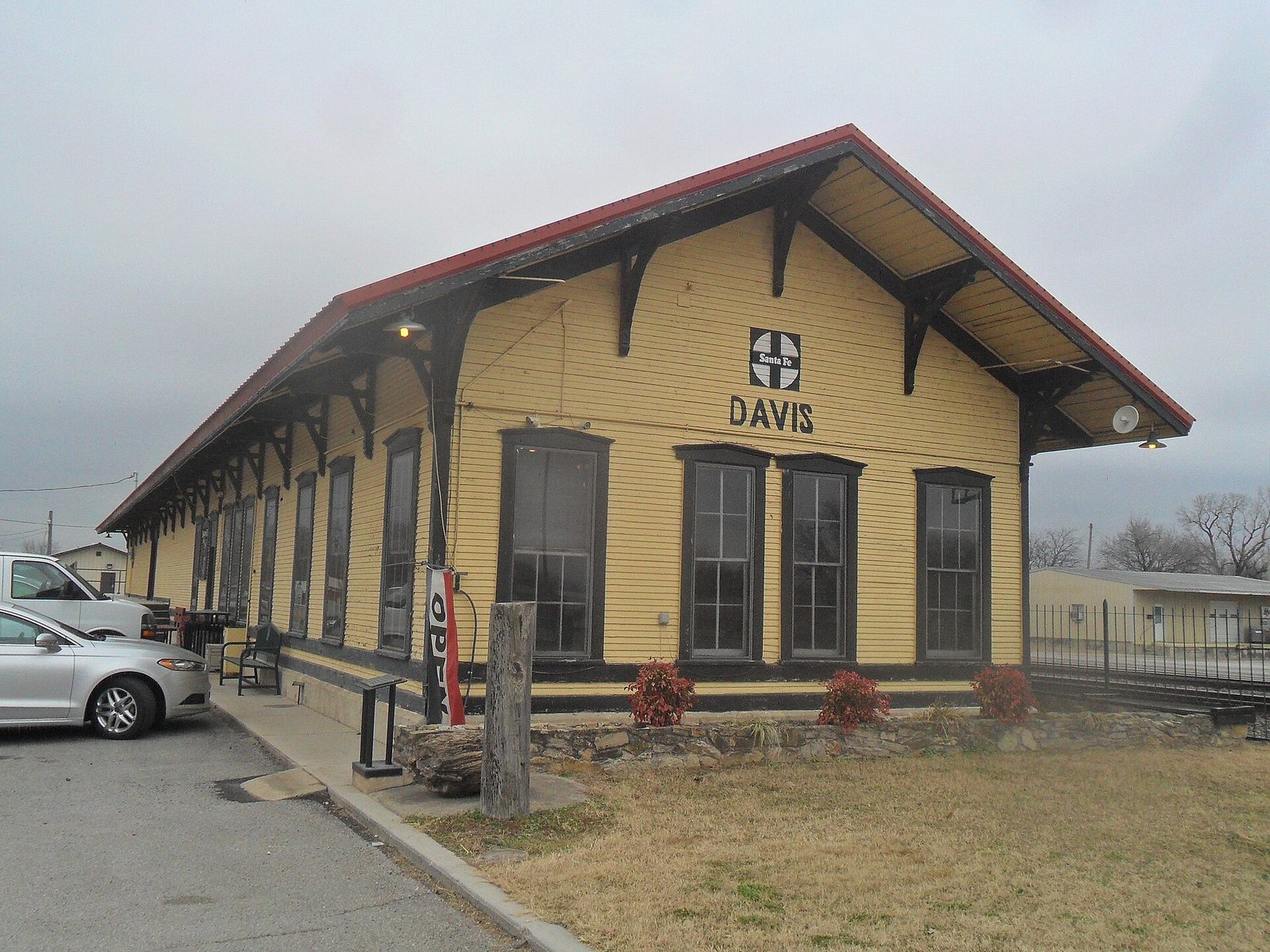
The wider Arbuckle region also has more in it than the park. These are ancient, eroded mountains — low, wooded and green rather than dramatic — and the drive between Davis and Sulphur passes through some of the prettiest country within reach of Dallas. If you have made the trip, allow time to look at it rather than treating the falls as the only stop.
Should You Stay Overnight Instead?
For some groups, yes, and the park is set up for it in a way that most day-trippers never notice. Turner Falls runs a full range of accommodation, and crucially admission is still charged on top of every overnight rate.
| Accommodation | Per night |
|---|---|
| Camping | $15–$20 depending on season |
| RV site | $25 |
| Screened shelter | $60 |
| Bunkhouse | $125 |
| Teepee | $150 |
| Covered wagon | $175 |
| Cabin | $225 |
| Pavilion (day hire) | $100 |
Run the comparison honestly. Camping at $20 plus summer weekday admission for a family of four at $50 is $70 for a night and effectively two days at the falls — against $50 for one day and four hours in the car. That is a straightforwardly good deal, and it turns a rushed day trip into a relaxed one.
The cabins at $225, by contrast, are priced against hotels rather than against campsites, and with admission on top a family is looking at close to $300 for the night. At that point you are paying resort money for a municipal park, and a Sulphur or Ardmore hotel with a Chickasaw day pass would likely serve you better.
The teepees at $150 and covered wagons at $175 are novelty accommodation, and they are priced as such. Whether they are worth it depends entirely on how much a nine-year-old wants to sleep in a covered wagon, which in our experience is a number with no upper bound. Just go in knowing you are buying the story rather than the square footage.
Is Turner Falls Worth It, or Is Chickasaw Better?
Here is the comparison nobody in the top ten results makes. Twenty-odd minutes further north of Turner Falls, at Sulphur, Oklahoma, sits Chickasaw National Recreation Area — a National Park Service unit with swimming on Travertine Creek, hiking, the Travertine Nature Center, and tent and RV camping.
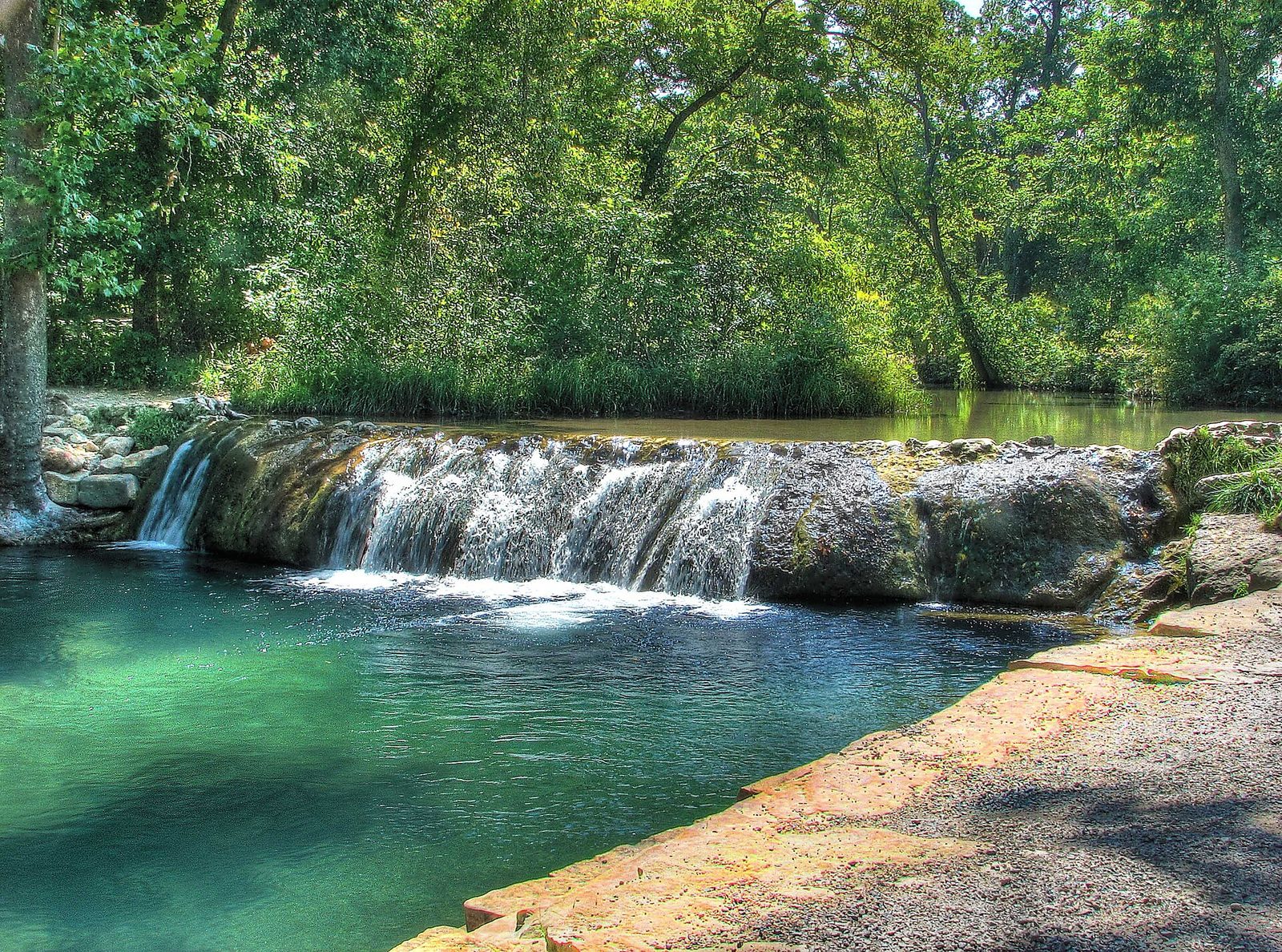
The two are genuinely different products and the choice depends on what you want. Turner Falls has the waterfall — 77 feet of it, which Chickasaw cannot match, plus a deep swimming pool at its base and a set of built amenities. It is a commercial park run by the city of Davis, and it feels like one: gates, tiers, paid parking, cabins and teepees.
Chickasaw is a national park unit, which means a different atmosphere entirely — swimming holes along a creek rather than one headline attraction, ranger programming, a nature centre, and the general character of NPS land. It is also the better option if you want to walk rather than swim, or if you want a quieter day.
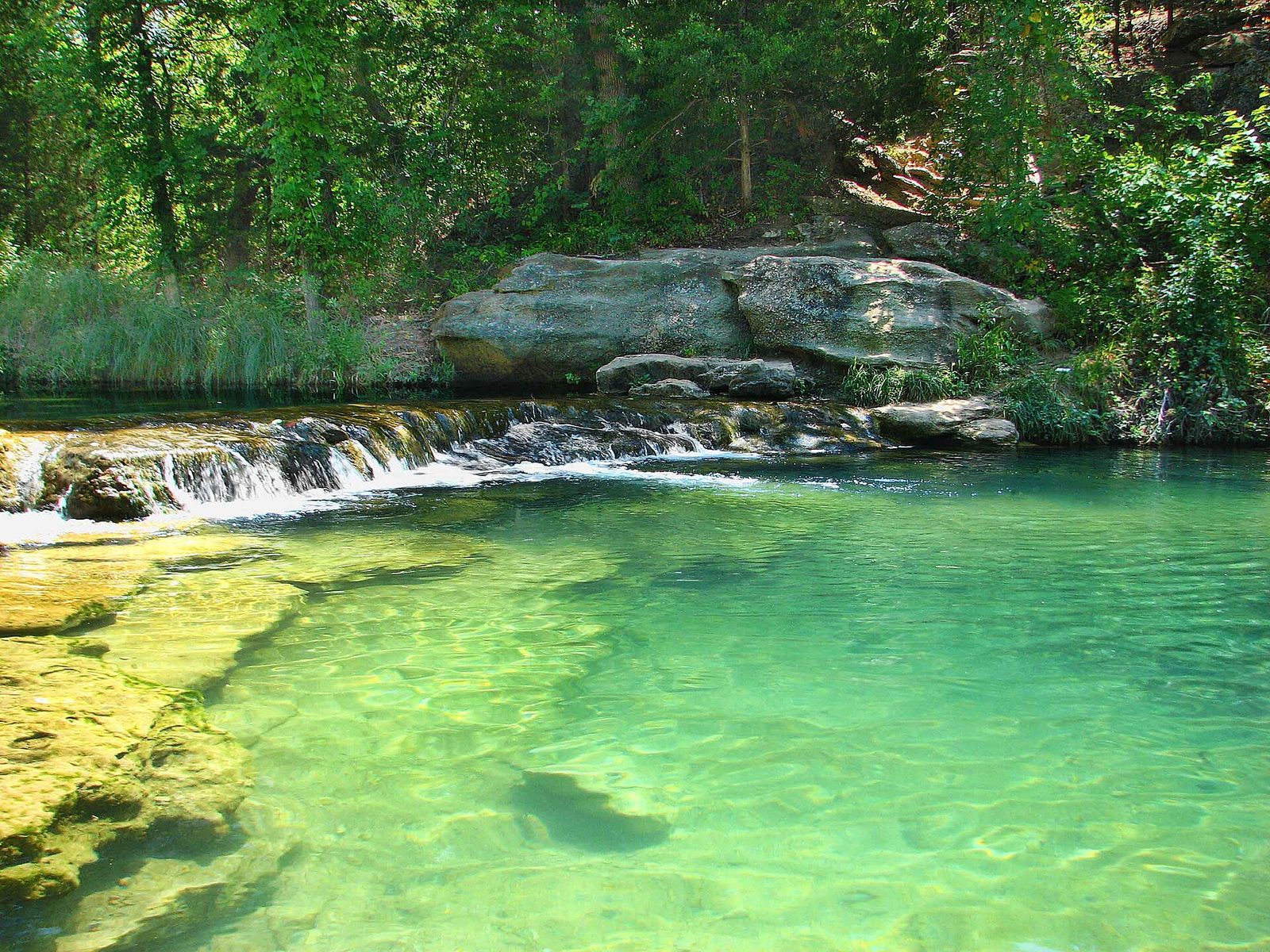
We could not confirm Chickasaw’s entrance fee or hours from the park service’s plan-your-visit index page when we checked in September 2026, so check nps.gov before you go rather than assuming it is free. The practical recommendation: on a summer weekday, do both. They are twenty minutes apart on the same highway, and you have already driven two hours to get to the Arbuckles. Doing one and turning round is the inefficient version of this trip.
Our guide to the best day trips from Dallas sets Turner Falls against the Texas options, several of which are closer and cheaper.
Can You Do Turner Falls Without a Car?
No, and it is worth being blunt because a fair number of visitors to Dallas do not have one.
There is no rail service, no scheduled bus that serves the park, and no DART route anywhere near it — DART’s network stops well short of the Red River, and Davis is another sixty-odd miles beyond that. The park sits at an interstate junction rather than in a town centre, and even within Davis you would need a vehicle to reach the gate.
If you are in Dallas without a car and want a day out of the city, the honest advice is to pick something inside the transit network instead. The Trinity Railway Express reaches Fort Worth from EBJ Union Station on a $9.00 Regional Day Pass, and DART rail plus the DCTA A-train reaches Denton on the same pass. Both are real day trips that need no vehicle at all. Our getting around Dallas guide sets out what the network covers.
If you are renting a car specifically for this, factor that into the cost comparison above. A rental day plus fuel plus $97 for a family on a summer Saturday makes Turner Falls a meaningfully expensive outing, and the arithmetic may push you toward a winter weekday or toward somewhere closer.
A Realistic One-Day Timeline
This is a summer weekday, aiming to get the best of the park and be home for dinner.
6:00 a.m. Leave Dallas. This is early and it is the difference between the trip working and not working. 8:00 a.m. Arrive at Davis, having crossed into Oklahoma with no time change. IDs out. 8:15 a.m. Through the gate, parked on free Level 3 while spaces are still plentiful. 8:30 a.m. Walk down to the falls before the day heats up and before the crowd arrives. This first hour is the one you came for.
10:00 a.m. Into the water. Flotation devices on every child twelve and under. The creek is spring-fed and colder than the air suggests, so expect a shock. 12:30 p.m. Lunch, then the trails and Dr. Collings’ Rock Castle, the castle-like structure built into the hillside that most visitors walk past. 2:30 p.m. Out, and north twenty minutes to Chickasaw National Recreation Area for the Travertine Creek swimming areas and the nature centre.
4:30 p.m. Back on I-35 south. 6:30 p.m. Dallas, which is a genuinely reasonable hour given how much you have packed in. That plan costs two adults and two children roughly $50 in admissions plus fuel, using free parking and the cheaper weekday rates. The same day on a Saturday costs nearly double and delivers less, because the crowds arrive in the middle of it.
Who Should Skip Turner Falls?
Anyone travelling with a dog. No pets, full stop. This is non-negotiable and the drive is too long to discover it at the gate.
Anyone who cannot get a certified flotation device for a child under thirteen. Without one, your children are not going in the water, and the water is the reason to come.
Anyone without a car. There is no transit route and no realistic workaround.
Anyone whose only free day is a July or August Saturday. This is the crowded, expensive, hot version of the trip, at the season when the park may sell out. If that is your only window, either accept it and arrive at 7 a.m., or go somewhere else. Fort Worth, Grapevine and Glen Rose are all closer and none of them charge you $25 to park.
Anyone expecting a state park. Turner Falls is a commercial operation owned by the city of Davis, with tiered parking, cabins, teepees and covered wagons. The waterfall is spectacular and the setting is real, but the experience is managed. If you want wilder, Chickasaw is twenty minutes away, and our guide to outdoor Dallas covers what is close to home.
Frequently Asked Questions About a Turner Falls Day Trip
How far is Turner Falls from Dallas?
About two hours north up I-35, to the junction with US Highway 77 at Davis, Oklahoma. That figure comes from travel coverage rather than the park, and it assumes a clear run. Oklahoma is in the same Central time zone as Texas, so there is no clock change in either direction.
How much does Turner Falls cost?
Adults pay $16 on a summer weekday, $20 at a summer weekend, $9 on a winter weekday and $12 at a winter weekend. Children 6 to 12 pay $9, $16, $6 and $9 respectively, seniors and military 55+ pay $9, $13, $6 and $9, and children under 5 are free. Parking is charged separately at $25, $15 or free depending on the level.
Is parking included at Turner Falls?
No. Parking is a separate charge: Level 1 is $25 a day and sits closest to the Blue Hole and the waterfall, Level 2 is $15 with access to trails and amenities, and Level 3 is free. Level 1 costs more than a peak-weekend adult ticket, which surprises most first-time visitors.
Do children need a life jacket at Turner Falls?
Yes. All children 12 and under must wear a Coast Guard certified flotation device while in the water. Inflatable floats, arm bands and novelty vests do not meet that standard, so bring proper certified jackets in the right sizes from home.
Can you bring dogs to Turner Falls?
No. The park states that no pets are allowed, and given the drive, this is worth confirming before you set off rather than at the gate.
What time should you arrive at Turner Falls?
At opening: 7 a.m. from 1 May to 30 September, 8 a.m. from 1 October to 30 April. Arriving at opening gets you the free parking spaces closest to the falls, the waterfall before the crowds, and the coolest part of a summer day. Secondary reports suggest the park can sell out on busy summer weekends.
Is Turner Falls open in winter?
Yes. Winter hours run 8 a.m. to sunset, with check-in until 8 p.m. Sunday to Thursday and 9:30 p.m. Friday and Saturday, and admission drops to $9 for an adult on a weekday. The falls keep running and can ice up spectacularly after a hard freeze, but it is a walking and photography trip rather than a swimming one.
Is there anything else to do nearby?
Chickasaw National Recreation Area at Sulphur, Oklahoma, is about twenty minutes further north — a National Park Service unit with swimming on Travertine Creek, hiking, camping and the Travertine Nature Center. Check nps.gov for current fees and hours before you go. Combining both makes far better use of a four-hour round trip than either alone.
Related Dallas Guides
- Best day trips from Dallas — how Turner Falls compares with the Texas options.
- Outdoor Dallas — parks, lakes and trails closer to home.
- Dallas with kids — what works with children across the region.
- Dallas on a budget — what a day out really costs.
- Getting around Dallas — the transit network and where it stops.
- Pet-friendly Dallas — where dogs are actually welcome.
- Best time to visit Dallas — seasons, heat and rainfall.
- Dallas itineraries — full days you can lift wholesale.
Photo Credits
- Turner Falls in winter: photo by unknown, Wikimedia Commons (CC BY-SA 3.0)
- Arbuckle Mountains: photo by Matthew Rutledge, Wikimedia Commons (CC BY 2.0)
- Davis, Oklahoma, Santa Fe Depot: photo by Matthew Zisi, Wikimedia Commons (CC BY-SA 4.0)
- Little Niagara, Travertine Creek: photo by jonathan c. wheeler, Wikimedia Commons (CC BY-SA 3.0)
- Travertine Creek swimming area: photo by jonathan c. wheeler, Wikimedia Commons (CC BY-SA 3.0)
- Turner Falls, Davis, Oklahoma (featured image): photo by USGS, Wikimedia Commons (Public domain)
Sources
- Turner Falls Park
- Turner Falls Park — Pricing
- Chickasaw National Recreation Area — Plan Your Visit
- Chickasaw National Recreation Area
- TravelOK — Oklahoma Tourism and Recreation Department
- DART — Fares and passes
- Texas Parks and Wildlife — Cedar Hill State Park
- Texas Parks and Wildlife — Dinosaur Valley State Park
- National Weather Service — Fort Worth/Dallas
- Climate of Dallas — NOAA-derived monthly normals
- US Coast Guard — Boating Safety and life jacket standards