This State Fair of Texas first timer guide exists because the fair is not one decision but four, and getting them in the wrong order costs real money. Which day you go changes admission from $25 to $7. How you arrive changes whether you pay $25 for parking. How many coupons you buy determines whether you eat well or run out at 4 p.m. And what time you walk through the gate decides whether you spend the afternoon in a queue or in the shade.
The 2026 fair runs 25 September to 18 October at Fair Park — 24 days. Everything below was checked against the fair’s own site in September 2026, and prices at a fair this size move every year, so the dated panel is deliberate. Our guide to Dallas events puts it in the context of the rest of the year.
What are the 2026 dates, hours and prices?
The current-facts panel. Everything in this section is from the State Fair’s own pages, checked September 2026.
| Detail | 2026 |
|---|---|
| Dates | 25 September – 18 October (24 days) |
| Hours, Mon–Thu and Sun | 10:00 a.m. – 9:00 p.m. |
| Hours, Fri and Sat | 10:00 a.m. – 10:00 p.m. |
| Location | Fair Park, Dallas |
| Parking | $25 per vehicle, 925 S. Haskell Ave, Dallas TX 75223 |
| Rail | DART Green Line — Fair Park Station or MLK Jr. Station |
| Phone | 469-945-FAIR |
One structural thing to understand before the prices make sense: admission and everything inside it are separate purchases. Your ticket gets you through the gate. Food and midway rides run on coupons you buy separately. A family that budgets only for admission will be unpleasantly surprised at the first food stand.
How much does the State Fair of Texas cost?
Admission is priced by day of week and time of day, which is unusual and is the single biggest lever you have.
| Ticket | Mon–Thu | Fri–Sun | Notes |
|---|---|---|---|
| Adult | $15 | $25 | $2 online fee applies |
| Adult after 5 p.m. | $10 | $20 | The cheapest regular entry |
| Child, ages 3–12 | $10 | $10 | Same every day; under 3 free |
| Senior, 60+ | $13 Mon–Wed, $7 Thu | $20 | Thursday is the seniors’ day |
| 1-Day FLEX | $27 any single day | Buy now, choose the date later | |
| FLEX 2-Pack Combo | $104 | Includes $50 in coupons, 2 carousel rides | |
| FLEX 4-Pack Combo | $134 | Includes $50 in coupons, 4 carousel rides | |
| Digital Season Pass | $52 | All 24 days | |
| Commemorative Hard Card | $62 | Adds a bring-a-friend ticket and Texas Discovery Gardens | |
(State Fair of Texas, checked September 2026.) Two verdicts from that table.
The 1-Day FLEX ticket at $27 is worse value than a weekday gate ticket at $15. You are paying an $12 premium for date flexibility. Buy it only if you genuinely cannot commit to a date; otherwise buy the day you want.
The season pass pays back on the third visit. At $52 digital, it beats two weekend adult tickets ($50) marginally and three of anything comfortably. If you live in the region or you’re in Dallas for a fortnight, it’s the obvious buy. For a single visit it is not.
Which day of the week should you go?
This is where the real money is. The fair runs a dense schedule of discount days, and the same visit can cost $25 or $7 depending entirely on which morning you pick.
| Day | Deal | Price | What you must bring |
|---|---|---|---|
| Opening day | Peanut butter drive | $10, gate only | 2 jars of peanut butter |
| Tuesdays | Value Day (Big Tex Insiders) | $12 online | Promotion code — text BIGTEX to 877-724-4839 |
| Tuesdays | 4-Coupon Midway | Rides at 4 coupons | Kiddie rides 3; excludes Thrillway and Texas Star |
| Wednesdays | Feed the Need | $7 | 5 canned food items — donations close at 5 p.m. |
| Thursdays | Senior Day | $7 gate, $9 online | Age 60+ with valid ID |
| Thursdays | Value Day and Thrifty Thursday | $12 online; food discounts | Insider code; participating vendors |
| Any day | Military or first responders | $5 off | Valid ID or badge; spouses and under-18s qualify |
| Any day | McDonald’s coupon | $5 off | Coupon from a participating restaurant |
(Checked September 2026.) The clear winner for a first-timer is Wednesday. Five tins of food bought at a supermarket for a few dollars turns a $15 weekday ticket into a $7 one, the crowds are at their thinnest, and you still get the full fair. Just note the donation programme closes at 5 p.m., so the deal and the after-5 discount are not stackable — go in the morning.
Tuesday is the close second, because 4-Coupon Midway Tuesdays change the ride economics completely if you have children. Most rides drop to four coupons and kiddie rides to three, which over an afternoon is a far bigger saving than anything on the admission side. The Thrillway and the Texas Star are excluded.
Avoid Saturday unless you have no choice. It’s the $25 price, the longest queues and the fullest car parks, for the same fair.
How do the coupons work, and how many do you need?
Coupons are the fair’s internal currency and the thing first-timers reliably get wrong. Nothing inside the gates takes cash directly — food, drinks and midway rides all run on coupons, which you buy at booths throughout the grounds or online in advance.
Three things worth knowing:
- The combo packs quantify coupons in dollars. The FLEX 2-Pack and 4-Pack both bundle $50 worth of food and midway coupons, which gives you a reliable reference point for what a coupon is worth when you’re budgeting.
- Old coupons don’t expire. If you have a strip left over from a previous year, bring it — they remain valid.
- Buy in one trip, not five. The booths queue up badly from mid-afternoon. Work out roughly what you need on the way in and buy it once.
For what the coupons are actually best spent on — which food is worth queueing for and which rides justify their price — that is a whole subject of its own and sits in our dedicated State Fair food and rides guide rather than here.
Should you drive or take DART?
Take the train. This is the least ambiguous recommendation in this guide.
Parking costs $25 per vehicle in the official lots around Fair Park, addressed at 925 S. Haskell Avenue. That was cut by $5 for 2026 after visitor feedback, which tells you something about where it had got to. Disabled parking is designated throughout the lots, and there are bicycle racks at Gates 5, 6 and 11.
The DART Green Line serves the fair from two stations. Fair Park Station sits on Parry Avenue at the entrance to the fairgrounds. MLK Jr. Station is near Gate 6. A Local Day Pass costs $6.00 and covers your entire day’s travel through to 3 a.m. the following morning; the reduced fare is $3.00 for seniors, riders with disabilities and Medicare card holders.
The arithmetic is not close. Two people driving pay $25 to park. Two people on the train pay $12 and skip the queue to get out of the car park at 9 p.m., which on a Saturday is its own reward. If you’re coming from downtown or the Arts District, the Green Line is a short ride. Our guide to getting around Dallas covers the wider network and the fare structure.
One caveat if you’re flying in the same day: there are no luggage racks on DART light rail, and operators do not help with bags. Drop your luggage at the hotel first.
What time should you arrive, and how long should you stay?
Gates open at 10 a.m. every day. The fair closes at 9 p.m. Sunday through Thursday and 10 p.m. on Friday and Saturday.

Arrive at 10 a.m. The first two or three hours are the quietest of the day, the food queues are short, and in late September — when highs still average 90°F — the morning is also the only comfortable part of it. Most first-timers arrive at two in the afternoon and meet the crowd, the heat and the queues simultaneously.
Plan six to eight hours. Fair Park is large and the fair fills it. A three-hour visit means choosing between the midway, the food and the exhibition halls rather than doing all three. If you only have an evening, the after-5 p.m. ticket at $10 on a weekday is genuinely good value for a compressed visit, and the fair looks its best after dark.
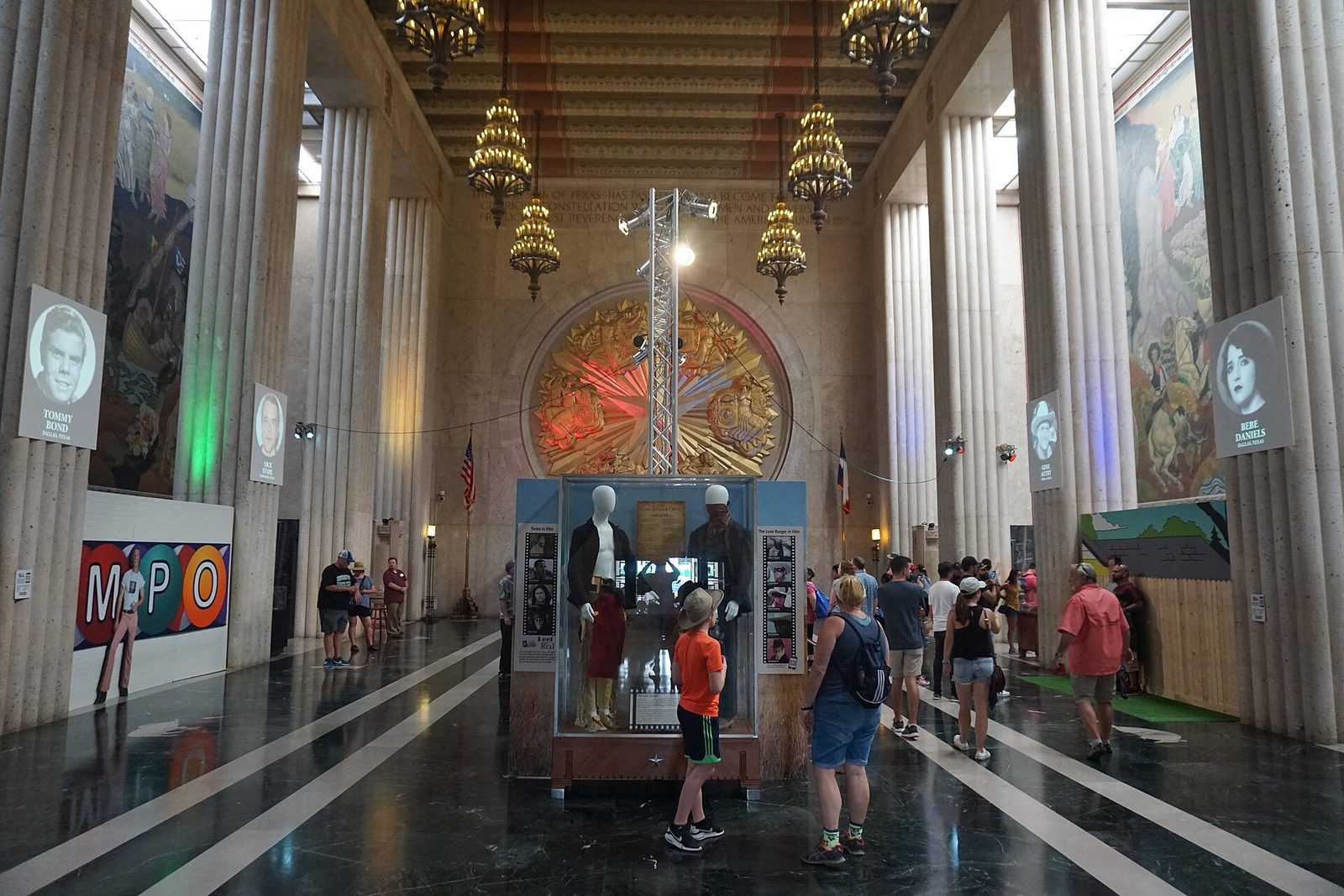
Build in an indoor hour. The historic Fair Park buildings — the Hall of State and the exhibition halls along the Esplanade — are air-conditioned, free to enter with your admission, and the obvious reset when the heat or the noise gets much. This is the single most useful thing to know if you’re bringing children or anyone who tires easily.
What can you bring into the State Fair?
More than at most large events, which helps the budget considerably.
Softshell coolers are permitted under the fair’s sizing standards, which means you can bring your own water — and in Texas in early October, water is the thing you will spend most on if you don’t.
Prohibited: alcohol, glass containers, metal utensils and loose ice. The fair recommends reusable ice packs instead of loose ice, which is a specific and easily missed rule — a cooler full of ice cubes will be turned away at the gate.
Beyond that, dress for a long day outdoors on hard ground. Fair Park is paved and you will cover several miles without noticing. In late September highs average 90°F and by mid-October they’re down to around 79.5°F, so the last week of the fair is materially more comfortable than the first.
What is Fair Park, and why does the setting matter?
Most visitors arrive thinking of the State Fair as a funfair with a large cowboy outside it. It is that, but the ground it stands on is the reason the fair looks different from every other one in the country.
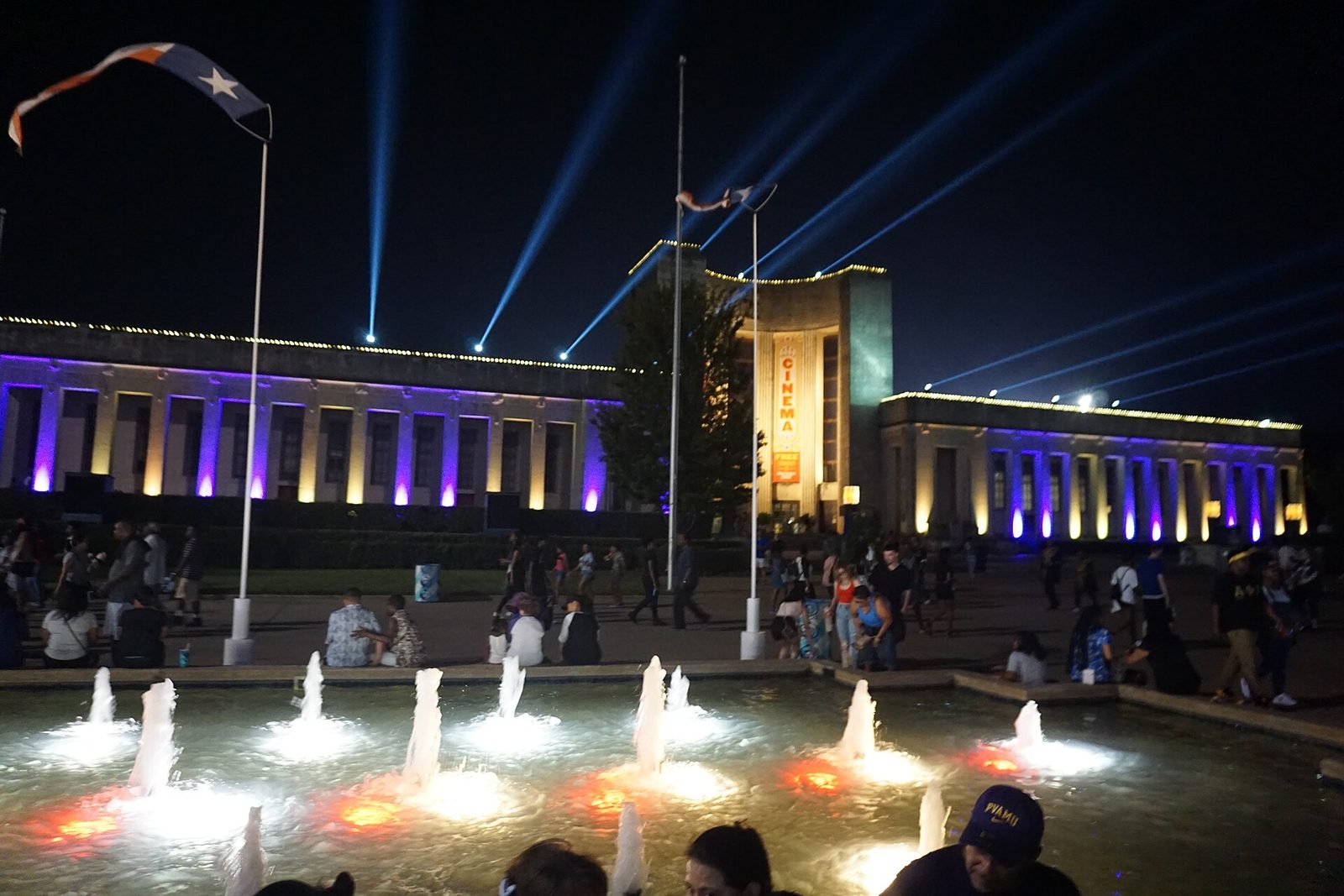
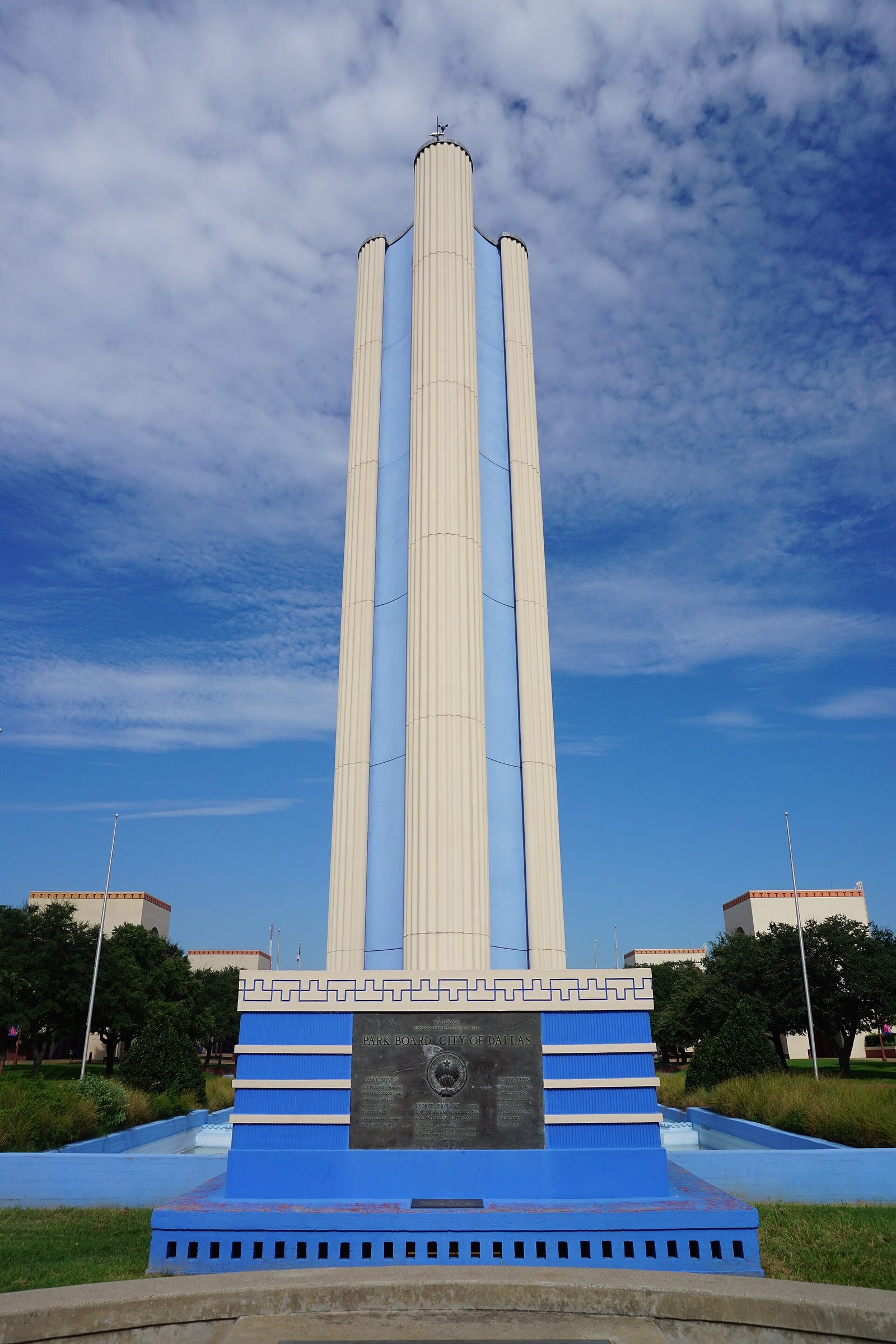
Fair Park’s monumental buildings were put up for the Texas Centennial Exposition, and they survive as an extraordinary ensemble of art deco architecture — colonnades, murals, sculpted façades and a formal Esplanade with fountains down the middle of it. When the fair lights those buildings at night and runs the fountains, the effect is genuinely unlike a travelling carnival, and it is the single most photographed part of the grounds after Big Tex.
Practically, this matters in three ways. The exhibition halls inside those buildings are air-conditioned and included with admission, which makes them the obvious heat strategy. The Hall of State, at the head of the Esplanade, is a free-standing reason to come even if the midway leaves you cold. And the site is large — Fair Park is a substantial park rather than a fairground, so distances between the midway, the livestock barns, the auto show and the food are real walking distances rather than a stroll.
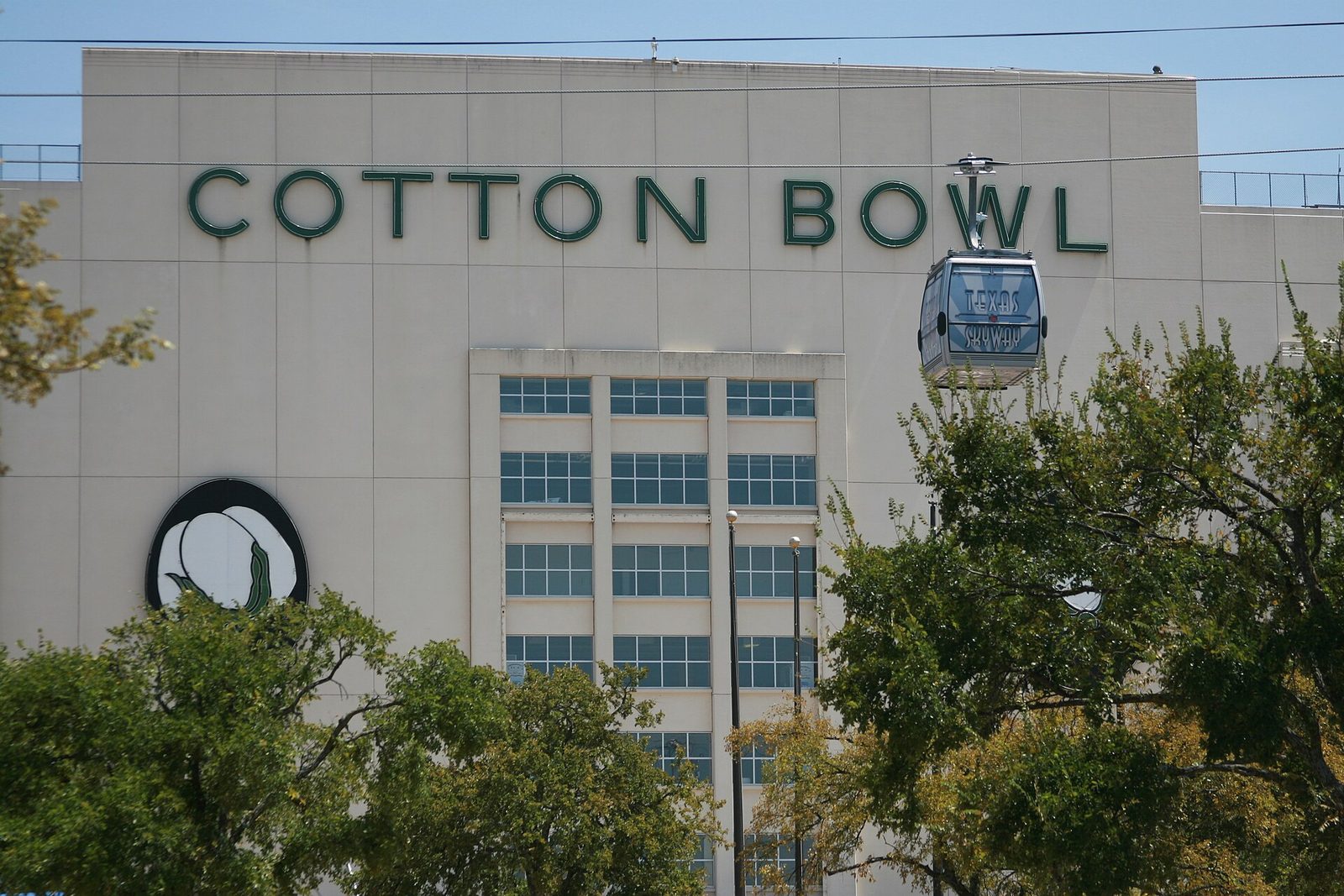
The Cotton Bowl sits inside the park as well, which is worth knowing for a different reason: when a game coincides with the fair, the crowd profile and the car parks change completely. Check the stadium schedule against your chosen date if you were planning a quiet weekday.
Fair Park operates year-round beyond the fair, with museums and gardens of its own, but that is a separate subject and belongs in our wider Dallas attractions coverage rather than in a fair-day plan.
What is the weather like during the State Fair?
It changes materially across the 24 days, and that alone should influence which date you pick.
| When | Average high | Average low | What it means on the day |
|---|---|---|---|
| Late September, opening week | 90.0°F | 70.1°F | Hot. Morning entry and indoor breaks are not optional |
| Mid-October | 79.5°F | 58.7°F | The comfortable window — the best fair weather of the run |
| Closing week | Around 79°F | Upper 50s | Pleasant days, genuinely cool evenings — bring a layer |
(Long-term monthly averages for Dallas.) Two consequences. First, the last ten days of the fair are considerably more comfortable than the first ten, and most people book the opening weekend out of enthusiasm. If you have a choice of dates and you dislike heat, go late.
Second, October is the wettest month in Dallas, averaging 4.79 inches — more than any other month of the year. A rained-off fair day is a real possibility rather than a remote one, and the fair is largely outdoors. The mitigation is the same as the heat mitigation: know where the indoor halls are, and treat them as part of the plan rather than an emergency.
Evenings in the closing weeks drop into the upper fifties, which after a 79°F afternoon feels colder than the number suggests. If you’re staying until closing at 9 or 10 p.m., bring something warm — it’s the most common thing visitors forget. Our best time to visit Dallas guide has the full year.
What should a first-timer actually do?
A loose order of operations rather than a list, because the fair rewards sequence.
Morning. Through the gate at 10, coupons bought in one go, then the midway while the queues are still short. If it’s a 4-Coupon Tuesday, this is when the ride budget stretches furthest.
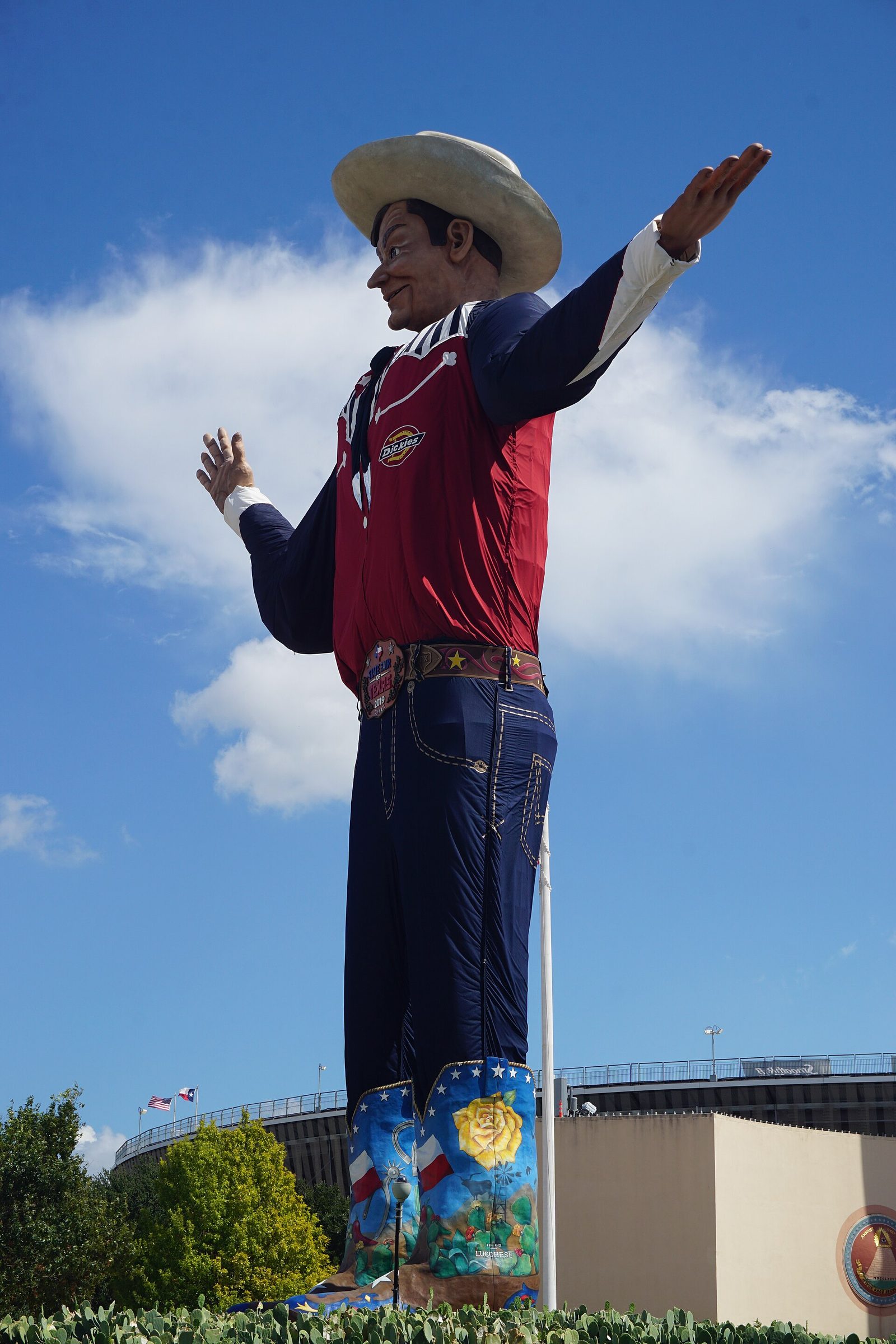
Late morning. Find Big Tex, take the photograph, and agree a different meeting point with your group — Big Tex is where everyone says they’ll meet and consequently where nobody finds anyone.
Midday. Eat, then go indoors. The exhibition halls and the Hall of State are the heat strategy, the culture and the sit-down, all at once.
Afternoon. The auto show, the livestock barns and the creative arts halls — the parts of a state fair that are genuinely a state fair rather than a funfair, and the parts visitors skip when they arrive late and run out of time. This is the section most first-timers regret missing. A state fair is an agricultural show with a midway attached, not the other way round, and the livestock barns in particular are free, shaded, and completely unlike anything else you will do in Dallas. Give them an hour.
Late afternoon. The point at which stamina becomes the limiting factor. If you have children, this is when to sit down with a drink somewhere shaded rather than pushing for one more ride — the meltdown at 5 p.m. is a fixture of first visits and it is almost always a heat-and-distance problem rather than a behaviour one. If you bought coupons in one go at the start, you also know exactly how much you have left, which makes the last two hours a plan rather than a negotiation.
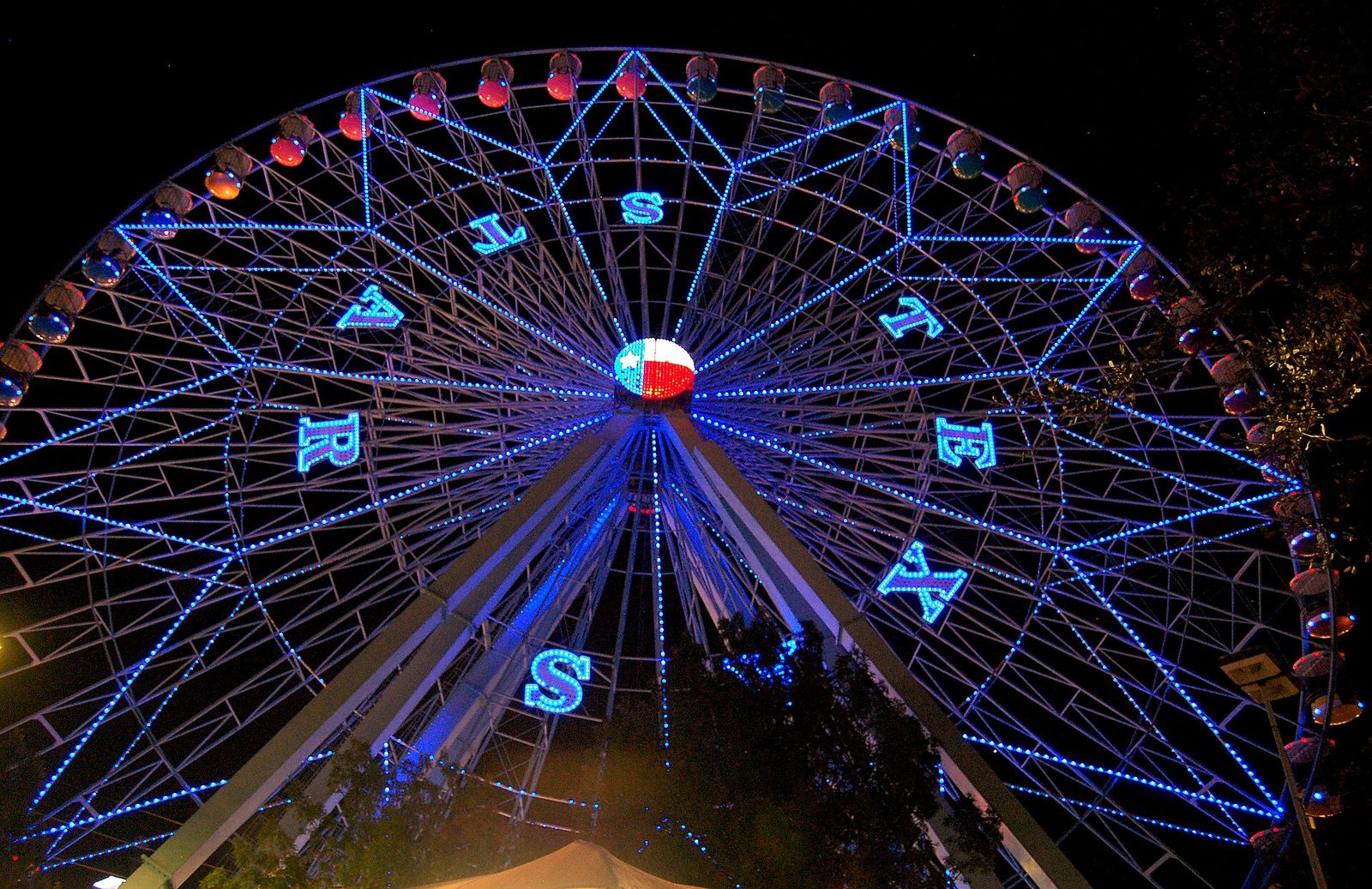
Evening. The Texas Star and the Esplanade after dark, when the fountains and the art deco façades are lit and the whole place looks like the reason it was built.
How do you do the State Fair with kids or on a budget?
The two questions have largely the same answer, which is to pick the right day and bring your own water.
The cheapest realistic family day. Two adults and two children on a Feed the Need Wednesday: $14 for the adults with five tins of food, $20 for the children, $12 for two DART day passes, so $46 before coupons. Compare that with the same family on a Saturday driving in: $50 admission, $20 children, $25 parking — $95 before a single coupon. The day of the week is worth more than every other saving combined.
Children’s pricing is flat. Ages 3 to 12 pay $10 every day regardless, and under-3s are free, so the weekday discount only helps the adults. That slightly changes the maths for larger families.
Coupons are where budgets actually fail. Admission is the small number; a day of food and rides is the large one. Decide the coupon budget before you buy them and treat it as fixed. Our Dallas on a budget guide applies the same discipline to the rest of a trip, and Dallas with kids covers the wider city.
Is the State Fair accessible?
Reasonably, with the usual caveat that a 24-day outdoor event on paved ground is a long way in any mobility device.
Disabled parking is designated throughout the official lots at 925 S. Haskell Avenue. DART’s Green Line offers level boarding into the centre car of the train with two designated wheelchair spaces, and reduced fares halve the Local Day Pass to $3.00. The fair also runs sensory-friendly mornings in partnership with IBCCES, which give a quieter environment and adapted activities — a genuine provision rather than a gesture, and worth building the visit around if sensory load is a factor.
The practical advice is the same as for anyone: come at opening, plan indoor breaks in the air-conditioned halls, and treat the 90°F late-September afternoons as a real constraint. Our accessible Dallas travel guide has the city-wide picture including transit detail.
Where should you stay for the State Fair?
The fair is at Fair Park, two miles east of downtown Dallas, and the Green Line connects the two directly. That makes downtown and the Arts District the sensible base for a visitor who wants the fair plus a city, rather than looking for a hotel beside the fairground.
Staying downtown gives you three things a hotel near Fair Park does not. You get the rest of Dallas within walking distance on the days you are not at the fair — the Arts District, Klyde Warren Park and the free M-Line Trolley are all in the core. You get a much wider choice of restaurants for the evening you inevitably decide you have eaten enough fried food. And you get the Green Line running back from the fair at the end of the night rather than a rideshare surge at closing time.
Book early if you are coming for a specific weekend. The fair runs for 24 days and fills hotels across the region, particularly on weekends and doubly so when a Cotton Bowl event coincides. One cost note for the expense arithmetic: Texas charges 6 percent state hotel occupancy tax and cities and special districts are authorised to add a local tax on top, so the quoted rate is not the final one. Our where to stay in Dallas guide maps the districts against transit.
What else can you do around the fair?
A fair day is six to eight hours, which leaves most of a trip free. Three things pair particularly well.
The Arts District, on a non-fair day. The Dallas Museum of Art is free, though every person needs a timed ticket, and the Nasher Sculpture Center is $10 — or $8 with proof of DART fare, which you will have from the Green Line. Both are closed Monday and Tuesday, which is the single most common planning mistake visitors make in this city.
The Sixth Floor Museum, at $27 for adults, Wednesday to Sunday, last ticket 4:15 p.m. It is the other thing first-time visitors to Dallas come for, and it sits a short rail ride from Fair Park.
An evening that isn’t the fair. Deep Ellum for live music is one stop along the Green Line from Fair Park, which makes it the natural pairing with an early fair day — go at opening, leave mid-afternoon, and come back out in the evening without ever moving a car. Our Dallas nightlife guide covers the districts, and Dallas itineraries has ready-made plans to build the fair into.
What’s not worth it at the State Fair?
The honest verdicts.
A Saturday visit, for a first-timer. Same fair, $10 more per adult, $25 parking, worse queues. Unless a Saturday is your only option, use a weekday.
The 1-Day FLEX ticket at $27, unless date flexibility is genuinely worth $12 to you. A weekday gate ticket is $15.
Driving. $25 to park against $6 for a day pass that also covers the rest of your day in Dallas, plus the car park exit queue at closing.
Arriving at 2 p.m. You get the heat, the crowd and the queues in one package, and you will run out of daylight before you reach half the grounds.
Budgeting only for admission. The gate price is the smallest number in a day at the State Fair. Plan the coupons first and work backwards.
Frequently asked questions
When is the State Fair of Texas 2026?
25 September to 18 October 2026, 24 days at Fair Park in Dallas. Hours are 10 a.m. to 9 p.m. Sunday through Thursday and 10 a.m. to 10 p.m. on Friday and Saturday.
How much is admission to the State Fair of Texas?
Adults pay $15 Monday to Thursday and $25 Friday to Sunday, dropping to $10 and $20 after 5 p.m. Children aged 3 to 12 pay $10 every day and under-3s are free. Seniors aged 60 and over pay $13 Monday to Wednesday, $7 on Thursdays and $20 at weekends. A $2 online fee applies.
What is the cheapest day to go to the State Fair of Texas?
Wednesday. Feed the Need Wednesdays cut admission to $7 with a donation of five canned food items, though the donation programme closes at 5 p.m. Senior Thursdays are also $7 at the gate for over-60s, and opening day is $10 at the gate with two jars of peanut butter.
How do you get to the State Fair of Texas on DART?
Take the Green Line to Fair Park Station on Parry Avenue, at the fairgrounds entrance, or to MLK Jr. Station near Gate 6. A Local Day Pass is $6.00 and covers the whole day’s travel through to 3 a.m.
How much is parking at the State Fair of Texas?
$25 per vehicle in the official lots around Fair Park, at 925 S. Haskell Avenue, Dallas TX 75223. That is $5 lower than the previous rate. Disabled parking is designated throughout, and there are bicycle racks at Gates 5, 6 and 11.
Can you bring food and drink into the State Fair of Texas?
Softshell coolers are permitted under the fair’s sizing standards, so you can bring your own water. Alcohol, glass containers, metal utensils and loose ice are all prohibited — use reusable ice packs rather than ice cubes.
How long do you need at the State Fair of Texas?
Six to eight hours for a full first visit. Fair Park is large, and a shorter visit means choosing between the midway, the food and the exhibition halls. If you only have an evening, the after-5 p.m. weekday ticket at $10 is good value and the fair looks its best lit up.
Is the State Fair of Texas worth it?
Yes, on the right day. It is one of the largest and longest-running state fairs in the country, the 1936 Texas Centennial architecture at Fair Park is remarkable in its own right, and a weekday visit with a discount day costs less than most city attractions. On a Saturday afternoon in 90°F heat, with $25 parking and a two-hour arrival, considerably less so.
Once you are through the gate, the coupon economy takes over — and for 2026 the fair has published firm coupon prices for the first time. A corny dog is eight coupons, cotton candy six, bottled water one, and Midway prices are down an average of 17 percent. Our guide to the best food and rides at State Fair of Texas works through what a day actually costs.
Knowing how the fair works is half of it; the other half is picking the right day out of twenty-four. Wednesday costs $7 with five canned goods, Thursday stacks Senior Days with Thrifty Thursdays, and Tuesday drops most Midway rides to four coupons. Our guide to the best time to visit the State Fair of Texas ranks all twenty-four days on price, crowds and heat.
One thing first-timers almost never realise: you are allowed to bring your own food and drink into the fair, in a soft cooler of 9 by 10 by 12 inches or smaller, and you can leave and return the same day on a hand stamp. Between those two rules and a $6.00 DART day pass, a family day drops by about a hundred dollars. See our guide to the State Fair of Texas on a budget.
Related Dallas Guides
- Dallas events and festivals — the full annual calendar, month by month
- Getting around Dallas — DART fares, the Green Line and the rest of the network
- Dallas with kids — where else to take children in the city
- Dallas on a budget — the same arithmetic applied to a whole trip
- Accessible Dallas travel guide — transit, sensory provision and venue access
- Best time to visit Dallas — why mid-October beats late September
- Dallas attractions — what else to see while you’re here
- Dallas history — including the Texas Centennial story behind Fair Park
- Things to do in Dallas — the wider list
Photo Credits
- Big Tex: photo by Michael Barera, Wikimedia Commons (CC BY-SA 4.0)
- The Texas Star: photo by Kairos14, Wikimedia Commons (CC BY-SA 3.0)
- State Fair of Texas crowds: photo by Michael Barera, Wikimedia Commons (CC BY-SA 4.0)
- Fair Park Esplanade: photo by Michael Barera, Wikimedia Commons (CC BY-SA 4.0)
- Hall of State, Fair Park: photo by Michael Barera, Wikimedia Commons (CC BY-SA 4.0)
- The Cotton Bowl: photo by bmendez68, Wikimedia Commons (CC BY 2.0)
- State Fair of Texas at night (featured image): photo by Michael Barera, Wikimedia Commons (CC BY-SA 4.0)
Sources
- State Fair of Texas — Plan Your Visit (checked September 2026)
- State Fair of Texas — Tickets and Prices (checked September 2026)
- State Fair of Texas — Discounts (checked September 2026)
- State Fair of Texas — Group Tickets (checked September 2026)
- DART — Fares (checked September 2026)
- DART — Accessibility (checked September 2026)
- Dallas Office of Arts and Culture — Sensory-Friendly Activities (checked September 2026)
- Climate of Dallas — NOAA-derived monthly averages (checked September 2026)
- DART — Rail network and airport connections (checked September 2026)